Home Blog Page 140

History – Bribie Islands oldest houses

0

Tags: Bribie Island. History. Houses. homes. Oldest. Queensland. Australia. Historical

Bribie Island’s Oldest House Celebrates 100 Years

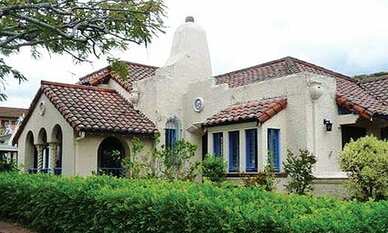
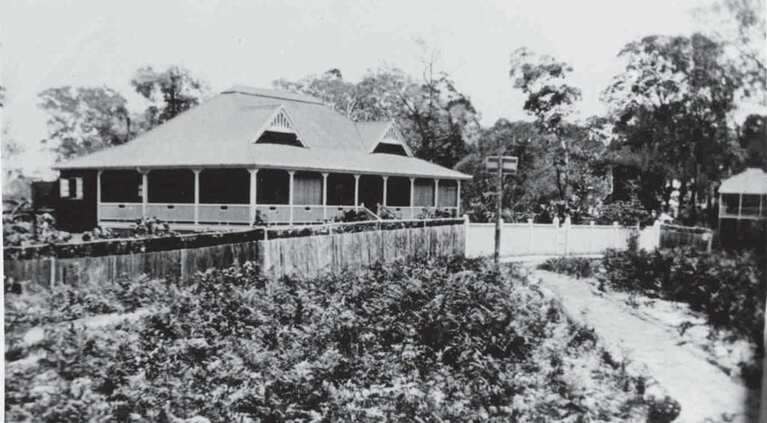
There are many fascinating old cottages around Bongaree that date back to the earliest land sales on Bribie Island, but the grand home at 36 Banya Street known as Coungeau House, is considered to be the oldest.

Bribie Island’s Oldest House Celebrates 100 Years Lynne Hooper – Bribie Island Historical Society There are several other buildings on Bribie that are actually older, but as was often the case in the past, they had been relocated to Bribie after having served many years as buildings elsewhere. One such example, also in Banya Street, is the small blue painted building now known as the Masonic Hall.

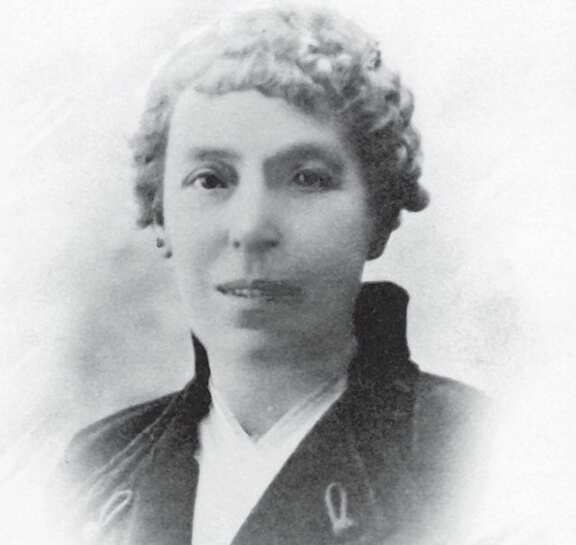
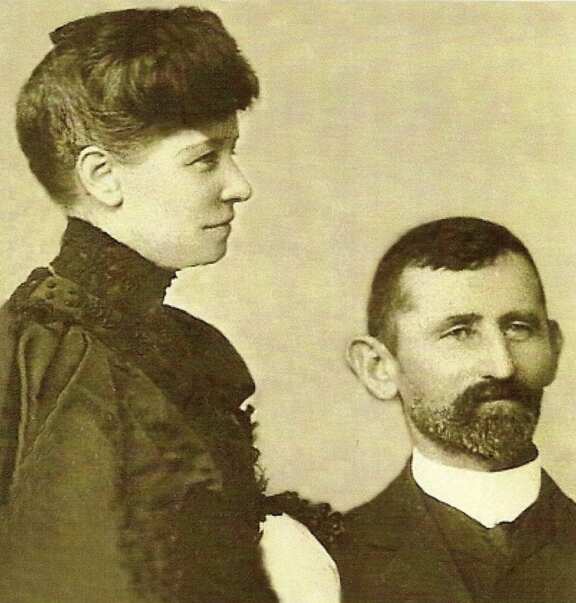
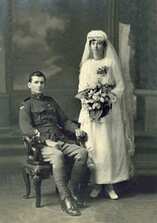
Featured Image(top): Emily & Norm COUNGEAU ran a Cafe/Wine Saloon in Queen St. in 1900’s

The Masonic Hall was originally built as a school in Enoggera then moved to be the State School in Deception Bay in 1892 where it operated until 1905. It was then relocated once again to Narangba in 1910 to be the school there. After 30 years of operation as a school, it was deemed no longer suitable and was sold by the Education Dept. The Hall has then relocated once again and floated over on a barge to Bribie Island in 1924 to become the Methodist Church.

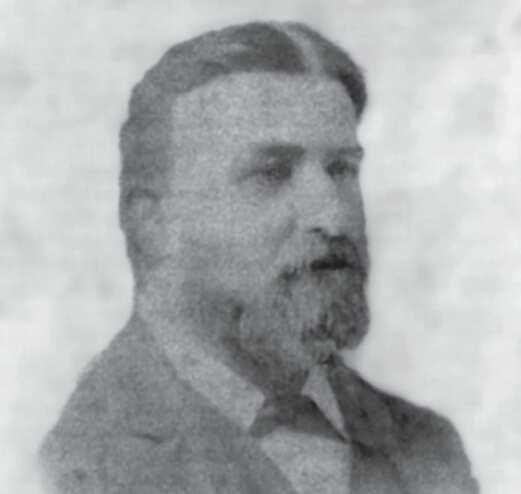
The building remained the Methodist Church until the formation of the Uniting Church and in 1986 it became the property of the newly formed Bribie Island Masonic Lodge. So what is considered to be Bribie Islands oldest house originally built here? On 23rd December 1912 one hundred land lots were released for sale in Bongaree and Norman Coungeau, a wealthy Brisbane merchant, purchased two lots on Banya Street for 5 Pounds each. Norman Coungeau was an Albanian and his wife Emily was English.

They had arrived in Brisbane in 1889 via Melbourne and opened a Café/Wine Saloon near the corner of Queen & Wharf Streets. The Olympia Café was a successful enterprise which they operated for over 30 years. The Coungeau’s commercial success enabled them to become significant patrons of the arts and donors to charitable causes.

Typical of the Coungeau’s generosity was in August 1915 when the Brisbane Courier’s “Aeroplane Fund” needed only ££53 to achieve the £550 required to purchase a plane. Norman, who had previously donated £50 called at the Courier Office and announced his intention of making up the balance to complete the Fund for this worthy appeal. Emily Coungeau was a popular and well-known poet and lyricist. From 1913, when she was over 50, her poems were published in the Brisbane Courier, the Sydney Bulletin, and the Australian Woman’s Mirror.

The poems were collected into four books. Emily went on to write the lyrics for many songs that were set to music and published not only in Australia but also in England where she was elected to life membership of the Society of British Authors, Composers & Arrangers. Emily wrote the libretto for the opera ‘Auster’ which was performed in 1935 at his Majesty’s Theatre in Melbourne and billed as ‘the first Australian Opera ever performed by a professional company’.

bribie island history houses homes historical

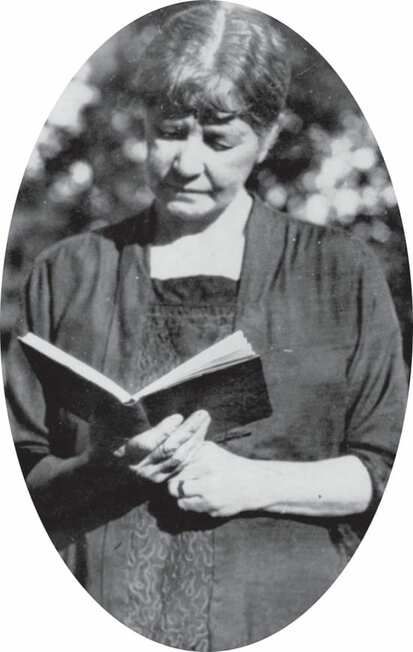
Emily Coungeau was a famous poet and lyricist

Norman and Emily commissioned renowned Brisbane Architects Hall & Dods and for their retirement house on Bribie Island and it was designed in the ‘Queenslander’ style to suit the climate. The ‘Queenslander’ is typically a timber house on stumps with an extensive, deep, shaded verandas accessed by French doors. The wide verandas provide shelter on long hot summer days that often ends with a torrential downpour.

Being built on stumps allows cooling air to pass under the house. The ‘Queenslander’ lends itself to an informal lifestyle which suited life on Bribie Island. In February 1915 Hall & Dods, placed advertisements inviting tenders for building the Coungeau’s house. Mr. James McDonald from Albion won the job and built the house during 1915, but with some difficulties as many of his young workers left to join the Australian Forces in World War 1. James Mc Donald also purchased land for himself on the Boulevard and later built his home there.

The Coungeau’s home had 3 bedrooms, a sitting room with stained timber floor, dining room, kitchen with stove and pantry, bathroom with an enamel bath, linen press and a septic system. In 1915 it was far and away the grandest home on Bribie Island with lighting provided through Wizard Lighting which used hollow tubing to light petrol vapor. The verandahs were fitted with Thurlow Venetian Blinds and had French Doors, with transom windows above for ventilation, to all rooms.

Two windmills and tanks supplied the property with water. In 1919 Norman & Emily retired to their new home which they called “St.Osyth” after Emily’s childhood home, and their gracious Queenslander became renowned for its fruit and flower garden. In 1936, aged in their late 70s, they decided to sell the house and travel to England. Unfortunately selling a house in the midst of a depression was not easy. After some time when it had not sold Norman decided “sooner than wait he would at least do some good” ” and they gifted their wonderful home to the Church of England as a rest house.

The Church agreed that the property would be called ‘Coungeau House’ in recognition and perpetuity. During WW2 the house, like many others on the Island was occupied by the Military, and by the 1960’s it had become rundown and in need of repair. In the early 1970’s it was sold by the Anglican Church to Toc H and today the house provides accommodation for disadvantaged families and youth groups, as well as function rooms for various Bribie social groups.

bribie island history houses homes historical

St.OSYTH House built for Coungeaus in 1915


Bribie Island Crime Report – March 2015

Tags: Bribie Island crime report. Crime Statistics Queensland

Eyes on the Road

Moreton Police District by Senior Sergeant Garth Peake on March 2, 2015

The following information relates generally to road related enforcement operations and statistics as reported for the Moreton Police District which includes statistics for Redcliffe, Deception Bay, Burpengary, Caboolture, Bribie Island, Woodford, Kilcoy and Moore Police Divisions.

The statistics relate to the week February 23 to March 1, 2015.

As of midnight on 1.3.15, Queensland road toll was 32 fatality crashes, which is the same as this time last year and nine more than last week. Over the weekend across the state there were five fatalities in three crashes, thankfully none in our Region.

The Southern Police Region is recorded as having eight fatalities, eight less than last year.

The Moreton District remains on two fatalities this year, one more than last year’s progressive tally. Members of the Road Policing units were involved in a number of operations throughout the week. Patrols ranged from early morning starts, specific RBT centred duties and attending to a major AFL match conducted at the Burpengary Fields. Officers reported few issues with the traffic at this major local event.

There were 32 traffic crashes reported in the Moreton District this week. This includes five public reported crashes recorded on the Police online facility. Hit and runs were again at the top of the hit list with 13 incidents reported, mostly at shopping centre car parks.

A speed camera was operated on 26 occasions across the district in the last week including Redcliffe, Bribie, Caboolture, and Woodford. The Bruce Highway was attended on three occasions with a high speed of 121 recorded. A deployment on Duffield Road, Redcliffe by State Road Policing Task Force returned 139 detections and a high speed of 120 in the 60 zone.

Forty-one unlicensed/disqualified offences were detected during the last week across the Moreton Police District which is down on last week’s high tally of 42. Of those detected, five had their plates seized for seven days and two for 90 days.

Sixteen drivers were again detected across the Moreton Region for drink driving offences last week, eight of which were detected by Road Policing units. One of the drivers detected ended over the high limit of .15%. with a reading of .190%, nearly four times the legal limit after being stopped for a speeding offence on the Bruce Highway near the Deception Bay Road overpass. The 49-year-old male driver is due to appear at Caboolture Court on the 23.3.15

Other Articles

https://thebribieislander.com.au/march-crime-report/


History – WW1 & WW2 soldiers who lived on Bribie Island

0

Tags: WW1. WW2.  World War 1. World War 2 soldiers. History. Queensland. Australia. Army Veterans.

WHO FROM BRIBIE ANSWERED THE CALL?

Bribie Island Historical Society received a grant from Queensland Anzac Centenary Grants program to identify all enlistees in WW1 and WW2 who were born or lived on Bribie Island or Pumicestone Passage when they enlisted.

From an original number of three WW1 enlistments, our research has now identified 18 from this area who answered the call. Considering that the population of Bribie Island in 1915 was about 40 and assume the same “up the passage” 18 is quite significant. So who were these men?

Three of them paid the ultimate sacrifice.

Arthur William STORR, 1899 – 1917, a surveyors assistant when he joined 9 Battalion (Bn) 14 Sep 1915, Tragically killed in action (KIA) France 26 Mar 1917 and remembered on the Villers-Bretonneux Memorial, Picardie, France. He gave his next of kin (NOK) address as “Bribie View, via Caboolture”.

William GOSLING, c1898-1918, the youngest enlistee age 18y10m and a farmer when he enlisted 26 Bn 11 Sep 1915. NOK living at Bribie Lightkeepers residence, North Bribie Island. He was KIA in France 8 Aug 1918 and is buried Villers-Bretonneux Military Cemetery, Villers-Bretonneux, Picardie, France.

history ww1 ww2 war

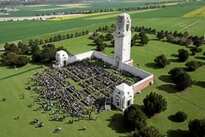
Villers-Bretonneux Military Cemetery (L), and Memorial (R) Villers-Bretonneux, Picardie, France.

The third was Alexander Thomas DAVIS 1892 – 1919, a fisherman when he joined 42Bn on 1 Oct 1916 and served in France until seriously wounded 9 Jun 1918. He was evacuated to England and then Australia where he died of wounds 5 May 1919. Arthur William STORR had two brothers also enlisted.

Harold Francis STORR, b1893. He was a plumber when he joined 15 Bn on 16 Sep 1914. He gave his NOK address as “Donnybrook, via Caboolture, N.C.Line”. 15 Bn landed Gallipoli 25 Apr 1915. He was wounded on 7 May 1915 treated in hospital at Mustapha and returned to his unit 17 Oct 1915. He remained with the Bn when it went to France and returned to Australia in Jul 1919.

history ww1 ww2 war

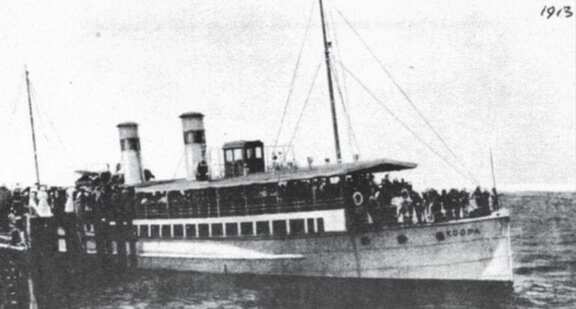
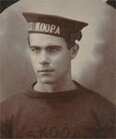
Reg Campbell (possibly after WW1 when he worked
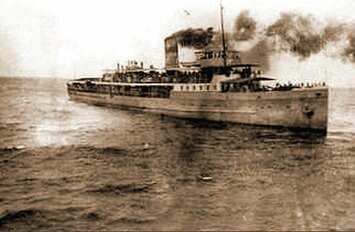
on SS Koopa).

Charles Allan STORR, b1896. He was a butter maker when he also joined 9 Bn 16 Sep 1915. He returned home 17 Jul 1919. He gave his NOK address as “Bribie View, via Caboolture, N.C.Line”. The eldest enlistee was 37yo Alan Layton, b1886. He joined 4 Pioneer Bn on 29 Nov 1916 and served in France. He was a storekeeper, married with family living on Bribie in 1916.

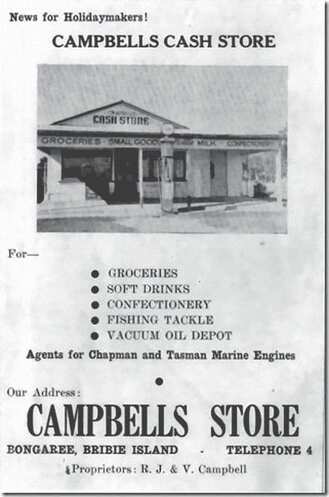
Reginald Joseph CAMPBELL, 1896 – 1976, enlisted in the Navy 16 Apr 1917. It appears that he served in Australia. Reg was born and died on Bribie Is. Reg was also an oysterman, a fisherman, and eventually a storekeeper. His last address was 7 South Esplanade Bongaree, Bribie Is.

John Robert MILLS, b1893, enlisted in 2 Remount Unit 5 Nov 1915. He served in Egypt until repatriated with deafness in Apr 1916. He and third brother Thomas James MILLS, b1891 joined 15 Bn 19 Nov 1914. He also served in Egypt and returned to Australia suffering rheumatism 29 July 1915. Both were born at Toorbul.

Maurice Alexander BISHOP, 1892 – 1973, enlisted 11 Depot Bn 26 Apr 1916, did not serve overseas and was discharged 18 May 1916. He was born at Toorbul.

Walter Herbert BONNEY 1896 – 1976. A carpenter when he joined 26 Bn 18 Oct 1915 served in France and transferred to 2 Division Signal Company in Jul 1918. He was born at Toorbul also.

Bertie DUX, 1896-1973. He was a railway porter when he joined 11 Bn 15 Jun 1916 and served in France where he was wounded. He was born at Toorbul. In Jul 1919 he was granted leave to work with a coachbuilding firm in London for a few weeks to gain experience before coming home.

George Leslie GOLLAGHER, 1894 – 1964. A bullock driver and was living Toorbul when he enlisted 2 Nov 1916. He joined 31 Bn and served in France.

George Ernest JACQUES, 1890 – 1962. He gave his occupation as a machinist was born at Coochin. He joined 49 Bn 15 May 1916. In the early hours of ANZAC Day 1918 in France, the 49th participated in the now legendary attack to dislodge the enemy from Villers-Bretonneux.

history ww1 ww2 war

Photo of Walter Henry Mills and Ada Burrell on their wedding day – 17 May 1919.
[Source: Ancestry.com – Kunde family tree – owner: suma328]

Thomas Martin TRIPCONY,b c1890, He was a farmer and joined 49 Bn 22 Nov 1915. He was then living at Cowie on Pumicestone Passage. He was wounded in Oct 1917 which resulted in him being returned to Australia in 1918.

If any reader is family or has information to add please contact [email protected]

Currently, there is not a memorial of any description on Bribie Island which pays tribute to WW1 and WW2 enlistees from this area who enlisted. Using funds received from Queensland Anzac Centenary Grants program those above and those identified from WW2 will be acknowledged on two separate plaques soon to be displayed on Bribie Island.

Do not miss the Bribie Island Seaside Museum exhibition commencing 27 Feb to 17 May called – Remembrance: The Australian War Memorial.

The age of wine – tips on ageing wine

Tags: Penfolds wine. Australian wines. How to age wine

THE BRIBIE WINELANDER

In the early 1950’s Penfolds sent Max Schubert, their chief winemaker, to France to observe how the French made the magnificent wines of Bordeaux with the aim of replicating this feat and producing an iconic Australian red.

Upon his return, Max started to play around with several blends with the prime grape variety being Shiraz as this variety better suits the Australian climate. When his first effort was submitted to the wine critics the comments were so disappointing Penfolds immediately ordered Max to stop making this wine and concentrate on the normal everyday wines.

However, Max continued to experiment with his new “baby” hiding away the resultant vintages at the rear of the warehouse. The critics revisited his original creation a few years later and their views were totally different announcing the wine to be the best ever produced in Australia.

Penfolds then asked Max to produce another batch of this wine and were delighted to find out he had continued to make it and Grange Hermitage was born. Because of this, it was then decided that the wine would only be released to the market no less than 5 years after vintage and that practice has remained to this day.

In the early 1980’s Grange had a retail price around $25 and the average price for good quality wines averaged around the $5.00 mark, now the current release of Grange is retailed for the mid $700 per bottle mark and the average price for good quality wines is probably around $20 or even less. I had the pleasure of having dinner with Mr. Schubert in about 1985 and asked him what he would eat with such a big wine as Grange, his answer Meat Pie and Chips, which he had regularly for Sunday lunch, it helps when you actually make the product and remember it retailed then for around $30 per bottle, not $750!

Because of our sunny warm climate the wines made in Australia tend to be more fruity than those of Europe and comparisons are very difficult, in fact, impossible, wines of France and Italy are often tasted after 100 years or more and still show amazing style and character whereas our wines should be drunk a lot younger, a good age for a top Australian red would be 10-15 years.

If you are considering cellaring wines, it should be noted over 95% of wines purchased in Australia are drunk within 24 hours, so here are a few tips. It is no good cellaring wines and only buying one bottle of each as you will never find out it’s true value to you as far as taste is concerned. Buy at least 6 bottles or even a dozen depending on what you can afford and open a bottle after 5 years and every couple of years thereafter and you be the judge when the wine is perfect for you, and wines that are in the lower price range are very rarely suitable for drinking after more than a couple of years.

Remember with the climate in Australia, heat, and light can be a killer of good wine so you will need an area that remains at a relatively constant temperature, around 7– 18 degrees centigrade, dry and dark. When you read on the label the cellaring potential is said to be 10 – 15 years or more remember this is the opinion of the winemaker based on everything being perfect.

Wine cellaring is not confined to red wines, there are several white varieties that evolve superbly, namely Chardonnay, Semillion, and Riesling. It is possible for any of these varieties to last ten years or more with the right cellaring conditions, and as most wine drinkers concentrate on cellaring older reds there are many bargains in white wines to be found if you look around.

Find a McWilliam’s Elizabeth Semillion with an older vintage of 6 or 7 years and you will notice all the medals on the label and a probable price tag of around $20. Clare and Eden Valley Rieslings, Chardonnays from The Hunter Valley, The Barossa, and Western Australia with a bit of bottle age can also be found at very competitive prices, just look around, liquor retailer Dan Murphy’s have a section of older vintages which are always worth checking out.

Amazingly the current vintage of Houghton’s White Classic can be bought now on special for around $7 and in 10 years you would probably pay $40 or more for the same wine that has been aged. Although I have mentioned medals as being an indication of the quality of the wine in the bottle please note that when the wine is submitted to the shows for judging the big wineries will go through many barrels to find the very best, which of course means that the wine you are buying is not necessarily up to the same standards of the medal winner, the smaller wineries will simply send a unlabelled bottle for judging from their stock.

If you have any queries on wines remember to drop me an email at [email protected]

Instead of buying your usual $5 dollar drop why not see what wine is on your shopping receipt from the supermarket, recently Woolworths and Coles have been doing a special buy where if you buy one bottle you get one bottle free so you can often buy a wine that normally retails at around $15 per bottle meaning with the free one it is costing $7.50 per bottle and compare the difference in quality to your regular favourite

Here are a few white wines and red wines I believe represent outstanding buying when on special, often close to half their recommended price.

White wines:

  • Houghton’s White Classic
  • McWilliam’s Elizabeth Semillon
  • Jacobs Creek Reserve Chardonnay

Red Wines:

  • Wyndham Estate Bin 444 Cabernet Sauvignon
  • Wyndham Estate Bin 555 Shiraz
  • Jacobs Creek Reserve Cabernet Sauvignon
  • Jacobs Creek Reserve Shiraz

Philip Arlidge Quote of the month:

“A meal without wine is like a day without sunshine.”

-Louis Pasteur

Other Articles

https://thebribieislander.com.au/wine-wine-wine-tell-something-dont-know/

https://thebribieislander.com.au/wine-varieties/

Bribie Island Fishing Report – Feb 2015

0

Tags: Fishing report Bribie Island. Fishing Spots. Tide Times.

REEL LIFE

Well, with the holiday period over and things starting to quiet down on the water, we have started to see some more fish come in!

Summer holidays can be a hard time to fish and finding a quiet little gutter or creek can be near impossible at times with all the extra traffic out on the water, with things a lot quieter on the water, now is a good chance to find your favourite creek, gutter, hole or beach and chase the many prevalent summer species around the island.

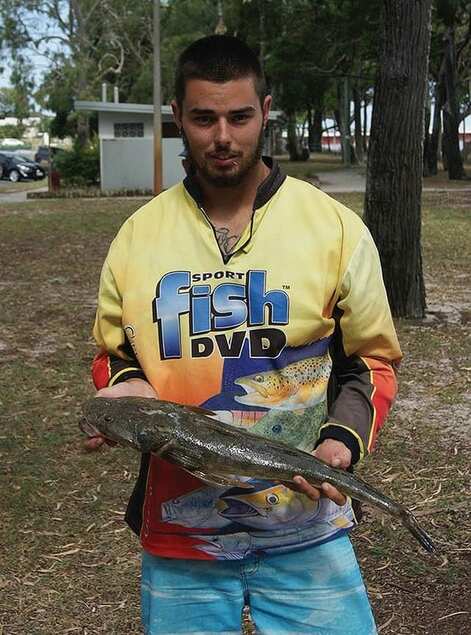
Flathead has been showing up everywhere around the passage lately mostly around the 50cm mark with the occasional 60 to 65cm fish coming in, flathead are a great species to chase this time of year and most beaches, sandbars and gutters will have flathead hanging around waiting for a feed.

Whiting has not seemed to be around in numbers this summer but fishing the beaches from Red beach and around to Woorim has still been producing good catches of summer whiting. Bream are still being caught in good sizes and good numbers, look for areas with deeper holes or surrounding structure such as mangroves, oyster leases, rocks and in through the canals.

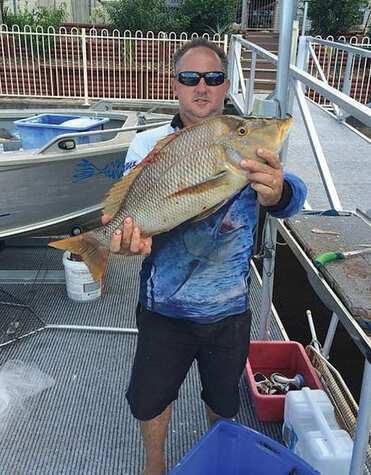
Sweet lip has been showing up regularly from the pylons around the bridge and channel markers in the passage.

Jewfish have been a little hit and miss over the last month but are still worth targeting around the deeper holes, bridge pylons and off the Bongaree jetty at night with live baits.

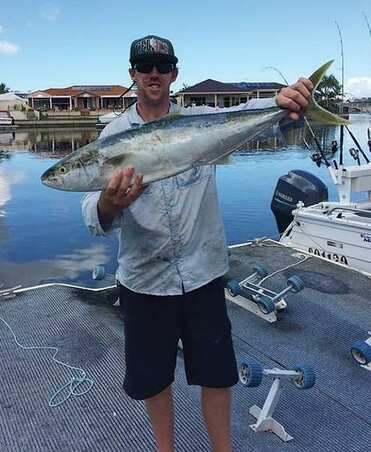
The recent rains have got the crabs on the move through the Pumicestone passage, so bring your pots if your thinking of spending the day out fishing. Offshore we are seeing some school and spotted mackerel around, the occasional snapper is still turning up too.

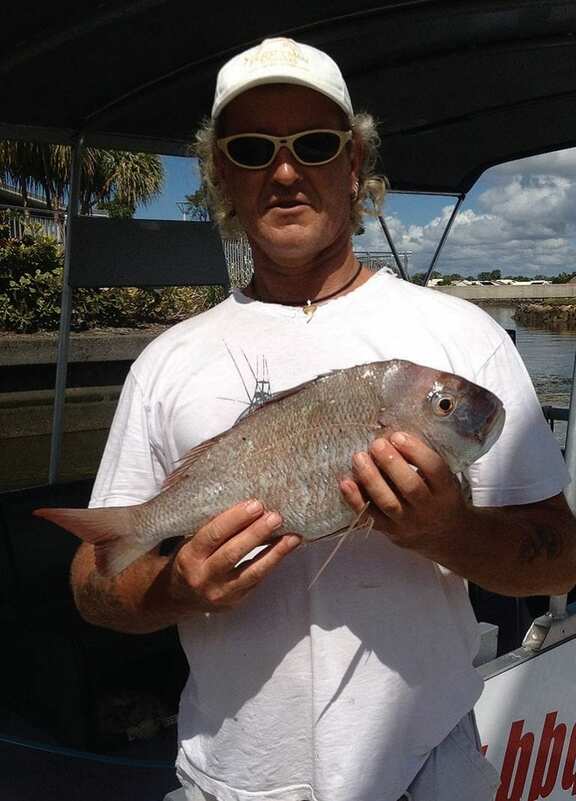
HOT TIP: Most productive baits over the last month have been worms, yabbies, and prawn for whiting and mullet, prawn and chicken for bream. Pilchard, mullet, and prawn for flathead. Happy fishing from the Tackle Inn crew!

Tide Times

Click here to see Bribie Island Tide Times

Other Articles

https://thebribieislander.com.au/huuuge-1930s-swordfish/

History – Queensland Aboriginal settlements.

0

Tags: Australian Aboriginal Settlements. Australia. Queensland. Bribie Island. History.

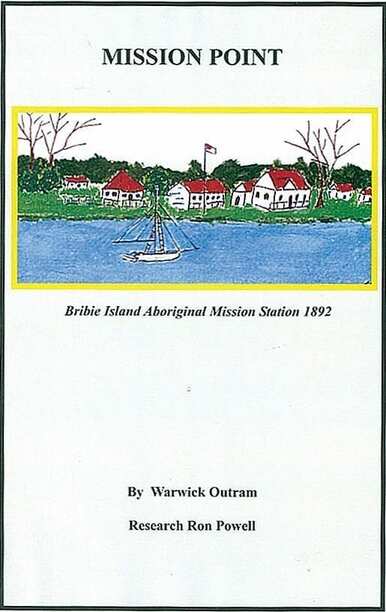
BRIBIE’S FIRST ABORIGINAL MISSION

Australian aboriginal history

RON POWELL – Article Author

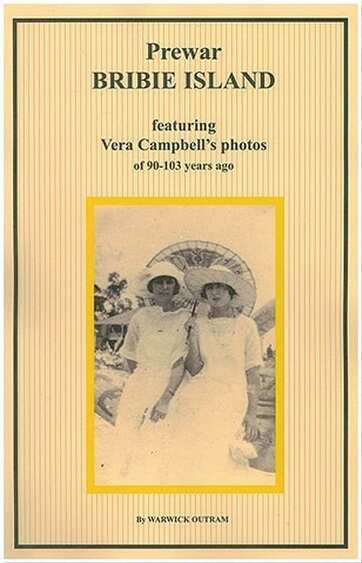
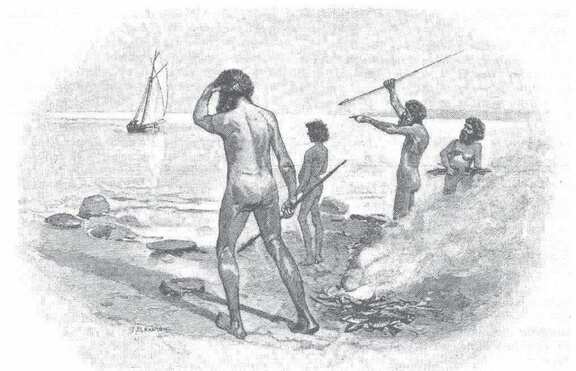
When researching for Warwick Outram’s new book about the mission, people were generally surprised when told how long our aborigines inhabited Bribie. Even though they had resided on Bribie for over 3000 years the mission came too late to help the local Joondoburri people.

The last Joondoburri person is Kal-Ma-Kuta, died 1897, buried close to the monument unveiled on 10 March 1962 by the Caboolture Historical Society. That sacred ground is today locked between the divided Bribie-Caboolture Road at Ningi

SCIENTIFIC PROOF

Carbon dating of midden material tells us aboriginal people were on Bribie from about the time of Stonehenge construction in prehistoric Britain before the Egyptians began building pyramids, and around the time when Abraham founded Judaism.” COME THE WHITE MAN Like all Australian Aborigines the Joondoburri people enjoyed the isolation that gave them a remarkable disease-free life.

Then in 1788, the First Fleet came to Australia, unfortunately with diseases common to all Europeans that then spread to the natives. Without acquired immunity, aborigines paid a heavy price. Estimates are between 60 and 90 percent of Australian aborigines died. The principal killer being smallpox which was eradicated by 1979 through an aggressive program conducted by the World Health Organisation. Immunization now controls many diseases but smallpox is the only human disease eradicated by vaccination.

AUSTRALIA TODAY

Over the last 225 years, Australia has taken a lot of people from different countries, races, religions, and politics. They have done a lot of good for Australia — but also made mistakes.Australia today is very different from the original British colony. I feel there is little gained by dwelling on the past, for today, Australians are proud of our independent nationhood, with its mix of people from all continents of the world, including aboriginal people both present and past.

BRIBIE’S PAST

Includes 3000 years residency on Boorabee (Bribie) of the people we now call the Joondoburri. On Bribie, at the Joondoburri Conference Centre within the Fisheries Research Station, is where the Queensland Government recognises the Joondoburri people. However, there is no general public acknowledgment on Bribie that the Joondoburri people ever existed.

PEOPLE ASK

“How should the Bribie community best honour the Joondoburri 3000 years’ residency? “ Suggestions made to date include, A prominent monument on the Bribie waterfront. A Joondoburri Park on Bribie, in which community employed professional guides, explain native methods of fishing, cooking, and hunting or supervise demonstrations of aboriginal art. Let everyone know your views by letters to the editor expressing the various ideas. Raise the matter within your local organisations, ask them to act on behalf of the Joondoburri who through no fault of their own, after 3000 years residency on Bribie, are no longer with us.

AUSTRALIAN VIEWPOINT

The Commonwealth of Australia, independent of the United Kingdom since 1st January 1901, publicly acknowledges the past with a Union Jack in the corner of our flag. On 14 July 1995, the Commonwealth proclaimed the Australian Aboriginal Flag, thereby acknowledging some 40,000 past years of Aboriginal existence in Australia.

BRIBIE VIEWPOINT

I believe our Bribie Community should acknowledge the proven 3000 years residency on Bribie Island of people we call the Joondoburri.

Do you agree? If so, I ask Bribie residents and Bribie Organisations to work together to establish a very visible public acknowledgment of Joondoburri past existence.

Other Articles

https://thebribieislander.com.au/history-bribie-island/

Bribie Island Fishing Report and Tide Times Jan 2015

0

Tags: Bribie Island. Fishing report and Fishing Spots. Tide Times.

REEL LIFE

Seasons greetings! We hope everyone has had a great Christmas and that you’re all kicking back and enjoying the summer holiday period! Inshore fishing has been a little on the quiet side and very hit and miss over the last month, the guys at BBQ Boat Hire at Pacific Harbour have been reporting boats coming in with the occasional nice flathead, whiting, and bream from around Whitepatch and the mouth of Ningi Creek.

There’s been some moses perch, cod and sweet lip from around the bridge pylons and some decent jewfish from around the deeper holes and dropoffs around the passage. Snapper around the 40 – 50cm mark are being caught from the mouth of Pacific Harbour and up around Gallaghers Gutter to the North.

bribie island queensland fishing bribie island queensland fishing

Good whiting is still coming in from Red Beach, Woorim and most of the sandbars up and down the Pumicestone Passage. These are a great table fish and easily caught from most accessible locations along the foreshore.

They will readily take most baits, but best results have been on worm, yabbies, and prawns. Bream can be caught right through the passage around rocky outcrops, oyster leases and in the canals.

The best time to target them is early mornings, late afternoons and night on a variety of baits including prawns, squid and flesh baits such as mullet. Burleying up the area you are fishing and using light gear will improve your chances significantly. We are now seeing some quality catches of both sand and mud crabs so if you’re thinking of spending some time fishing the passage this summer, it’s worth bringing your pots.

Offshore has been firing for those venturing out with snapper, mackerel, cod, and mahi-mahi prevalent. There is plenty of live bait around the passage for those looking to catch their own and we stock a selection of yabbie pumps, cast nets, jigs, and aerators at Bellara Bait & Tackle.

For those that want the hard work taken out of their next trip, we have live, fresh, frozen and cured baits on hand as well.

Hope you all enjoy the holidays and have a great new year

Other Articles

https://thebribieislander.com.au/fishing-south-east-queensland-and-moreton-bay/

https://thebribieislander.com.au/huuuge-1930s-swordfish/

New years and new wines

Tags: Wine. Sauvignon Blanc. Shiraz Viognier. Chardonnay. Champaign. Australian Wineries.

THE BRIBIE WINELANDER

Now that we are into the new year, it’s out with the old and in with the new. It is time to acquaint ourselves with some new kids on the block and perhaps along the way reacquaint ourselves with some old favourites and see what has happened to them.

Over the last few years, winemakers have returned to the old world of grape growing to diversify into some of the European grape varieties that never originally made it to Australian shores.

We now have opportunities to try our palates out on some of these. Sticking with the same style is a very safe way of making sure you don’t waste your hard earned cash on something you may not like but it can also be very boring. Remember when you discovered Sauvignon Blanc and that “eureka” moment which changed your wine experience forever? Well, I welcome you to experiment yourself and here a few suggestions if you enjoy dry white wines.

Viognier came to Australia in the late 1990’s and I remember Yalumba having billboards advertising its arrival with tongue-in-cheek humour. Whilst we didn’t rush out and purchase huge quantities, it is still out there and makes for a very easy drinking flavourful dry white.

There is some confusion when the variety also appears on labels of red wines and becomes Shiraz Viognier. Although Viognier is still a white wine variety, blending just 5% with Shiraz softens the wine down, which as we discussed last month, at this quantity doesn’t always need to be shown on the label. Thank goodness it has now been removed from most labels even though the variety probably is still there.

Other new grape varieties are Vermentino and Trebbiano. Expand your taste buds and look for these styles from wineries such as Brown Bros., or Pizzini from Victoria. With red wines look for Tempranillo, Sangiovese, Nero d’Avola, Nebbiolo and one of my favourites, Durif. Durif isn’t strictly a new variety but is probably not familiar to many. The wineries who do it well such as The Calabria’s of Griffiths Three Bridges Durif, DeBortoli’s Vat 1 Durif and Morris Durif from Rutherglen Victoria offer an alternative to your regular tiple and they can often be big and bold.

These varieties can be cellared for twenty years or more. With the diverse climate conditions in Australia we can grow almost any grape variety successfully somewhere and make a pretty good fist of it. With the fairly attractive exchange rate at the moment it is also possible to buy imported wines with these grape varieties at reasonable prices and compare just how good our winemakers are.

It is also good to drink the grape variety of the original country with a food course to match, say a Tempranillo with a Paella, a Sangiovese with a beef lasagne, or a Trebbiano with an antipasti or seafood risotto. Australian Riesling is another often overlooked quality wine.

Due to the arrival of so many new varieties, it is possible to overlook some old favourites and one I often bore people with is Riesling and for good reason. Australia makes fabulous dry wines from this variety. We still are the second largest planting worldwide to Germany and until the late 1980’s it was our largest planted white wine variety before we fell in love with Chardonnay.

It is said that the success of the four-litre cask was to blame for its demise as it also carried the name Riesling when in fact the juice came from other varieties such as Sultanas and produced a less than dry fruity style — one far removed from the great wine true Riesling grapes can produce. As it is now the new year, if you’re someone who enjoys a great dry white head down to your local liquor store and buy an Australian Riesling from The Clare Valley, The Eden Valley, The Great Southern in Western Australia, or Tasmania. Look for names such as Killikanoon, Jim Barry, Bay of Fires, Grosset, Henschke and Leasingham. There are of course many more.

The characters to look for are lemons and limes which make them perfect match with fish, oysters and anything that goes well a squeeze of lemon juice on it. Good Rieslings will age gracefully and lose their citrus flavours replacing them with honey and sometimes oily characters. Moving onto red, and specifically Pinot Noir. Pinot Noir is an interesting but sometimes troubled grape variety in Australia.

It was once said of 400 wineries that produced the wine that you could have 400 different styles ranging from rich and earthy to jammy and somewhat sweet. Pinot Noir grapes originated in Burgundy in France where strict controls are in place to maintain the quality of the grapes. There Terroir is an important phrase used describing the importance of climate, soils and grape quality and this produces generous, rich, mouth-filling wines. In fact, a Grand Crus can cost many hundreds of dollars per bottle and are often sold out before the grapes are picked!

In Australia the better Pinot Noir wines come from cooler regions such as Gippsland, Macedon Ranges, The Mornington Peninsular, and The Yarra Valley in Victoria, and The Porongerups in Western Australia and Tasmania. Look for names such as Moorilla Estate, Mount Mary, Paringa Estate, Yabby Lake and Castle Rock to taste the best of this variety. Cheers!

JANUARY’S WINE SUGGESTIONS FOR AN EXCITING START TO THE NEW YEAR:

WHITE WINES

  • O’Leary Walker Watervale Riesling
  • Bleasdale Adelaide Hills Pinot Gris
  • Vasse Felix Semillon Sauvignon Blanc.
  • Tyrells Semillon
  • Xanadu “Next of Kin” Chardonnays

RED WINES

  • De Bortoli Bella Riva Sangiovese
  • Brookland Valley Verse 1 Cabernet Merlot
  • De Bortoli Gulf Station Pinot Noir
  • Seppelt Chalambar Grampions Heathcote Shiraz

Philip Arlidge [email protected]

Other Articles

https://thebribieislander.com.au/brief-history-wine/

https://thebribieislander.com.au/wine-varieties/


Historical Newspaper Publications – Bribie Island

0

Tags: History. Historical newspaper publications. Bribie Island. Editorial. Historical Society

HISTORICAL PUBLICATIONS OF CHRISTMAS’ PASSED

Cast your mind back and imagine Bribie Island 50 years ago? Some may well remember, but here’s a bit of a taste of Christmas as published on Bribie Island circa 50 years ago.

These Newspaper clippings should give you an idea of what it was like and how much has changed since then.

hisorical newspaper publications queenslandhisorical newspaper publications queensland hisorical newspaper publications queensland

IMAGES: COURTESY OF BRIBIE ISLAND HISTORICAL SOCIETY – HISTORICAL NEWSPAPERS

Check out how far Bribie Island has come from a mere 700 residents with roughly 80 telephones, to what we call now ‘living the dream’.

Amazing to imagine dialing up a local business on the telephone with just two digits! Thanks to Barry Clark, Founder of Bribie Island Historical Society for digging up these beauties!

Merry Christmas and a Happy New Year from everyone at the BIS! Stay safe this festive season.

Other Articles

https://thebribieislander.com.au/historical-women-bribie-island/

HOLIDAY FISHING – BRIBIE ISLAND

2

Tags: Fishing Bribie Island. Fishing Spots. Tide Times. Queensland

REEL LIFE: HOLIDAY FISHING

Summer is here! Now is the time to start chasing the big summer whiting that is in numbers around the island. Woorim, Red Beach and the sandbars and gutters around the passage have been producing some quality fish with plenty around the 30 to 45cm mark. Fishing light gear on a rising tide as the water comes in over the sandbars has produced good results.

Baits can range from live or cured beach worms, yabbies, pippies, squid tentacles or even small hard bodies and soft plastics.

Flathead seemed to have slowed down but are still around, fishing the run out tides early morning or late afternoons around yabbie banks and muddy or weedy bottomed areas will get you amongst the fish.  It’s a good idea to walk the area you’re going to fish at low tide to look for flathead holes in the sand. Flathead is ambush fish and keeping baits moving slowly or throwing lures will produce best results.

Drift fishing over the shallows by boat is normally very productive. The best baits for flathead are pilchards, mullet strip, prawns or small live baits. Great success can be had with soft plastics and hard body lures.

Jewfish seem to be coming in fairly regularly with good fish up to and around a metre long, coming from the Bongaree jetty and the bridge pylons at night for those using big live baits such as mullet and squid.

Grunter has started to show up in the deeper gutters and areas of the passage. Drop-offs in the creeks will take a variety of baits.

queensland fishing spots

Featured Image(top of the article and above): Jewfish caught around Bongaree Jetty and the bridge pylons over November.

Bream have slowed but can be still caught all around the island on pretty much any bait or small lures. The canals or rocky ledges and oyster leases are your best bet late afternoon or evenings.

Snapper is around but it can be a bit of hard work to find them. Fish the deeper areas with fish flesh baits, herring hardyheads or squid on a run out tide.

Mackerel are now showing up in good numbers around the channel marker, jetties and bridge pylons. Now is a good time to start targeting mangrove jack. Look for areas holding structure, around mangroves, oyster leases or rocky walls. These are a great sports fish and great on the table, best baits are live baits or lures.

We are finally seeing some quality sand and mud crabs from in and around the passage as the weather and water warms up towards Christmas time.

For those fishing offshore, we have seen some great cod coming in from the deeper holes, ledges, and drop-offs.

We hope everyone enjoys the upcoming summer and festive season and gets out to wet their line! Merry Christmas from all at Bellara Bait and Tackle!

Tide Times

Click here to see Bribie Island Tide Times

Other Articles

https://thebribieislander.com.au/bribie-island-fishing-spots-and-tide-times/

https://thebribieislander.com.au/bribie-island-fishing-spots-tide-times/

Wine Varieties

Tags: Wine. Cabernet Sauvignon. Sauvignon Blanc. Pinot Grigio. Chateau d’Yquem. Pinot Gris

THE BRIBIE WINELANDER

For many years wines produced in Australia carried the names of traditional European styles, which given the influence of immigrants arriving from Germany and Italy isn’t surprising. Names such as Hermitage, Claret, Moselle, Hock, Champagne, Port and Burgundy adorned our labels.

In the 1990’s though, we reached an agreement with the European Union that these would be taken off and we replaced them generally with the grape varieties that went to produce that wine.

In Australia, a wine that has up to 85% of a certain variety doesn’t have to disclose the other varieties in the remaining 15%. It used to be said that Grange at one time had nine or more different varieties but as Shiraz was the main variety it was known as Grange Hermitage.

Although as a nation we enjoy Shiraz more than other red grape varieties, we also are capable of producing very good Cabernet Sauvignon, especially from Coonawarra in South Australia and Margaret River in The West.

The Cabernet Sauvignon wines of Coonawarra often have very strong blackcurrant and mint aromas and come from a very small patch of red earth known as Terra Rossa which is some 20 km in length and 2 km wide.

In this region, Cabernet Sauvignon grapes represent 58% of all the varieties grown and history shows the first plantings in the region were in 1890 with the first vintage being 1895 by John Riddoch, whose name is remembered on one of Wynns premium reds. Other well-known vineyards include Zema Estate, Leconfield, Parkers, Balnaves, and Hollicks. Also, several of the larger wine companies have vineyards in the area and one of my favourites is The St. Hugo from Orlando which is consistently a great example of Coonawarra Cabernet at it’s best.

This month the varieties we are looking at are Sauvignon Blanc, Pinot Grigio, and Cabernet Sauvignon and I shall make a couple of suggestions for wines to adorn your Christmas table.

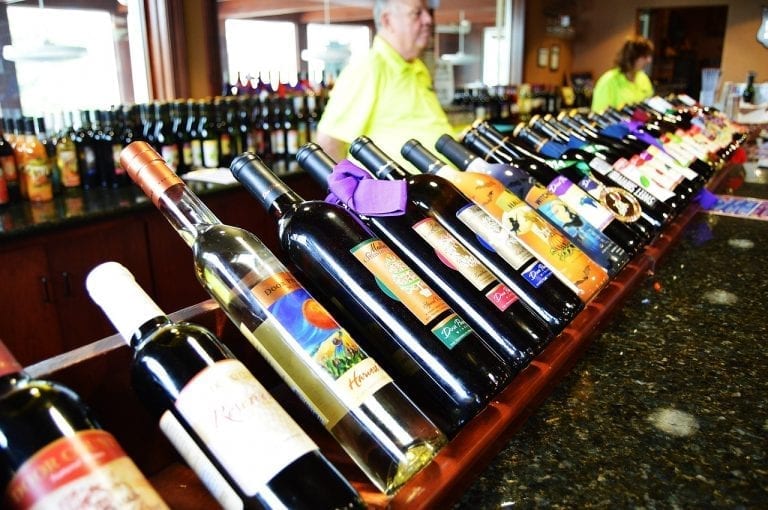
wine wineries australia

SAUVIGNON BLANC.

In our region, New Zealand has certainly claimed this market for themselves with their distinct zingy acidic style. With aromas of passion fruit, gooseberries or capsicum, the wines are perfect for drinking on their own or can be matched with white seafood or any shellfish. Also try with goats cheese, turkey and most white meat.

In France over 70,00 acres are devoted to this variety and the wines are often matured in oak barrels, giving them a totally different character sometimes known as Fume Blanc. The variety is not only used for making dry wines. In Bordeaux, they blend the variety with Semillon to produce one of the worlds great dessert wines, Chateau d’Yquem. One of the best I have tried recently is actually an Australian wine from Wicks Estate in Victoria.

PINOT GRIGIO

Fairly new to the Australian market, this wine is also known as Pinot Gris and is a grape variety some are predicting will be as successful as Sauvignon Blanc. The styles can be different varying from acidic and racy to luscious, it is up to the consumer to decide which style they prefer.

As with Sauvignon Blanc, the wine is better matched with white fish, shellfish, and white meat.

CABERNET SAUVIGNON

I just love a great Cabernet and they go so well with any red meat or mature cheese, especially at a barbecue. Often blended with Merlot to produce a softer style of wine. If you want to enjoy a red on a warm summers day just pop it into the fridge for twenty minutes or so to get the temperature down to around 16 or 17 degrees when the wine will be at the perfect temperature to enjoy.


SUGGESTIONS FOR THE CHRISTMAS LUNCH OR DINNER:

CHRISTMAS ON A BUDGET (AROUND $10.00):

SPARKLING WINE:

  • Hardys Sir James.

WHITE WINES:

  • Jacobs Creek Chardonnay
  • Jacobs Creek Riesling
  • Evans and Tate Sauvignon Blanc
  • Yalumba Y Pinot Grigio
  • Banrock Station Moscato (sweeter style)

RED WINES:

  • Wyndham Estate Shiraz
  • Hanwood Estate Cabernet Sauvignon
  • De Bortoli Cabernet Merlot
  • Rawsons Retreat Merlot

ROSE:

  • Jacobs Creek

FORTIFIED:

  • Penfolds Club Tawny.

A BIGGER BUDGET CHRISTMAS:

SPARKLING WINE:

  • Billecart-Salmon Brut Reserve Champagne

WHITE WINES:

  • Penfolds Bin 311 Chardonnay
  • Kilikanoon Morts Block Riesling
  • Cloudy Bay Sauvignon Blanc
  • McWilliams Elizabeth Semillion
  • Pizzini Pinot Grigio

RED WINES:

  • Penfolds RWT Shiraz
  • St. Hugo Cabernet Sauvignon
  • Felton Road Pinot Noir
  • Cullen Dianna Madeline Cabernet Merlot ROSE:
  • Turkey Flat Rose

FORTIFIED:

  • Campbells Rutherglen Classic Muscat
  • Penfolds Father 10 Y.O. Tawny.  Also, remember that we have a unique sparkling wine in Australia that suits Christmas down to the ground and that is the sparkling Shiraz.

Here are a few suggestions.

  • Seppelt Original Sparkling Shiraz
  • The Black Chook Sparkling Shiraz
  • Peter Rumball Sparkling Shiraz
  • Morris Sparkling Shiraz Durif

Remember any questions contact me on [email protected] Cheers!

Other Articles

https://thebribieislander.com.au/brief-history-wine/

A brief history of wine

Tags: Wine. Chardonnay. Shiraz. History

THE BRIBIE WINELANDER

Making wine isn’t rocket science, the wine was probably first developed by accident some five thousand years B.C. in China or the Middle East when the sugar in the juice of some crushed grapes reacted with natural yeast.

Probably it was off the skins or just floating around in the air and combined with some heat started the fermentation process off. I have no doubt the first accidental winemaker tried this strange concoction and was the first wine drinker to wake up the following morning with a hangover! Obviously, in those days the wine they were drinking had no preservatives and they probably developed a taste for oxidised wine.

It is thought Romans or the Greeks discovered that by adding a little sulphur the wine freshness lasted longer. Then of course came the bottle and cork. The evolution of the perfect container and enclosure has continued and it was an Australian company that came up with the screw top known as a Stelvin Cap due to severe problems with cork taint in the late eighties and early nineties when over 10% of our wine was affected.

Although this system hasn’t been accepted universally I am sure eventually more countries will see the light and go down that track eventually. Unfortunately, some of the romance of a waiter discouraging a cork disappears when he unscrews the bottle but least you almost certainly get a wine in perfect condition and we almost lost this technology. In the late 1970’s, early eighties Yalumba had already recognised a problem with some corks and developed the Stelvin Cap, initially, the seal was only used on the cheaper end of the market and eventually was once again replaced by corks.

GOOD WINE MAKES THE DINNER PARTY MUCH MORE LIVELY, ALWAYS START THE
EVENING WITH BUBBLES AND THE FUN WILL BEGIN.
DON MARQUIS COMMENTED:
“I DRINK ONLY TO MAKE MY FRIENDS INTERESTING”

When cork taint became a severe problem in the nineties wineries tried replacing cork with plastic corks and other strange closures but when someone opened some cellar stock from the early stelvin tests found the 15-year-old wine in perfect condition interest reappeared. Now, most of our wines regardless of cost are under this enclosure, except for some export wines to America and Europe who regard this closure still for cheaper wine so corks are still used, and they insist on using plastic corks in their homegrown cheaper products.

When will they ever learn? Wines have characters which make them unique and also helps when matching certain styles of food to them each month we will look at a couple of varieties and try to match the food.

wine history

CHARDONNAY:

Chardonnay is the most planted white grape variety in the world and excels most in cooler climates where its peach, nectarine and melon flavours and aromas are backed by subtle mineral characteristics. When matured in French Oak barrels the added flavours of the oak add to the complexity of the wine. Varietal characteristics include grapefruit, celery, minerals, green apples, citrus, peach, melon, and nectarines Food match: Note where making a white wine sauce use the wine that is being served with the meal. Roast pork, mature cheese such as cheddar, chicken salads, roast chicken, paella, cheese fondue, duck pate, turkey dishes, minestrone soup, mussels in white wine sauce, scallops in white wine sauce, potato soup, rockmelon and prosciutto, salmon pate, roast lamb, spicy spaghetti marinara, tarragon chicken.

wine chardonnay shiraz history

SHIRAZ:

This grape is widely grown in Australia and grows well everywhere, however it grows particularly well in The Hunter Valley, McLaren Vale, and The Barossa Valley. Varietal characteristics include black olives, white pepper, black pepper, spice, raspberry, redcurrant, jammy, plum, eucalyptus, earthy, and chocolate. Food match: Again use the wine in making sauces and serve with the meal. Beef lasagne, chargrilled steak with pepper sauce, beef burgers, paella, Irish stew, venison with a red wine sauce, mousaka, paprika beef, or spaghetti bolognese. Cheers!

Other Articles

https://thebribieislander.com.au/wine-wine-wine-tell-something-dont-know/

https://thebribieislander.com.au/wine-prices/

ISLAND HISTORY – LIBRARY CELEBRATES 50 YEARS SERVICE

0

Tags: history. Queensland. Bribie Island Library.

BY BARRY CLARK- BRIBIE ISLAND HISTORICAL SOCIETY

Bribie Island Public Library is arguably the most used public facility in our community. The building these days is modern, spacious and well utilised but it started from very humble beginnings.

The site where the library stands today was originally known as “The Hill”, being an elevated sand dune that ran beside swampy ground through what is now the bowling club and caravan park. It was a popular vantage point in the early days of tourism through the 1920’s and 30’s, where campers pitched their tents and crowds of visitors enjoyed picnics and games.

Featured Image(above): Soon after the new library had opened an interesting weather event was captured in a photo taken by local Pharmacist Don Mullen, showing a white covering of hailstones on the ground and a rainbow arching over the new building.

During the Second World War, the site was used for fuel and water storage tanks and pumps. After the war, a small wooden building on the site was used as an amenities and changing shed by visitors. This shed was used in the period from1956 to 1959 as a snack bar and fish & chip shop by Jim Looke, and then remained empty and largely unused for several years after that.

brbie island queensland history

With a resident population of just a few hundred people at that time, nobody had seen the need for a public library on Bribie Island. In 1963, just before the new Bribie Bridge opened, a large new hall was built in Cotterill Avenue as a roller skating rink and dance hall. This building has had an interesting history over its 50 year life, becoming a cinema for several years in the 1970’s before TV became popular, then as the Busy Fingers Op Shop for over 20 years, until it eventually became the Baptist Church as it is today.

It was in this brand new hall in 1963 that a group of local business people held the first meeting for the formation of a Bribie Island Chamber of Commerce. The small but very active Bribie community were hopeful of establishing a civic centre with meeting rooms and a library. This idea coincided with the return to Bribie Island in 1963 of a lady who would play a very significant role in the establishment and development of a public library.

Marguerite “Lou” Young had spent some time on Bribie Island during the war years at their family cottage named “Toga”, when the military were in occupation and just a few civilian residents remained here. In 1963 she came back to live on Bribie with her husband Ken and three children. They established and ran “Bribie Welding Works” which continued for 28 years. Lou Young soon became involved with the Bribie Island State School P&C where she reorganised the school library.

Lou had always been a self confessed “Book Worm” but this task involved her first and only book burning, of old and battered books, and a request for funds to obtain new books for current student needs. Although having few formal qualifications, Young was then asked by the local Police Sergeant to set up a public library, which she promptly did in the old wooden shed on The Hill.

This very basic library opened in the shed in 1964, with just 200 fiction books and 100 non-fiction books. Lou’s mother, Mrs Farleigh was the very first member to sign up. However, book reading was not very popular on Bribie in those days as only 19 members joined in the first three years. Interestingly, records reveal that the islands most famous resident and International recluse artist Ian Fairweather became library member number 23.

The many thousands of visitors and holiday-makers were keen readers, and a second-hand book exchange was also available in the shed for those who were not eligible to be members of the official Caboolture Council Library. The library continued to operate in this small shed for the next 16 years until 1976, when the Caboolture Council built a brand new modern brick library, just south of the shed.

Lou Young served as the librarian from inception, initially part-time, and then becoming the full-time Council Librarian. The 1976 building is today’s southern end of the library complex housing the large Hector Holthouse room, used for exhibitions and functions, and the smaller John Bateman meeting room. Soon after the new library had opened an interesting weather event was captured in a photo taken by local Pharmacist Don Mullen, showing a white covering of hailstones on the ground and a rainbow arching over the new building.

In the first 20 years to 1984, membership of the Library grew to some 3800 members, but over the following 30 years membership and usage grew to over 14,000 members today. This dramatic increase in library services led to a major new extension to the library building in 2004. The original old shed remained on the hill until 1992 when it was finally declared unsafe and demolished by the Council.

The granddaughter of Jim Looke, the fish & chip operator in the 1950’s, sought to retain the shed as an item of Bribie history. However, it was demolished. However, in recognition a small plaque was placed in a garden in front of the library entrance, which can still be seen today, paying tribute to Jim Looke’s business in the shed from 1956 to 1959. The humble shed played a significant role in the development of the Bribie community, and its demolition in 1992 coincided with the retirement of Lou Young as librarian after 27 years of dedicated service.

brbie island queensland history

Just prior to her retirement Lou Young compiled a document titled “Bribie Island – Collection of Information for Student” capturing many aspects of Bribie Island history. She sought to document answers to the many thousands of questions she had been asked about Bribie Island over her many years of service.

This publication may soon be updated and republished by the Bribie Island Historical Society as a tribute to Lou Young, who retired to Esk and died in 2010. The library was significantly enlarged in 2004 with an extension on the northern end, which today houses all of the books and technology of the modern library services. The current Librarian Bronwyn Ash and her exceptional staff invite the public to commemorate 50 years of service by the Bribie Island Library next month.

Other Articles

https://thebribieislander.com.au/historical-women-bribie-island/

https://thebribieislander.com.au/bribie-island-history/