Home Blog Page 29

Wheelchairs and Mobility Scooters a Guide for Safe Travel in Queensland

AN EMERGENCY FUND IS MONEY YOU SET ASIDE TO COVER URGENT OR UNEXPECTED COSTS. THIS COULD BE CAR REPAIRS, UNEXPECTED TRAVEL OR AN URGENT MEDICAL BILL. IT PROVIDES A FINANCIAL SAFETY NET SO YOU DON’T HAVE TO BORROW MONEY IF SOMETHING HAPPENS TO YOU OR YOUR FAMILY.

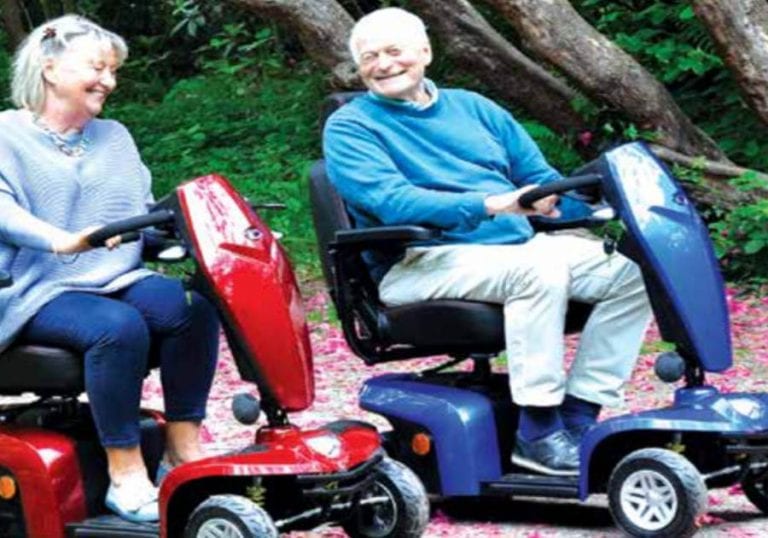
Road safety seems to have flow away as more people are reliant on the use of mobility devices as the population ages and there are even more mobility impairments and people having to relinquish licences. Many users of motorised scooters seem to have no sense of the road rules and drive them as if they own the road. In observation in the past few weeks there have been so many near accidents as regardless of footpaths the drivers ride on the middle of the road, manoeuvre around the round abouts in the middle of road, and then to top it all off riding across the bridge in the middle of the road causing a bank up of traffic.

WHEELCHAIRS AND MOBILITY SCOOTERS A GUIDE FOR SAFE TRAVEL IN QUEENSLAND

The Queensland road rules A person with a mobility impairment who uses a wheelchair or mobility scooter is a pedestrian under the Queensland road rules. By law, wheelchairs or mobility scooters used by people with a mobility impairment can go anywhere a pedestrian can go, such as footpaths, shopping centres and nature strips. Road rules that apply to pedestrians also apply to wheelchair and mobility scooter users. These are: Footpaths: Wheelchairs and mobility scooters can be used on footpaths, bicycle paths, shared paths and nature strips (such as grass verges between the footpath and the road). Footpaths must be used wherever possible to avoid riding on the road.

ON THE ROAD:

You must not use your wheelchair or mobility scooter on the road in the same way as a car. A wheelchair or mobility scooter can only be taken on the road if there is no footpath, pathway, or nature strip available, and only where a pedestrian is allowed to walk. If you do need to use the road, stay as close as possible to the side of the road, and travel in the opposite direction to traffic so you have good visibility. If you need to cross a road, always cross at the safest possible point. Use pedestrian crossings, traffic lights or refuge islands if available. You must obey all traffic signals intended for pedestrians.

SAFETY TIPS ON FOOTPATHS AND ROADS
• Travel at a speed suitable to the conditions.
• Use streets with footpaths or other off-road pathways, where possible.
• Try to avoid hilly routes if an alternative route is available because these use more power and may be more difficult to navigate safely.
• Make turns slowly.
• Approach ramps and kerbs head-on.
• Be careful around parked cars.
• Be aware that your smaller size often makes you less visible.
• If you have a battery power gauge, be mindful that the second half of the battery is drained more quickly than the first half. As visibility on roads and paths is often poor at night, try and make sure pedestrians and motorists can see you. • Wear brightly coloured clothes.
• Display a white light at the front, a red light at the back and reflectors for times when there is less daylight. Wheelchairs and Mobility Scooters Wheelchairs and Mobility Scooters: A guide for safe travel in Queensland Booklet available from Department of Main Roads

Beyond Dental

AT SANDSTONE POINT DENTAL, THEY’RE NOT ONLY CHANGING THEIR NAME, THEY ARE CHANGING THE WAY PEOPLE PERCEIVE DENTISTS – One patient at a time!

Sandstone Point Dental is currently undergoing a name change. Soon they will be Beyond Dental Care, which is a perfect name for this dynamic team as they certainly go above and beyond when looking after their patients.

A common reason that patients neglect their dental health is through dental fear. They want to change that by creating exceptional experiences through a team that really cares! Their mission is to change the way that Australians perceive dentistry, by giving everyone access to affordable, quality and compassionate treatment that gives them the results they need! Their trusted team of extensively trained dentists and highly-experienced auxiliary staff are dedicated to doing whatever it takes to deliver greatlooking smiles in a relaxing and caring environment. The professional team of dental clinicians are committed to catering to your dental needs in a personalised manner. Treating everyone like they would like to be treated themselves, and take the time to make sure you are looked after and not just treated like a number.

The Child Dental Benefits Schedule (CDBS) allows eligible children between the ages of 2 to 17 years, access to benefits for basic dental services. Eligible children are provided with a benefit entitlement which is over $1000 per child over a two-calendar year period. Beyond Dental Care accepts all children eligible for the CDBS scheme and will bulk-bill the services directly to Medicare.

The dedicated team are patientfocused, modern and state of the art Dental Surgery located in “The Village”, the heart of Sandstone Point. Servicing the local Sandstone Point and surrounding communities, including Bribie Island, Ningi and Caboolture.

They are currently welcoming new patients, and are looking forward to welcoming you to the practice. Call the office today on 5429-5628 or book online to schedule your appointment!

Help your children see clearly

IT’S THAT TIME… BACKPACKS AND LUNCH BOXES AT THE READY, SCHOOL IS BACK IN SESSION! SEEING FRIENDS AGAIN IS AN EXCITING TIME FOR OUR KIDS. SADLY, AROUND 1 IN 5 CHILDREN HAVE UNDETECTED VISION PROBLEMS THAT CAN HINDER THEM REACHING THEIR FULL POTENTIAL. DESPITE THIS 30% OF PARENTS HAVE NEVER CONSIDERED HAVING THEIR CHILD’S EYES TESTED.

When was the last time your child’s eyes were tested? Do you think that there’s no need unless your child complains of difficulty seeing? Before children are diagnosed with a vision problem, they may think the way they see is normal – in many cases, they simply don’t know the difference between clear vision and the way they see. Our learning journey in school is driven in most cases by our ability to see clearly. With so much of learning visual-based, it is important to have your child’s vision in order.

Throughout their young lives, kids’ bodies change at a practically dizzying rate– and their eyes aren’t necessarily exceptions.

Optometry Australia and Eye Envy Optometrist recommend children have a full eye examination with an optometrist before starting school and regularly as they progress through primary and secondary school.

SIGNS TO LOOK FOR INCLUDE:
– Frequent blinking
– Red or watery eyes
– Difficulty concentrating
– Hovering or closing one eye
– Holding a book very close to read
– Squinting or sitting very close when watching TV
– Complaints of headaches
– Complaints of blurred or double vision

Recent studies and investigations have found that during quarantine and extended periods of homeschooling the rates of myopia or short-sightedness have increased. There is great importance in balancing the time that children spend on screens and devices with their time outside in sun to reduce the development of myopia and slow its progression.

If you suspect your child has a vision problem or you have never had your child’s eyes examined, please see us. Eye Envy Optometrist recommends children get their eyes tested before starting school and regularly as they progress through primary and secondary school. You can call us on 5432 3077 to book a bulk billed comprehensive Eye examination four your child.

Lions Club Australia Dig Deep to make a Significant Difference for Prostate Cancer Diagnosis

Generous donors, clinical experts, and collaborative researchers have come together to make a difference in the lives of more than 21,000 Australian men diagnosed with prostate cancer each year.

Following a partnership with Mater spanning more than 20 years, Lions Clubs Australia has generously donated $450,000 to the Brisbane Mater Foundation to purchase the BK3000 – a new targeted ultrasound system designed to enhance precision when it comes to prostate cancer biopsy and diagnosis.

Positive outcomes for patients with prostate cancer usually rely on early diagnosis and the disease being localised to the prostate. Biopsy alone cannot accurately map all locations of cancer within the prostate, which is why ultrasound imaging has emerged as a vital addition when assessing the exact location and extent of cancer.

With ultrasound machines like the BK3000, Mater clinicians can be incredibly specific and definitive in their diagnosis, which in turn enables enhanced treatment options for patients.

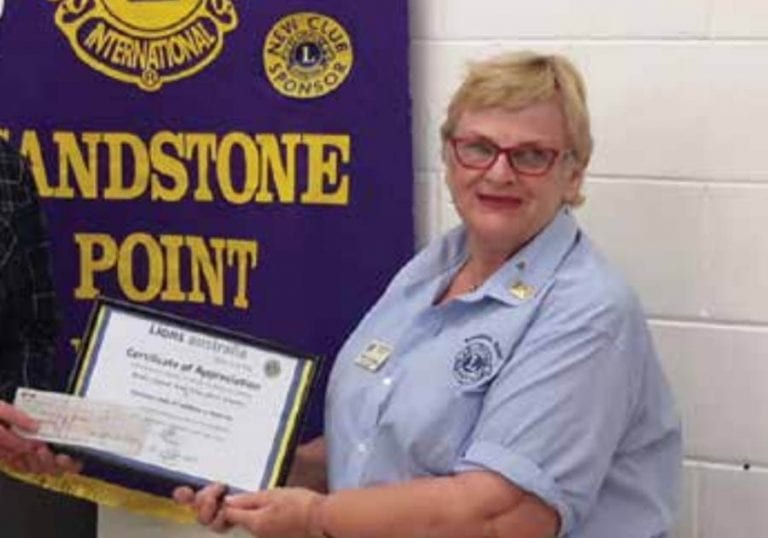
Local Lion of 20 years and Life Member Andy Fitzgerald knows only too well the importance of donations of this magnitude as she also happens to be a Mater health professional. She said “I know how much difference Lions make on the ground. To quote the lead of Queensland’s Lions Prostate Cancer Research, Treatment and Support Project it is a great honour to know we can make a difference to the outcomes of those facing prostate cancer right across the spectrum of prevention, awareness and treatment, she said.

Lions clubs throughout Australia are always looking for new members to help further the great work they do in supporting organisations such as the Mater Foundation.

However, support, first and foremost, starts in your own backyard and that’s where your local Lions shine. Whether it’s providing shelter and a safe environment for local people suffering abuse and homelessness or other much needed vital support or, on a greater scale, raising money for medical research, the support you give your local Lions is welcomed and it is not just financial assistance that is needed.

If you think you’d like to help your local community and have fun while doing it, why not come along to your local Lions and find out what being a Lion is all about.

The Sandstone Point Lions Club is a very social club whose members believe the work you do for Lions must be fun. According to Sandstone Point Lions President, Keith Hadley, “In some ways, we’re a social club that does Lions work.”

TO FIND OUT MORE, PLEASE CONTACT ERIC BANHAM ON MOBILE 0435 017 752.

Winelander – January 29, 2021

Another year begins and the lockdown problems continue if we were expecting a magic wand to sweep away all our problems then we should be disappointed, I wore my mask as instructed for the first time this week yet above the island in Caloundra our Sunshine Coast cousins live a relatively normal life, ah that’s life but I doubt whether our U.K. friends appreciate the name U.K. virus!

As the dust of Christmas and New Year settles down we look forward to celebrating Australia day and the first vines that started to arrive in Australia carried by James Busby and friends, not to be confused with the name used by Coles for their house brands on the shelves in Liquorland and First Choice Liquor Superstore outlets!

James Busby was born in Edinburgh Scotland and then later emigrated with his family to New South Wales in 1824 and on his arrival was appointed a teacher in viticulture at the Male Orphan’s School at Bald Hills near Sydney. After receiving a grant of land from The Governor he chose a block in the Coal River area in The Hunter Valley region which eventually became one of the early wine-producing areas in Australia.

In 1831 Busby returned to England before visiting Spain and France to continue his studies in viticulture returning in 1832. In 1833 he was appointed to the position of British Resident in New Zealand and went to The Bay of Islands where he planted some of the rootstocks he had collected on his visit to Europe and began making wine there before his vines were productive in Australia.

Other settlers had tried to produce wine prior to Busby and wine was available commercially for consumption in 1820 even being exported back to The U.K. in 1822 by Gregory Blaxland who was the first winemaker to win an overseas award. In 1833 Busby arrived back in Australia with a serious selection of vine cuttings including mostly French grape varieties mainly for fortified wine production. The quality of winemaking in Australia was improving as more settlers from winemaking regions arrived, for example, emigrants from Prussia established winemaking in The Barossa Valley north of Adelaide and on a smaller scale winemaking was established in Geelong by winemakers from Switzerland.

Early winemaking struggled with the new climatic conditions the winemakers faced here in Australia however, in 1873 at the Vienna Exhibition at a blind wine tasting Australian wines were praised by the judges for their quality making which was later rescinded when the wines were found to be from Australia when the judges thought they were from France!

Australian wines continued to make strides at French wine shows and a Victorian Syrah (Shiraz) entered into the 1878 Paris Exhibition was likened to a Chateau Margaux which was great praise indeed. Wines continued to win Gold Medals in France until the industry was brought to its knees with the attack on the vines by Phylloxera a mite which attacked the roots of the vines killing the vine.

After recovering from this setback the Australian wine industry continued to grow to the 140 million cases produced annually today although there have been hiccups over the years notably in the 1980’s when a wine lake was created by overproduction resulting in thousands of vines being pulled out only years before our wines were discovered by the wine drinkers of England and we couldn’t produce enough to satisfy their thirst, especially Jacobs Creek wines, and until more vines had been planted.

Thanks to the vision of emigrants such as James Busby we have a vibrant wine industry that continues to move forward planting exciting new varieties to combat the changing climate although in recent years a new danger in bush fires has emerged and of course the dreaded tariff word imposed recently by the Chinese in an attempt to punish us for being outspoken on the virus, I am sure this will only drive us to look for new markets to enjoy the great wines of Australia in the future.

I bought some wines through ‘Naked Wines’ an online wine service and a selection from a winemaker in the West who was the senior winemaker at Evans and Tate, Brian Fletcher. I first met Brian at one of The Wine Press Club meetings where I was a committee member for around 15 years and during his time with Evans and Tate won many medals before he moved to Margaret River to form a partnership with The Calneggia Family who are major vineyard developers and owners in The Margaret River region.

Naked Wines provide the capital to make wines under the Naked Wine labels and the wines I have recently received made by Brian are outstanding. To date, I have enjoyed the Chardonnay which is excellent having aromas of rockmelon with a vibrant fruit finish and the Cabernet Merlot which again shows the outstanding winemaking talents of Brian. I eagerly look forward to opening his “El Cid” Tempranillo which I cannot believe no-one has used that name before especially in Spain!

Here’s hoping for a very different 2021, and here’s to the good drinking friends of the grape thank you for your support and I hope you continue to enjoy these articles.

The Bribie Islander Gloss Magazine January 29, 2021 Issue 132

Issue 132 OUT NOW. Get all your community news and information. Bribie Islands only community gloss magazine NOW EVERY TWO WEEKS! – Articles on boating, camping, fishing, life, drama, travel destinations, sports and what to see and do on Bribie Island. Covering charities, organisations, places, children’s activities, arts and crafts, tourist destinations, heritage parks, technology, science, music, gardening, and much more.

Download latest digital edition here.

Fishing Report – January 29, 2021

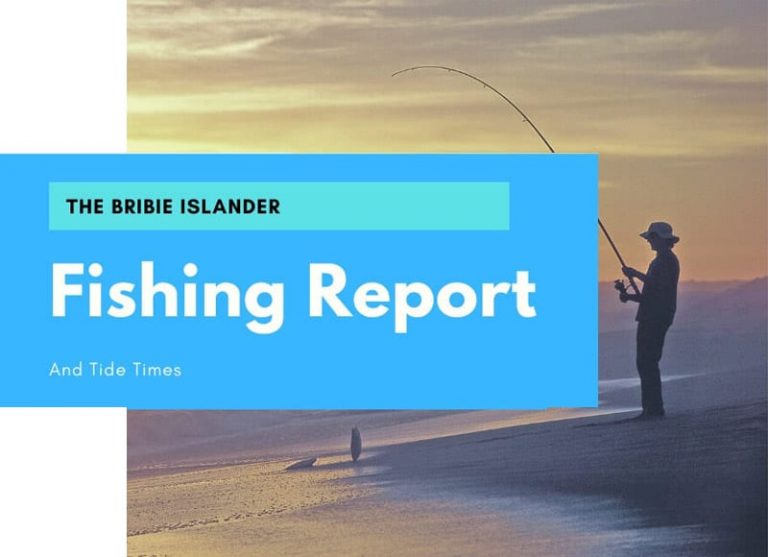
Hi everyone! We are nearing the end of the school holidays for another year hopefully you have all had time to relax and go fishing. Despite plenty of rain and wind, I’ve had good reports coming in with some excellent catches. The school and spotted Mackerel have been giving anglers plenty of fun around the channel markers live Herring and floating pilchards have been doing the trick. Also, small silver slugs with a fast retrieve are working. With the rain, the prawns are in big numbers and not far behind them are Trevally, Mangrove Jack, Bream and Queenfish. Target these around the canals and creeks on an incoming tide seems to be the best time. Also using surface lures to target these is a great way to get some action. There’s some really good Squire around the ripples and the odd Mulloway drifting with fresh Squid or Cuttlefish has been the choice baits. Flathead has been in good numbers around the flats at Buckley’s Hole and the fish trap at Sandstone Point, soft plastics with a slow roll and pause working, shrimp patterns like the atomic prong 3 inches are the go-to plastic and the Zman slim swim. Come check out the new colours we have in stock. Anyway, that’s all, for now, stay safe wet a line and relax.

Pioneers grow Cotton & Sugar

Long before anyone or anything was happening on Bribie Island, in the 1860s pioneer settlers tried first to grow cotton, and then sugar, on the Caboolture River. They had much to learn in that early “multicultural” environment. George Raff was a businessman and politician who had emigrated from Scotland to Sydney in 1839. He married the daughter of a retired missionary and moved to Brisbane in 1851 for new trade and investment opportunities. His house in New Farm he named Moraybank, a reference to his native Morayshire in Scotland.

Raff helped to establish direct wool trade between Brisbane and London. As a politician, he campaigned for the separation from NSW and served as a member of Queensland’s first Parliament.

With others, in 1861 he set up the Caboolture Cotton Co., one of 10 cotton companies established in Queensland, using expensive imported equipment.

MORAYFIELD
Raff built the large plantation homestead beside the Caboolture River, on a slight rise to protect from flooding, with outhouses, separate kitchen, carriage house and stables. The large property, he named Morayfield, was on rich alluvial soil, surrounded on three sides by the Caboolture River.

With 120 acres of cotton crops, it suffered severely in disastrous floods of March 1863, after which they soon switched from growing Cotton to Sugar.

OATLANDS
In the same year, Captain Claudius Whish, ex Indian Army, also established an adjacent property, which he named Oatlands, further up the Caboolture River.

The bridge over the Caboolture River, on the Bruce highway, is called Cpt. Whish Bridge, passing through the original Oatlands property.

KANAKA LABOUR
These plantations were substantial undertaking, in what was then a very remote area of European settlement.

Access by land was difficult and everything came by steamships up the winding Caboolture River. Sugar cultivation, processing and distilling became well established. Several kilometres of cane transport Tramways were constructed, and by 1868, sugar exported by river steamer, and 18,000 gallons of rum was produced. Between 1863 and 1904, more than 62,000 Kanakas were brought to Queensland from New Caledonia and Vanuatu as cheap labour.

Plantations were isolated communities, police were often days away, and treatment was harsh. The Reverend John Dunmore Lang visited the Morayfield plantation in 1868, to report on the treatment of Kanakas, at what was then one of the largest sugar plantations in Queensland.

SUGAR GROWING STOPS
After years of regular flooding of the Caboolture River, sugar-growing stopped in 1884. George Raff died in 1889, equipment was removed, land subdivided, and by 1909 new owner James Buchanan ran the largest milking dairy herd in Caboolture district with 250 head.

He sent cream to the Caboolture butter factory and leftover milk went to fatten pigs The river flats were extensively flooded again in 1953. Raff’s old plantation house abandoned, and a new house built on higher ground. In 1960, APM Forests Pty. Ltd. purchased the land, and for the next 40 years, it was a Pine Plantation. In early 2000s work began on the extensive North Harbour Residential Development and Business Park.

HERITAGE PARK
Surviving remnants of the original plantation were recognised as culturally significant, added to the Queensland Heritage Register, and a Heritage Park established. Informative signage has been erected, Information centre built, guide brochure printed, and the facility is open daily to the public.

The stone steps of the original Plantation house can still be seen, and a gravestone stands as a silent sentinel on the riverbank to Levi Walker who was just 27 when he emigrated from Scotland to Australia in 1869. He found work labouring at Morayfield plantation but sadly drowned just six weeks later in the unpredictable Caboolture River.

DISPERSED
The term “Dispersed” was often used in official documents of early European settlement in Moreton Bay, in relation to Aboriginal people. They were fast losing control of their tribal land, and can only imagine the issues resulting from the arrival of Kanakas. Let me finish with an extract from a letter, dated 10 Oct 1861, from the Caboolture Cotton Co. to the Colonial Secretary.

NORTH HARBOUR HERITAGE PARK.
This is a little known new local attraction, created in partnership with the Abbey Museum of Art & Archaeology. I have recently taken members of the Historical Society and U3A for informative walks, with our guide Cheryl Thornley, a teacher’s aide at Bribie Island State School, who lived in the old Morayfield plantation house as a child in the 1950’s.

MORE BRIBIE HISTORY
The Historical Society meets on the second Wednesday of the month at 6; 30pm at the RSL Club. Visitors and new members welcome, with notification.

Blessing of the Fleet

THE BRIBIE ISLAND SAILING CLUB, TOGETHER WITH AN OUTRIGGER CANOE FROM BIMOCC, WEATHER PERMITTING, WILL BE HOLDING A BLESSING OF THE FLEET CEREMONY FOR THE BOATS IN THEIR CLUB.

This will take place between 9 and 10am on Saturday, 30th January 2021, with the boats motoring northwards from Sylvan Beach, past the VMR Pontoon. A Minister from St Peter’s Church, Bribie Island, will bless the boats as they pass the pontoon. Members of the public may be interested in observing the proceedings from the waterfront. The ceremony has taken place in the past on Bribie and the BISC is trying to revive this annual event. After the ceremony, the BISC will be sailing off to Mission Point for one of their regular events.

CASPIAN TERN – Hydroprogne caspa

Caspian Terns are a common sight roosting by the water’s edge or flying over the Pumicestone Passage, and at Woorim. During the summer months, many of them fly off to their breeding grounds so you are more likely to see them at other times. They are easy to spot as they are the largest tern in the world and can be identified by their very large, red bill. They are 53-58 cm long, weigh 400- 750 g and have a wingspan of 1.1-1.4 m. Wings are long and legs are short. Their backs and wings are grey and the feathers below are white. As they age their feathers become darker which makes it easier for experts to work out the age of the bird. During the breeding season, they have black caps with small crests on the tops of their heads. These become streaked with white during non-breeding times. Calls are deep and harsh. Male and female are similar in appearance. Their average age is about 12 years. The oldest recorded bird in the world was 32 years. When moving to their breeding grounds they often fly at 80- 100m above the ground.

Habitats are mostly in coastal locations all around Australia. Usually, they stay relatively close to the coastline and do not fly too far out to sea. They do venture inland and are often seen roosting and flying around lakes, dams, lagoons and rivers. I have sometimes seen a small flock roosting at the Spit on Somerset Dam. They are found in every continent in the world except Antarctica. Caspian Terns are usually sedentary but do fly off to breed and to follow sources of food when necessary.

Mornings are when they do most of their hunting. They are usually solitary predators and fly with heads pointing downwards looking for food. Fish from salt or freshwater are their main diet which is obtained by diving from about 15m headlong into the water with folded wings. They are often fully submerged when procuring their prey. The food is usually swallowed head first while in flight or taken to the nest to feed their young. Insects such as grasshoppers and dragonflies, the young and eggs of other birds and small animals are also a small part of their diets.

Caspian Terns mainly breed in the summer months but given the right conditions may breed at any time of the year. Usually, a new mate is selected each season but sometimes couples remain together for several years. Their courting rituals are interesting in that the male takes a whole fish, flies high overhead with it then presents it to the female of his choice. If she accepts they immediately become a couple and soar together into the air performing tandem aerobatics. Breeding mostly takes place in small colonies but also some breed in solitary pairs. Nests are made on sandy beaches and off-shore islands. These built by both parents are scrapes in the sand sometimes circled by scattered debris. One to three creamy splotched eggs are laid and incubated for 20-22days by both parents that then look after the young chicks. Babies are fed with whole regurgitated fish. Both parents become noisy and hostile if the nest is threatened by animals or people. To protect the babies from the heat the parents stand over them with wings outstretched creating a shady shelter. Fledging occurs at around 35-45 days but the young birds are fed by their parents for months afterwards sometimes as long as 8 months. Young birds first breed at about 3 years.

Their scientific name is taken first from an ancient Greek word – Hudros meaning “water” and a Latin word Progne meaning “swallow”. “Caspa” refers to the Caspian Sea where early ornithologists associated them with the Caspian Sea where they were common. Conservation status is secure in all states except Victoria where it is listed as vulnerable. World population estimated at around 50 000 pairs is probably stable and maybe even increasing a little. Like other shore-nesting birds, babies and eggs are unprotected against fourwheel drives, people and animals on the beach. The mortality rate is high and in some parts is as much as 62%.

Mediterranean Stuffed Chicken Breasts

Feta cheese, roasted peppers, spinach and more flavors from the Mediterranean fill these easy stuffed chicken breasts. Browning the chicken in a skillet before baking gives it a beautiful golden color, and finishing it in the oven ensures that this healthy baked chicken recipe cooks evenly throughout.

INGREDIENTS
1/2 cup chopped fresh spinach
1/4 cup Kalamata olives, pitted and quartered
1 tablespoon chopped fresh basil
1 tablespoon chopped fresh flat-leaf parsley
2 cloves garlic, minced
4 boneless, skinless chicken breasts
1/4 teaspoon salt
1/2 teaspoon ground pepper
1 tablespoon extra-virgin olive oil
1 tablespoon lemon juice

DIRECTIONS
Step 1
Preheat oven to 220 degrees C. Combine feta, roasted red peppers, spinach, olives, basil, parsley and garlic in a medium bowl.

Step 2
Using a small knife, cut a horizontal slit through the thickest portion of each chicken breast to form a pocket. Stuff each breast pocket with about 1/3 cup of the feta mixture; secure the pockets using wooden picks. Sprinkle the chicken evenly with salt and pepper.

Step 3
Heat oil in a large oven-safe frying pan over medium-high heat. Arrange the stuffed breasts, top-sides down, in the pan; cook until golden, about 2 minutes. Carefully flip the chicken; transfer the pan to the oven. Bake in a moderate oven for 20 to 25 minutes. Drizzle the chicken evenly with lemon juice. Remove the wooden picks from the chicken before serving.

Healthy Eating on a Budget

PLANNING IS THE SECRET TO HEALTHY EATING BASED ON THE AUSTRALIAN DIETARY GUIDELINES WHILE STICKING TO A BUDGET:

• Plan your meals and snacks for the week.
• Make a list and stick to it.
• Don’t shop when you’re hungry. (Not only does this limit unplanned purchases, it also limits unplanned kilojoules when you’re trying to control your weight).
• Spend most of your money on the Five Food Groups.
• Think hard about why you are buying discretionary foods and how much you really need to buy. This is especially important if you are trying to lose weight, because if you don’t buy it and take it home, it’s much easier to stick to your goals.
• If you would really like to have a high kilojoule food, buy the smallest amount that will satisfy you, the best quality you can afford and eat it slowly, savouring it with all your senses.
• Try to limit discretionary foods and drinks to special occasions and small amounts. Avoiding discretionary foods not only saves you money but the extra kilojoules too
• Drink water instead of juice or sweetened drinks, it’s free and has no kilojoules.
• Use what you already have, what’s in season and what’s on special. For example, almost any vegetable can be cooked in stock and pureed to make a delicious winter soup. Just add wholegrain bread and you have a meal.
• Freeze leftovers for other meals or for lunches.
• Use leftovers in different ways.
• Substitute ingredients.
• Use powdered skim milk in recipes.
• Make your own custards and milk based desserts using low fat milk and limit added sugar.
• Buy smaller amounts of lean meat, skinless chicken and fish and extend meals by adding legumes, extra vegetables and grains. By adding extra vegetables to meat dishes, you will also reduce the kilojoules in the dish.
• Know how you will use what you buy, how much and when.
• Only buy what you need.

The World’s Best “Computer”

EVEN RECOGNISED COMPUTER “NERDS” (AND GENUINE EXPERTS IN I.T.) MUST ASK THEMSELVES THE QUESTION, OFTEN: “JUST HOW GOOD IS THE HUMAN BRAIN?” IS IT THE WORLD’S MOST IMPRESSIVE “COMPUTER,” EVEN?

There is compelling evidence to suggest that it still is … despite all the “experts” telling us that as a species, we draw on less than 10% of our personal mental capacities… and I don’t doubt that assessment in the slightest. (Some suggest less than 5%, even).

The older I get, the more I am in awe of what the human brain is capable of – and that feeling of awe has been strengthened by my experiences in cobbling together several hundred thousand words in recalling (unprompted), and recording, memories back to my earliest childhood days, back to the mid-tolate1940s. And considering that I was born in 1942 that (I reckon) is a pretty fair effort.

The recall factor has stunned even me, on numerous occasions. I don’t claim any great level of intelligence to explain this; it just happened. But how is it possible for someone – anyone – to recall, so clearly, people and events dating back to the times when they (in this case, me) were only a handful of years old? It stuns me!

A FEW EXAMPLES ……

Just today, I was chasing up some details (on my man-made modern laptop computer) on a couple of old rugby league-playing mates who made the League “big time”, playing in the Sydney league in the 1960s and 70s. Inadvertently, I tapped into historical records of Sydney RL players back into the 1940s and 50s. Nothing “big deal” about that….. but what did surprise me greatly was that I recalled personal details(even where they came from and what clubs they played for) about players around the late 40s who were my “idols” when I first started playing footy at the age of six. That was when my reputation as a rugby league devotee – or “tragic”, as often described today – began.

• Throughout the scribblings of my family history and memoirs, I recalled (in quite specific and clear detail) incidents that occurred before I had even become of school-age (5 years, at that stage)….and that’s 73 + years ago, now

• Out of the “blue”, I recalled making (in my early-tomid primary school days) a boyhood version of today’s modern radio……a crystal set…..and lying in bed listening (late at night) to broadcasts of rugby league matches out of Brisbane and Sydney – and even Australia v England cricket Tests, out of England.

Someone much smarter than me (I don’t remember who!) told me how to make the crystal set radio and I just did what I was told. I didn’t understand, then, how and why it worked…. and I still don’t know. My brain just “clicked in” and produced the results, and so my experiences (and knowledge) of my two strongest sporting “loves”, rugby league and cricket, grew…..to linger for another 70+ years.

All this tells me that the brain “experts” are right in suggesting that we draw on less than 10% of our brains’ capacities …and I reckon that certainly applies to me!.

As an invention of “modern man”, computers need the input of human brains to record, store and recall the facts and events punched into them(by humans). So who punches the “what, where, when, how, and why” of our life’s experiences and memories into our brains for later recall, so extensively and so accurately? THINK ON IT!