Whenever we stop for coffee during or after rides, the members of Bribie Island Bicycle User Group (Bribie BUG) contribute donations to help a local charity of our choice. We have been supporting the Bribie-Moreton Hospice Health Services for two years now and our members recently voted to continue this support for another year.
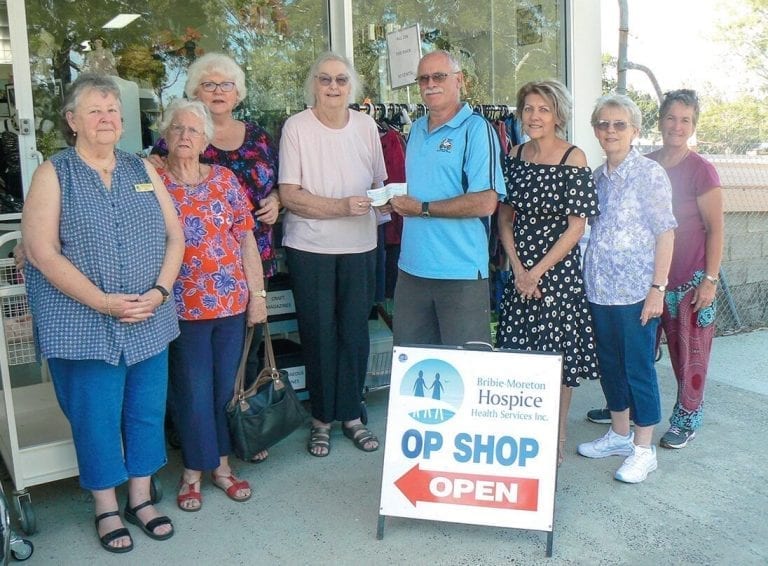
Featured Image(above): (From L to R) Nell Baker, Hospice Op Shop Manager Joan Harrison, Hospice Committee, Member Lyn Stevens, Hospice Committee Member, Joan Cornett, Hospice Vice President Leo Boonstoppel, Bribie BUG President Kerrianne Hickman, Hospice Committee Member Maree Cunningham, Hospice Honorary Secretary Linette MacFarlane Bribie BUG Member.
Over the last year, our members donated $939 which the club rounded up to $1,000. On 26 September members of both the Hospice committee and Bribie BUG gathered outside the Bribie Hospice Op Shop to see our President Leo Boonstoppel present a cheque for this amount to the Hospice Vice President Joan Cornett. Bribie BUG was formed to encourage bicycle use on Bribie Island and to help cyclists meet each other and ride together to explore Bribie and other areas on the mainland.
We also seek to improve conditions and facilities for cyclists on Bribie. Bribie BUG holds regular weekly rides for members and visitors. Rides currently leave from the Information Centre on Benabrow Avenue, Bellara at 8 am on Mondays and Saturdays and 6 am on Wednesdays, weather permitting.
Bribie BUG’s free annual event for cyclists of all ages, Ride Bribie Island 2019, is coming up on Sunday, 27 October at Apex Park, Bongaree with rides of 40km, 30km, 20km and 10km on offer. Contact Bribie BUG at [email protected] or phone Isabel on 5496 8661 for more information.
OzFish Unlimited is partnering with RMIT, a leading Australian tertiary institution and global university of technology and design, on their Pesticides Detectives program. This is a national Citizen Science research project investigating the occurrences and concentration of pesticides in Australian waterways.
It is funded by the Department of Industry, Innovation, and Business and undertaken by the Aquatic Environmental Stress Research Group (AQUEST) based at RMIT University. The goal of the project is to provide communities across Australia an opportunity for involvement in a simple, yet meaningful monitoring program where they can learn about the health of their local waterways and have an awareness of the pressures placed on them, while also providing valuable data on the quality of Australia’s waterways in respect to pesticides.
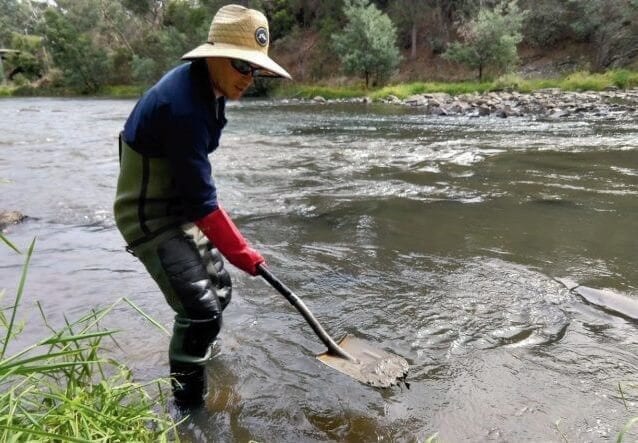
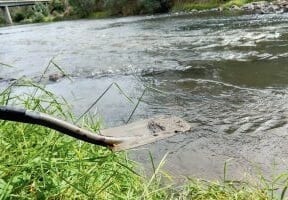
Ozfish members will collect samples from very fine muddy sediment to send for testing.
Of primary concern is the ever-increasing use of chemicals in our everyday life, and the risks they pose to the health and beneficial uses of waterways. Pesticides are one group of contaminants increasingly being detected in waterways across Australia and worldwide. They are chemical compounds that are used to control, prevent, kill, suppress, or repel pests. “Pesticide” is a broad term that includes insecticides (insect killers), herbicides (weed or plant killers), fungicides (fungus killers), rodenticides (rodent killers), growth regulators, and other materials like miticides, which are used for mite control, or products that kill snails and slugs (molluscicides).
There are thousands of different pesticides in use today in and around houses, shops, offices, storerooms, sheds, gardens, farms, pastoral stations, and many other places. The project will advance our knowledge base on the state of Australian aquatic environments, providing data to inform on priority pesticides of concern at local, regional and national levels. Our local Ozfish Pumicestone Passage Chapter is assisting in the program in conjunction with their reef-building and improving the oyster presence in our passage.
For more on this or any other Ozfish activities, e-mail [email protected].
Tags: Famous People. Actors. Mr Dance. Celebrities
An odd word, ‘sexyful,’ but somehow more powerful and descriptive than ‘sexy,’ and if that word applies to anyone, it does more so to the dashing Charles Dance, than any other show business celebrity I have ever met.
As we are having a tête-à-tête in London in 1986, sitting on a traditional S-shaped English loveseat, facing each other, but retaining that modest barrier between us, the blonde Charles Dance originally from Worcestershire, oozes such sex appeal that it is almost intimidating, yet inoffensive because there is no arrogance, just a friendly bubbling self-confidence. This has taken me by surprise, as Dance is nothing like his image: the archetypal, glacial Englishman – reserved and distant, introspective and infinitely private. Instead, he is breezy and waves his arms about a lot when making a point. But an even greater surprise is that everyone calls him Charlie.
At 40 he is a family man with two children, Oliver 12 and Rebecca six. “I’ve never had a chip on my shoulder,” the slim, 190cm tall Mr. Dance assures me, “although I did start to think I was ready for better parts about five years before I got them!” His acting skills, whether the perfect villain or shrewdest politician, are so incredible, that Charles is never short of work. This year he has three major movies released – Shirley Maclaine’s OUT ON A LIMB, in which he stars as the mysterious MP lover; Eddie Murphy’s, GOLDEN CHILD, where he portrays the sly devil; and as a film director character in GOOD MORNING BABYLON.
But it is only 2 years ago in 1984 that Charles soars high as the star of TV’s JEWEL IN THE CROWN, while his acting debut in the original mystery TV series FATHER BROWN, dates back to 1974 and his cinematic debut FOR YOUR EYES ONLY to 1981. “We all like our egos pampered from time to time,” he chuckles with warmth in his voice, “but I don’t read a part like Guy Perron in THE JEWEL IN THE CROWN, and think that’s going to turn me into a sex symbol. “I’m not a star.
I regard myself as a character actor because if you’re going to call yourself a star, you have to continually produce something that is instantly recognizable and I don’t want to do that.” He must be one of the most prolific performers ever as the decades go on, for Charles will have done over 180 movies, TV series, and programs, live theatre performances, narrating audiobooks, video games, and documentaries, including six episodes of National Geographic’s Savage Kingdom – their most expensive WILD TV series ever.
Tv Series
Dance’s villainous faces in days to come
Helly’s 1986 Living Magazine Interview
The movie he directed and for which he wrote the screenplay
National Geographic’s Most Expensive Wild Series
Striking Film In Kenya
But he has not always been this confident he admits nostalgically. “As an adolescent, I didn’t have acne or other teenage problems. Instead, I developed an unexpected, awful stammer. And so, I got stuck with a label – stammerers’ aren’t supposed to be very bright. My confidence slid away. I suppose I was lucky, because when I turned 18 my stammer disappeared over three weeks, as strangely as it had come.” So, Charlie lost his ‘stupid’ label and his confidence gradually returned.
But acting is just one of Charles’s deep-seated and amazing talents: With both screenwriting and directing films, encouraged by his having studied graphic design and photography, he will choose Judy Dench and Maggie Smith for my favourite, and his most successful screenplay and directing box office movie, LADIES IN LAVENDER. Dance will also win the PARIS FILM FESTIVAL AWARD FOR BEST ACTOR in the Canadian KABLOONAK one of his most impressive movies while accomplishing his biggest dream: travelling.
But right now, the man who always surprises his audience with each different villainous role only wants to talk about labels, not his next starring movie, WHITE MISCHIEF, the erotic Murder mystery drama in Kenya, with GRETA SCACCHI, nor the future. “I believe you must ignore labels. They are hard to live with for everyone. When people have a certain image of you, even when it has been made up by someone else, they still assume it’s a label you have put on and you are proud to wear.”
“So then you are obliged to uphold that image, and when you do something out of character, people begin to tear you apart because you’re not what you are supposed to be – even though you never said you were that in the first place.” “It does present a problem because instead of having to live up to your own expectations – which is difficult enough – you have to live up to other people’s. It’s not on. You should always insist on being yourself.” His looks don’t concern Charles either, but his both distinctive and distinguished voice, once heard is never forgotten.
“Look at me – I’ve got an odd face. For a start my nose is bent. If I blink with these heavily hooded eyelids it’s like barn doors closing. If I have a single late-night, the lines under my eyes get darker still, the bags heavier and the angles from which they can photograph me even more limited.” He isn’t fishing for compliments. He means it and believes he is plain. “It’s not a classical looking face. I just don’t have film star looks.” None of which has stopped him being hailed Britain’s answer to Robert Redford. Dance shakes his head in dismay.
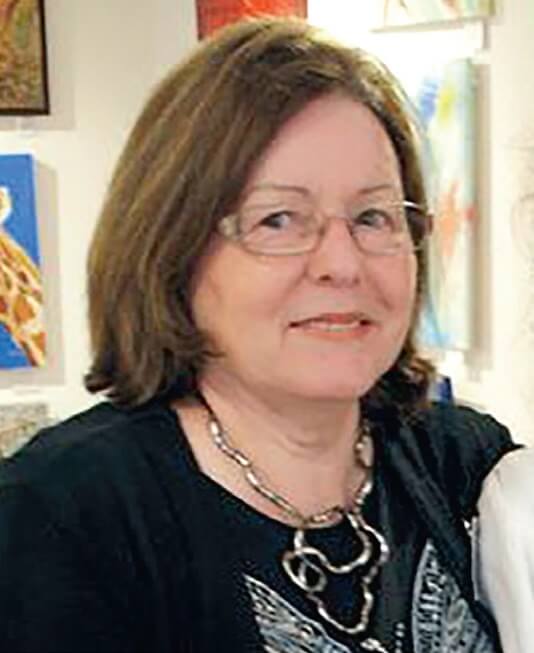
BICAS October Artist of the Month, Trudy Brooks claims her love of art developed while studying at high school and teachers’ college. Now living in Dayboro, she was born in England but has spent most of her life in different areas of Queensland. During this time, she took the opportunity to attend as many workshops as possible, including programs organised by the Flying Art School and the University of Southern Queensland.
Trudy has tutored watercolour classes for the Redcliffe Art Society for the last few years. She loves that watercolour paint appears to have a mind of its own which the artist can utilise to enhance the creativity of the work. Her inspiration comes from our brilliant Australian watercolour artists like Greg Allen, Alvaro Castagnet, Joseph Zbukvic and David Taylor. She says she is fascinated by the way these artists use the white of the paper to capture light in their works.
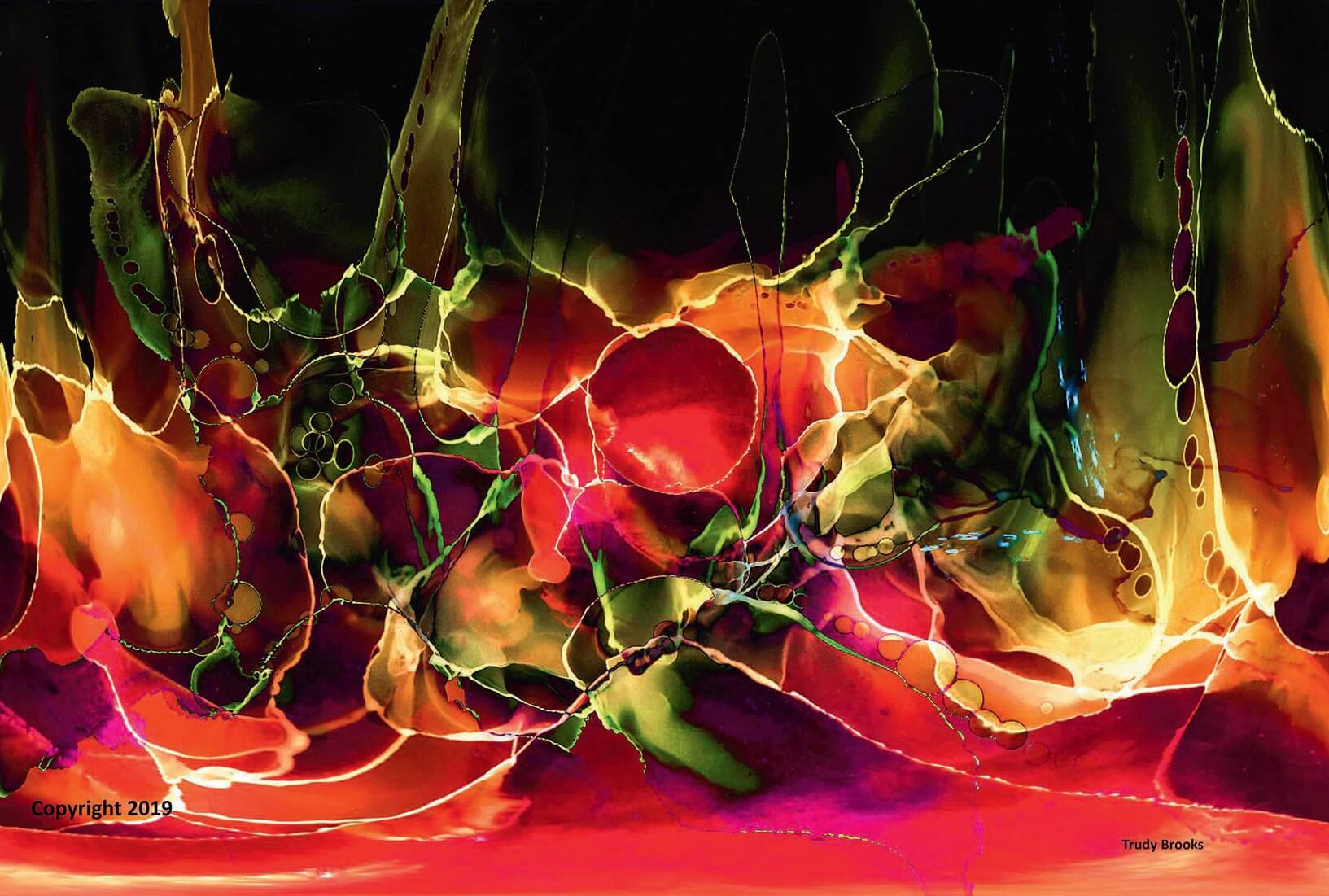
Dancing Light
TRUDY BROOKS
Trudy’s art ranges from conventionally realistic to intuitive abstracts. She likes to experiment with different media and substrates, in oil, acrylic, watercolour, alcohol inks and mixed media. Recently she has also had success in competitions with her digital art. Her passion at present is experimenting with ways to combine digital art with other media including alcohol ink. Examples of Trudy’s work can be seen on her facebook page, Trudy Brooks Art.
Meet Trudy over morning tea at Bribie Island Community Arts Centre on Friday, October 25 at 10.30 am and hear her speak about her art journey. Book for catering on 3408 9288.
Tags: History. Bribie Island. Moreton Bay. Brisbane. Queensland. Australia.
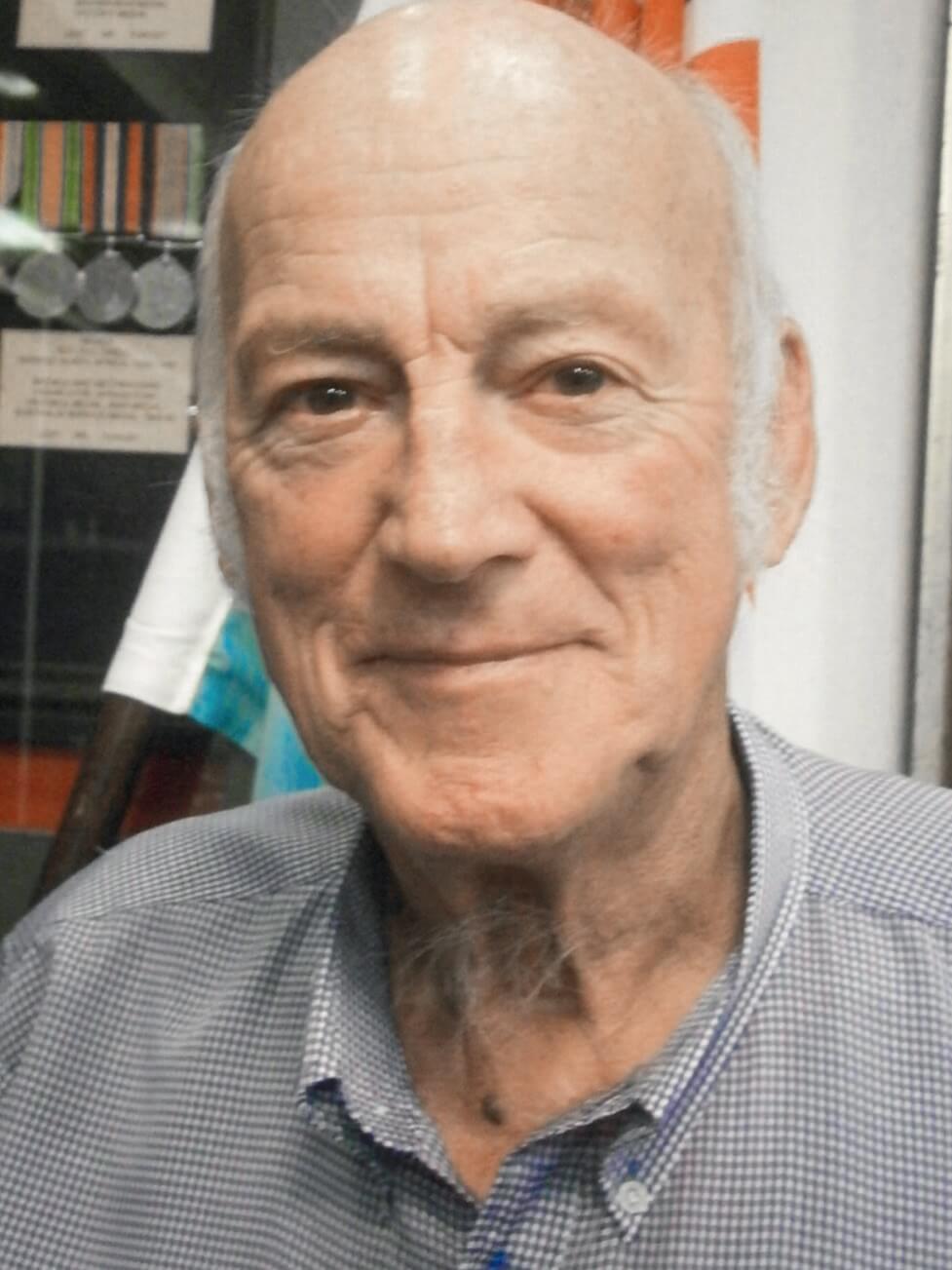
The new settlement of Bongaree opened to residents 107 years ago in 1912. Descendants of one of the pioneers and business family have recently returned to live on Bribie. The Bribie Island Historical Society is delighted to welcome Trevor Sutton as a new member of the Committee, as he has family links back to those early days. This article tells his story.
In 1926 John Moyle and his wife Georgina moved from Roma to start a new life on Bribie Island running the “Carlton House” guest house in Banya Street. The Moyle family stayed on Bribie for more than 25 years’ running accommodation and later the café kiosk beside the Jetty.
THE MOYLE FAMILY STORY
In 1926, just 14 years after the construction of the Jetty at Bongaree, John Mathew Moyle together with his wife Georgina made a break from their farm near Roma to start a new life on Bribie Island. The following advertisement appeared in the Brisbane Courier-Mail, on Saturday 10th April 1926 soon after the Moyles arrived on Bribie.
BRIBIE “CARLTON HOUSE” the oldest and most up-to-date boarding house on the island, visitors are assured of the best attention, combined with cleanliness and good table. Mrs J. Moyle, ‘Proprietor.”
In those early days, there were only five guesthouses on Bribie offering basic accommodation for a maximum of 85 people, when the resident population was only about twice that. Most of the thousands of regular visitors from Brisbane camped in canvas tents they brought with them and erected along the foreshore at Bongaree.
Trevor Sutton
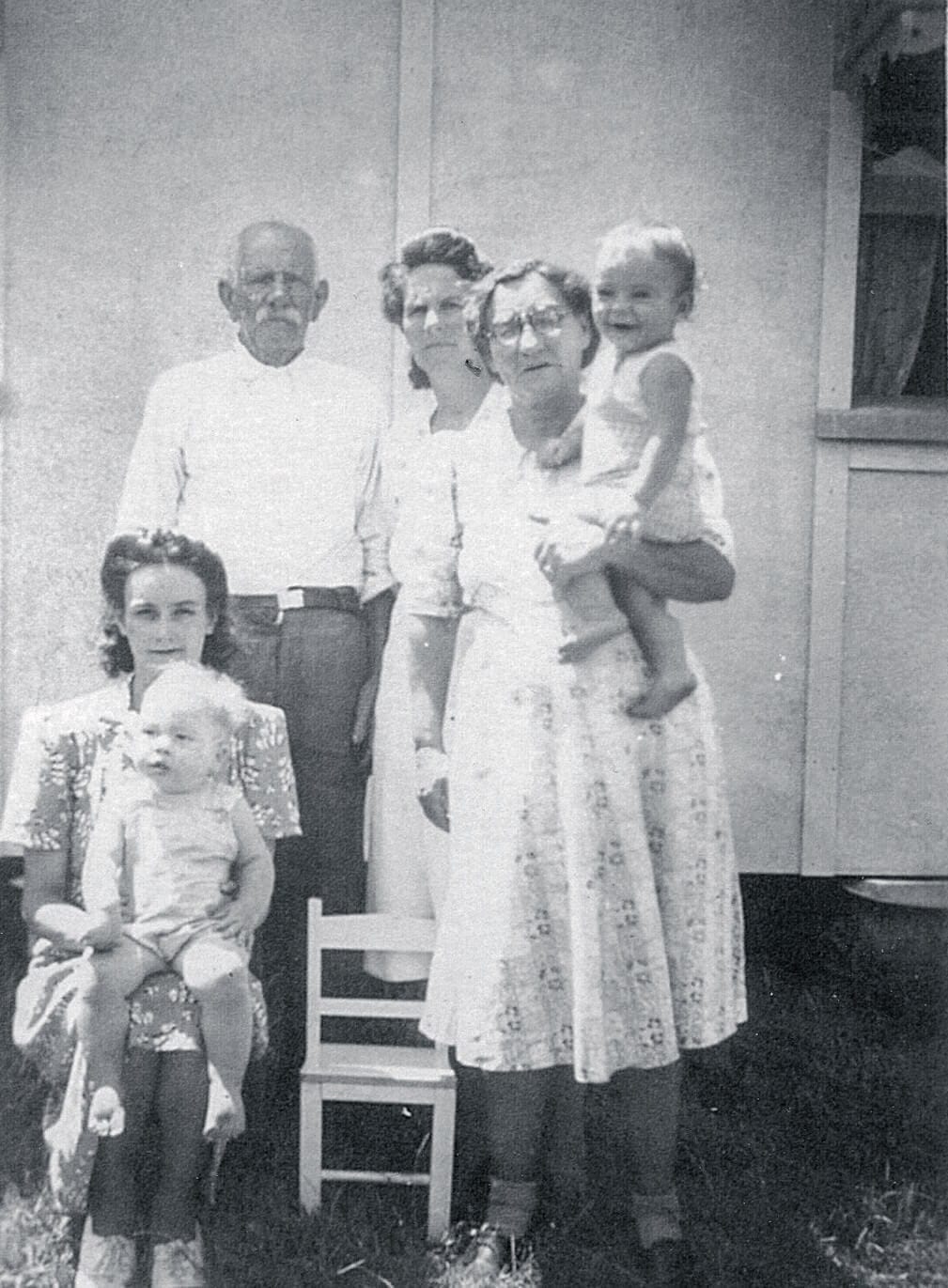
Moyles Family photo 1940’s
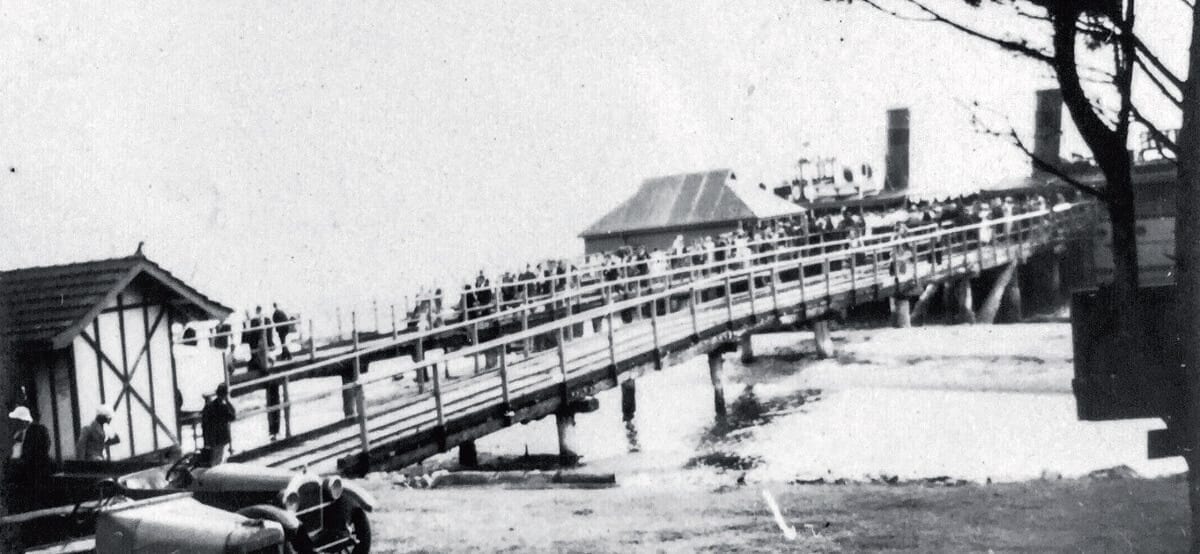
BRIBIE TOURISTS in 1920’s
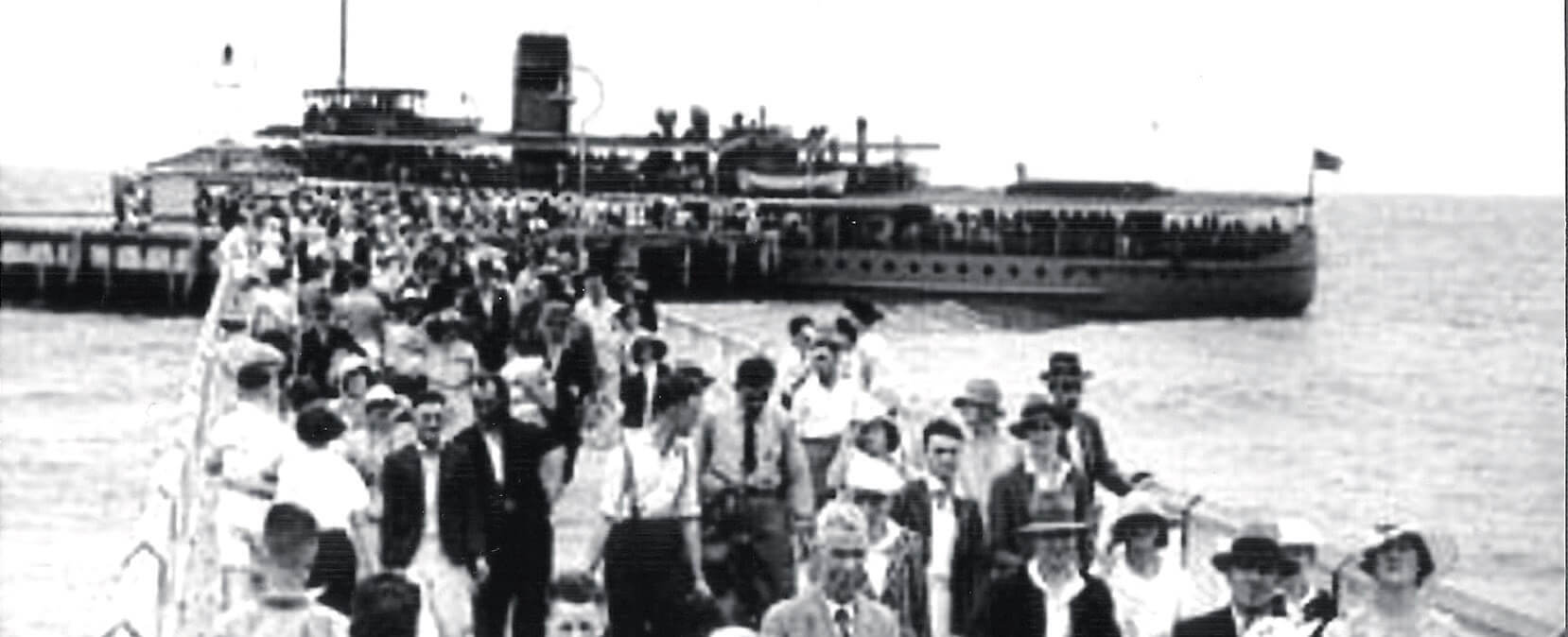
Leasing a Café Kiosk at the Jetty, the Moyle’s were heavily involved in early tourism. Cooking “Hot Fish Dinners” beside the Jetty they serviced the hundreds of visitors in the kiosk, dining room and guesthouse at the Jetty, as the regular Steamships Koopa and Doomba unloaded passengers after the three-hour trip from Brisbane. Their great-grandson Trevor Sutton and his wife Lilian have recently moved from Tasmania to retire on Bribie and bring valuable historical connections to the early pioneer days when Bribie had just a few residents, but many hundreds of regular visitors.
As a young boy, on holiday with his parents from Roma, Trevor Sutton remembers visiting his very old Great Grandfather. Trevor recalls some of these memories… “He was preparing for the arrival of his customers of the Steamship by firing up a couple of water boilers to make hot tea in four-gallon kerosene tins, then sitting back in an armchair with his penknife and plug of tobacco for his pipe”. The Moyle’s had a great reputation for their fish dinners and were exceptionally busy when the boats arrived at the Jetty.
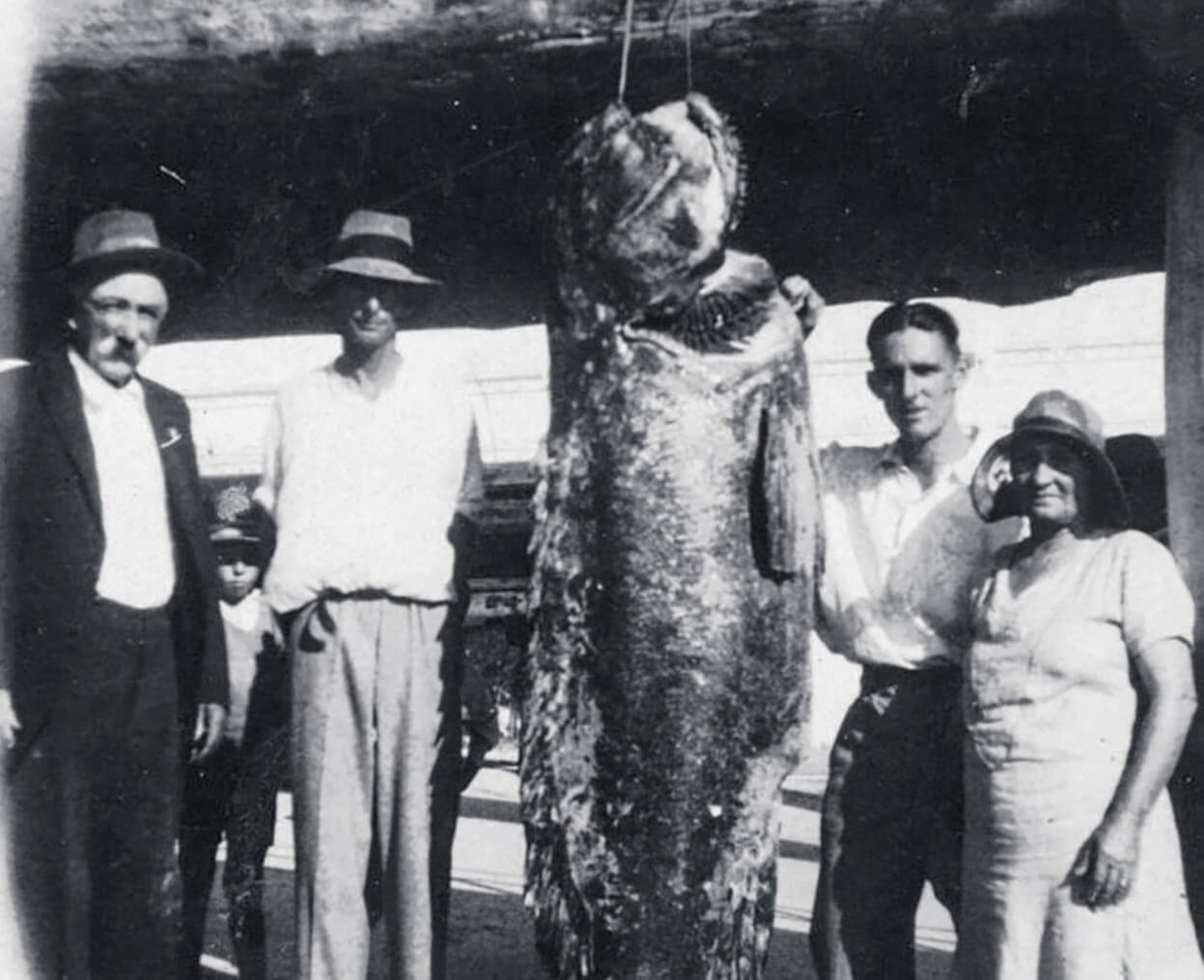
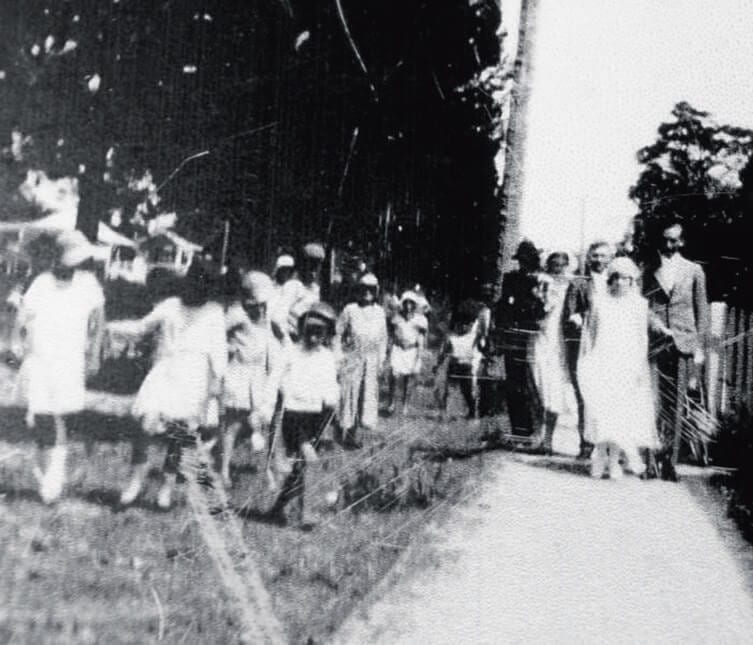
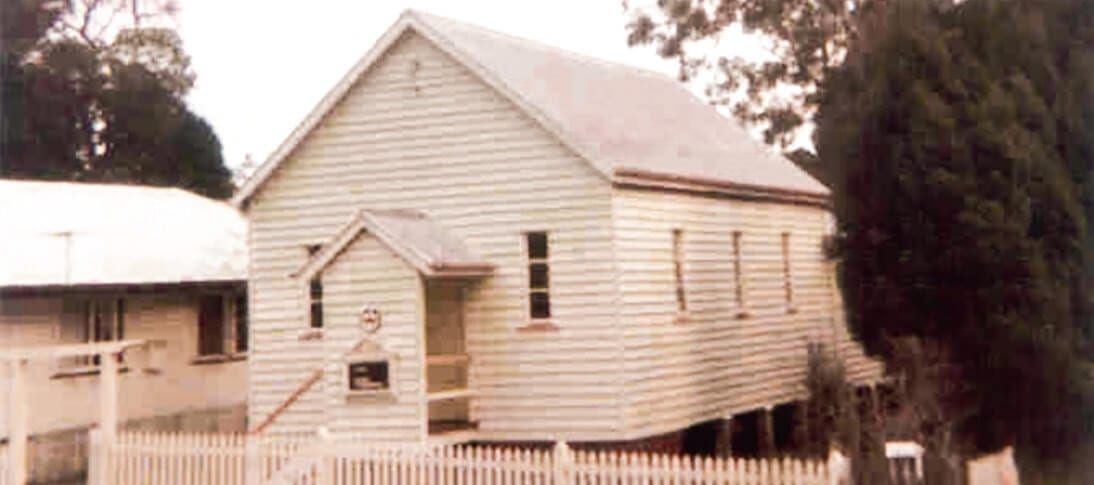
Members of the family often helped out, including daughters, Alice, May, Doris, Cate, Amy, and sons John and Edwin. There were amazing numbers of very large groupers caught from the jetty and the Moyles witnessed many strung up close to their kiosk. Edwin Moyle married Mavis Shields, another pioneer Bribie family, and were the first people married in the new Methodist Church on Bribie in 1928. The church had been a school at Narangba and Deception Bay, before being transported to Bribie and reerected in Banya Street.
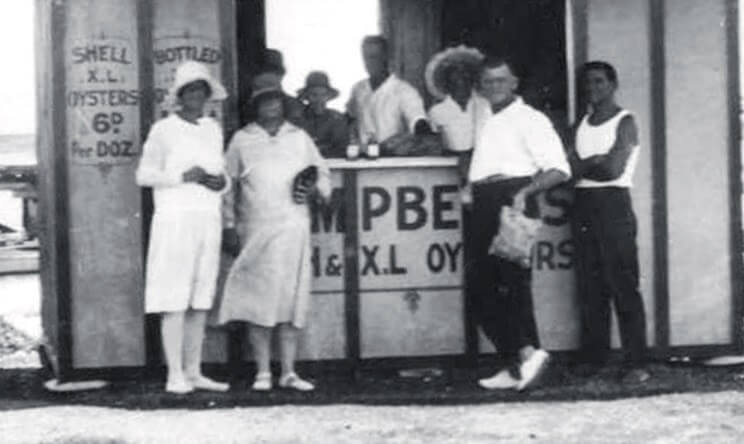
It still stands in Banya Street today but is now the Freemasons Hall, painted light blue. Their son Charlie Moyle, born on Bribie in 1931, now resides at Gatton and has just celebrated his 87th birthday! Mavis Shields was the youngest daughter of Alfred Shields whose house was on Toorbul Street, next to where Brennans Store was later built. Alfred and his sons, Eddie and Gordon, often provided deep sea fishing services for parties staying on Bribie Island. His wife Trixie had a kiosk originally, owned by the Campbells, on the Jetty that sold fresh oysters, fish, and fruit to day-trippers.
When they retired, John and Georgina Moyle remained in Banya Street while their daughter Doris and her husband Colin Phillips and his brother Syd looked after the business. Their youngest daughter Alice married Cliff Rigbye, and Alice worked with her parents throughout the war years when he served in RAAF. Another remarkable coincidence, many years later for Cliff Rigbye, was when he sold his general store in Crow’s Nest to Joyce Voysey’s family. Years later Joyce was the author of the book ‘A Girl from Bribie,’ launched by the Bribie Island Historical Society in 2009.
Groper caught by Moyles at Bongaree c 1930s
Edwin Moyle and Mavis Shields wedding Banya St
Methodist Church
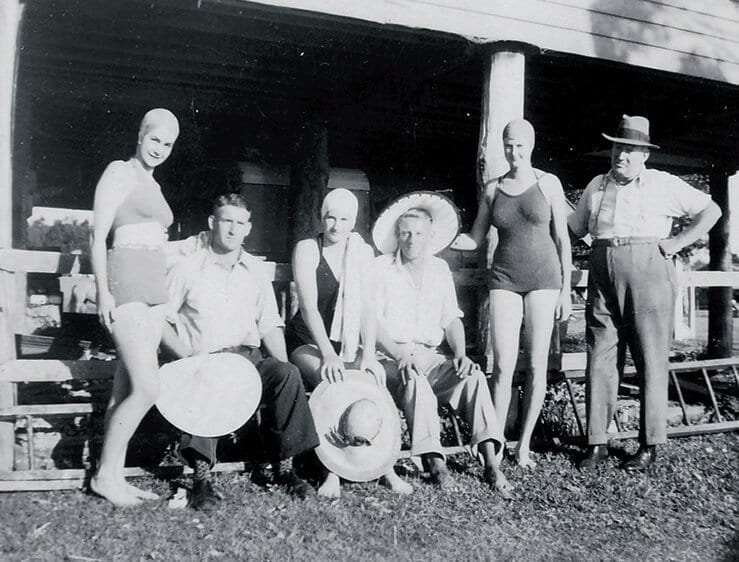
Rae Sutton L. in 2 piece Bathing suit
Oyster kiosk at Jetty
The book launch was attended by my mother Rae Sutton, granddaughter of Mathew and Georgina Moyle and grandsons Rex and Ray Rigbye. “For most of her early life, my mother Rae was a regular visitor to Bribie Island often staying to help her grandparents.” During one visit as a young lady, she raised eyebrows by wearing the latest style two-piece bathing costume. This two-piece bathing suit was a revolutionary outfit for the period and caused quite a stir! When her father later saw the photo, he asked for the bathing suit, so that he could later destroy it saying …. “No daughter of mine will be seen running around in such a skimpy outfit.”
“My mother’s first visit to Bribie was as a 12-year-old after her mother put her on a train in Roma and sent her unaccompanied to Bribie Island, to help grandmother Moyle for a few weeks and have a holiday. “On arrival in Brisbane, her Aunt Doris’ boyfriend met her at Roma Street Station prior to being taken down to catch the ‘Koopa’ across to Bribie.” “Aunt Doris was planning her wedding and decided that her fiancé should have his teeth seen by a dentist in Brisbane. He had work carried out and this required an anesthetic procedure.
There were fatal complications with the anesthetic and he did not recover.” The Moyle family were shocked by his death and it took a long time before Aunt Doris recovered… One of Mum’s friends from Bribie was Kitty Freeman, the daughter of the man whose family ran the Bribie Post Office. I think she was only 13 when Kitty called at the kiosk to see if she could come and help her father to take a seriously injured man across to Redcliffe for urgent medical treatment?
Mr. Freeman was called to help in emergencies, as there was limited first aid on the Island. The injured man was brought to the jetty with a gaping wound where he had been impaled on a spike! “They set off in the small boat thinking that he may die.” It was a long trip in the little motorboat to get him to medical treatment in Redcliffe, and they did not get back to Bribie until very late that night. My mother recalled the incident quite vividly because she neglected to tell Grandmother that she was going off to Redcliffe, in the panic to help. She was in big trouble!
Doomba crowds head to Moyles 1930s
RETURN TO BRIBIE IN 2019
“We are delighted that Trevor Sutton has joined the Historical Society Committee, and shared with us these fascinating family photos and stories of early Bribie.” Trevor Sutton’s wife Lilian was not aware of his historic connection with Bribie Island until they moved here. As a schoolgirl in Miles, 60 years ago… Lilian welcomed the then Minister for Public Education Les Diplock, to her school.
She has since learned that this was the same man that had been the very first teacher in the Bribie State School when it opened in 1924 and he had been a guest at the wedding of Trevor’s Great Aunt Catherine Moyle on Bribie in 1928. “It is a very small world!!”
MORE BRIBIE HISTORY
The Historical Society has monthly public meetings at the RSL Club on the second Wednesday of each month commencing at 6:30 pm. With interesting guest speakers on a wide range of topics, you can see many more photos and articles on our Blog Site at: http://bribieislandhistory.blogspot.com or contact us on [email protected]
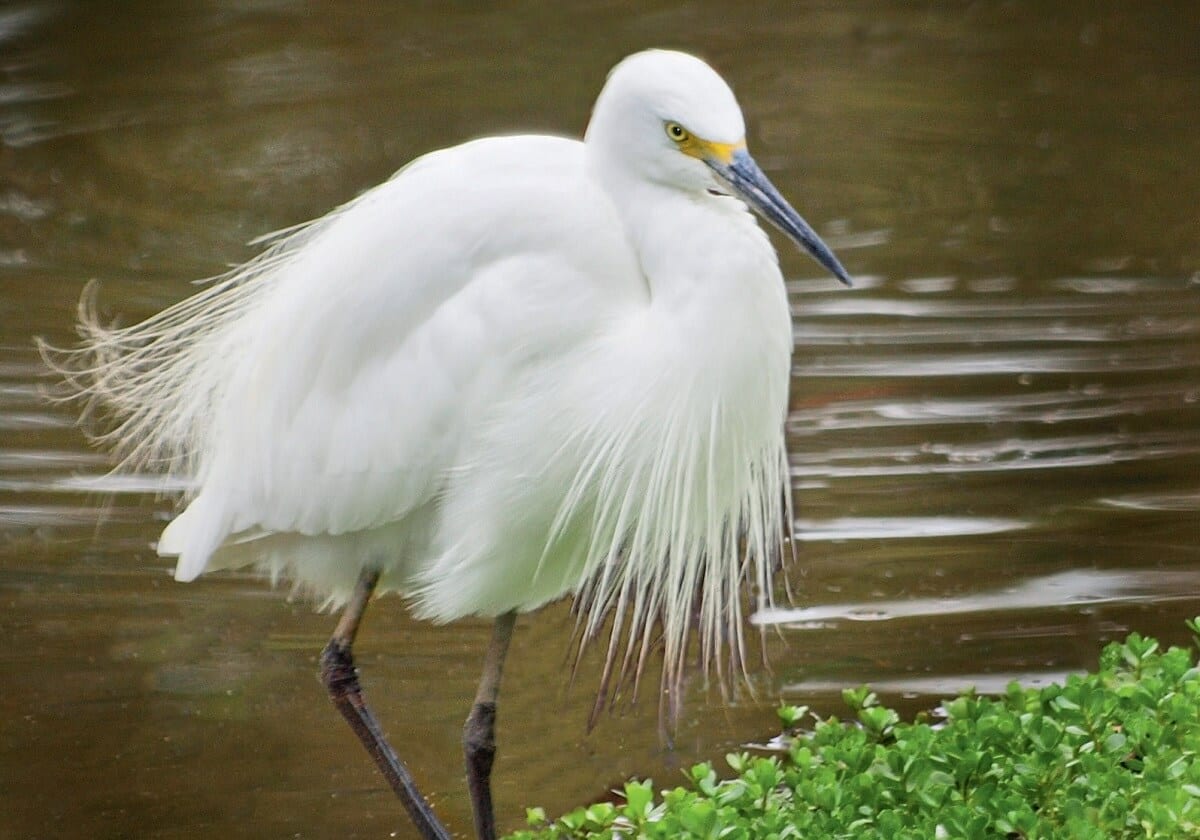
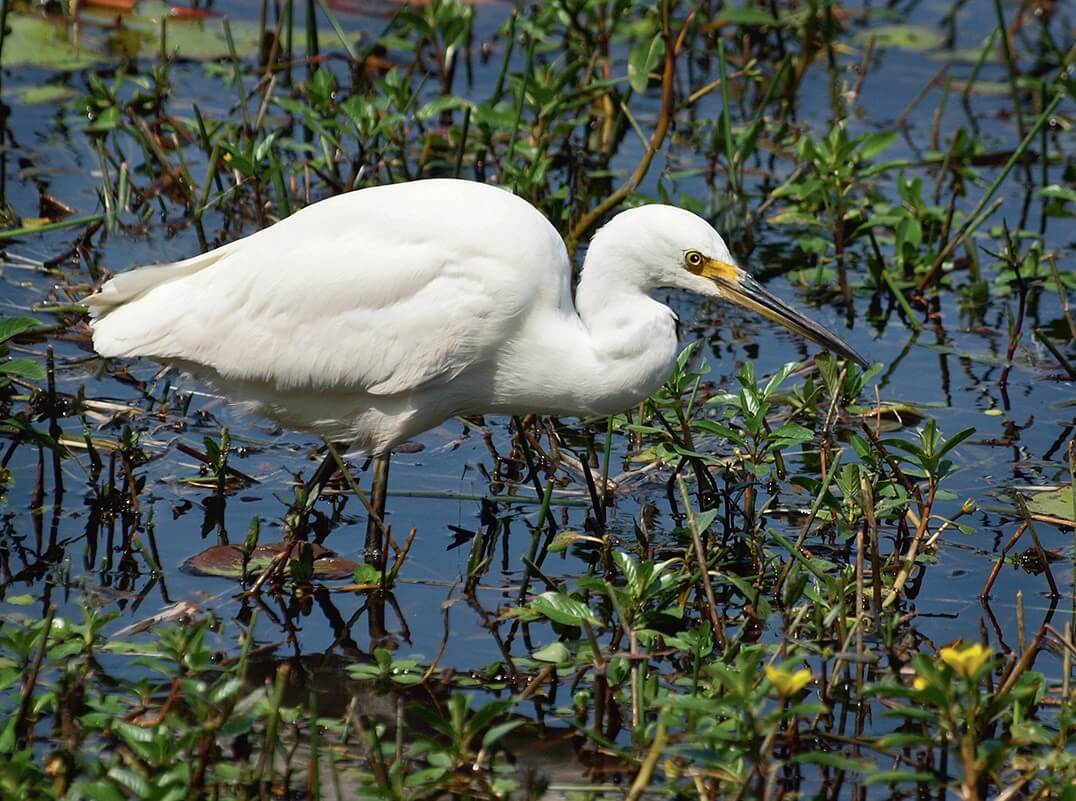
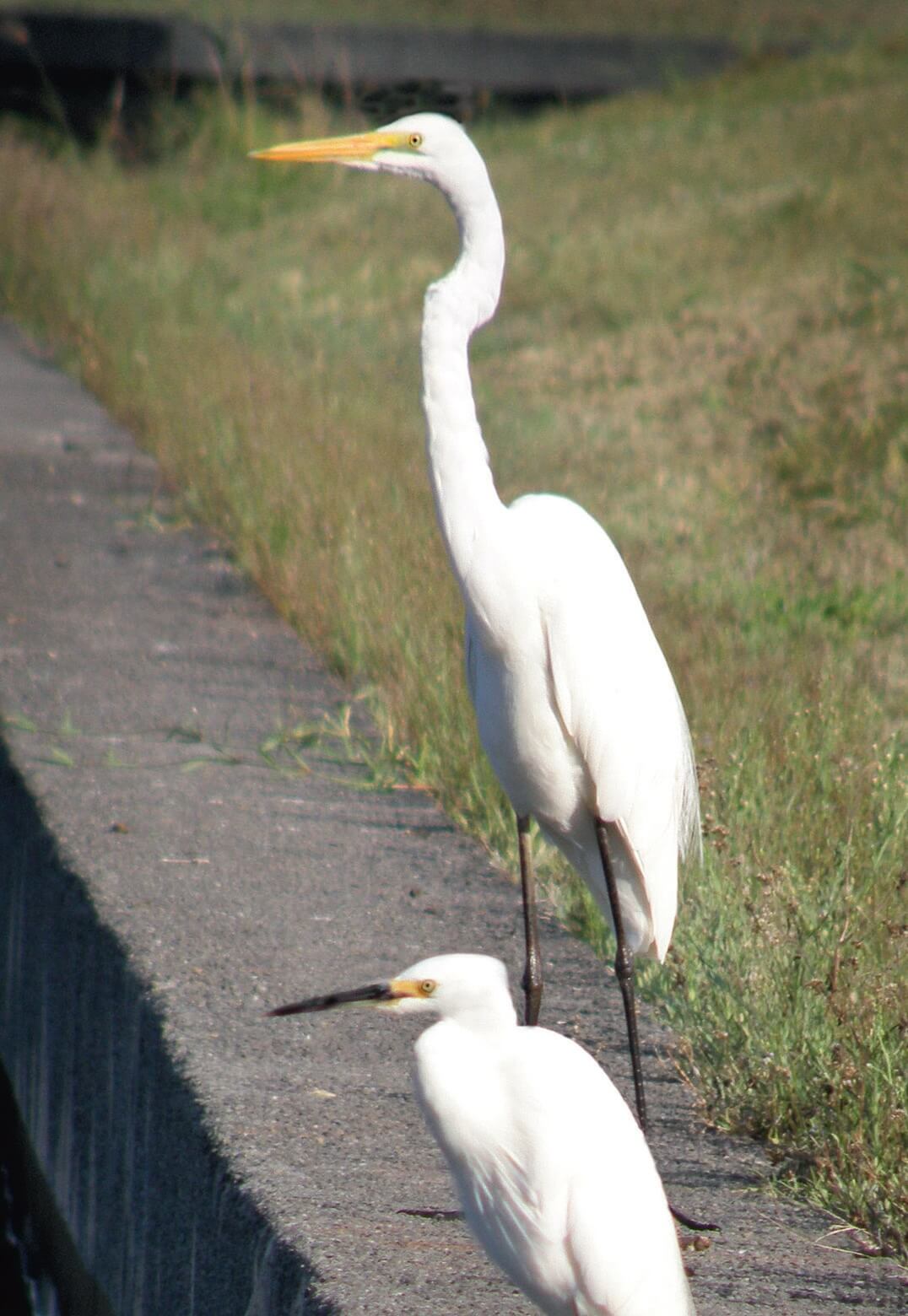
Little Egrets are a species of heron and a common sight on Bribie Island. They are easily distinguished from other white Egrets as they have black legs and bills and are the smallest of their species. They are 55-65 cm in length and weigh 250-300 g. The plumage is all white with some yellow naked skin on the face and under the feet. Usually, they are silent but during breeding or if alarmed their voice is loud and croaky.
Both salt and freshwater wetlands are their preferred habitat and they are found over most of Australia except in the very dry regions of WA, NT, and SA. They are nomadic when in need of new feeding grounds. Some are migratory and travel to Tasmania during the winter.
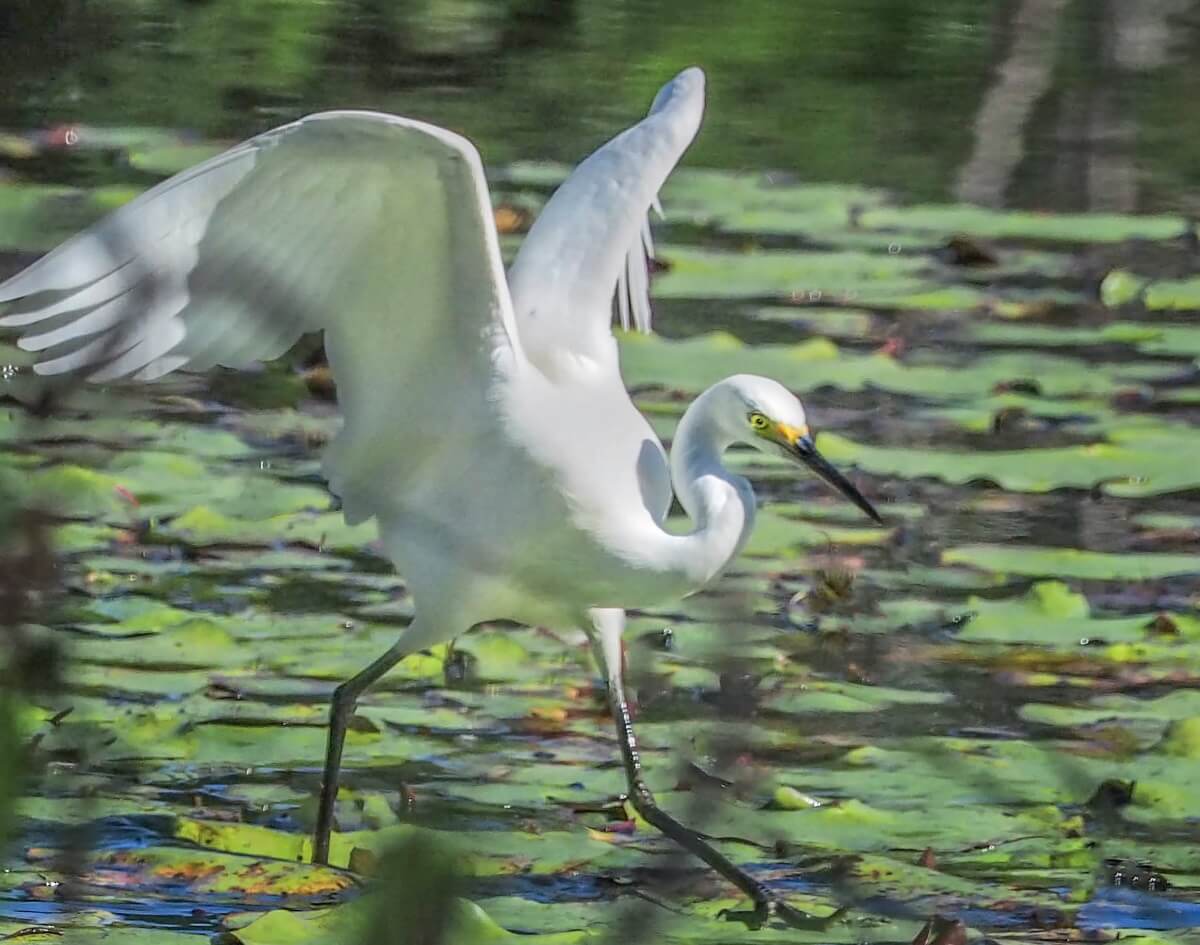
They are more common in the northern parts of Australia and are also found in Africa, PNG, Asia and Europe and are gradually moving into other countries. Little Egrets are entertaining to watch when feeding as they are energetic and move rapidly, darting here and there in their search for food. In shallow water from about 10-15 cm, they dash about flapping their wings, lifting their legs and darting for prey usually alone but sometimes with other Egrets.
Diet consists mainly of fish, amphibian creatures and insects. Feet are scraped along the mud or sand to flush out aquatic prey which is quickly pounced on then devoured. As with other Egrets, little Egrets develop beautiful white plumes during the breeding season. These form on the breast and back as well as two long plumes on the head. Sometimes some of these plumes remain with the egrets after the season has finished.
In Breeding Plumage
Non Breeding in typical feeding waterhole
Searching for food
Compare Little Egret and Great Egret
They breed in colonies in trees or mangroves on or near water with mostly other Egrets, Ibises, cormorants, and spoonbills. Nests are untidy platforms of sticks mostly lined with leaves. 4-6 blue-green eggs are laid and are incubated by both male and female for about 20-25 days. Both parents care for the young and in about 26 days the chicks move out of their nests and perch on the nearby branches.
Soon afterwards they begin to fly. During times gone by Egrets were served with other meats in feasts and at royal tables in England. During the reign of Mary 1st 1000 egrets were slaughtered and served at one banquet alone. As well as being used for food, they were being killed to obtain the plumes for hats and other fashion requirements. There came a time when they became scarce all over Europe and it wasn’t until the 1900s when the killings stopped that their numbers began to increase.
Reclamation of tidal lands and swamps can be a threat as well as eggs and babies being stolen by other birds and reptiles. They adapt kindly to manmade shallow wetlands and their conservation status is secure for now. Their average lifespan is about 5 years.
Welcome to issue number 97 of The Bribie Islander. What a journey it has been so far contributing to this little local paper; connecting with you all and exploring more of our community has been a special gift. There is so much more to come and many more conversations to be had. Being born into a large family from a relatively small (and very beautiful!) town, having a mother with a unique investment in the livelihood of people and identifying with a Christian faith has moulded me.
It has shaped my mind and heart towards wanting to understand and be a proactive part of community. I love community. The word itself however has somewhat of a tame and, dare I say it, lacklustre, connotation. Community – the real meaning of it – however, is anything but. I am only just beginning to unearth and ignite in my mind just how intricate and powerful and stunning this thing is. I mean, let’s just analyse the word itself. Community: a common unity, a union that is shared with everyone.
Wow! Do you understand? This isn’t some nice saying that symbolises a group of people that all live in a certain place that sometimes cross each other’s path and sometimes do the same hobbies together. This is a concept that is interwoven with spirit, heart-beats, footprints, fingerprints, vibrations of different – unique as DNA – vocal chords all touching each other for a common purpose.
We don’t even 1/ billionth understand this level of connection. Did you know that trees talk to each other? Yup, they do. So there are these trees called acacia trees that elephants just love to munch on. The trees, however, do not like this munching and just like we humans might yell out, “watch out!”, to other fellow humans in danger, so does the acacia. Once a tree realises it is being eaten it sends out a chemical message (ethylene gas), through the air that lets other acacia know they are under-fire.
Once the neighbouring trees receive this message, they then release, ‘tannin’, which herbivores find poisonous1. So even trees, which were once thought to stand alone and independent, are actually beautiful living things that depend on each other for survival and communicate to save one another. How much we can learn from the acacia. Us humans are designed to have and to hold each other’s backs! Not stab something into them. When did we ever have the right to mistreat one another? That ‘right’ doesn’t exist and if it does, it’s a ‘wrong’.
The thing is, we are not seeing just how interconnected we are from the person next to us to that stranger on the other side of the world. No matter the physical distance, we are somehow in mysterious ways, connected. For some, that is a very disturbing thought, for others it’s both exciting and perplexing. The point is, every single one of our actions toward another person bounces into them, then onto and through people, things, animals, the rain and elements, the atmosphere, until it comes back to us.
We talk about the world economic system, cool, what about the world ecologic/biologic/sociologic system. Where has our logic of common-unity gone? Therefore, my friends, let our thoughts become deep toward one another. Be reverent. Revenge, anger, hatred toward others only ever comes back to us and destroys what we love. Let go of these things. And just because someone has done you wrong doesn’t make it right for you to pass that same wrong to others.
That kind of behaviour is very unwise and foolish. It shows a lack of character and breeds whatever your source of pain was in the first place. Find your dignity in loving and respecting others without hesitation. Islanders, may you have ears to hear a cry for help from your fellow man and the valour, especially if you have the obvious means, to do something about it. Riches means nothing at the end of this life if you only ever helped yourself for only a shallow hearted man thinks like this.
When under-fire would you stand by your mate or cower away? And remember that not only is your mate a reflection, a version, of you but so is a stranger too. For a stranger is really no stranger at all.
I will be the first to admit I have a shocking memory for names and faces, there, a moment at Changi Airport when I bumped into a client I had called on for some time and spent several minutes calling him John when I realised after he had gone it was John’s partner Gordon, I suppose not being in the store was my only excuse. Therefore when a lady I had met on a boating course some three or four years ago said hello the other day it was unlikely I would remember the occasion but she was kind enough to remark that she read these articles, however, she didn’t always agree with some of the comments I made.
This was music to my ears for it means that the articles sometimes are a talking point and I would be the first to admit I certainly don’t know everything about wine and I am still learning all the time. Drinking wine has certainly changed during my time in the industry, nowadays on nearly every television show, there are occasions when someone is seen drinking a glass of wine and wine has become a talking point when people get together, far different from the beer-drinking of not many years ago. Even at the Bribie Golf Club on a Friday night most tables seem to have a bottle of wine being shared by the diners, and also quite a lot of premium wines especially red wines.
A few weeks ago, I purchased half a dozen bottles of Wynns Black Label Coonawarra Cabernet Sauvignon from one of the Dan Murphy stores and when I got home, I noticed one of the bottles was different to the other five, it had a cork! At first, I thought maybe it was an export bottle because many countries aren’t keen on our Stelvin screw-top enclosures and our wineries still export the wines with cork. On looking a little closer I saw the offending bottle was actually from the 1995 vintage so I had the excitement of looking forward to trying a twenty-four-year-old wine which was going to be well over the hill, just about still drinkable or a surprise and still drinking well.
As we had friends over for dinner last Saturday I decided this was an opportunity to see how this wine had developed remembering I hadn’t cellared the wine so had no idea how it had been stored over the years, whether it had been laid down or left standing up, subjected to temperature fluctuations, everything about the bottle was a mystery that was about to be revealed. As I removed the top of the capsule it was noticeable there was no wine leakage and the cork looked new and as it was pulled out of the bottle there was no wine stain anywhere, it was in perfect condition.
A quick smell of the wine to see if there was anything to worry about revealing lovely aromas of blackcurrants and suggested the wine was going to be an outstanding treat, happy days! I had left the wine standing upright for a couple of hours to allow for any sediment to settle on the bottom of the bottle and it was now time to decant the wine carefully into a decanter. I poured the wine keeping an eye on the last few drops to see if there was a vein of sediment and it looked perfectly clean not even a tinge of brown, the colour was still vibrant.
We were having beef cheeks which had been slow-cooked for nearly six hours and the match was perfect and to follow was a bottle of 2012 Penfolds Bin 28. To finish we had deep-fried ice cream balls which were accompanied by a Pirramimma Late Harvest Riesling 2013 vintage and the evening was a great success. I was in Liquorland the other week and overheard a customer mentioning the sulphites in the wines gave her headaches and decided to read up on this subject as there are some truths and myths on this subject.
Sulphites occur naturally in all wines and have been a known part of winemaking for a thousand years. Sulphites occur as part of the fermentation process, a natural by-product of the yeast metabolism during the conversion of sugar to alcohol and are completely harmless to over 99% of all people. In fact, the human body produces sulphites and there are already about 10 times more sulphites in you daily than a bottle of wine. The warnings on labels came about due to restaurants in the 1970s and 1980s protecting the spoilage on fruits and vegetables with a spray of sulphites to prevent the produce from oxidising and going brown, but unfortunately they were using up to 2,000 ppm which caused an adverse reaction in several hundred people and laws were introduced that imposed warning labels on any products with sulphites over 10ppm.
Why then do some people get headaches from red wine? First of all there is usually twice as many sulphites in white wine as there are in red but there are a host of other natural components in red wines which can cause headaches such as histamines and tannins being the main culprits, red wine contains about 30 times more histamine than white and if your body has an intolerance to histamine the number one symptom is a headache. Another cause which no-one would ever like to admit to is dehydration caused by not drinking enough water between the glasses of the wine so one way to prevent a headache is simply enjoying a couple of glasses of H2o during the evening.
The bad news for sulphite sufferers is the following products contain more sulphites than a bottle of wine, canned fruit, frozen fruit, fruit syrups, jams and jellies, cereals, chips, ketchup, mustard, relish, vinegar, deli meats, sausages, and canned soups to name just a few. This week I noticed that Dan Murphy’s were selling the Houghton Classic range for under $6 which as I have mentioned before the Houghton White Classic is always a very good wine and will actually cellar very well for a number of years, the wines regularly win medals at wine shows and would normally retail at around $12. Houghton was established in 1836 and is one of Australia’s oldest operating wineries.
The Swan Valley Winery site has a colourful history which includes tales of pioneer Scots, bandits and generations of winemaking craftsmanship. In 1937 winemaker Jack Mann created Houghton White Burgundy using French White Burgundy winemaking techniques in creating this wine which went on to sell 1 million bottles in 1972 the first wine to do so and has been an ever-popular wine to this day. Although the title White Burgundy can no longer be used on the bottle the current ‘White Classic’ wine crafted by winemaker Ross Pamment, who incidentally is only the 13th winemaker in Houghton’s rich history, maintains the style created by Jack Mann all those years ago.
I first came across Ross 50 years ago when I coached The High Wycombe under 12’s soccer team and he was our goalkeeper in a very successful league winning team, he joined Houghton as a cellar hand in 1989, joined the winemaking team in 1999 and became senior winemaker in 2009 who would have thought back in 1982 he would one day lead Western Australia’s most awarded winery today. Cheers, Philip Arlidge. [email protected]
This is one of the disadvantages of wine, it makes a man mistake words for thoughts.
Samuel Johnson
And in the same vein but hundreds of years earlier… “It is the wine that leads me on, the wild wine that sets the wisest man to sing at the top of his lungs, laugh like a fool, it drives the man to dance, it even tempts him to blurt out stories better not told.”
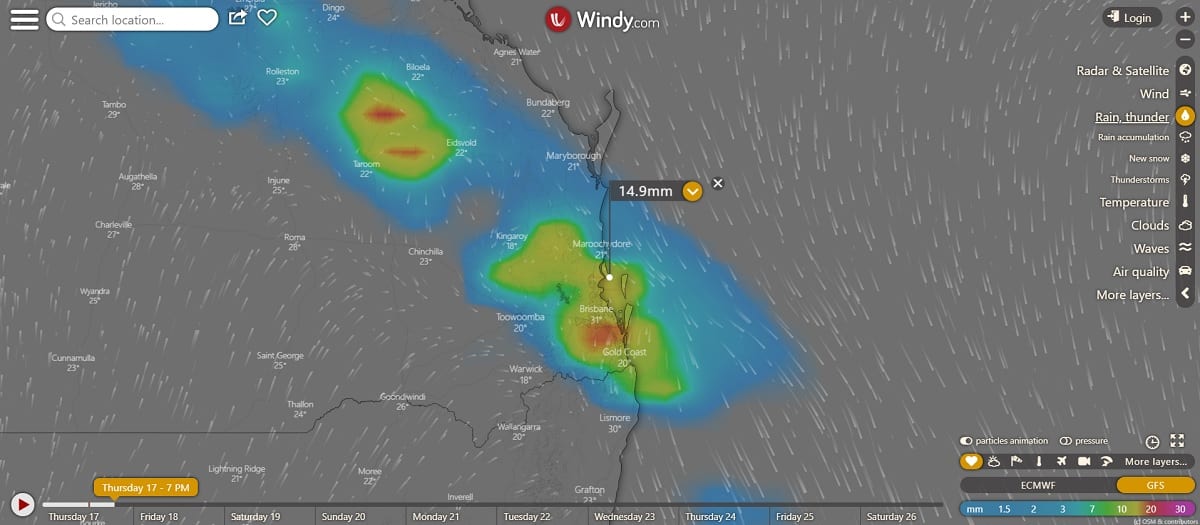
Bribie Island and areas might see some shower activity develop this afternoon. Possible thunderstorms may also develop, some may be severe with heavy rain, strong winds, and hail.
Showers & storms will start to develop over the ranges and will head towards the coast later this afternoon bringing some much-needed rain.
An inland trough will combine with moist northerly winds producing showers and thunderstorms.
We can’t rule out the slim possibility of some supercell thunderstorms developing which can bring extreme weather including large hail, destructive winds, and torrential rain.
WORLD POLIO DAY MORNING HIGH TEA BRIBIE ISLAND HOTEL
Sylvan Beach Esplanade Bellara 4507
24th October 2019 10 am to 12 noon
$36.00 per head
For ticket sales please contact Bill Peacock OAM World’s Greatest Meal Team Member 0403 686 998 or Direct Debit. CBA Mr. William Peter Sheehan BSB 064448 ACC 10349746 Please include name. Raffles, door prize and fun.
Special thanks to Bribie Island Rotary and Spinal Life Australia Special Guests. Susanne Rea OAM Nauman Abbasi & Gold Coast Benji
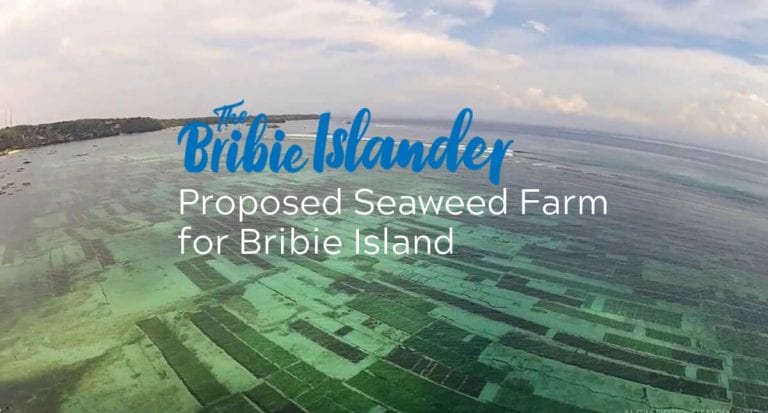
As you may be aware there has been a proposal submitted to government to approve a seaweed farm off the foreshore at Sandstone Point and Godwin Beach.
A group of residents have organised an information evening as it appears there has been no public consultation. At this meeting the Australian Seaweed Institute will give a presentation regarding this proposal. There will then be a question and answer session so the community can have a better understanding of the impact this proposal will have on the Bay and the local community.
I would like to invite residents who are interested in learning more about this proposal to attend the meeting on Wednesday 16th of October at the Sandstone Point Community Complex, Bestmann Road E. at 7:30 p.m.
Get all your community news and information. Bribie Islands only community gloss magazine NOW EVERY TWO WEEKS! – Articles on boating, camping, fishing, life, drama, travel destinations, sports and what to see and do on Bribie Island. Covering charities, organisations, places, children’s activities, arts and crafts, tourist destinations, heritage parks, technology, science, music, gardening, and much more.











 A few weeks ago, I purchased half a dozen bottles of Wynns Black Label Coonawarra Cabernet Sauvignon from one of the Dan Murphy stores and when I got home, I noticed one of the bottles was different to the other five, it had a cork! At first, I thought maybe it was an export bottle because many countries aren’t keen on our Stelvin screw-top enclosures and our wineries still export the wines with cork. On looking a little closer I saw the offending bottle was actually from the 1995 vintage so I had the excitement of looking forward to trying a twenty-four-year-old wine which was going to be well over the hill, just about still drinkable or a surprise and still drinking well.
 The bad news for sulphite sufferers is the following products contain more sulphites than a bottle of wine, canned fruit, frozen fruit, fruit syrups, jams and jellies, cereals, chips, ketchup, mustard, relish, vinegar, deli meats, sausages, and canned soups to name just a few. This week I noticed that Dan Murphy’s were selling the Houghton Classic range for under $6 which as I have mentioned before the Houghton White Classic is always a very good wine and will actually cellar very well for a number of years, the wines regularly win medals at wine shows and would normally retail at around $12. Houghton was established in 1836 and is one of Australia’s oldest operating wineries.

 For ticket sales please contact Bill Peacock OAM World’s Greatest Meal Team Member 0403 686 998 or Direct Debit. CBA Mr. William Peter Sheehan BSB 064448 ACC 10349746 Please include name. Raffles, door prize and fun.