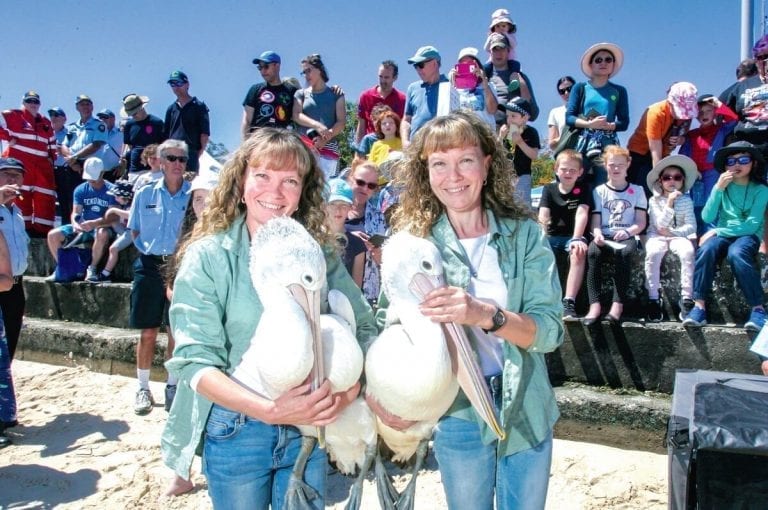
Paula and Bridgette Powers have been rescuing and treating Pelicans and sea birds on the sunshine coast for more than 16 Years!
In that time the Twinnies have helped thousands of birds from numerous species all across the coast!
With their rehabilitation facility and community training done with Queensland schools. A recent cry for help to the community to help raise $25,000 was a huge success with the goal reached which will help with the ongoing costs of caring and feeding the animals.
The noun worthlessness can describe an object’s lack of value, but it’s more often used to describe people —specifically in relation to how we feel about our self. If we experience multiple setbacks in our lives like job loss, financial struggle, divorce, or not like our looks, we can end up feeling like our lives have no meaning.
“Why Do I feel Worthless?”: When Nothing Helps
Often, feelings of worthlessness can be a symptom of depression. Many depressive disorders leave patients feeling alone, unworthy of social interaction, and unworthy of help. The trouble is, this is a vicious circle and those feelings often foster greater depression. In cases of clinical depression, it is recommended that you seek help from a professional.
I believe it’s mostly related to how we view life itself.
Feeling worthless is one of the deepest and darkest emotions we can encounter.
Unfortunately, life isn’t fair, and we will find our self-feeling worthless without warning.
We are dependent on so many things in order to feel our worth.
Feeling worthless derives from different areas and reasons.
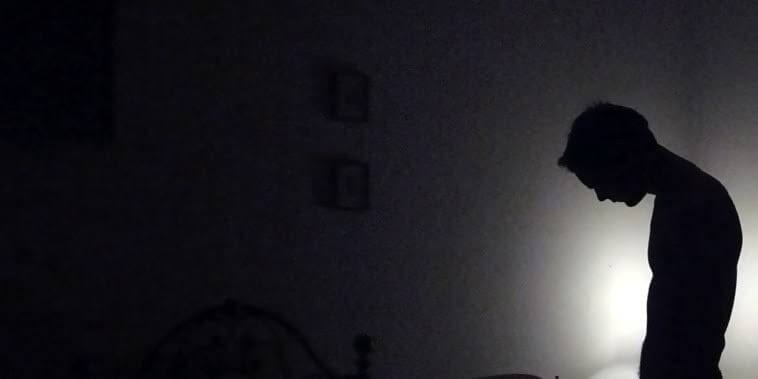
Why we feel the way we do
A good look into our own thoughts, feelings, and emotions will help reveal the culprit. Our character can help us squash feeling worthless and highlight the truth.
1. Comparisons
When we compare ourselves to others and feel ugly in these comparisons, we find ourselves feeling worthless.
2. Losing identity
We start feeling worthless when we lose our identity. • During life, we go through different phases and chapters.
Within these chapters, we take on various roles, e.g. daughters, wives, mother.
3. Criticism
Early in life, you may have encountered a huge amount of criticism.
As an adult, you may have carried this criticism with you and all the healthy critique you receive is met with bitterness.
Sometimes worthlessness does come from past criticisms.
It can grow and accumulate in insults over the depreciation that’s hard to heal.
4. Negativity
After encountering so many bad situations and people, we become programmed to think everything will go wrong.
We find it pointless to try and do better because everything will turn out negatively anyway.
5. Mental illness
If you suffer from a mental health disorder such as depression, feelings of worthlessness will come often.
You also won’t be able to pinpoint a specific action which causes this…because there is none.
There can be triggers, but these triggers may be random and hard to discover. • This is one thing that makes mental illness so deadly.
6. Health issues
Believe it or not, your physical health can make you feel worthless.
If you’ve lost your ability to walk, eat certain foods, or do otherwise enjoyable activities, you may start to feel like nothing matters anymore.
Your health can also play a more direct role in feeling worthless as well when chemicals and hormones are out of balance.
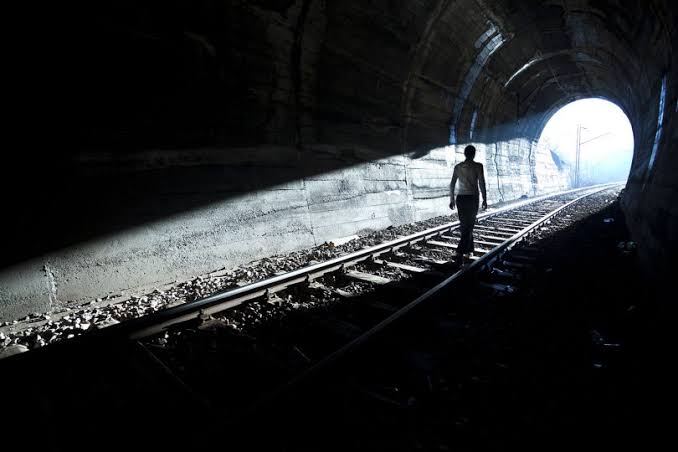
I think we all feel worthless sometimes…
Maybe you don’t know why you feel worthless, but you just do. Whatever is causing these feelings cannot stop you from trying to eliminate them. Despite what’s happening in your life or what has happened, you can choose to do better and be better.
We must understand that no one is perfect, and the perfection we may see in others is not real. Beneath the attractive details that you feel you don’t have, lies the faults and imperfections. Just like you, everyone else is full of doubts and faults.
Remember “Your value is the product of your thoughts. Do not miscalculate your self-worth by multiplying your insecurities”. – Dodinsky The most important thing is… Never give up! – Wishing you all good mental well-being – Cheers Veronica.
We keep you up to date with the latest beach reports for Bribie Island and areas.
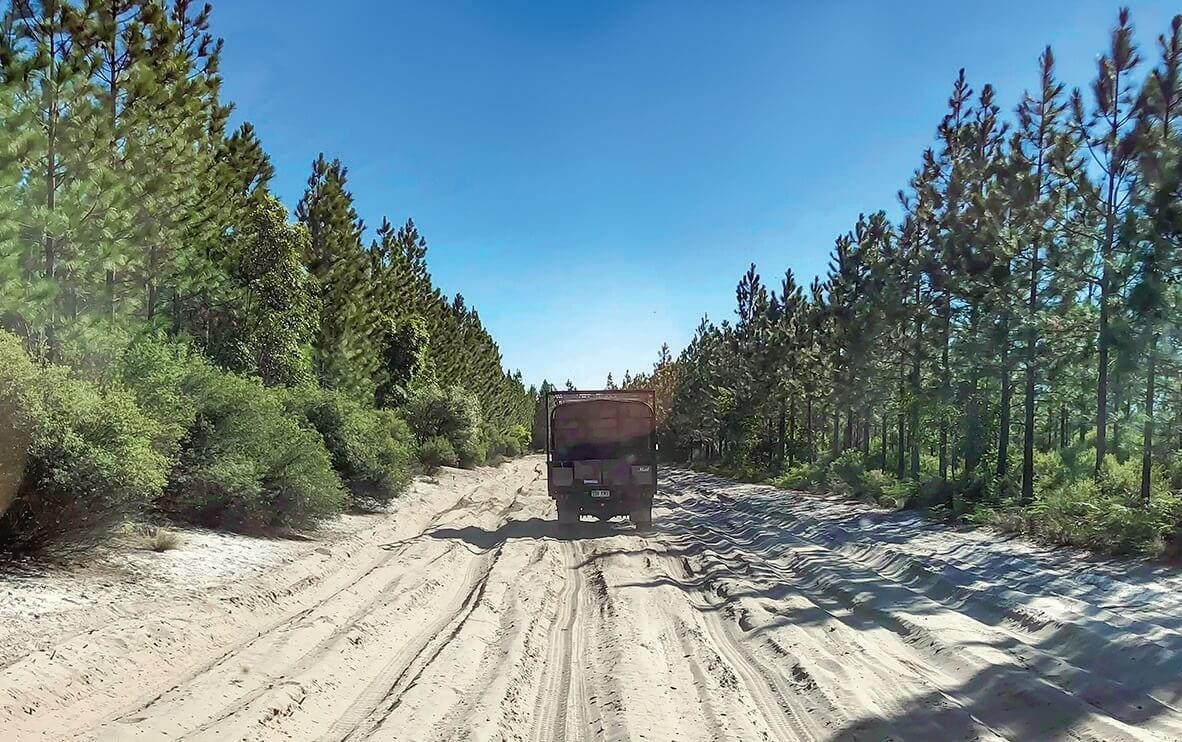
Welcome to another beach report from Michael and Rick at Gateway Discovery Tours. The inland track is soft in the usual places and we have had a few bogged vehicle recoveries, tyres at 18 to 20psi and off you go, if you’re in a low vehicle don’t drive in the wheel tracks as your undercarriage will drag and you’ll get bogged, instead drive on the high, make a new track, with your tyres at 20psi you drive on top of the sand, remember a wheel spin is not your friend and will cause you grief.
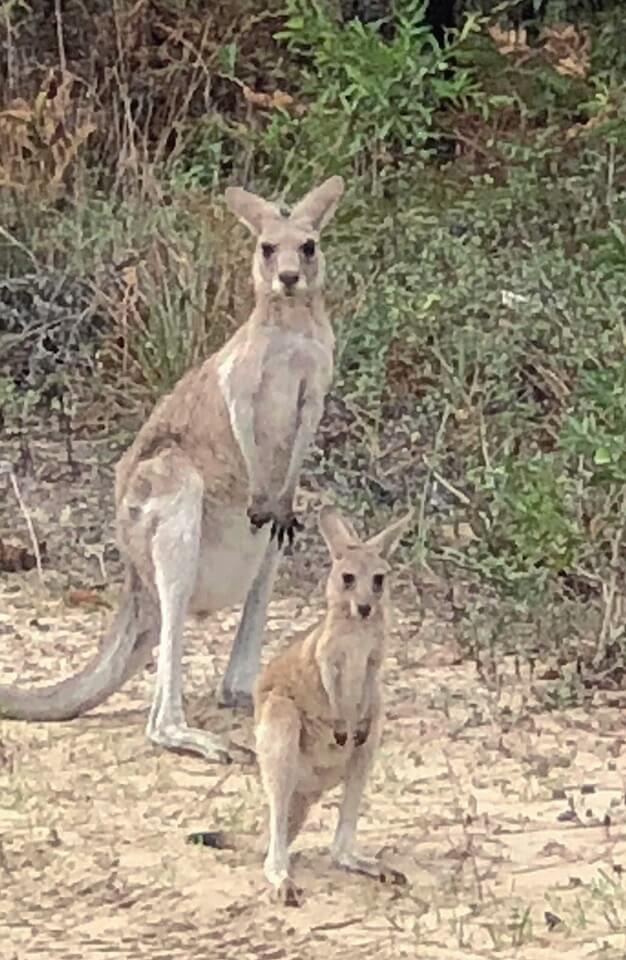
The track at Woorim is also soft and cut up, the first bend when you leave the 8th avenue car park is treacherous with many getting bogged there and usually, the tyre pressure has not been reduced and is at 40psi instead of 20psi. The kangaroos and wallabies are very resilient and there are plenty around, the vegetation in the burnt areas is growing back rapidly after the recent rain and warm weather.
Parts of the inland trackare soft and cut up
As we head towards Christmas more families utilise the beach, remember it is a main road so watch out for children and respect the rules. The recent story in another paper didn’t get the cause of the bush fire right, but our rangers had to backburn to save the National Park and were certainly not the original cause.
Enjoy our beautiful National Park respect others, it is a privilege, not a right to use it. Have fun and stay safe.
Stay up to date with the latest fishing reports, best fishing spots and tide times for the Bribie Island and Moreton Bay areas.
It has been good to have such great weather over the past few weeks; the Island has been very busy with different events occurring. The fishing has been full-on with lots being caught throughout the passage and on the surfside. We are seeing a lot of dolphins playing and frolicking in the passage, while they are about chasing a good feed we don’t get to catch much.
However, if you head up the surfside, we are seeing a lot of Mackerel, Flathead, Dart, and Whiting at the 1st, 2nd and 3rd Lagoons you can try the campsites as well. Our local angler was at Lime Pocket getting a good feed of Sand crabs they are also in the Passage and at several points in Bellara, Bongaree and Sandstone Point, we have also seen mud crabs in Ningi creek, Toorbul, Gallagher’s campsite, Donnybrook, and Banksia Beach Canals.
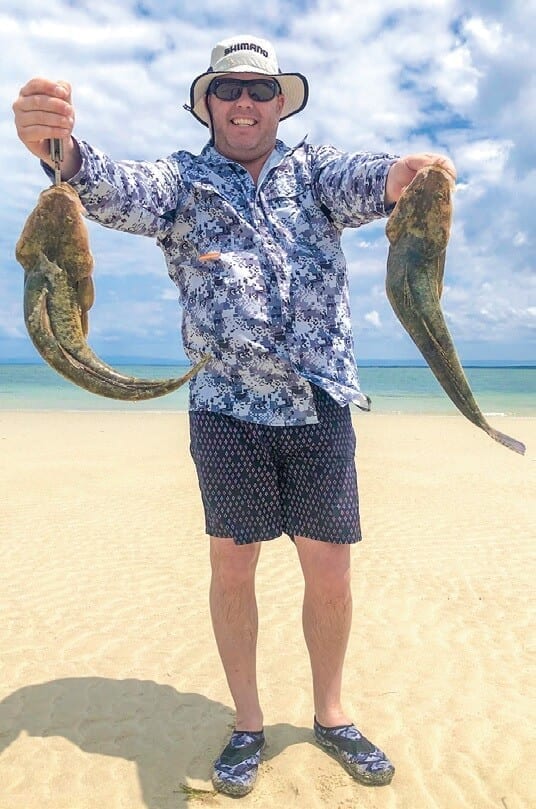
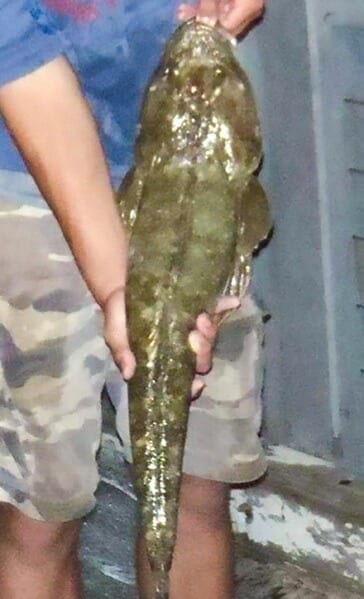
The flatheads are on the bite at Poverty Creek, Bellara, Toorbul, and Bongaree we had one angler catch an 80cm Flathead off the jetty. The passage is certainly the place to catch a feed of Bream and Squire and the best places are Turners Camp, The Ripples, Red Beach, Ningi Creek, and Poverty Creek.
Shannon at Red Beach with his catch of Flathead.
Flathead caught and released at Bongaree Jetty.
The Bird Cage in the shipping channel is proving to catch some good size Mackerel. The winds have come up over the past few days making it very difficult for any fishing. Just remember when fishing and netting on the Bribie Bridge make sure you take your rubbish and please don’t leave any dead fish and eels on the roadway, place them back in the water.
The weather is looking pretty good for the upcoming weekend, so if you mention this add we will give you a 10% discount on all purchases over $20 at Gateway Bribie Adventures. Make sure you go and see Nev our Master Baiter at the shop for all your fishing and bait tips.
Best time to catch crabs Crabbing 1-2 hours before high tide all the way through 1-2 hours after high tide the water will have good movement and this is when you have the best chance to catch the crabs.
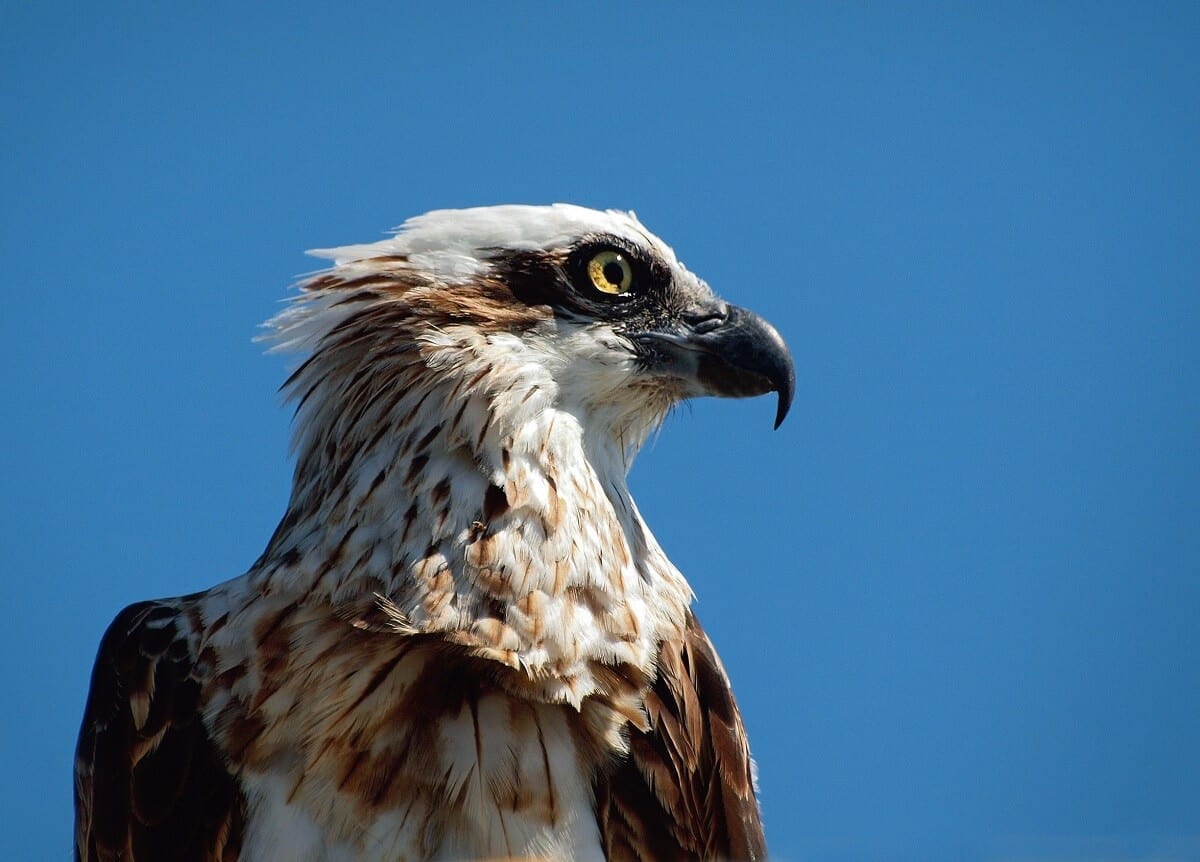
A familiar sight on Bribie Island is the Eastern Osprey flying over the Pumicestone Passage and along the coastline at Woorim searching for food. Several large nests are found on the island and there are also nests that can be viewed from the road to Caboolture. Eastern Ospreys are large bicoloured fishing hawks which are quite a distinctive sight in flight or on a perch.
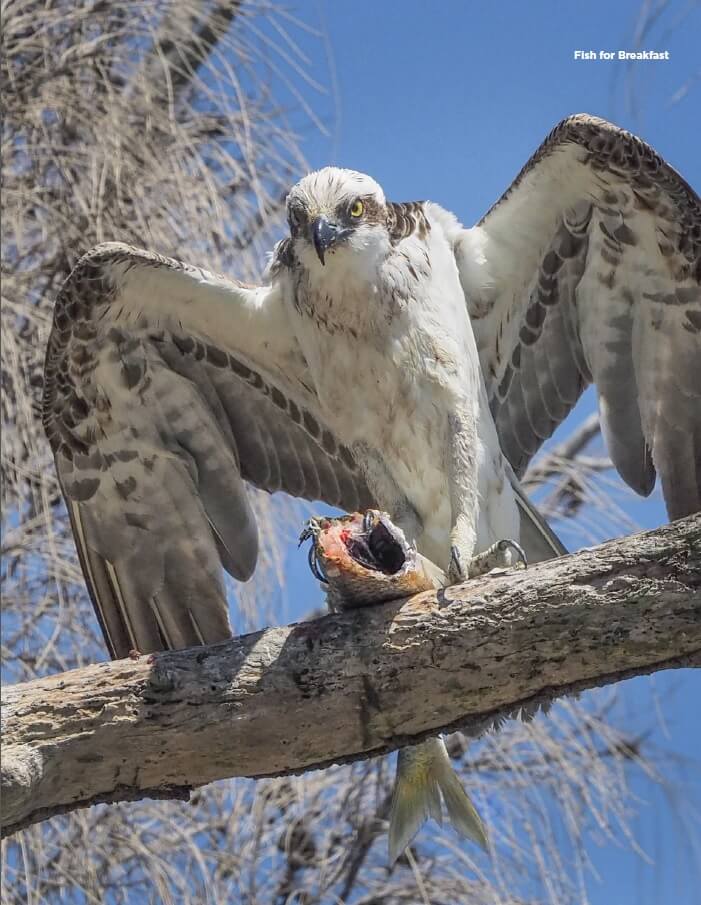
Females and males are similar to the females at 65 cm in length slightly larger than the males. Females weigh 1.2-1.6 kg with the males a little smaller. Inflight the wings with a span of 1.7 m move slowly with distinctive fingers showing at each wingtip. Short spiky crests are noticeable when they are perched usually in open areas. They have strong and hooked beaks which are used to tear their prey apart before eating.
Nostrils can be shut to keep the water out. Feathers are oily so that they do not become saturated while fishing. The mostly silent Ospreys are quite noisy during the breeding time making mournful whistling sounds. Lifespan is 7-10 years and occasionally a little longer. Their habitat is somewhere near the water in coastal areas, beaches and large waterholes. They do not venture far out to sea but will travel sometimes a few hundred kilometres inland if the feeding grounds are suitable.
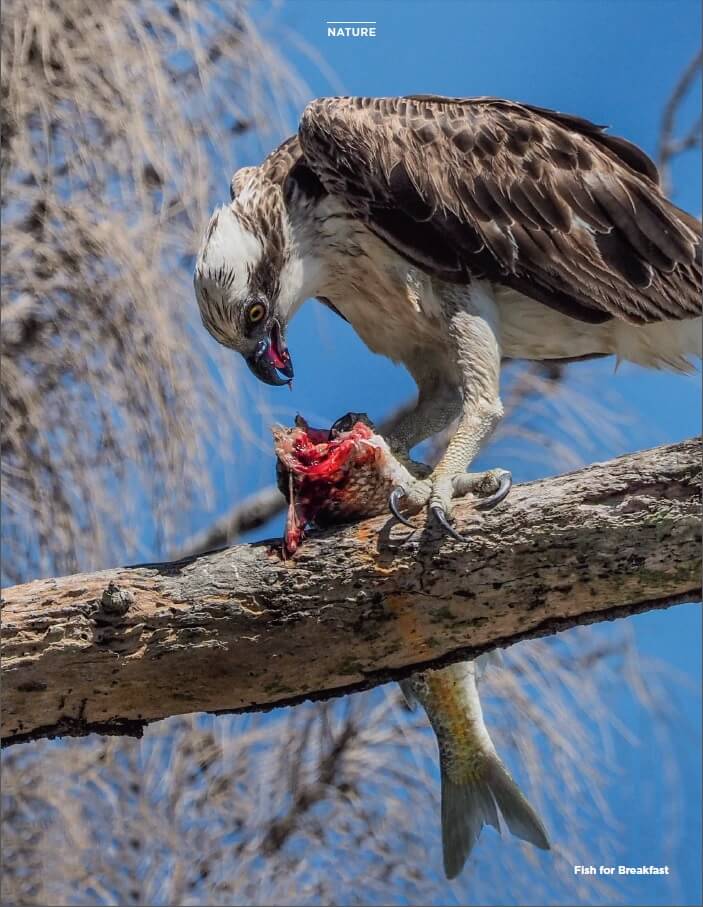
They are mostly sedentary and not usually migratory. Eastern Ospreys are also found in the Philippines, Indonesia and PNG. 99% of their diet is fish. When hunting they soar at about 10-40 m in the air looking for food. Their eyesight is exceptionally good, and they can spot a fish from a great distance. They drop feet first with wings folded into the water and grab their prey in their strong, sharp claws then rise vertically from the surface with the fish firmly held.
Two of their toes are reversible which allows them to grip slippery fish with two claws in front and two behind. Usually, the fish are caught close to the surface, but Ospreys have been known to plunge as deep as a metre for their food. With the catch held firmly, they fly to a nearby perch to rip apart and pick mouth-sized bites and slowly devour the meal looking up for danger after almost every bite. It is important that their prey is not too large which would make it difficult to lift from the water. Sea snakes are sometimes eaten, and in the north, an occasional flying fox is on the menu.
Fish for Breakfast
Fish for Breakfast
Eastern Osprey
Note small crest
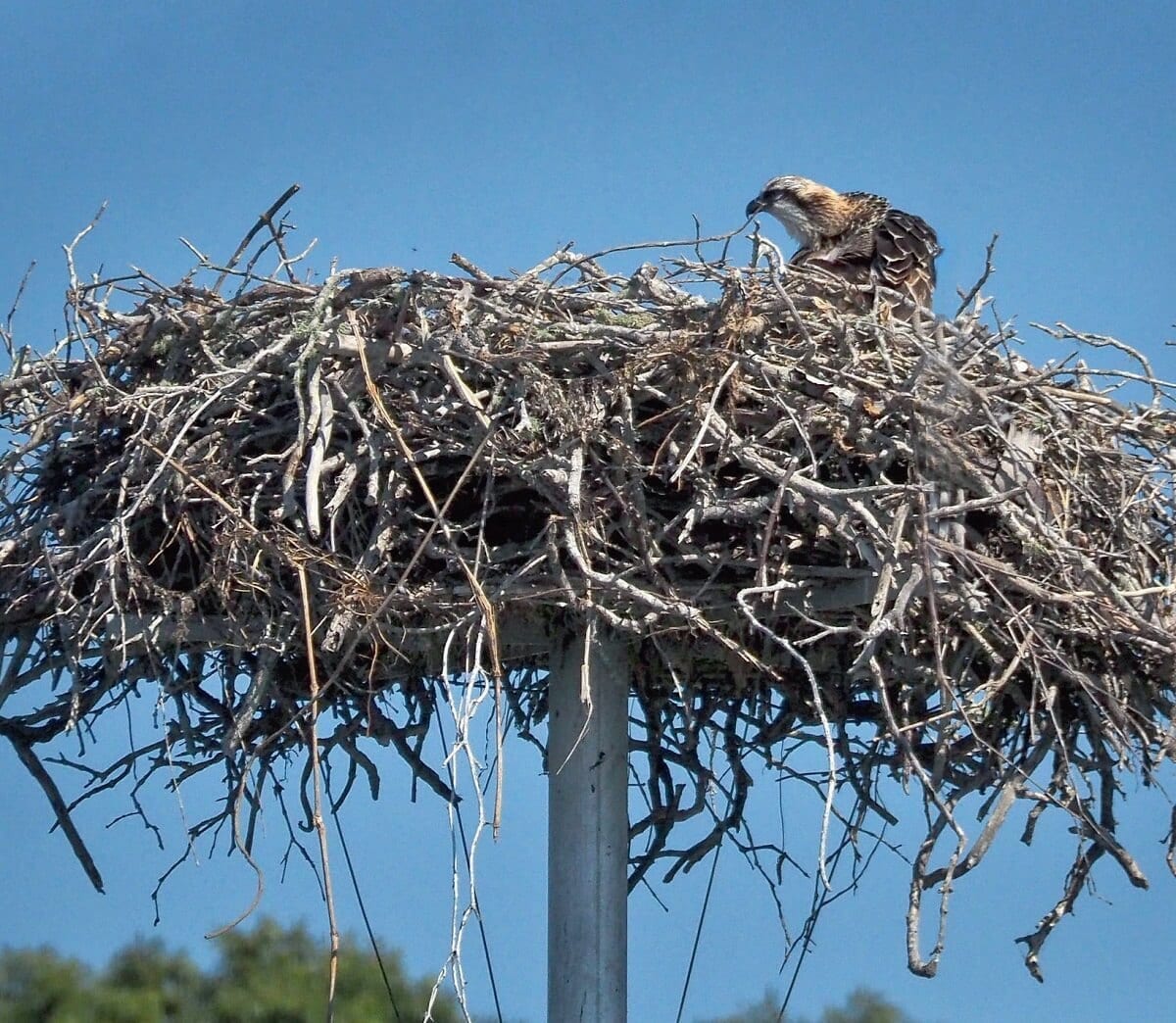
On the Nest
Ospreys are monogamous and mostly stay together for life. Breeding depends a lot on climatic conditions and in SE Queensland it is usually around June-August. Nests are built in high trees, manmade structures and on cliff faces. Sticks, bark and other debris found in the vicinity make up an untidy nest. Both parent birds collect the materials, but it is the female that builds the nest. Nests are usually used year after year and each season more sticks added until in some cases the nest measures up to 2 m high and 2 m across. New nests are usually quite small.
2-3 brownish motley eggs are laid and incubated by the female for about 33 days. Males are the hunters and bring the fish to the female on the nest who breaks it up to feed the young. Chicks can eat 3-5 fish a day. When food is in short supply the first hatched and the strongest chick is most likely to survive. After about 50-60 days the babies are ready to leave the nest and then stay with their parents for 3-5 months. They then disperse and begin their breeding life at 3-4 years.
Their scientific name cristatus is derived from the Latin meaning “Crested”. Ospreys have been on earth for at least 11 million years and have evolved differently in some ways from other raptors. Unique to Ospreys are the reversible back toes and the closable nostrils. Conservation status of Eastern Ospreys is federally secure, vulnerable in NSW, rare in SA and not present in Victoria and Tasmania.
Ospreys have adapted somewhat to the human population in that they build on manmade structures and fish around populated areas. Rubbish in our waterways and abandoned fishing lines and hooks can be a problem for their wellbeing.
Here’s a question that I get asked almost on a daily basis, or maybe weekly, or maybe monthly actually I never get asked at all and that is what is ‘Icewine” or to give it its original title Eiswein. Last time we were in Canada I bought a bottle of Sauvignon Blanc Icewine and am yet to open it as it only comes in 200ml bottles and you have the right occasion and the right food, any more than four of you and each would get a thimble full, anyway here is the answer to the question what nobody ever asks.
The first Eiswein is believed to have been made in Germany in the late 1700s when freezing weather struck before the grape crop could be harvested. However, the winemaker persisted, harvesting and pressing the frozen grapes and fermenting the juice into a sweet wine. Germany and Austria continue to produce Eiswein but sometimes their moderate European winters do not always provide the cold weather needed to freeze the grapes. When German immigrants arrived in Canada they carried on the tradition of making what is now called Icewine mainly in British Columbia and Ontario starting in the 1970s.
There are usually ideal conditions for reliable production, warm summers to ripen the grapes and cold winters, Ontario is now the leading Icewine producer and has earned global acclaim for its Icewine. Icewine is made from grapes that have been left to freeze naturally on the vine. It produces a luscious intensely flavoured wine with rich aromas and flavours of ripe tropical fruits such as lychee, papaya and pineapple. Made from white wine grapes and red wine grapes all the varietals are sweet but have a firm backbone of acidity making them firmly balanced.
As it is a dessert wine it needs to be chilled and as with sauternes and botrytis affected wines, they not only compliment deserts but also aged blue cheese and foie gras. Icewine must be made from approved grape varieties such as Vidal, Riesling, Sauvignon Blanc, Cabernet Franc, and Cabernet sauvignon.
In Canada the season starts in the autumn with the netting of the grapevines to protect the grapes from the birds, the grapes are then left on the vine until the temperature reaches a sustained -8 degrees centigrade or lower sometime between December and February when during the time between the end of the growing season and the harvest the grapes dehydrate concentrating the juices and creating the characteristic complexities of Icewine.
Typically a period of at least six hours is needed to harvest the grapes, most being picked by hand, while still frozen the grapes are pressed leaving most of the water behind as ice. Because only a small amount of concentrated juice is extracted, it takes about 3-4 kilograms of grapes to produce a 200ml bottle about 15% as against the expected yield of normal table wine and it can actually get too cold to pick the grapes because at -14 degrees the grapes yield too little juice, one year Inniskillin started pressing the grapes at midnight and didn’t see a dribble of juice until 8.00 am and during the night the frozen grapes broke two wine presses!
The juice is very sweet and can be fairly difficult to ferment and what is left is relatively low in alcohol with high sugar levels but the result is liquid gold and some of the finest dessert wine in the world, the most expensive Icewine ever sold was Royal DeMaria 2006 Chardonnay Icewine which was sold for $30,000 and they now list the award-winning 2000 vintage Chardonnay Icewine for a cool (sorry) $250,000 per bottle. The market is very important to Canada as they are now the largest producer of Icewine in the world producing 2.5 million bottles last year which was worth $70 million retail and Canada was recognised in International competition for its Icewine when a wine from the Inniskillin Estates Winery in Niagara won the coveted Grand Prix d’Honneur in 1991 at Bordeaux VinExpo.
Unfortunately everywhere seems to be out of stock at the moment of the Canadian wines however it appears that Frogmore Creeks Iced Riesling made in Tasmania and which uses a tank freezing process is available at Dan Murphy’s for around $23 for a 375ml bottle. I had an email from Lissa this week who buys her wine online and asked why I mention BWS, Dan Murphy’s and Liquorland so much which is a fair observation. I would like to expand my purchasing options and should include the BottleMart over at the Sandstone Point Hotel but apart from the clubs, we are pretty starved for choice.
I still feel it is a pity that The Comisky Group didn’t invest in a small version of Harry Browns similar to their outlet at the Eatons Hill Hotel but whether we would have given it the support necessary to make it viable is probably doubtful but looking at the number that turn up for their shows who knows? I had a Ned Sauvignon Blanc from New Zealand this week from Liquorland which was very good and Liquorland also promoted their VinVale Shiraz again from Shingleback in McLaren Vale, but a great buy was from Dan Murphy’s which was The Serafino Shiraz which normally retails at $22 a bottle but during September if you bought one bottle you got another free.
Serafino Winery is owned by The Maglieri Family who has been making outstanding wines for many years initially under their own name until the winery was purchased some years ago and is now part of The Treasury Estates Wine Group.
A couple of interesting comments from a couple of novelists:
The Spanish Wine, my God it is foul, catpiss is Champagne compared, this is the sulphurous urination of some aged horse. Thank goodness Spanish wines have improved since D.H. Lawrence tried them. “Tastes like piss” he shouted. “Only you would know” murmured his host Not Basil Fawlty but Canadian novelist Claud Parsons.
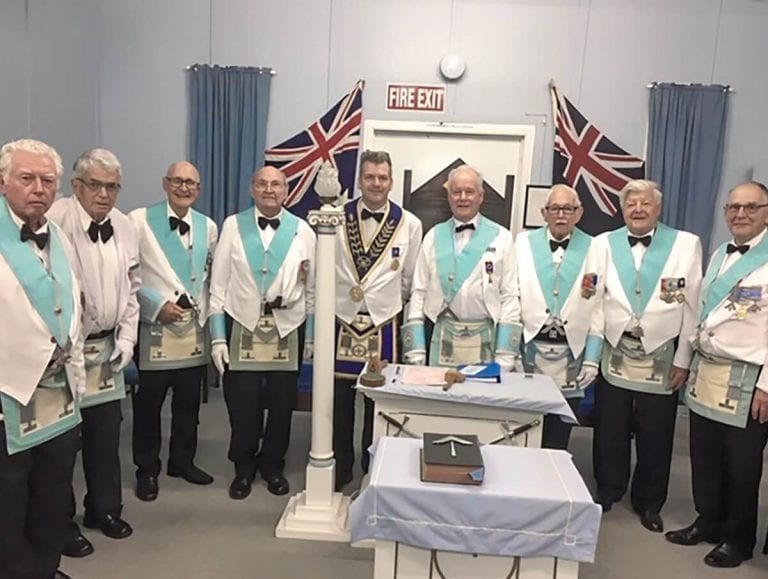
The Bribie Masonic Lodge has just held its 2019 Installation with a changing of the guard and optimism for a positive future for the members. New Master of the Lodge Greg Hemphill says any retirees, who are Masons are most welcome to visit and anyone who’d like to enquire about joining the fraternity will be encouraged to do so.
The Installation was held in Bribie Lodge’s “blue building” in. Banya St. With the post Installation festive function across the road in the Toc H function room.
Bribie Lodge meets on the second Wednesday of the Month at 7.00. Pm. and regularly visits other lodges in the region. For more information please call 0411 143 772.
Tags: Bribie Island Rotary Club. Charity. Not for profit
The Scene: You see a person clutch their chest, lose all colour in their face, and suddenly fall to the ground, unconscious, displaying no signs of life. No – it’s not a TV show or play – it’s real-life, occurring in front of you. It happens everywhere, every day, across Australia. These signs can indicate that the person is suffering from a Sudden Cardiac Arrest (SCA).
According to the National Heart Foundation, each year, more than 20,000 Australians suffer an SCA. A cardiac arrest is usually fatal and Australian medical authorities say only about 10% of those 20,000 people survive. Thus 18,000 die! St John Ambulance Australia said its figures showed the survival rate was more like 5% (19,000 deaths). No matter which statistic is correct, that is far too many lives being lost each year.
Calling 000 and giving the person immediate Cardiopulmonary Resuscitation (CPR) are the most important things to do. But if you can also quickly locate, and use a Defibrillator, this can increase their chances of survival by 70%. Saving someone’s life comes down to an issue of response time. In the interests of all Briberians, Bribie Rotary has recently purchased an Automated External Defibrillator (AED), with grant money received from “The Gambling Community Benefit Fund”, for use on the Island.
It is most important, however, to know when an AED should be used and when you should use CPR. It is also important to know if an AED is available for use, and is close by. Don’t be afraid to ask – or do a course when offered. A defibrillator is a machine that uses electricity to shock the heart back into its correct rhythm. It is used when someone has an SCA. This is when the heart suddenly stops pumping. The defibrillator analyses the heart rhythm and decides whether an electric shock is needed. AEDs can be used by almost anybody in an emergency.
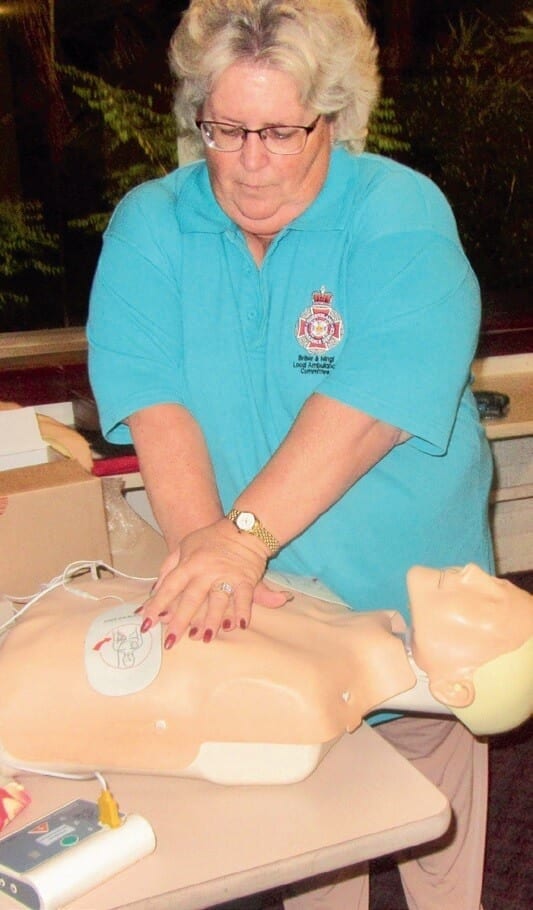
They guide you through each step of the process. They won’t give the person an electric shock unless it’s necessary, so you can’t harm someone by using an AED. Last month, Bribie Rotary dedicated one of their weekly meetings to watch a demonstration on how to use a Defibrillator. The demonstration was conducted by two of our members Rae Guyder and Bernie Wilson who are also members of the Local Ambulance Committee (LAC).
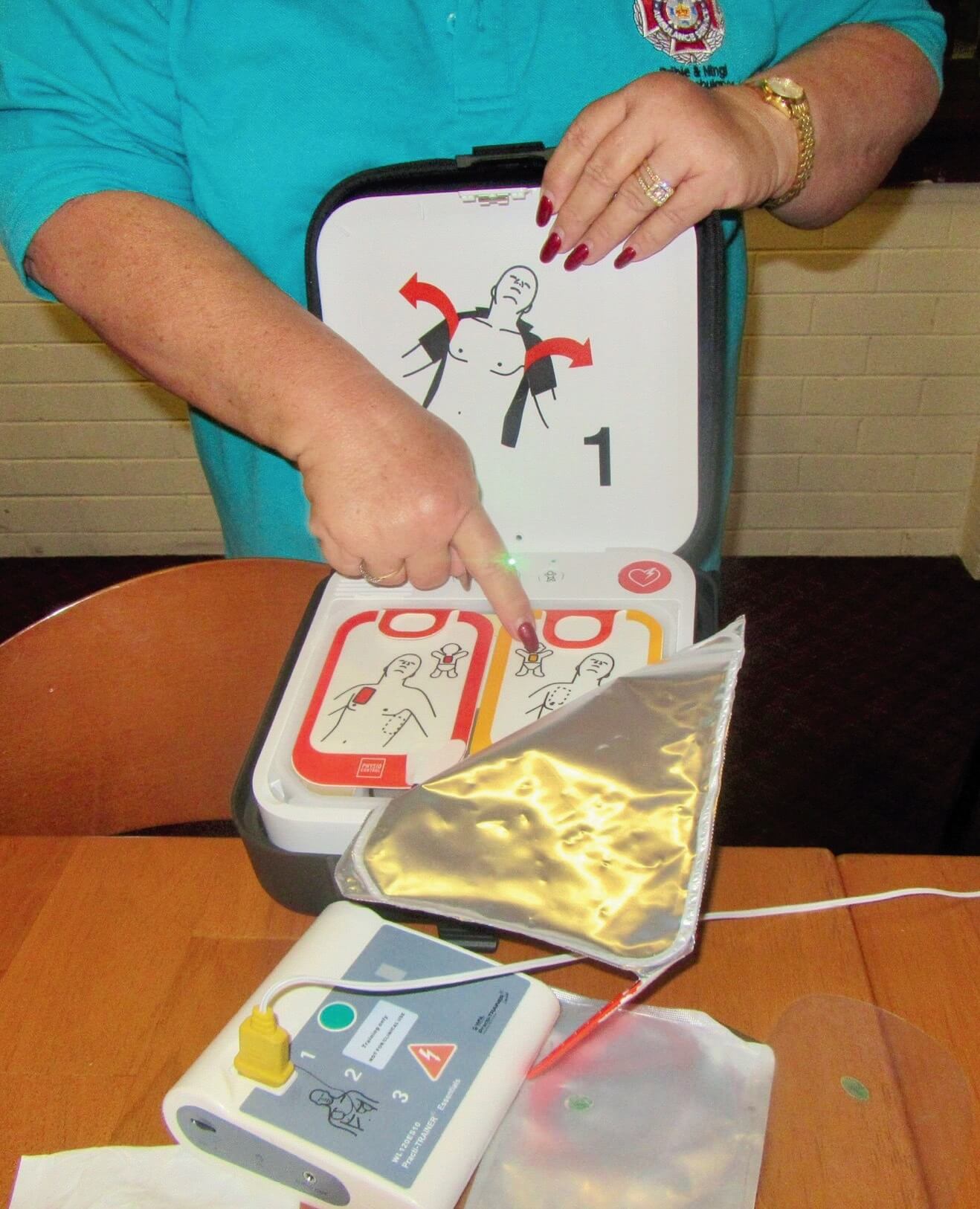
I must admit that I was hesitant about using an AED, however after watching the demonstration, I realised the devices are designed to be easy to use and no “formal” training is needed. As soon as you turn the AED on it starts talking and takes you step by step through what to do. Remove all clothing between the neck and waistline, get rid of any water on the person and if necessary shave a small patch on the chest so the pads have direct contact with the skin.
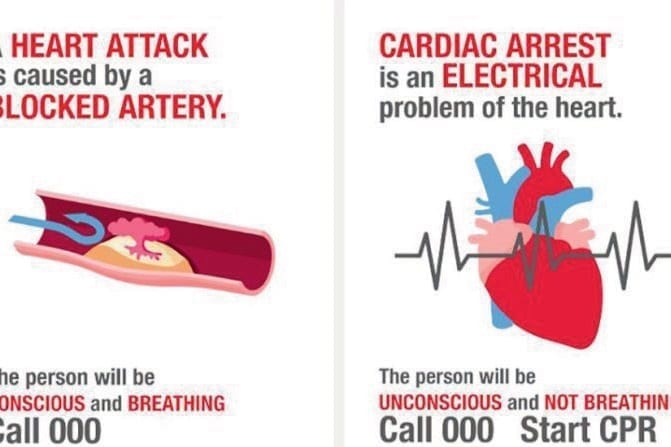
Place one pad below the right shoulder and one under the heart (left ribcage). The AED will then deliver a shock that interrupts the erratic rhythm of the heart, giving it a chance to return to its normal rhythm. You should then continue CPR. The device will continue to monitor the person’s heart and if it stops again the unit will audibly advise that another shock is required. Perhaps one of the most important things to know is that a heart attack and cardiac arrest are two very different things.
Rotary AED
Bernie Wilson demonstrates how to use AED
A heart attack is when an artery in the heart gets blocked or becomes too narrow for blood to flow through normally. This prevents blood from getting to some parts of the heart muscle. This damages the heart, sometimes permanently. On the other hand, a cardiac arrest is when the heart suddenly stops beating. This means that the blood stops flowing to all parts of the body including the heart and brain. As soon as this happens the process of death starts. At some point, usually within 10 minutes, the damage to the heart and brain will become so great that it can’t be reversed.
The chance of survival drops by around 10% every minute after the heart stops. With a cardiac arrest, urgent treatment is required to keep the blood moving around the body and to try to ‘restart’ the heart. When CPR and AED are provided within the first few minutes the chances of survival are the greatest. AEDs are usually found in shopping centres, workplaces, sports grounds, hospitals, and gyms. This year, Woolworths is rolling them out to all its stores across Australia for the use of both workers and customers. Our Bribie Rotary AED will be located in our Rotary Market Van and will be available to anyone in need on Rotary Market Day – the second Sunday of each month.
Please let stall holders and friends know that we now have a Defibrillator. Come and see us at our next markets on Sunday 13 October and one of our dedicated team will show you where it is located. The first recorded example of shocks being used to restart a human’s heart is in 1947 by US surgeon, Claude S Beck. We have all seen ‘the paddles’ being used in movies and television shows and know how effective they can be. So if the need ever arises don’t be afraid to do something! Don’t stand back and watch, remaining one of the crowd. ACT! Time is of the essence.
If you know where the AED is – get it. Helping early is the key to life! Remember: If a defibrillator and/or CPR is used correctly within 3-5 minutes of cardiac arrest/ heart attack, survival rates jump from 5 percent to 70 percent. Perhaps 10,000+ lives can be saved. One of these lives saved might well be your Father, Mother, Uncle or Aunt. It might also be your son or daughter – don’t ever think the young are exempt! Bribie Rotary: “So much more than a Sausage Sizzle!”
Police have been made aware of a number of school children campaigning for donations in the Bribie Island area.
While police have confirmed that local schools are in fact holding fundraising events and programs at the moment, we would like to take this opportunity to remind community members of what to do should you witness what you think may be suspicious activity.
If you are approached by anyone claiming to be fundraising, police encourage residents to ask to see sponsorship booklets that they should be carrying to record donations in.
If they are unable to produce the booklet, then residents should consider not donating.
If you believe that you may have given money to children or anyone else misrepresenting themselves, you are encouraged to contact the police and report it.
If you have information for police, contact Policelink on 131 444 or provide information using the online form 24hrs per day.
You can report information about crime anonymously to Crime Stoppers, a registered charity and community volunteer organisation, by calling 1800 333 000 or via crimestoppersqld.com.au 24hrs per day.
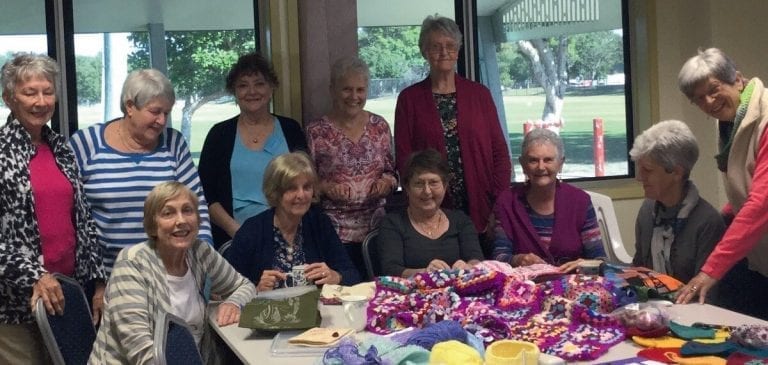
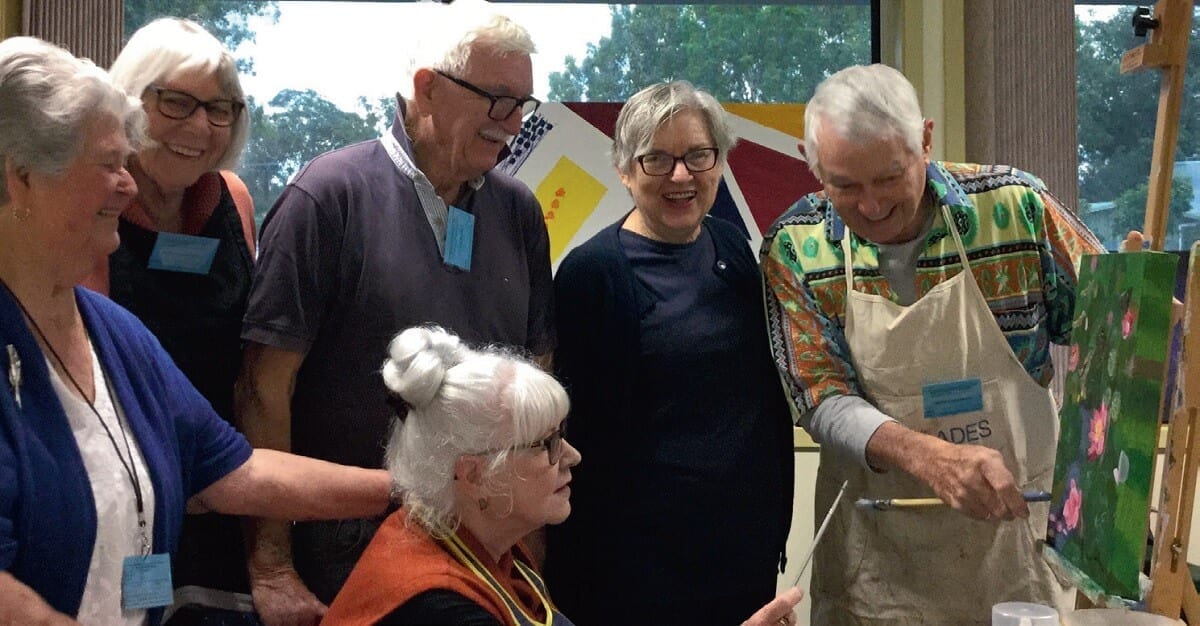
With just a few weeks before Christmas is upon us, here is an opportunity to find unique gifts for everyone. There are so many talented and skilled people on Bribie who create the most remarkable things. On SATURDAY 26th OCTOBER they will display a huge range of works that are all for sale at bargain prices. The annual U3A ARTS & CRAFTS MARKET DAY is where many students at U3A classes display their talents.
This will be held at U3A Centre in the main RECREATION HALL on First Avenue and will open at 9 am and finish at noon. This is a once a year opportunity to see and buy some of their remarkable creative work. Bribie University of the Third Age (U3A) conduct over 30 Arts & Craft classes each week, and this annual Market Day on Saturday 26th October is where they display and offer for sale a wide range of handmade item to both the Members and the general public.
Items for sale include the following:
Handicraft, Painting,
Drawing, Acrylic,
Sewing, Gift cards,
Crochet, Mixed Media,
Pottery, Needlework,
Silk Painting.
This special annual Market Day is a great opportunity to buy unique Christmas gifts for friends and family at very attractive prices. Makers are generally, just recovering the basic cost of materials and not the hundreds of hours of skill and patience involved in their creative hobby. In addition to viewing the displays, there will also be several subject Tutors showing what they do, and the opportunity to appreciate some of the many classes on offer next year.
The U3A Market Day on Saturday 26th October will open at 9 am at the U3A Centre in the Recreation Hall on First Avenue and run for just three hours until 12 noon. Morning tea will be available. The Hall will be buzzing with buyers and sellers with a range of unique items, and those who have not yet discovered the delights of U3A will have an opportunity to view the classrooms and facilities.
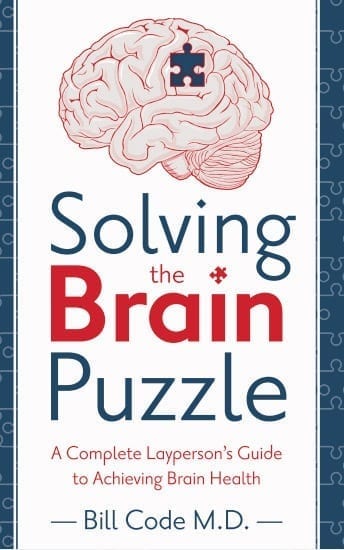
Other U3A activities All existing U3A members are reminded to pay their annual $10 membership fee during the month of October. New members are welcome to join U3A at any time and can enroll in any advertised courses that have vacancies or go on the waitlist. On Friday 1st November at 1pm an “Insight” presentation will be given by visiting international specialist Doctor Bill Code who will speak about his research on “Solving the Brain Puzzle” Term 4 Classes for this year at U3A will finish on Friday 6th December, but membership renewal and payment for next year’s classes can be done before term ends.
Timetables and Newsletters can be found at the Bribie Library, Neighbourhood and Information Centre and all information are on the web site www.u3abribie.org.au and you can contact U3A on 3408 1450 during office hours. Term 1 next year starts on 28th January and runs until 3rd April.
We all have one.…but do we know how to keep it healthy? There are challenges in the way our Brain works with us, and for us, or even against us, as we progress through life. Some people have great memories, others seem very intelligent, while others may change over time. You can hear a specialist International Doctor speak about “Brain Health”, here on Bribie, with valuable insights for everyone.
This Canadian Doctor and author is visiting Bribie Island for a few days and has agreed to give a free public presentation at U3A. Dr. William Code lives on Vancouver Island in Canada and is an anesthesiologist, integrative medicine specialist, and acclaimed international speaker and author.
Dr Bill
A medical practitioner for 40 years, he studied integrative medicine under Dr. Andrew Weil at the University of Arizona and is a leading expert in “Pain Management” and Brain Health. He has had his own 22- year journey with MS and has written three bestselling books. He is in Australia to promote his latest book “Solving the Brain Puzzle” and has kindly agreed to give a free public talk.
Free Public Talk on Bribie Island This presentation is open to the public and will be held at U3A Recreation Hall on First Avenue commencing at 1 pm on Friday 1st November. The one-hour presentation will be followed by personal Questions and Answers, and afternoon tea for $2. Booking is essential so phone U3A during office hours on 3408 1450 or add your name to the list on U3A Notice Board.
Bribie Island Croquet Club is having a very exciting time as we almost have a fifth court to play on. Work has been continuing for months now, preparing the area, leveling the ground, treating the soil to try to prevent weed growth, laying the turf, regular cutting, and that is just the court.
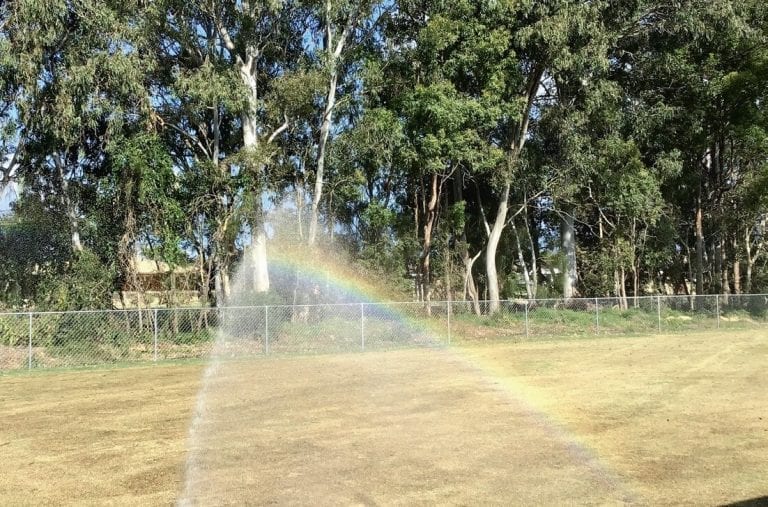
Featured image(above): Watering the green
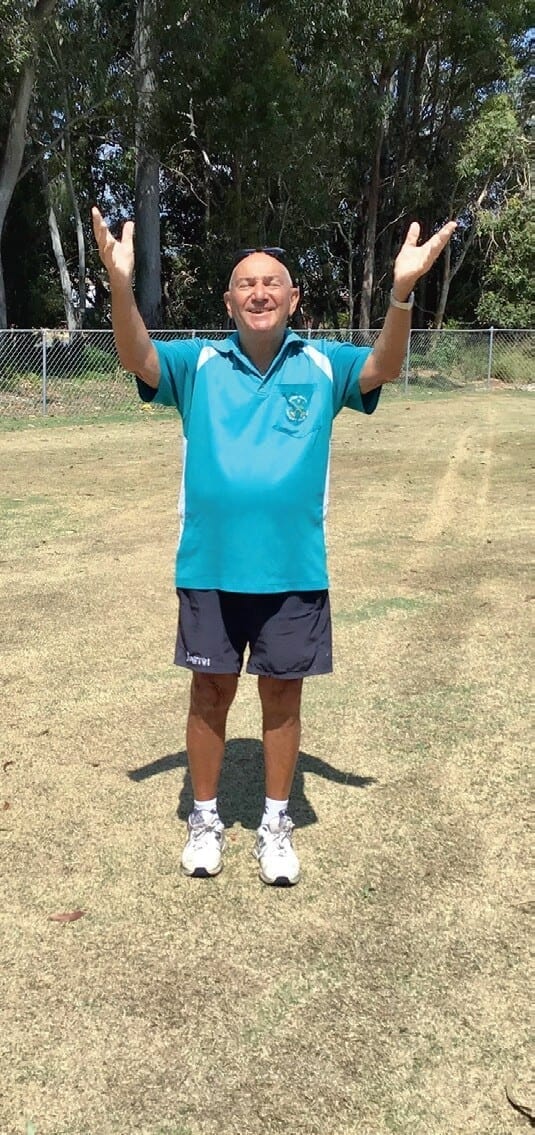
Then a fence needed to be put in place and a new shelter seat erected. Busy Fingers kindly supplied the shelter shed to protect any players sitting out from the Queensland sun. We are almost there. The grass was cut again this week but it is not very green. You can see in the photograph Dick Byres the President appealingly to the skies for some rain!
Dick Byres the President appealingly to the skies for some rain!
At the moment we are watering it in the hopes that it will be ready for the Official Opening on 9th October. This will be a fantastic help to the club because with membership growing sometimes there are too many people to play on the existing 4 courts on Wednesdays and Fridays.
Soon we will be able to utilise all five courts with the possibility of playing different disciplines playing at any one time. We play Golf Croquet, Association Croquet, Ricochet and Gate ball. Why not come and have a go?
Get all your community news and information. Bribie Islands only community gloss magazine NOW EVERY TWO WEEKS! – Articles on boating, camping, fishing, life, drama, travel destinations, sports and what to see and do on Bribie Island. Covering charities, organisations, places, children’s activities, arts and crafts, tourist destinations, heritage parks, technology, science, music, gardening, and much more.

 Why we feel the way we do
 I think we all feel worthless sometimes…


 As it is a dessert wine it needs to be chilled and as with sauternes and botrytis affected wines, they not only compliment deserts but also aged blue cheese and foie gras. Icewine must be made from approved grape varieties such as Vidal, Riesling, Sauvignon Blanc, Cabernet Franc, and Cabernet sauvignon.
 Unfortunately everywhere seems to be out of stock at the moment of the Canadian wines however it appears that Frogmore Creeks Iced Riesling made in Tasmania and which uses a tank freezing process is available at Dan Murphy’s for around $23 for a 375ml bottle. I had an email from Lissa this week who buys her wine online and asked why I mention BWS, Dan Murphy’s and Liquorland so much which is a fair observation. I would like to expand my purchasing options and should include the BottleMart over at the Sandstone Point Hotel but apart from the clubs, we are pretty starved for choice.