Home Blog Page 80

Hit and Run, Bribie Island

Police are investigating the circumstances surrounding an incident where a 69-year-old woman was located with significant injuries at Woorim at Bribie Island on Sunday March 4.

Around 7pm the 69-year-old woman left a North Street business and was walking on a Boyd Street footpath when it is believed she was struck by a bicycle or motorised device near the Edwin Schrag Lookout.

The woman was transported to the Royal Brisbane and Women’s Hospital for multiple bone fractures and lacerations.

The woman (captured in CCTV) is described as, Caucasian with short grey wavy hair.

She was wearing a light blue t-shirt, dark navy knee-length shorts, white joggers and was carrying an over the shoulder dark coloured hand bag.

Police would like to talk to anyone who may have any information about the incident or those involved.

Investigators are also appealing for anyone who was in the area at the time and may have CCTV footage or vehicle dash cam vision to come forward.

If you have information for police, contact Policelink on 131 444 or provide information using the online form 24hrs per day.

You can report information about crime anonymously to Crime Stoppers, a registered charity and community volunteer organisation, by calling 1800 333 000 or via crimestoppersqld.com.au 24hrs per day.

Quote this reference number: QP1900441274

History of Bribie Island Street Names

Tags: Bribie Island History. Queensland. Moreton Bay. Brisbane. Street Names

I get many comments about these regular History Pages with readers often surprised to learn new things about the fascinating history of Bribie Island. The more you understand about this place, the more you can appreciate it. This rich history is in old buildings, parks, and even street names.

Street names such as CAMPBELL, WEBSTER, and TRIPCONY record the contribution of early pioneers, SUNDERLAND, RENTON, McDONALD, BOYD, and RICKMAN were early in business, while KOOPA and DOOMBA were ships that brought the first tourists here. The language of the indigenous people is remembered in names like BIBIMULYA, TOORBUL, and NEENUK.

Many streets are simply named for BIRDS, FISH, and TREES but the background to some street names that you drive or walk down every day may surprise you. There is an Exhibition currently showing at the Bribie Seaside Museum called “The Streets we Live in” which tells about several Bribie Street names, and I encourage you to go and see it. The exhibition runs until 21st APRIL.

I have written about just a few of them here to spark your interest. The Historical Society research the rich history of this Island and you can view many more interesting stories on our Blog Site at http://bribieislandhistory.blogspot.com or contact us on [email protected]
BRIBIE STREET NAMES

AVON Ave.

Avon was the name of the Ship that was scuttled in the Passage in 1915, and is still visible at low tide today 104 years later, across the Passage from Banksia Beach. It was fabricated as a Paddle Steamer in Glasgow Scotland in 1867, and shipped out in sections to Melbourne and reassembled. This 100 ft. long steel vessel ran from Melbourne to the Gippsland Lakes for 23 years before running aground on the NSW coast in 1891. It was largely abandoned before being auctioned for just 100 pounds and then used as a coal barge on the Brisbane River until it collided with a Ferry in 1911.

James Clark, known as the “Pearl King” before losing much of his pearling fleet in a Cyclone, farmed numerous Oyster Leases in the Passage from his land at what is now Sandstone Point. He purchased the hulk of the AVON, towed it to Bribie and scuttled it in the Passage as protection for his Oyster beds in 1914. It has been a navigation landmark in the Passage for more than a hundred years but is now rusted to the waterline and visible only at low tide.
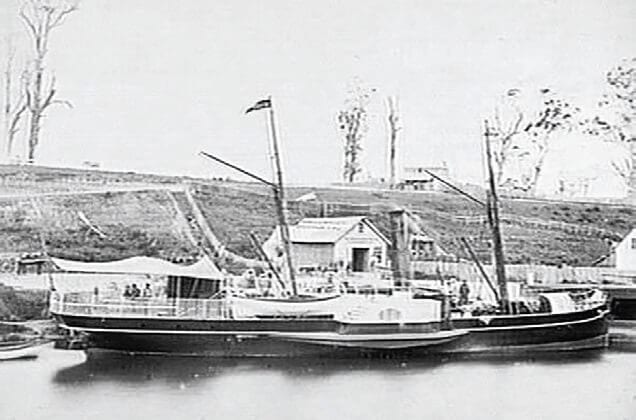
Paddle Steamer Avon 1880’s
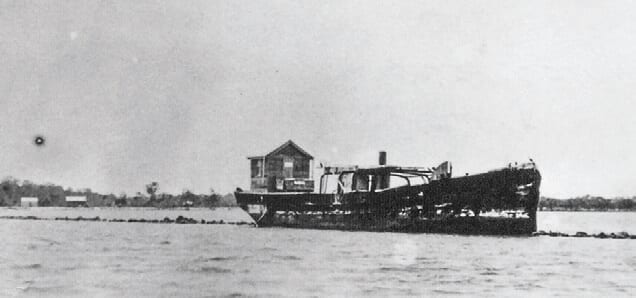
Avon Hulk Scuttled 1915

BANYA St.

Banya Street takes its name from an early oyster camp in that area, long before the development of Bribie Island by the Brisbane Tug Company. Fred Foster also had a camp there in the 1880’s catching and processing Turtle and Dugong, which is how FOSTER Street got its name. In 1912, George Campbell, a director of the Brisbane Tug & Steamship Company wrote to the Lands Dept. in Brisbane suggesting the recently surveyed new township on Bribie Island is named Banya.
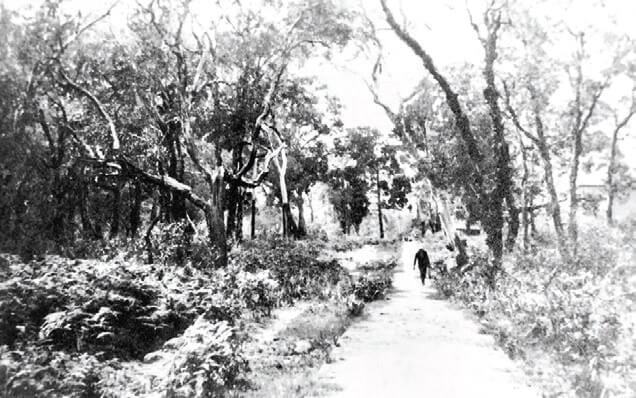
Banya Street 1920’s(above)

Banya Street 1954(below)
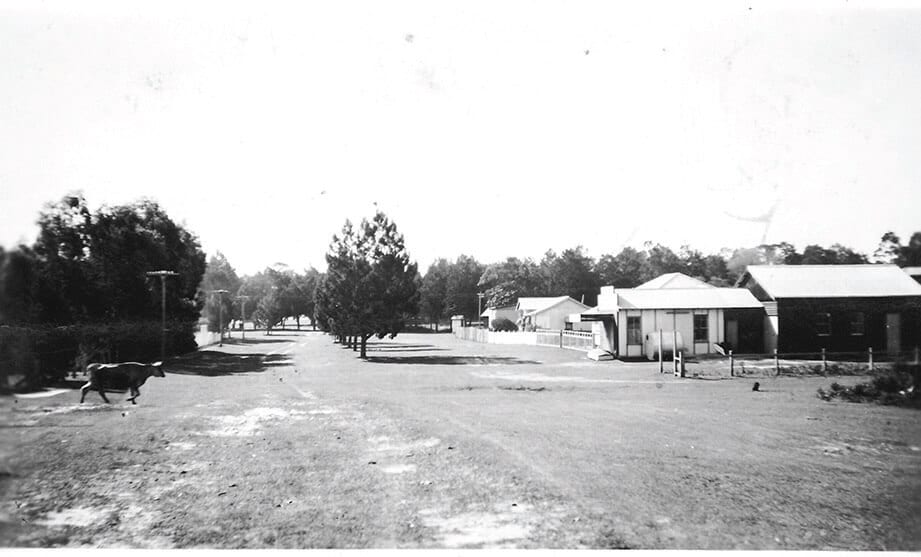
That name was deemed to be too similar to other place names in Queensland and so the name Bongaree, (Matthew Flinders aboriginal companion who first landed here in 1799) was selected. It was however agreed to have a major street in the new Township of Bongaree named Banya. Initially surveyed as a wide road reserve Banya St. began as a narrow bush sand track.

As land was sold and houses built it grew to become one of the grandest streets on Bribie Island with many historic buildings still remaining. These include two early churches, the first electricity Generator, Bakery and the grand Coungeau House (now TocH) built in 1916 for Naoum and his poet wife Emily, who wrote Australia’s first Opera there.

CAPTAIN COOK Dr.

Is one of the many Streets at Banksia Beach that relate to the voyages of James Cook, the first person to sail and map the East Coast of Australia, but he never came anywhere near Bribie Island. Cook was a long way out to sea, east of Moreton Island when he passed here on 17th July 1770.

Cook named Cape Mor(e)ton and the Glasshouses but was not aware of any of the islands of Moreton Bay. It was a Developer who gave street names such as BANKS after Joseph Banks the Naturalist , and Daniel SOLANDER his assistant Botanist, WHITBY and PLYMOUTH for seaports in England, VENUS for Cook’s primary purpose of observing the transit of Venus in Tahiti, ELIZABETH BATTS was Cook’s remarkable wife and mother of their 6 children, who outlived all of them.

ENDEAVOUR was the name of Cook’s sailing ship that made this amazing world journey, and BOTANY records Cooks first landing in Australia. Most of the street names in the western part of Banksia Beach record names and events related to that first voyage of discovery by James Cook in 1768/71.

Cook went on to spend another 7 years as a remarkable navigator and Captain of the “Resolution” on two long journeys exploring for a Great South Land and North West Passage, before his untimely death at the age of 51 at the hands of natives on Hawaii in 1779.

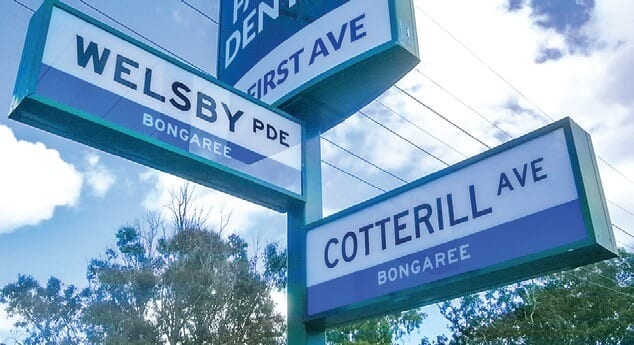
COTTERILL Ave

Named for the Cotterill family who emigrated from Nottingham, England to Bribie Island in November 1924 at the invitation of her uncle Alfred Hall. Lily Cotterill was a niece of Alfred Hall who had a General Store at Toowong before moving to Bribie and opening the first Shop at Bongaree in 1918 in partnership with Artie Bestman. Lily Cotterill, her husband Wilf and daughter Muriel aged 8, came from England in 1924 and built a corrugated iron residence and first kiosk shop at Woorim as soon as the new road had been constructed. They later moved to Bongaree to manage Hall & Bestman’s leased farmland.

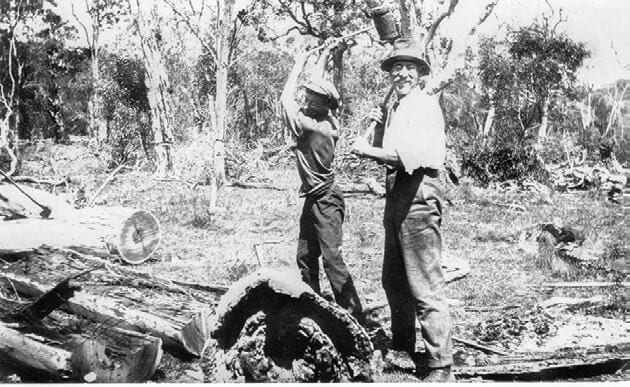
Wilf Cotterill quickly became known as the “ Melon King” growing vegetables, raising chickens, ducks, and eggs for sale, as well as developing the substantial farmland. In 1924 the farm was 321 acres of leased land on the north side of Shirley Creek held by Alfred Hall and Arthur Bestman. By 1930 the lease was held by Alfred Hall and Wilf Cotterill who set to work clearing the land, erecting farm buildings and a house.

Over the years he built a successful dairy farm supplying fresh produce to the Hall & Bestman Store (corner of First Avenue and Toorbul Street) as well as the island’s few residents and thousands of visitors and campers. During the years of World War 2, he supplied fresh milk to the Australian and American military forces located on Bribie Island and Toorbul Point.

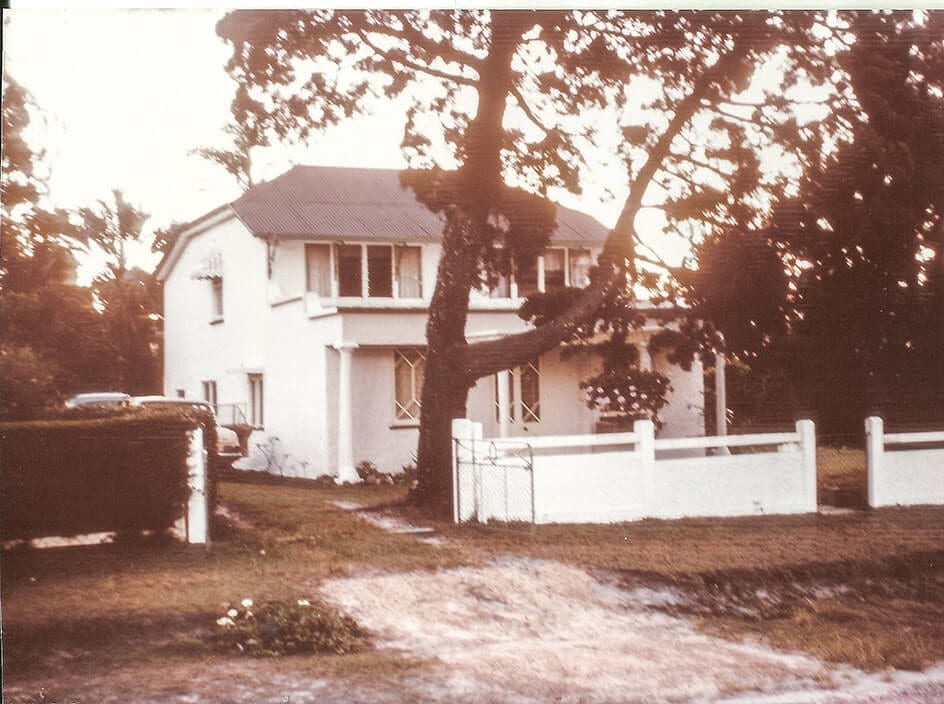
By 1950 the leasehold was converted to freehold and Wilf Cotterill became the sole owner. The land was later subdivided for residential housing known as the Cotterill Estate, but the original Cotterill farmhouse remained on a block of land between Cotterill and Hall Avenue until 2008 when it was demolished to make way for units.
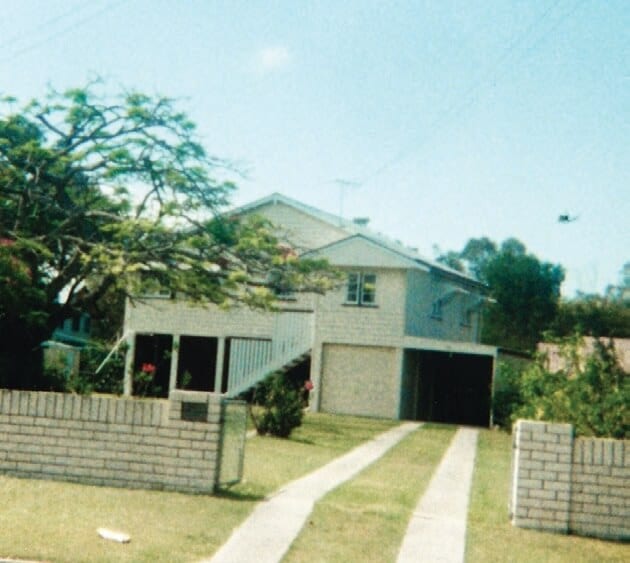
Cotterill Daily House 1996(above)

Clearing Land 1924(below)
FIRST AVE.

First Avenue was the first of five short avenues in the new Township of Bongaree and later became the first road that crossed Bribie Island to link Bongaree Jetty with the Ocean Beach. Originally known as Campbell Ave. in 1912 it was just a bush track, used by some early residents and visitors who made the long hot walk along the sandy track from Bongaree Jetty to Ocean Beach.

In 1914, George Campbell of the Brisbane Tug and Steamship Company obtained a 21-year special lease with a plan to build a tramway from the Bongaree Jetty to the Ocean Surf Beach. However, by 1923 Mr. Campbell conceded the tramway was not going to happen and a sand roadway was cleared using stone and cinders in the swampy low points, transported from Brisbane and unloaded on a special temporary jetty beside the main jetty at Bongaree.

From 1924 when this private road was completed it became known as Ocean Beach Road and was maintained by the Tug Company for the use of their company buses. There were few other vehicles on the Island in those days, but they could use the Toll road for a small fee, and pedestrians were still free to walk along the roadway. This situation continued until the early 1950s when the Brisbane Tug & Steamship folded and it became a public roadway. By the 1970s the road was part of the Caboolture-Bribie Island Road that ran over the recently completed (1963) Bribie Bridge to Woorim and is now known as First Avenue.
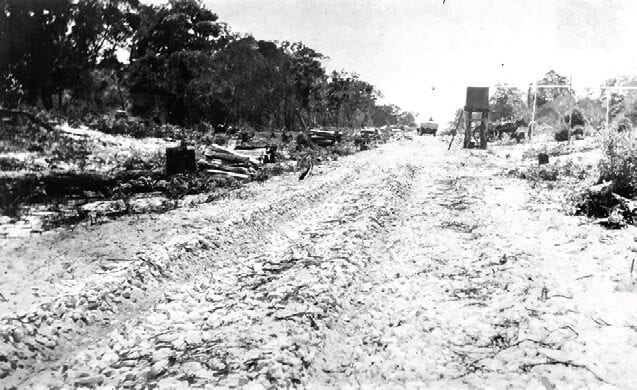
Clearing Ocean Beach Road, 1924

GOODWIN Drive

Named for John Goodwin who built the first Hotel on Bribie at Ocean Beach in 1939. John Goodwin managed the hotel with his brother Patrick and sister Isobel. It was the first licensed property on the island and had modern comforts for residents and holidaymakers. Soon after the Hotel opened World War 2 broke out and Goodwin’s Hotel Bribie was taken over by the military and used as Officers’ accommodation.

John transferred the liquor license to a small Cottage in Bongaree as a temporary Hotel, built a bar on the ground floor and lived upstairs with his siblings. This English style cottage was located on the corner of Banya and Foster Streets but has since been demolished and a modern home built. After the War, when the Hotel Bribie reopened, guests had a choice of 11 guestrooms and access to the bar, parlour, and lounge. Large swing doors between the rooms opened up to convert the bottom floor into a dance hall in the evenings. Later in life, John Goodwin became a Caboolture Shire Councillor and was influential in having electricity and water connected to Bribie Island.
Clearing Ocean Beach Road, 1924

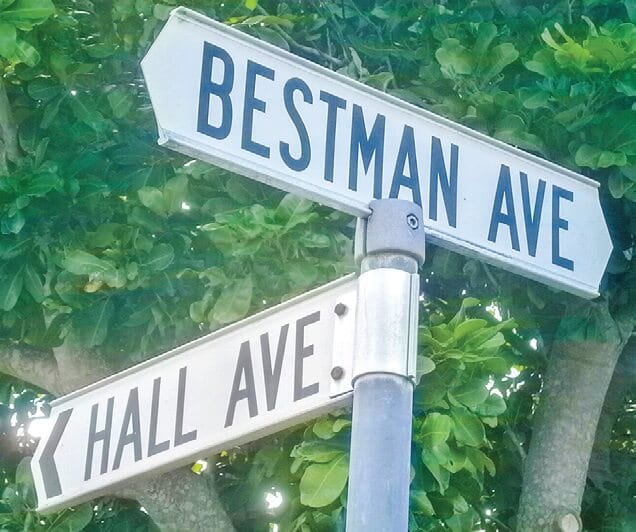
HALL & BESTMAN Avenues.

These two streets are named after friends and businessmen, Alfred Hall and Arthur (Artie) Bestmann (original German spelling with two N’s) Their friendship started around 1912 when Hall, a grocery merchant in Toowong, would come to the newly built Jetty on Bribie Island for fishing holidays.

Here he met Artie Bestman who was the first permanent resident on Bribie Island, though he maintained connections with the family farm at Beachmere. Artie Bestman had cattle and beehives on Bribie and supplied fruit, honey and his father’s homemade wine to early visitors. A partnership developed between Hall and Bestman when some campers on the island asked Alfred to bring supplies from his grocery store in Toowong.

In 1913, Alfred Hall built a weekend holiday home next door to Bestman, opposite the Jetty, and together they started selling groceries out of the window of his spare room to customers. As business grew, they built the island first grocery shop in 1918 which became known as the Hall & Bestman Store. This was located at what is now a Real Estate office on the corner First Avenue service road and Toorbul Street. From the early days, they had dairy cows for milk, chickens for meat and eggs and grew vegetables to supply both visitors and residents.

They also hired out cut timber tent poles to campers and would erect them for a fee before the campers arrived on the steamships.
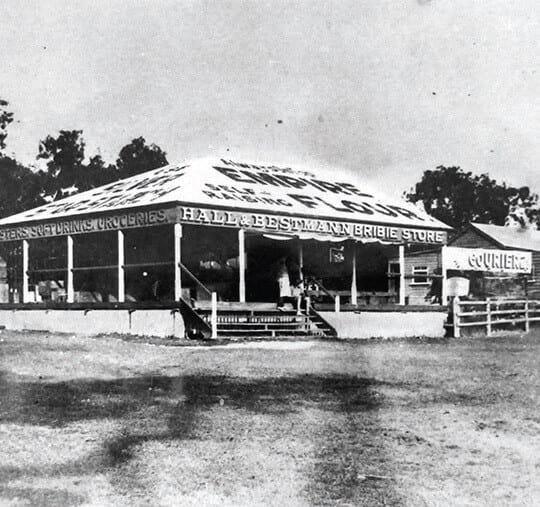
Hall & Bestman Store 1920’S

WELSBY Pde.

This honours Moreton Bay historian and businessman Thomas Welsby (1858-1941), who was a respected politician and sportsman. His association with the Moreton Bay region started as a young man and continued throughout his life. Welsby sailed and fished throughout the bay and his intimate understanding encouraged his writings and contributed to the social and geographic knowledge of Moreton Bay.

He wrote seven books, the last in 1937 when he was aged 79 about a legendary character Bribie the Basket Maker. Welsby’s story tells of the island getting its name from a man known as Bribie, an escaped convict who came to the island around 1842. He is said to have made fishing baskets in which he caught fish and crabs and lived on the island with an indigenous woman. However, by Welsby’s own admission, there is no evidence at all that such a person ever existed In addition to his many books, Welsby had many accomplishments in his life and maintained a house on Bribie Island with an indigenous housekeeper.

He was a member of the Queensland Legislative Assembly and founding member and president of the Historical Society of Queensland. He was also a founder of the Brisbane Sailing Club which later became the Royal Queensland Yacht Squadron, and founding vice president, president, and patron of the Amateur Fishing Association of Queensland (AFA) formed in 1904, which established a base on Bribie Island in 1925, which is still in use today.
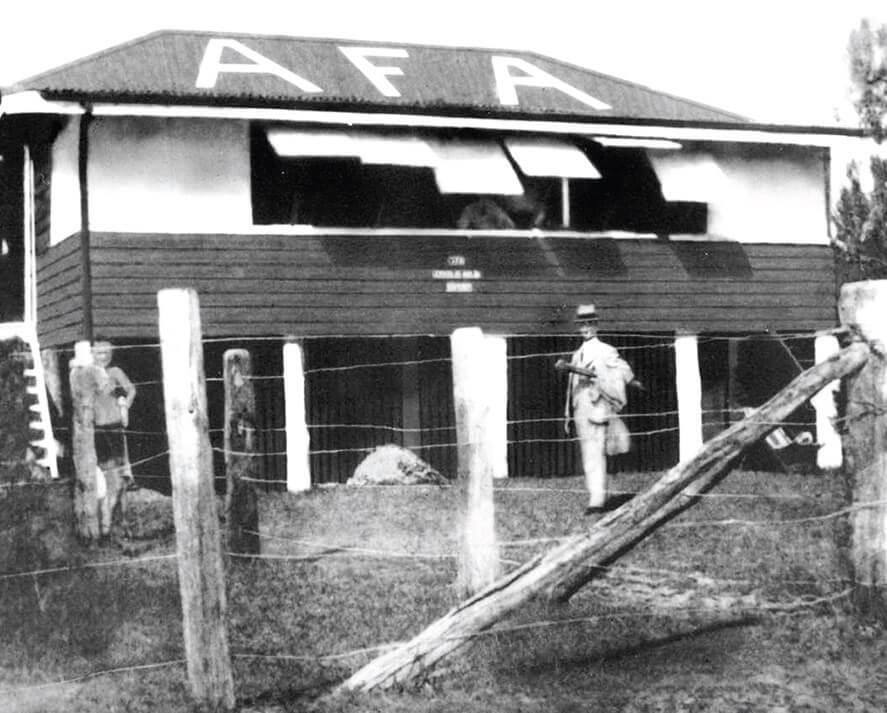
AFA Cottage 1925

WINSTON Dr.

Named for the Winston family of Ben & Mary Winston and their three sons Arthur, Edwin and Frank Winston. Ben Winston was elected a committee member at the first meeting of the Bribie Island Progress Association in 1922 and was Bribie Island Bowling Club’s delegate to the Queensland Bowling Association.

In 1930 sons Arthur and Edwin Winston acquired a leasehold over a 360-acre portion of land which stretched from Creel Bend north to Benabrow Avenue and inland to where Winston Drive is today, where they established a Tobacco farm, which was then an experimental crop. The land was later converted from leasehold to freehold and subdivided to become known as the Winston Estate.

Older brother Frank would often visit Bribie island and he was an early camera and photography buff, so these visits gave him many photographic opportunities. In 1933 Arthur and Edwin Winston purchased the Bestman Store business which they carried on as Winston Bros Cash & Carry for the next three decades. They were the first to introduce bottled milk to Bribie Island which necessitated the installation of a cold room. A wooden seat was placed outside the shop as a popular meeting place for locals. It was affectionately known as The Seat of Knowledge.
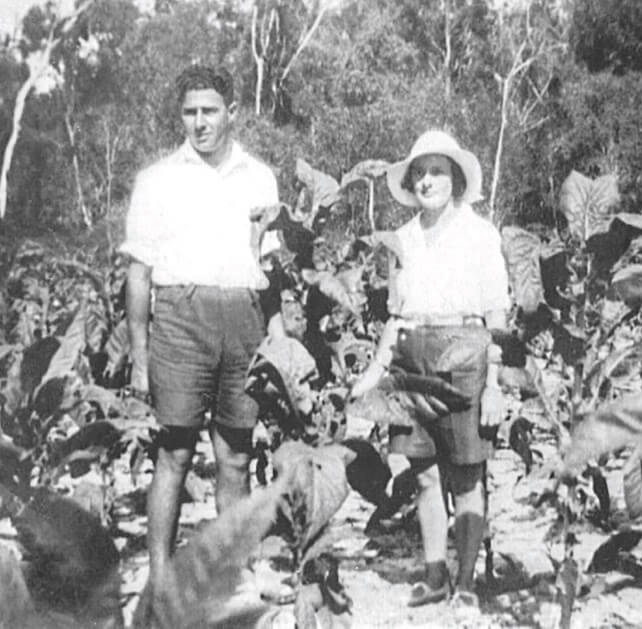
Mr & Mrs. Hall at Winstons Tobacco Farm 1936

Arthur Winston became a Caboolture Shire Councillor for Bribie Island in 1962, following the death of John Goodwin, who had built the Hotel Bribie back in 1939. Frank went on to make extensive movie Films and Photos of Bribie, and created postcards from his photographs and sold these at the family store. Much of this extensive and historic photo collection was recently displayed by Lissa Winston at the Seaside Museum.

WHAT ABOUT YOUR STREET.

I encourage you to go and see the new Exhibition titled “THE STREETS WE LIVE IN” at the Bribie Island Seaside Museum which will run until April 21st. The Historical Society has monthly public meetings at the RSL Club on the second Wednesday of each month commencing at 6:30 pm. with interesting guest speakers on a wide range of topics, and you can see many more photos and articles on our Blog Site at http://bribieislandhistory.blogspot.com or contact us on [email protected]

If you know any history about your street, talk about it in the comment section below

Australian Tourist Destinations – Northern New South Wales

Tags: Australia, NSW, New South Wales, Travel and tourist destinations

Trials and Tribulations in Northern New South Wales

After our rather chaotic drive getting lost through Sydney, we decided we needed a longer stop at Shoal Bay, to get the van and ourselves back into shape. Wherever we went a certain smell was following us, if you know what I mean…we had a few misdiagnoses, blaming spring fertilizers and other vans, until we finally had to admit that WE had a black water valve problem!

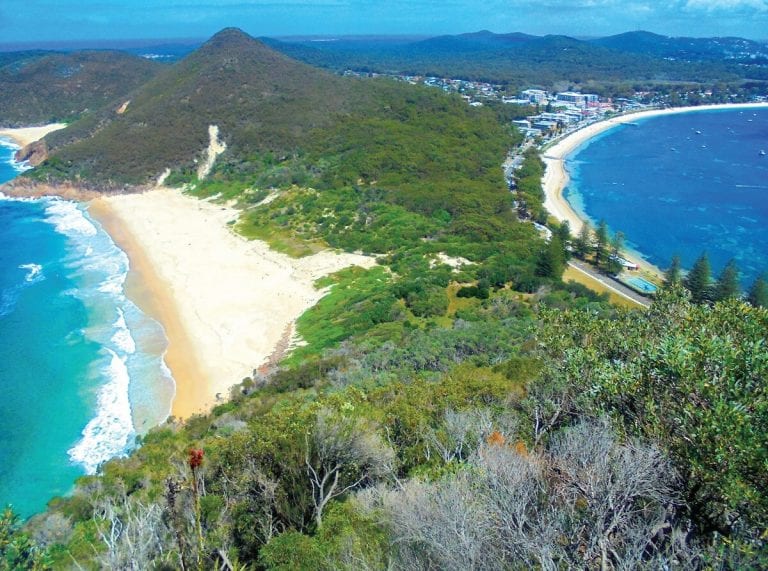
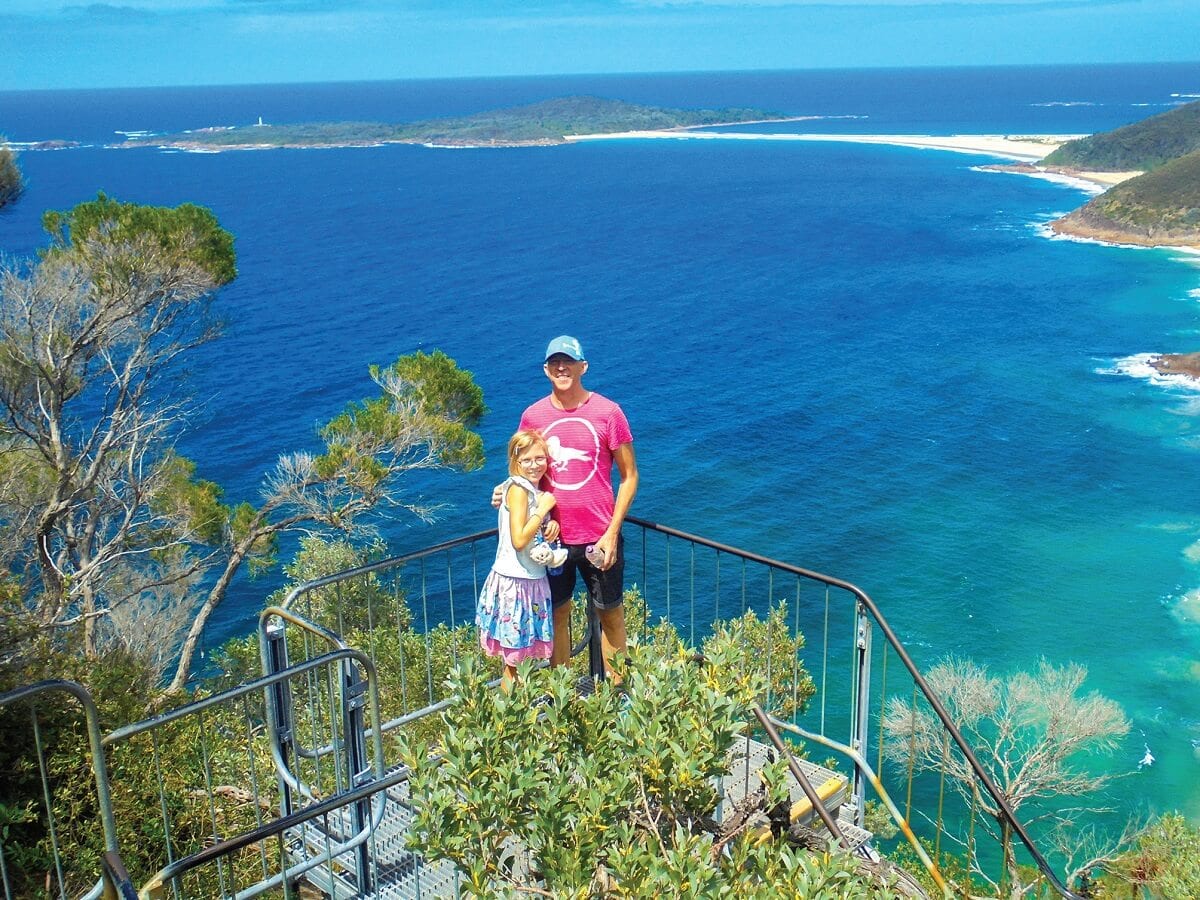
Featured Image(above): View over Shoal Bay and Zenith Beach from Tomaree lookout

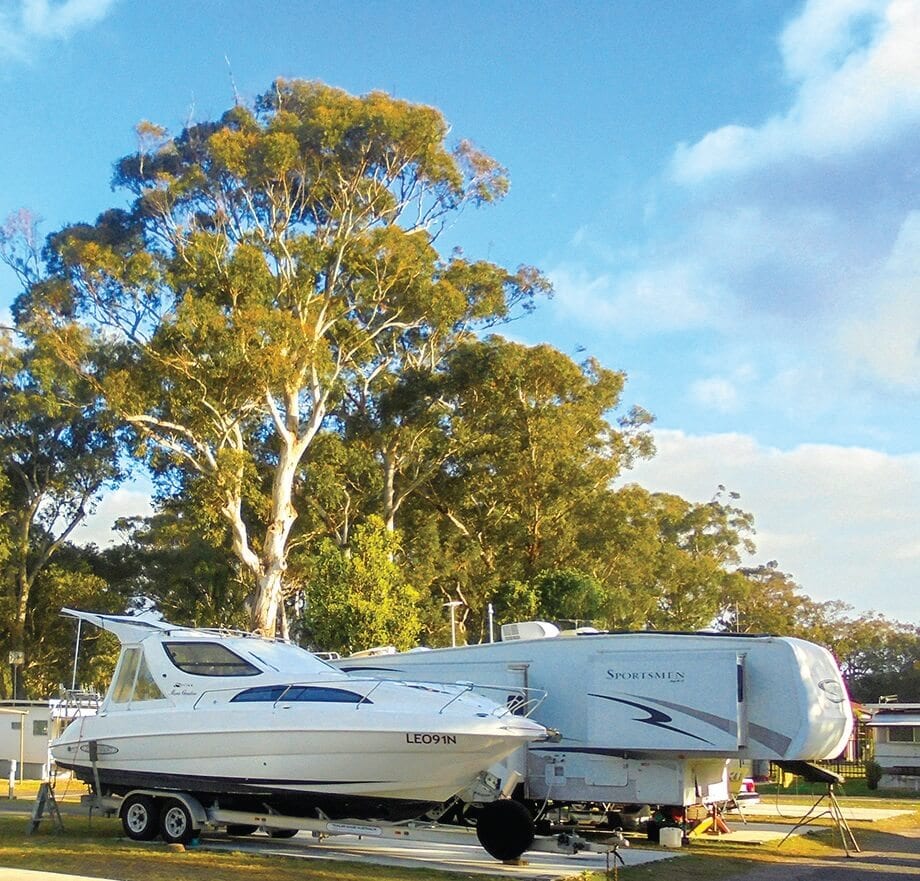
To top it off the hot water system collapsed, with water leaking out the van, right left, and centre! Luckily we still found a spot in a caravan park close to a toilet and shower, yet parking was another topic. Everything was chockers, and we had to squeeze in between multiple vans and a huge boat. Not sure why someone had their boat in the park, but I guess if you love boats and get sea sick then the caravan park is another option. Unfortunately, as the boat was so huge, we were eye to eye with a love nest… do I need to say more?

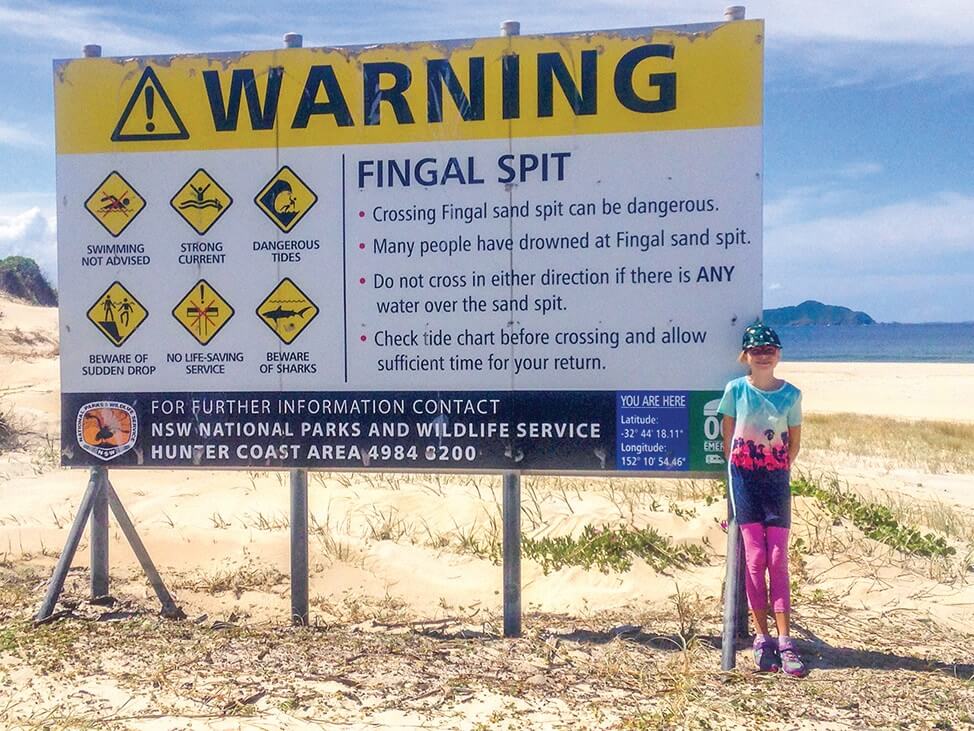
Thankfully the surroundings of Port Stephens were so amazing, that we hardly spent any time spying on our active neighbours, and instead took advantage of all the great restaurants, shops and parks. Our favourite place was the spectacular Tomaree lookout, just half an hour climb from our caravan park. From there one could see across the whole region including dangerous Fingal Spit, which Richard and Ginger braved to cross at low tide.

Australia, NSW, New South Wales, Travel and tourist destinations

Fingal Spit warning sign

It took ten days to get all our plumbing issues sorted before we were ready to pull up stumps. For a change, that morning, we were on time with our packing up, which is important when you have to leave through boom gates with an access code that stops working after your check out time has expired… And then unexpectedly our hooking up of the car to the van turned out rather tricky, as over the last few days caravans left and came and it looked like we were hemmed in!

This is one of those crucial times when you need all those helpful, active neighbours to come out of boats and the woodwork, with some good advice, on how to get you out of the pickle… In the end, all the adjacent caravaners had to move their cars and some even had to hand wiggle their vans until we finally were set free! While everyone was waving good-bye, Richard rounded the corner and a surge of water poured out from the under storage!! It was just like one of those water trucks spraying a dusty road…

Australia, NSW, New South Wales, Travel and tourist destinations

Tomaree Head lookout with Fingal Spit in the background

The waving stopped and everyone stared in disbelief, knowing and having suffered through all our plumbing problems, hoping that it was not the black water tank again! Meanwhile, my bladder was at bursting point, extra agitated from witnessing all that water, but with no time to stop we left the onlookers behind in their puddles in search of a new spot to pull over.

By then we were in a busy town area, and as soon as Richard found a big enough parking area, I dashed into the van to do my business just to hear him call out: ”Sorry Love but I have to move! The van is blocking a driveway, and the driver is in a hurry to get out!” The ‘hurry’ car made it out all right, while I was hanging on to my dear life in the cubicle, as you would on a plane with major turbulence! When I eventually made it out of the van, feeling totally carsick, I mentioned that we should call it a day, find a quiet caravan park and have a Schnapps… never mind it was only around 11 am and the traveling day had not even started yet!

Anyway, once all this was sorted we were finally ready to hit the road, me following closely behind the Dodge with the Rocket (the Nissan 300 ZX, my birthday present we just picked up at Ulladulla), as the brake lights on the Dodge were still dodgy… going on and off depending on bumps in the road. We only had a three hour drive ahead of us and therefore decided to check out a few headlands on the way, with the first one being Black Head. In hindsight, maybe this was not the right day to go sightseeing…

Australia, NSW, New South Wales, Travel and tourist destinationsBeach at Manning Point

Never mind, we pushed on and as luck had it we missed an important turn-off, ending up on a downhill road getting narrower by the minute until we saw a tiny one-way wooden bridge, … which we now totally blocked with our rig… Fifteen months on the road, never getting stuck, not even in the outback, and now on the home stretch in the middle of civilization, here we were… Deep breathing, counting till ten, saying a little prayer…nothing helped and we were faced with reversing up that steep hill or trying to turn around…

We went for option number two, with me informing the piled up and oncoming traffic of our plan while directing Richard until the Dodge and van got jack-knifed … Now it was up to poor hubby to maneuver in multiple tiny steps forwards and backward into the bushes until at long last he was able to complete the turn!

Australia, NSW, New South Wales, Travel and tourist destinations

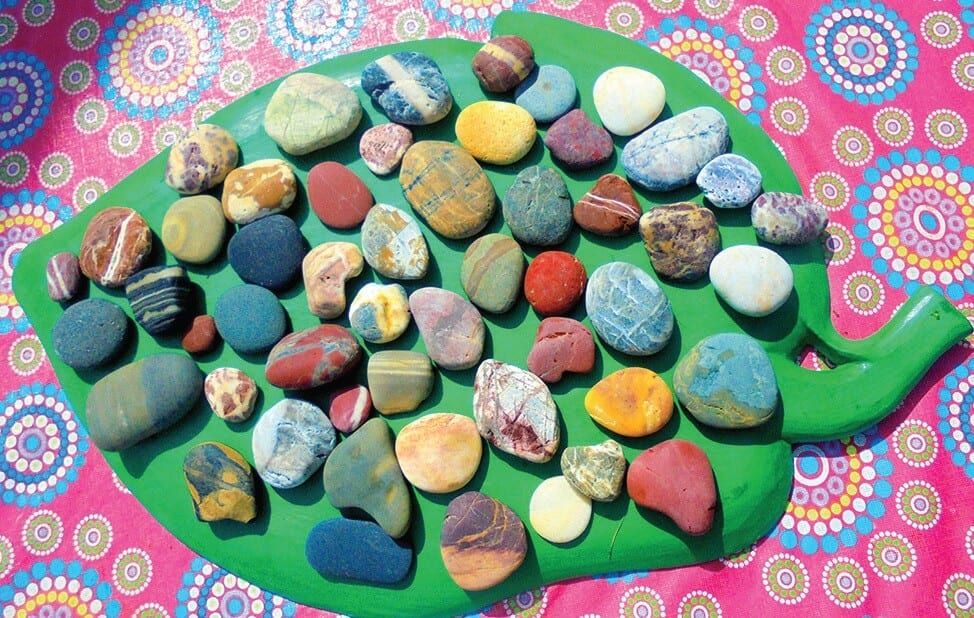
Pebbles at Manning Point

By then it was around 2 pm and we were rather shaken, as you can imagine, yet for whatever reason decided to keep on exploring… This time we figured out a less dangerous approach, namely that I should check out the bays with the Rocket, and Richard, Ginger and Coco would wait with the rig further on at Diamond Bay. Off I went and it was not long before I got stuck between two oversize trucks, carrying a couple of houses, which in return got stuck under a power line…

When I finally got unstuck and reached the Red Bay village centre, I found out that it was a dead end and I was forced to turn around and face the houses on the move all over again. Hoping for something amazing at the end of that exhausting day we arrived at Manning Point …but we could see nooooothing…

Australia, NSW, New South Wales, Travel and tourist destinations

Ginger’s sleeping area next to the dining table

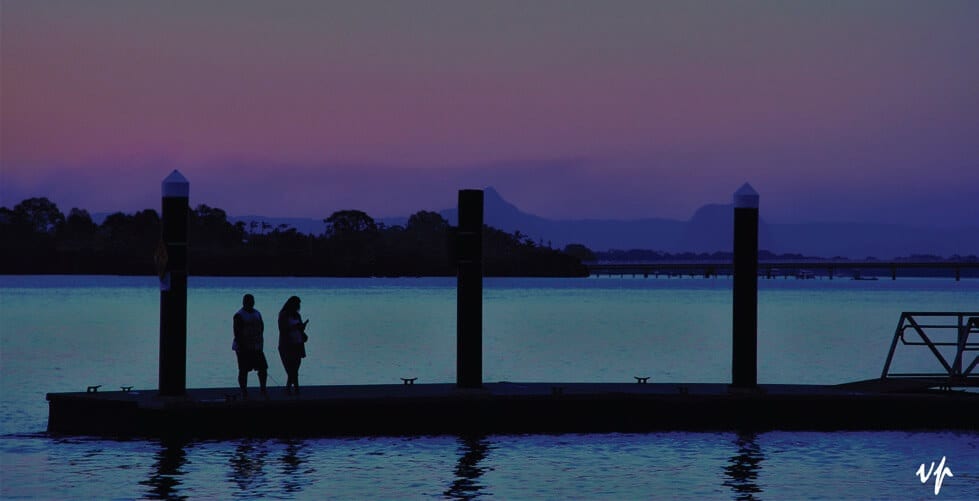
On a closer look, however, after risking a few more side roads, we found a gorgeous caravan park situated between a beach and river, with an amazing pool and a secluded spot just for us! It turned out to be a little hidden gem, backed by a unique beach filled with pebbles on one end, and running into pure white sand on the other. For dinner, we discovered a little pier restaurant on the riverside, where you can watch the pelicans settle in for the night, or view some live footage from an underwater camera, showing fish swimming below, while you eat your anchovies on pizza above.

Australia, NSW, New South Wales, Travel and tourist destinations

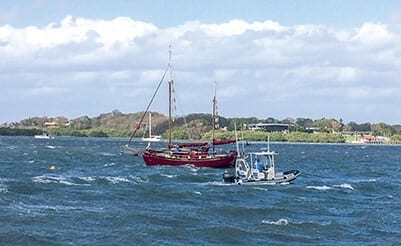
Our neighbour’s boat at the van park

Now you think I over exaggerated about that day, but let me tell you… I actually had to leave out a couple of more incidents as I was running out of space! Maybe it was a sign, that it was time to go home before real disaster strikes? But you know us by now, and I will squeeze in a bit more exploring before we arrive at our new home at Bribie in the next and last episode of The Long Way Round to Bribie!

PHOTOGRAPHY FOR BEGINNERS – Lesson 1

Tags: How to become a photographer. Photography tutorial. Lessons

(Not a professional photographer but just an experienced learner)

Even though photography is an ART, besides knowing your DSLR camera (and, sometimes, besides knowing your compact one, or, even, your smartphone) you might need some technical know-how. This tutorial has no aim other than to help the beginners. For deeper learning, please consult the Internet.

How to become a photographer. Photography

 The photos were taken at the Jetty (Bongaree). This photo is missing some light.(above)

This image has the proper light. (below)

How to become a photographer. Photography

INTRODUCTION: MAIN CONCEPTS

1.- Light

2.- Composition

3.- Message

4.- Edition

Definitions:

1.- Without light, there is no image, no photography. It means that to take any photo you need light and, to obtain a good pic, you need to control that light.

2.- The composition shows your arty side. Nevertheless, even if it’s a very personal point of view, you must know some tips.

3.- The message is what you really want to show. You must know how to transmit it properly.

4.- Normally, to heighten your photos, you need to edit them. The editing allows you to complete or to improve them. In a certain way, it’s your darkroom.

Step by step, I’ll try to explain and develop these matters in the simplest way.

Note: I remind you that the cameras we are considering here are the DSLR ones, digital single-lens reflex camera, (those which lenses can be changed). Nevertheless, some of the matters which will be described here can be applied to compact cameras and smartphones too.

LESSON 1:

LIGHT

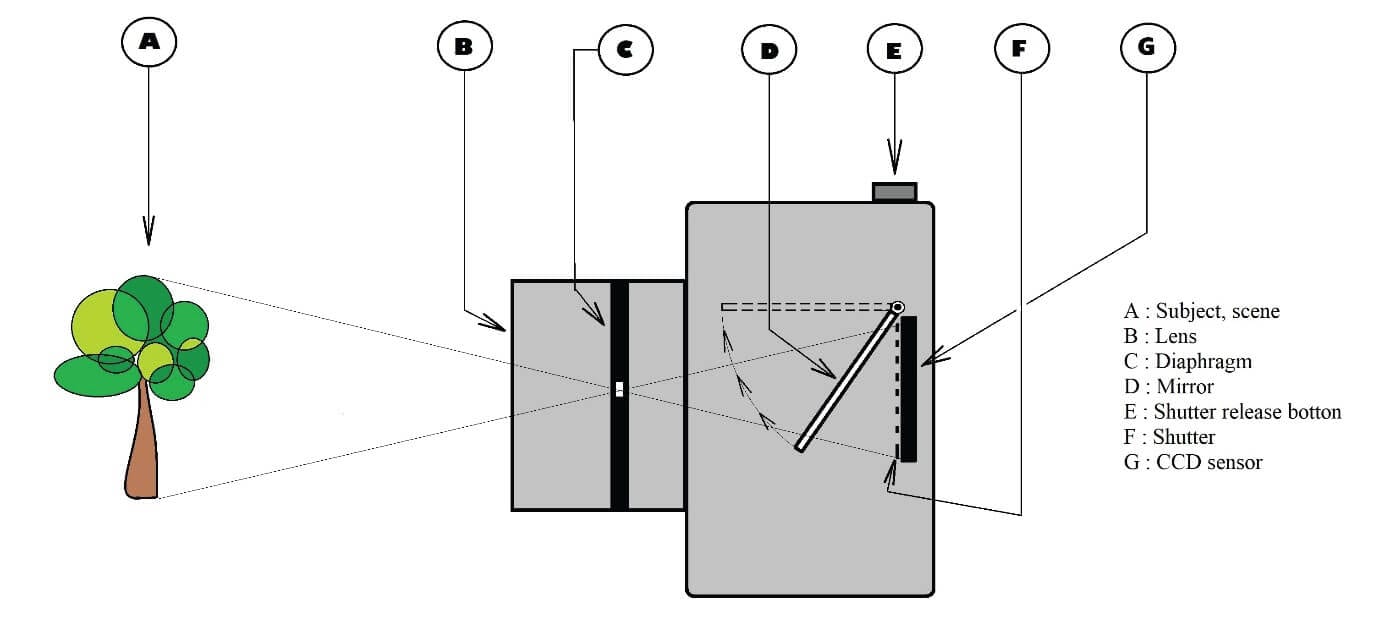
In photography, light is the first and most important of the concepts. Let’s first remind which are the main parts of a camera (see the picture below):

How to become a photographer. Photography1.- Lens (even if it’s not a part of the camera) (B on the figure)
2.- Diaphragm (built-in the lens) (C)

3.- Shutter (built-in the camera) (F)

4.- CCD sensor (built-in the camera)

(G) We could compare these devices to our eyes: the diaphragm would be the pupil, the shutter the eyelids and the CCD sensor the retina.

Why can we see a scene?

Because it’s illuminated. If the light disappears, we wouldn’t see it. It means that the image we capture with our camera is light, only light. That’s why it’s so important to handle properly the amount of light we want to use. Normally, we consider that too much light gives an overexposed image and not enough light an underexposed picture. A right picture needs a right light, a right exposure.

What happens when we press the shutter release button?

The button releases a 45º leaning mirror built-in the camera and opens the SHUTTER. The image of the scene -the light- goes into the lens, crosses the hole of the DIAPHRAGM, crosses the SHUTTER and, finally, it’s registered in the CCD sensor and goes directly to the memory card. The intensity of the exposure depends of the APERTURE of the diaphragm (the diameter of the hole), the SPEED the shutter flips up and down and the SENSITIVITY of the CCD.

Note: When the mirror and the shutter are not released, they protect the CCD sensor from the light. The mirror allows us to watch the scene through the viewfinder or the back screen.

It appears then three important topics:

1.- The APERTURE (of the diaphragm)

2.- The SPEED (of the shutter)

3.- The SENSITIVITY (of the CCD sensor)

You can contact Victor Pérez Pérez at victor. [email protected]

NEXT ISSUE:
Photography tutorial lesson 2 & 3

Other Articles

BRIBIE ISLAND PHOTOGRAPHY CLUB July 2018

GETTING TO KNOW YOUR CAMERA

Tags: Photography Club Group Bribie Island

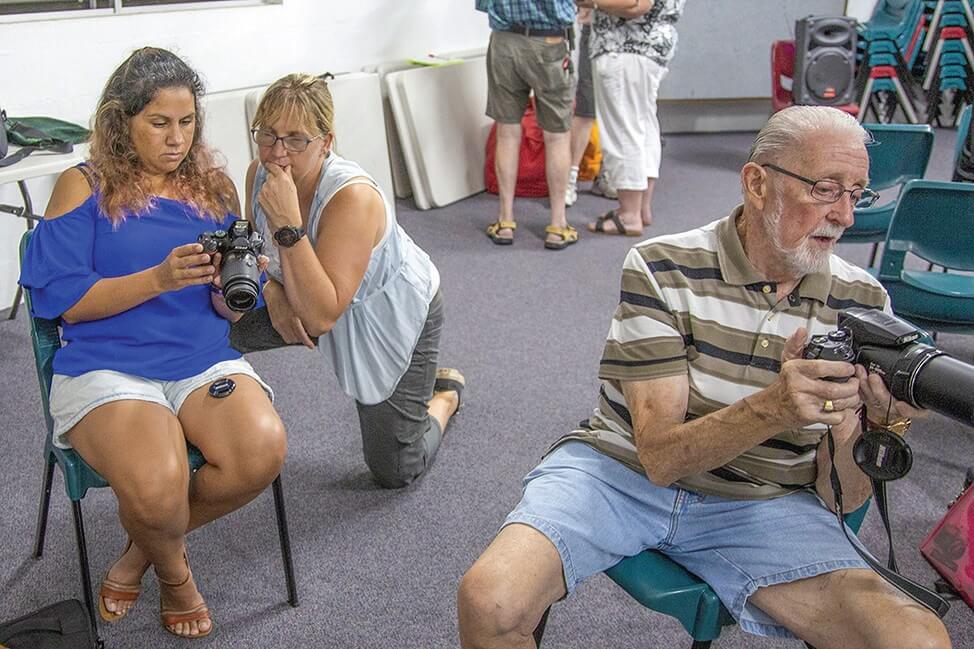
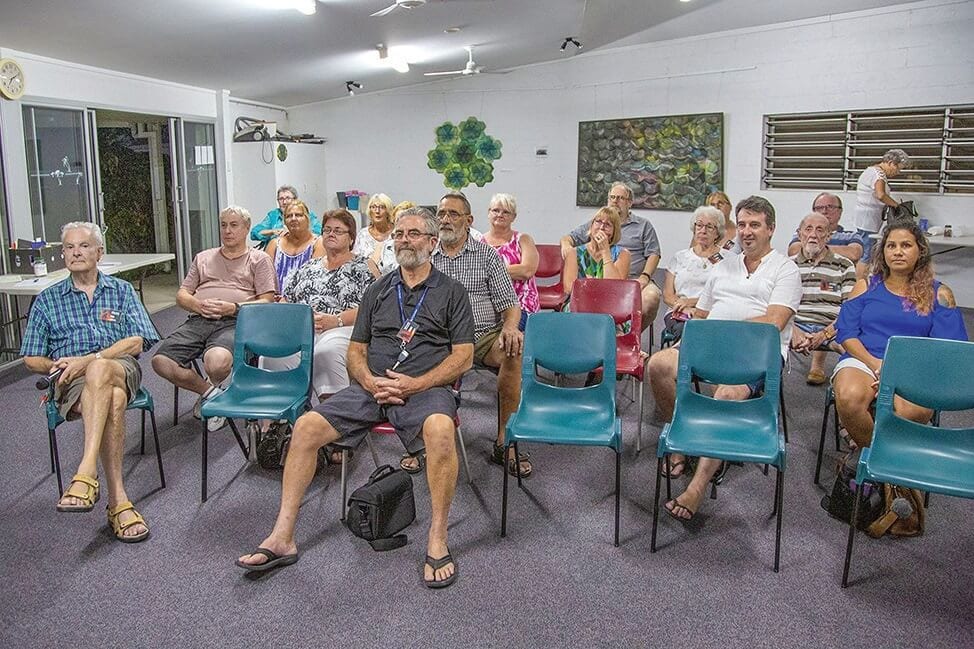
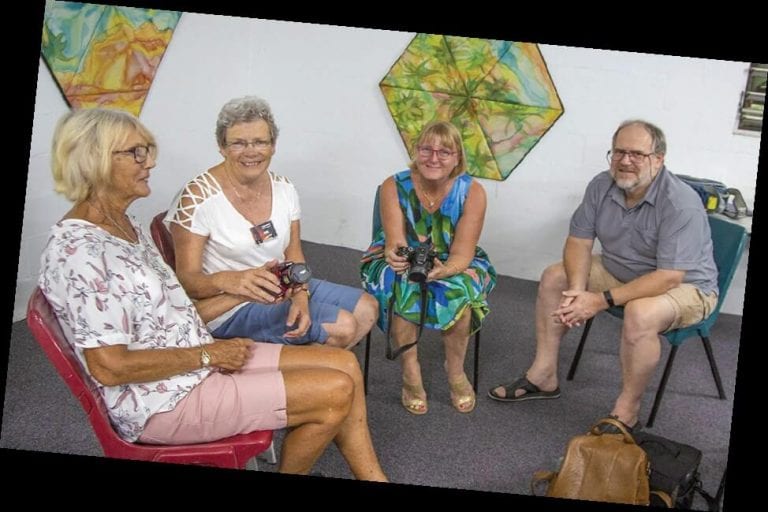
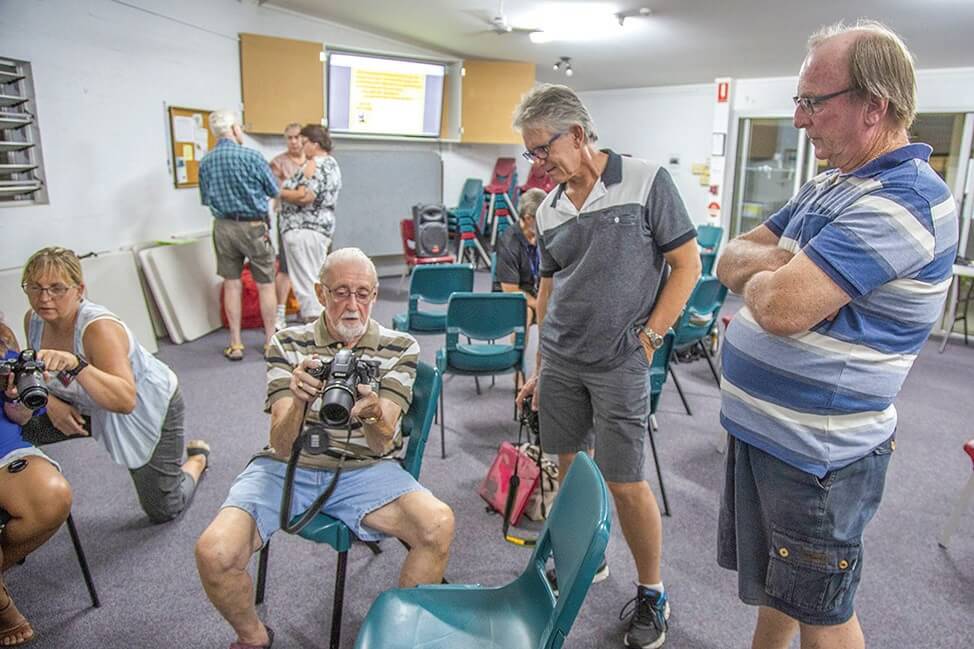
Our first monthly meeting for the year was a “Getting to know your Camera” workshop with members of the public invited to attend. There were videos on several topics such as Composition and Exposure. Ron Le Huray explained the workings of Aperture and Depth of Field. John Cupper gave a short talk on Photographing in Raw and how to process these large files.

We then formed into groups according to camera types with experienced members assisting with technique and answering questions that arose. Afterwards, we enjoyed a nice supper and a general chat mostly about photography. We were very pleased to welcome and hopefully help several visitors. 2019 is shaping up to be an exciting year for our club with many varied activities proposed.

Photography Club Group Bribie IslandPhotography Club Group Bribie IslandPhotography Club Group Bribie Island Interesting location shoots are planned for each month with an extended outing to Tin Can Bay proposed for later on in the year. A portrait workshop with John Lomas is in the pipeline and the PSQ Convention is to be held at Wynnum this year.  The Bribie Island Photography Club meets on the fourth Monday of each month at 7 pm in the Boardroom at the back of the Arts Centre on Sunderland Drive. New members are always welcome. The first two meetings are free. If you wish to come along ring Gordon at 3408 2649 or Gail at 3408 9850 or just turn up on the night. www.sites.google.com/site/bribiephotographyclub e: [email protected]
Other Articles

LOOKING FOR NEW FRIENDS?

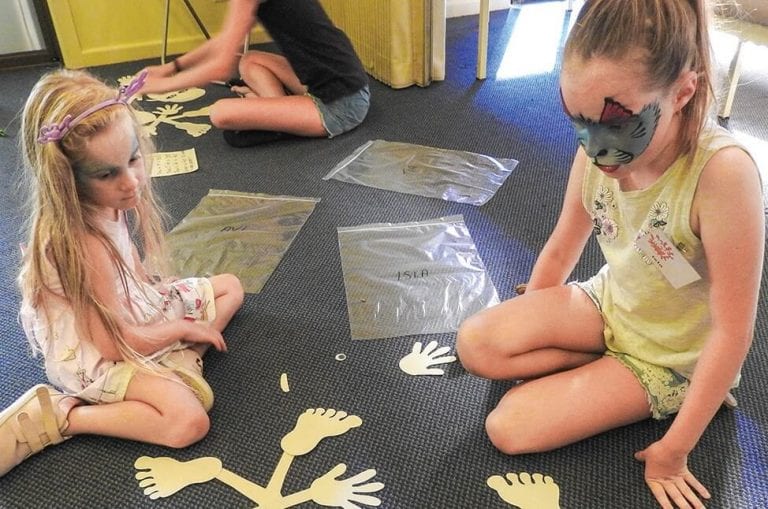
MESSY CHURCH?

Tags: Bribie Island Churches. Groups. Clubs. Uniting Church

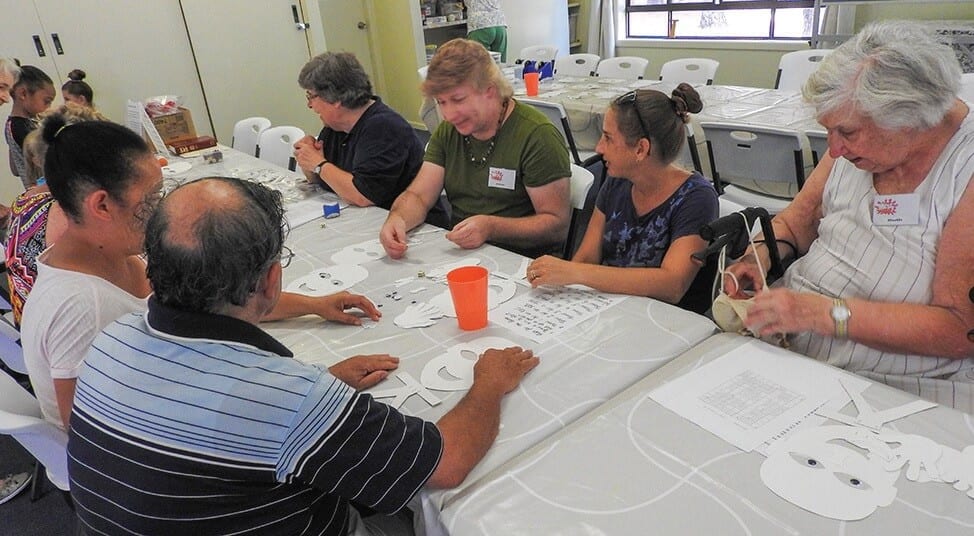
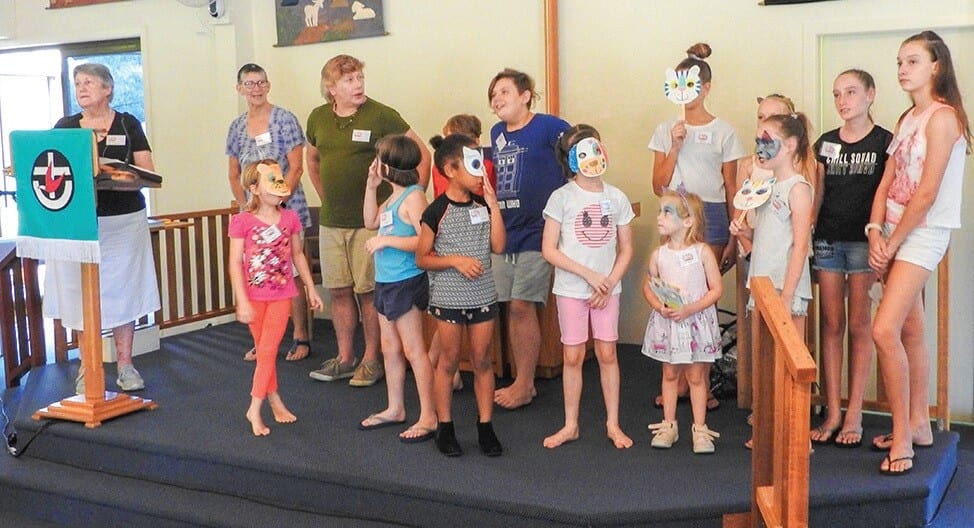
According to Margaret Grove, it isn’t always messy, but it is always fun! “Messy Church is an active way of exploring the fundamentals of the faith. It is Church for all ages from the very young to the very old. It is a relaxed way of sharing time together as we explore the mysteries of faith,” says Margaret.

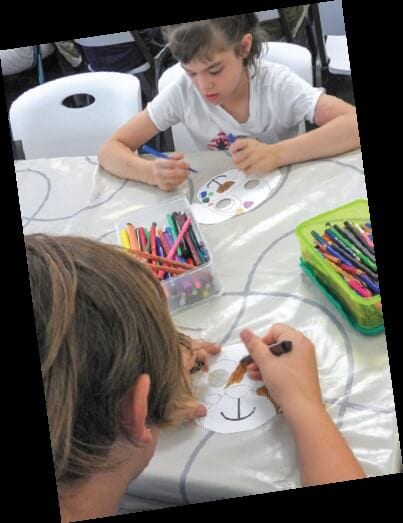
The Uniting Church in Webster Street, Bongaree, on Bribie Island hosts Messy Church on the second Sunday of the month from February to November inclusive and Margaret says that everyone is invited and welcomed. “Messy Church commences at 4.00p.m. sharp, with games that highlight a particular theme for the day. Everyone can have a part, even if it is cheering the younger ones on as they play out an exuberant game. Next, it is time to explore the theme further with quieter and sometimes messier activities that add more understanding to the day’s themes.

There are activities for all ages and it is so refreshing to see all ages of folk working together on these,” she said. “By 5.00p.m. we are ready to share what we have learned in a “Celebration” and at 5.30p.m. we sit down to a delicious meal together. Messy Church concludes around 6.00p.m. It is an early night for a family and that is why many families including grandparents, parents, and children all enjoy the evening.

For those who don’t have their family close, please feel that you are family and come along to share the joy.” The next Messy Church is Sunday, 10th March. For further information, please telephone Margaret on 5497 5777.

IN HARMONY WITH OTHERS FOR THE WORLD

Tags: Bribie Island Children’s choir club, group

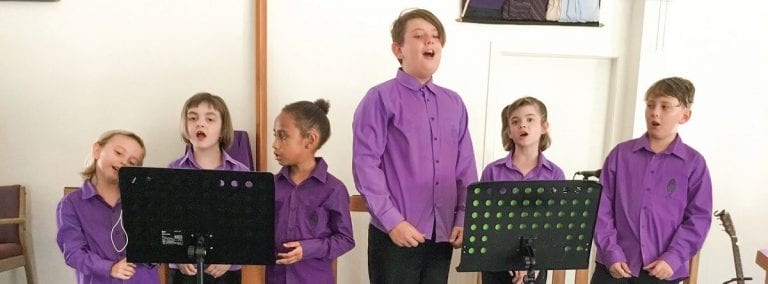
Parents who have been looking for extra, no-cost activities that their children can enjoy may want to consider the Ecumenical Children’s Choir. According to Margaret Grove, the choir which has been operating since 2011 has included more than eighty children from all faiths and cultures from Bribie to Caboolture. “The general age range for our singers is from four to early teens (and we have had children both older or younger than that),” she said. “There is no cost associated with the choir.

Uniforms have been donated and music is provided. Parents are welcome to stay with their children during the choir practices if they so desire (and sing along if they want to as well). Over the years, the children who have been available have sung at retirement villages on Bribie three times a year during the children’s school holidays and in other locations as the opportunities arise.

This year, we are striving to achieve a special project where the children will use their singing for the benefit of others in the wider community,” said Margaret. She said choir practices are held at the Uniting Church in Webster Street, Bongaree from 3:30 pm to 4:45 pm every Monday of the school year. “The children are able to work towards gaining badges for special skills learned throughout the year.

If any of your children love to sing, they are really welcome to join the choir. Singing is a beautiful gift and the more we use the gift, the better it becomes. There is no audition necessary, just enthusiasm!” For further information, please telephone Margaret Grove on 5497 5777.
Other Articles

Community Choir – The Sandstone Point Carols

LOOKING FOR NEW FRIENDS?

Tags: Bribie Island Local Clubs and groups. International Women’s Day

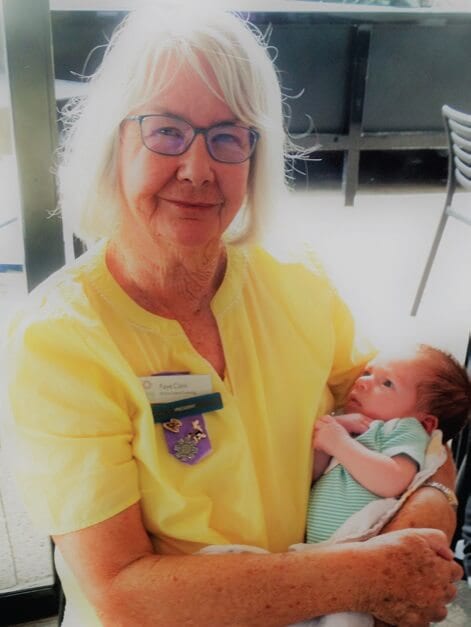
Oblivious to the chatter around him, newborn baby Mason was cuddled by VIEW President Faye Clark at the Coffee Club last week. Mason is the great-grandson of VIEW member Veronica Waterfield and the coffee morning was the first social event for the year. ‘We’re a friendship club’ Faye said, ‘perfect if you’ve moved to Bribie and looking to make new friends. We have a lunch meeting and a social event each month and with some easy fundraising we support The Smith Family.’

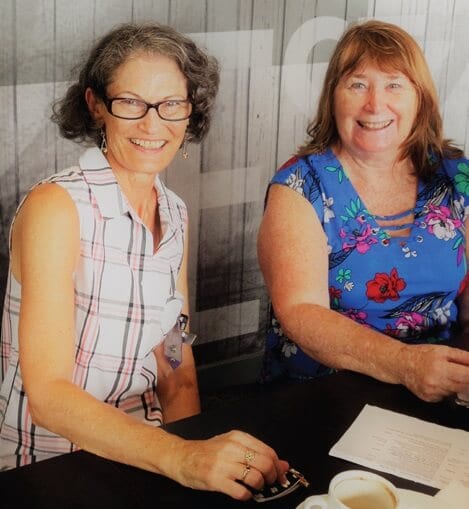
Featured Image(above): Jennifer Keeley (Secretary), Julie Bacon (Publicity)

One of Australia’s oldest and biggest women’s clubs View was founded by The Smith Family in the 1950s to give women a Voice (a petition to Parliament), Interest and Education of Women through guest speakers. Bribie club is celebrating its 23rd birthday this year and supports 5 disadvantaged students with Smith Family scholarships. ‘We get wonderful letters from our students thanking us for enabling extra curricula lessons like music or swimming, a musical instrument or computer, stationery, school excursion or even new school shoes’ said Faye.

‘All those extras so many families are struggling to provide. The Learning For Life programs also help their reading and a mentor can guide them on the path to a career.’ Programmer Stella Auchter was passing out invitations to an International Women’s Day breakfast on Friday 8th March at the Serenity Restaurant, Waterways Motel.

Guest speaker is local Judy Frost, a former Special Ed teacher who has just published her second book on her unique teaching method for readers. All women are very welcome. Starting time is 8.30 for 9 am. Phone Stella on 0419 796 476 if you’d like to come. General inquiries phone Faye Clark on 3410 7444.

CATCHING THE BRIBIE BUG

Helly’s Celebrities of the 20th Century

Tags: Celebrities. Famous people. Actors. Timothy Dalton. James Bond. 007

THE SENSITIVE OO7

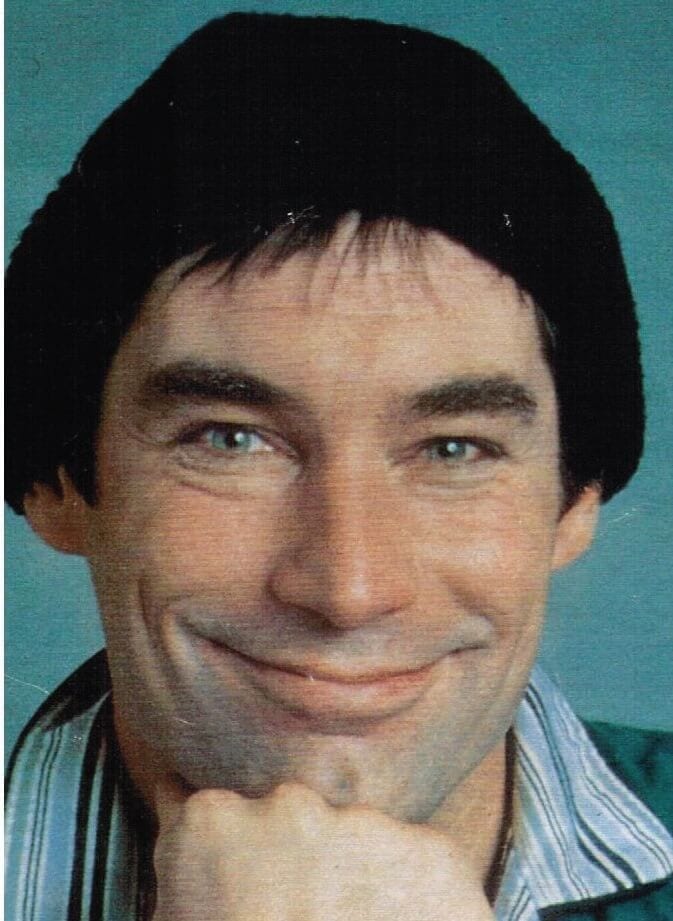
Even before I meet 42-year old TIMOTHY DALTON, ALIAS JAMES BOND 007, in 1988, I know I have a battle on my hands to interview the Wales-born English actor for Hello Magazine, as he is some force to be reckoned with.

Featured Image(above): In ‘Hawks’

It’s an image as far removed as could be from the sensitive 007 he portrays in the 1987 ‘THE LIVING DAYLIGHTS’ and his forthcoming 1989 Bond film ‘LICENCE To KILL.’ The atmosphere on the film set of his latest movie, the black comedy ‘HAWKS’, where the director allows me just three minute increments of interview time in between takes, is electric and makes it almost impossible to establish a rapport or have continuity.

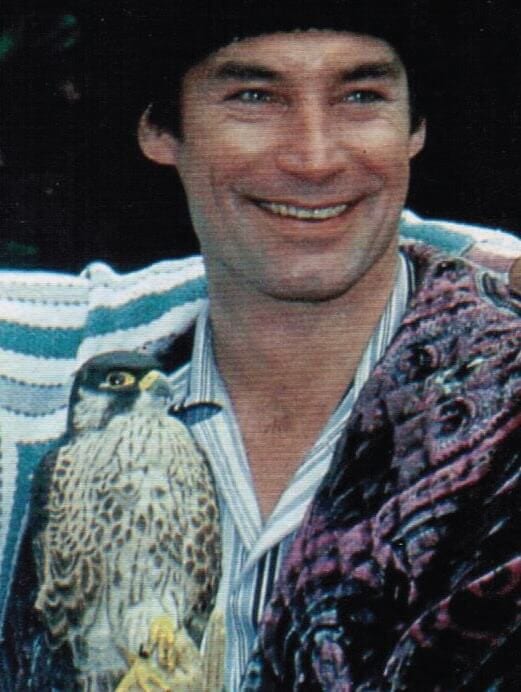
The poignant comedy of ‘Hawks’ tells the story of two terminally ill hospital patients, who decide to steal an ambulance, to have one last fling in Amsterdam, living life to the fullest with a sexy weekend of “five floors of paradise.” Dalton’s maroon velour dressing gown resembles a Persian carpet – a ludicrous mismatch to the striped pyjamas, sloppy slippers and black woollen cap, hooked tightly over his ears, as he ambles across the shiny floor at London’s Charing Cross Hospital.

Celebrities. Famous people. Actors. Timothy Dalton. James Bond. 007

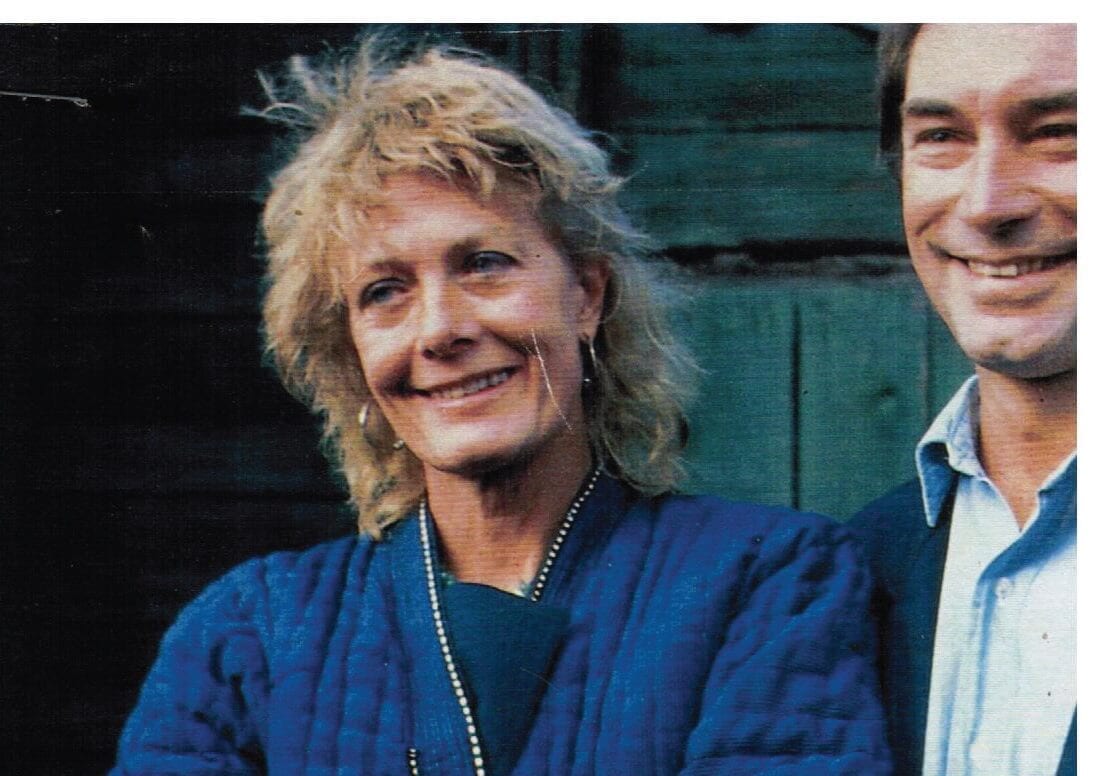
With life long friend Vanessa Redgrave

After waiting for six hours in the crowded hospital corridor, this revelation sounds like the start and end of my interview, as Dalton rushes off for yet another take on scene 327. It’s a long, tiring day, standing, watching, praying hour after hour that Dalton would finally come to talk. He strides over to me, his long, lean 6’2” frame, with its strong classical features, exuding both an air of menace and a mantle of privacy you can’t unravel. “Why?” he demands, reiterating from a previous three minute discussion, “Why should Bond have changed my lifestyle? I was living like I liked to live before.

Celebrities. Famous people. Actors. Timothy Dalton. James Bond. 007

In the black comedy ‘Hawks’

I was happy as I was. I just want to earn money to be able to do the things in my life I want to do. “But it has never been a goal of mine to have flashy women, cars, clothes and the rest. I like my tatty jeans and t-shirts. I love my old Toyota. So why should it change me? But it has given me more choice. I can now reject films I don’t want to do and get others like ‘Hawks’ started because of Bond. I can now do more of the badly paid theatre work I love. Bond has increased my commercial viability.

I can choose films like ‘Hawks,’ one of the best scripts ever written, where I can stay at home instead of working abroad. Bond has certainly given me freedom.” He lets out the most raucous of roars, a natural laugh that comes from so deep inside his belly, that it confirms him to be refreshingly free of personal vanity. Although Dalton was initially criticized for the lack of lighthearted playboy humour in The ‘Living Daylights,’ his sophisticated Bond, where he performs most stunts himself, grosses $191.2 million, considerably more than the previous last two Roger Moore Bonds.

Dalton achieves a much darker, more serious and gritty realism, closer to Ian Fleming’s original Bond – the prototype for 21st century’s Daniel Craig’s Bond. Over the decades, Dalton’s greatest love – the theatre – has seen him star in innumerable productions for the Royal Shakespeare Theatre, the Old Vic, the National Youth Theatre etc, enrolling in the Royal Academy of Dramatic Art, aged 18. His memorable movie debut as the weak King of France in 1968’s ‘THE LION IN WINTER’ and co-starring with Katharine Hepburn, Peter O’Toole and Anthony Hopkins, was followed by films like ‘MARY QUEEN OF SCOTS,’ 1971, and right into the 21st century, with ‘THE TOURIST’ 2010 and ‘DOCTOR WHO’ 2010. But getting back to ‘Hawks’ in 1988.

Celebrities. Famous people. Actors. Timothy Dalton. James Bond. 007

As James Bond in With life long friend Vanessa Redgrave ‘The Living Daylights’

Dalton has warmed up to me now and the words flow easily. He enjoys talking at last. But surprisingly my mentioning his 17-year relationship with Vanessa Redgrave does not erupt into the expected volcano. Dalton is actually trying to please, but genuinely finds the mention of his personal life so hard to take, that his voice becomes hoarse and finally breaks as he concludes. “I’ve known Vanessa since we worked together on ‘MARY QUEEN OF SCOTS.’ But that does not make any difference when we’re acting together. I admire her resolve and courage. She has a tremendous depth of care.

But you must not make any presumptions about the nature of any specific relationship. We work well together. How we are in the street afterwards has nothing to do with it. “I never have and never will speak about my private life. So whatever you have heard is fabrication. I am a very private person and yet have nothing to hide. But I have learnt a long, long time ago, particularly in this business, that if you start talking about your private life, you lose it. If you make it public, it’s gone. It’s as simple as that.”

Gloss Magazine Bribie Islander 5th Edition March 01 2019 Issue 82

The Bribie Islander Magazine
Get all your community news and information Bribie’s only community gloss magazineNOW EVERY TWO WEEKS! – Articles on boating, camping, fishing, life, drama, travel destinations, sports and what to see and do on Bribie Island. Covering charities, organisations, places, children’s activities, arts and crafts, tourist destinations, heritage parks, technology, science, music, gardening and much more.

Australian Wildlife – RESTLESS FLYCATCHER -MYIAGRA INQUIETA

0

Tags: Australian Birds. Wildlife.

I remember the first time I saw a Restless Flycatcher. It was at Ewan Maddock Dam and the bird was high up in a tree in open woodland. I watched in amazement at its fidgety performance, with a wagging tail and nervous movements while perched on a branch. Restless Flycatchers have been sighted on Bribie Island but not very often. They prefer open forests and are more likely to be seen in winter.

Featured Image(above): Not to be confused with the Willy Wagtail

I have since spotted them singly or in pairs in several other locations in Australia. The most recent sighting was at Theodore. They are not found in large numbers anywhere but are spread over a considerable area. Restless Flycatchers are smallish, black and white passerine birds with a faint buff smudge on their breasts and small crests on the top of their heads.

They are 16-21 cm in length and are similar to and sometimes mistaken for Willy Wagtails that are often found in the same locations. Male and female are very much alike. Their call is a rasping, grinding sound which is why they are sometimes called “Scissors Grinders”. Insects are the main item on the diet which are caught on the wing. They will also hover in an almost vertical position and collect their prey from foliage and branches.

Australian Birds. Wildlife.

Restless Flycatcher

The grinder sound is maybe to frighten sedentary insects and spiders into moving to a more exposed position thus becoming easier to gather. Restless Flycatchers seldom feed on the ground. Nests are bowl-shaped and built in the forks of trees near water and are not unlike the Willy Wagtail’s nests. They are made of grass and bark and are woven together with cobwebs and lined with fur or other soft materials. Nests are often built in the same place each year. Clutches are made up of 3-4 white eggs with brown speckles. Both parents build the nests and incubate the eggs. Incubation takes about 2 weeks.

Australian Birds. Wildlife.In 13-16 days, the young fledge and fly off a short time later. There can be up to three broods produced in one season. The Restless Flycatcher was first recorded by John Latham in 1801. Their scientific name is of Latin origin – “inquieta” is from the Latin “inquietus” which means restless. Conservation status is secure now, but the population is decreasing.

Australian Wildlife – LONGICORN – LONGHORN BEETLES

0

Tags: Australian Native Wildlife. Beetles

Longicorn or Longhorn Beetles are a large family of wood-boring beetles with about 1250 species in Australia and 26 000 worldwide. They are easy to identify as they have particularly long antennae which are mostly longer than their body length. Their long bodies range from varying lengths and can be up to 80 mm long. Antennae are partly surrounded by their compound, mostly kidney-shaped eyes.

Larvae are fat, cream grubs between 20-40mm long with a rusty coloured head and prominent mandibles designed to chew into wood. Witchetty grubs are the larvae of several species of Longicorn Beetles and are high in protein, very nutritious and I believe have a pleasant nutty taste. Longicorn Beetles lay their eggs mostly under bark of their particular host tree which is either dead or dying.

Australian Native Wildlife. Beetles

Chloroporus curtisi

Larvae are mostly wood borers and feed on the wood of these trees. During their long development the larvae grow to a large size and can demolish the whole inside of a tree trunk. Larvae keep chewing for their whole lives and stop only when it is time to pupate. The frass or excrement is used to seal up the chamber and when the adult is ready to emerge it bores through the bark leaving a hole about 6 mm in width. Most of their life is spent in the larvae and pupa stages with adults only living for around 30 days.

Australian Native Wildlife. Beetles

Eucalyptus Longhorned Borer

Life cycles can take up to 2-4 years but in tropical areas the life span is much shorter. Many of the Longicorn species feed on wood while others eat pollen, sap or leaves. Pollen eaters are important in the pollination of their preferred flowering trees while others play an important part in the decomposition of dead wood. I have managed to photograph three Longicorn species on Bribie Island. Common Eucalypt Longicorn Phoracantha semipunctata – Adults are energetic fliers.

One flew through my window, presumably from the Gum Trees across the road. This species is considered a major pest in Eucalypt Plantations as the larvae feed on the eucalyptus wood. They have a life cycle of 2-3 years. Tiger Longicorns Aridaeus thoracicus are wasp mimicking beetles about 20mm in length. They resemble wasps and act like wasps to fool predators likely to attack.

Australian Native Wildlife. Beetles

Tiger Longicorn Beetle

Their preferred food is pollen on some flowering native plants particularly belonging to the Myrtle family. Host trees are Eucalyptus, Laurel, Leptospermum and Mangroves. Chloroporus curtisi are attractive black and yellow Longicorns with the adults feeding on pollen from several native trees commonly found in heathlands, woodlands and dry forests. They are also wasp mimicking beetles.

Acacia trees are the host trees for the larvae. Not much is known about this species and I have not been able to find a common name. In China Longicorn Beetles are often called “Sky Cow” beetles as their faces are similar to a cow when looked at from the front.

NEW BOOK – HANDY HISTORY OF BRIBIE ISLAND

When I retired to Bribie Island from Sydney in 2003 I soon became fascinated with the rich history of this small place. This is the “The Cradle Site of Queensland” but there was virtually no visible evidence or recognition of this significant fact. No general information or signage, no Museum, few books about Bribie history and little information at the Visitor Centre. I am pleased to say that things have improved in the last few years with a few bronze plaques and signs along the waterfront at Bongaree, free Heritage walks and brochures available, books written by local authors, a very active Historical Society, and regular History Page articles in this magazine.

I have been conducting weekly classes in Bribie History at U3A for over 10 years now, and with my colleagues have made more than 100 presentations to various local Clubs, Groups and Organisations about many general and specific aspects of Local History. Not everyone is interested in History …..local or otherwise. However, when people start to hear or read about the remarkable people and events that have shaped both the past and present history of this small island they can get very interested. A question we are often asked, especially by newcomers to the Island is “Is there a good book that gives a good summary of Bribie history”.

Until now that has not been easy to answer. The late Warwick Outram wrote 29 books about Bribie Island history and most of these are available for reference at the Bribie Library, along with many other publications. That’s a lot or reading, and hard to absorb it all if you can’t take it home. However, the Bribie Island Historical Society has now compiled and published a great new pocket-sized, well-illustrated book titled “Bribie Island- A Handy History” which is essential reading for Bribie residents and visitors. The Book provides an overview of the major events, people and stages in Bribie’s commercial and social development over the last 250 years…

It answers a lot of the general questions that people want to know about Bribie’s past. The book will be launched at the Bribie Island Library on Tuesday 26th February at 10:30 am. You need to register your name at the Library if you would like to attend the book launch. The book will sell for just $10 and will be available at the Museum and other locations around Bribie, and through the Historical Society.

The Historical Society has monthly public meetings at the RSL Club on the second Wednesday of each month commencing at 6:30 pm with inspiring guest speakers and presentations on a range of topics. The Historical Society continues to research and document the rich history of this Island and you can view many interesting stories on our Blog Site at http://bribieislandhistory.blogspot.com or contact us on [email protected]