Home Blog Page 100

Mental health – RESILIENCE

0

Tags: Mental Health. Well being. Resilience

By VERONICA MERCER Mental Health Accredited Social Worker

“Do not judge me by my success, judge me by how many times I fell down and got back up again.” – Nelson Mandela

Definition:

Resilience refers to one’s ability to “bounce back” from adversity, trauma, tragedy, threats and/or significant sources of stress. When faced with a difficult life event; the sudden loss of a loved one – resilient individuals can successfully cope with, or adapt to, the associated stress.

Today’s World:

There has been a notable decline in the health and wellbeing of young people today. The increasing numbers of young people who are succumbing to emotional instability, mental illnesses, obesity, as well as low educational and social competence is concerning. Being affluent and having the ability to give our children things we were unable to have as a child, should be a good thing.

Unfortunately, affluence can create more challenges in raising resilient children than financial challenges or adversity. The experience of having to save for something or having to wait for it makes the receiving of what is desired so much sweeter. Being able to delay gratification is seen as a key quality of an emotionally mature person. For many of today’s young people, they have the immediate access to plastic credit cards and all the temptations that it brings.

This is taking place before they have the maturity to manage the full consequences of their actions. This is one of the attributes of emotional intelligence. We know more than ever before how the human brain develops and grows, and this has massive implications for parents and parenting. Resilience is a positive attribute that helps us to manage complex issues, difficulties, times of duress, trauma or disappointment by us having developed: • Strong problem-solving skills

• Persistence of will

• Founded on hope (www.valuesforlife.net)

Building resilience can help our children manage stress and feelings of anxiety and uncertainty. However, being resilient does not mean that children won’t have trouble or distress. Emotional pain and sadness are common when we have suffered major trauma or personal loss, or even when we hear of someone else’s loss or trauma. Being resilient is not always about feeling better or having fewer emotional reactions. It’s about managing and responding to emotions in a healthy and positive way. You and other adults in your child’s life play a role in helping children articulate, respond to and manage emotions.

Mental Health. Well being. Resilience

It’s important to remember the positive aspects of resilience:

Improving children’s resilience is about helping children to manage their feelings in a healthy and happy way. Children with a sensitive temperament can learn to survive the ups and downs of life through learning to be resilient. Children respond to ‘difficult events’ in diverse ways and may need diverse types of support to be successful, deal with the tough times and to be a positive influence for others. Resilience Traits.

• Boundaries guide us to understand that there is a separation between who we are at our core and the cause of our suffering. The suffering may play a part in our story but it does not overtake our permanent identity.

• Surround themselves with other resilient people, for whatever reason supportive people give us space to grieve and work through our emotions. They know how to listen and when to offer just enough encouragement. They do not try to solve our problems. Good supporters know how to just be with adversity – calming us rather than frustrating us.

• Self-awareness helps us get in touch with our psychological/physiological needs—knowing what we need, what we don’t need, and when it’s time to reach out for some help. Being ‘blissfully unaware’ may get us through a difficult day but it’s not

• a wise long-term strategy. Being self-aware allows us to be good listeners, understand the subtle cues from others body ‘s and their mood.

• If we were to always try and be strong to stay afloat, yet prone to massive stress fractures when we experience an unexpected change in our environment, we would present as prideful stubbornness without emotional flexibility or self-awareness – making us emotional glaciers.

• Resilient people understand that stress/pain is a part of life and that it fluctuates. Acceptance is about learning from the experience, coming to terms with the truth

• and/or pain. It is when we repress, ignore or try to deny it, that we come unravelled. We must experience the full range of emotions and trust that we will bounce back.

• We all react differently to stress and trauma. Some of us shut down and some of us ramp up. Somewhere in the middle, there is mindfulness– being in the presence of the moment without judgment or avoidance. It takes practice, but it’s one of the purest and most ancient forms of healing and resilience-building.

• When we try hard to find the answers to difficult questions in the face of traumatic events, the trying too hard may actually block the answers from arising naturally in their own due time. It’s okay to not have it all figured out right away. More importantly, we need to develop trust that we will gradually find peace and knowing.

Good self-care habits are vital, and we should have a strong list of good habits that support us during our times of need. We can all become self-care spotters in our life—noticing those things that recharge our batteries and fill our cup. Find them and utilise them frequently.

• The most resilient individuals know how to reach out for help. We can all learn how to be better supporters on another person’s team. Remember It’s okay to communicate to our supporters what is and isn’t helpful feedback/support for our needs. Voicing our needs is essential in having them met. People are not “mind readers”.

• We can train ourselves to ask which parts of our current story are permanent and which we can change. Our interpretations of our stories will always change as we grow and mature. Knowing that today’s interpretation can and will change, gives us the faith and hope that things can feel better tomorrow. This helps us maintain a realistic understanding that the present situation is being coloured by our current interpretation.

• When we are feeling stressed and overwhelmed, our thoughts can swirl with dizzying speed and disconnectedness. We tend to overthink every little thing. Learning to get our thoughts out of our heads is something we all need to learn.

It’s quite simple we need to write it down or share our thoughts with someone. We can find a great sense of reprieve by getting the thoughts out of our head (https://www.psychologytoday.com/au/blog/design-your-path/201305/10-traits-emotionally-resilient-people).

Mental Health. Well being. ResilienceParents Role in building their children’s resilience

• Be sensitive to the stress in your children’s lives, help them cope and for them to find solutions.

• Understand when and why your children are bored and help relieve their boredom

• Have boundaries – e.g. limit the amount of money your children spend and monitor how that money is spent

• Know who your children’s friends are

• Be engaged in your children’s lives: help them with their homework, attend their sports events, participate in activities together, and talk to them about issues like drugs and alcohol.

• Parents need to be constantly reviewing what is happening in their children’s lives.

• Reflecting with the other parent or family member or another person deeply involved in their child’s life is very helpful to stay in tune with an individual child’s development.

• Please avoid comparing children – that is disrespectful of a child’s individuality and essential human potential and has the tendency to invalidate the child.

• Children need to experience disappointment, challenge, failure and boundaries to fully develop the interpersonal and personal skills that allow people to live in society.

• Children need to have a voice and age-dependent moments of autonomy where they get to have a sense of control over their life. However, too much will lead to overindulgent, permissive and unpleasantly challenging behaviour that will create conflict and distress.

• Young children need help to manage strong negative feelings and learn how to communicate their needs to significant adults. (https://healthyfamilies.beyondblue.org.au/). Tips for parents From a resilience perspective parents need to coach kids through some of their more challenging moments and reviewing what they may have learned for next time. Avoid solving all their problems for them.

You can promote a lasting sense of resilience in your kids by:

• Having a positive attitude, yourself. Your attitude as a parent impacts on their ability to bounce back from some of the difficulties they face. Make sure you model a ‘you can do it’ attitude for your child when he meets some of life’s curve balls.

• Look for teachable moments. Many kids’ learning opportunities are disguised as problems. Make the most of these opportunities so that kids can grow and learn from some of the challenges they face.

• Make kids active participants in the family. Active participation in a family develops the self-help, problem-solving and independence skills of kids that are necessary for resilience.

• Build kids coping skills. There are plenty of strategies you can pass on to kids to help them cope when life doesn’t go their way, including acceptance, getting away for a while, and normalisation.

Promoting resilience in kids is a not a single event but a continuous process that requires adults to be supportive and empathetic when things don’t go their way. It also requires you as a parent to understand resilience, so you have faith in your yourself, and your child’s ability to cope.

What does resilience look like?

There’s probably not one way to describe what resilience looks like and, of course, no-one is resilient all the time. There are some characteristics that we might expect to see in a child who is coping well or is resilient. For instance, they might:

• use positive self-talk for encouragement

• capably express their feelings and thoughts

• not hide away from strong feelings

• have helpful, age-appropriate strategies to manage their emotions if they are upset

• rearrange their plans to work around an unexpected situation

• use a trial-and-error approach in their daily life

• remain hopeful and keep on trying if something doesn’t work out

• know when to stop trying if they decide the effort is not worthwhile

• actively ask for help if they need it.

It’s important to note that children can appear resilient on the outside but not actually be resilient. They may have learned to behave in ways that are acceptable to the adults around them. Sometimes, these children can go under the radar in a school or community setting. A child like this might;

• not openly express their feelings

• put on a front (even though it’s obvious they are struggling)

• not fully engage in what’s happening around them

• not fully connect with other children and adults in their lives

• tend to give up if things don’t go well in the first instance

• not appear confident in dealing with situations themselves (but might not make a fuss about it) (https://healthyfamilies.beyondblue.org.au/).

What are the factors that impact on a child’s ability to build resilience? Resilience partly comes from factors internal to the child.

• A resilient child has social and emotional competencies for their age that help them to name their feelings, manage their emotions, be aware of other people, solve problems, and make good decisions.

• A child’s unique temperament or personality will have some bearing on this.

• Some children learn social and emotional skills quite easily, whereas other children require more support.

• Certain children are more easily upset or distressed than others when confronted by a difficulty. Resilience is affected by external factors too.

• Children are more likely to be resilient when there are supports around them from family, school or community;

• When they can seek help, being shown that they don’t have to do everything themselves or have all the answers.

• If children are surrounded by adults who model resilience – through their own behaviours as well as by explicitly teaching and practising the social and emotional skills – they will be more likely to develop resilience themselves.

• It can also help for parents to learn to manage their own stress and build their own resilience, so they can best support their child. Health professionals can play an active role in this regard.

• Schools, as social and learning environments, provide many opportunities for children to confront and learn to deal effectively with the many day-to-day stressors that arise.

• A planned and strategic approach to this work can help children develop skills and gain a sense of connectedness, and really acts as a protective factor.

In fact, resilience as something we all keep working on over the course of our lifespan. We can learn the skills and gain the confidence to deal with challenges throughout our lives transitions. This, of course, begins in childhood and the patterns we develop then will play a role in how we continue to deal with problems in the future. We certainly see children in schools who build their self-confidence and their resilience over time, often assisted by the support of families and school staff.

The focus on social and emotional skills is important for children’s resilience.

These are the skills that help children to;

• understand themselves,

• manage a wide range of emotions, and

• seek help when necessary (https://healthyfamilies.beyondblue.org.au/).

Teaching children to accept that all feelings are okay is an important aspect of this and enables them to express things such as frustration or worry. It is also key to help children feel in charge of their own responses to feelings, and to have confidence in their ability to solve problems that arise, with support if necessary.

If we understand resilience as partly about being able to seek and accept help when required, we will be able to normalise the range of experiences we all have, including on bad days. Developing resilience is an individual and personal journey and you should use your knowledge of your own children to guide them on their journey.

If your child seems stuck or overwhelmed and unable to use the tips listed above, you may want to consider talking to someone who can help, such as a counsellor, psychologist or other mental health professional. Turning to someone for guidance may help your child strengthen resilience and persevere during times of stress or trauma. Wishing you all good mental well-being. Veronica

“Out of massive suffering emerged the strongest souls; the most massive character is seared with scars.” – Khalil Gibran

Other Articles

https://thebribieislander.com.au/insomnia-symptoms-side-effects-causes/

Queensland travel destinations – Coober Pedy

Tags: Tourism, travel, Queensland. Australia. Coober Pedy

Hi there, here is just a quick rehash in case you have missed the latest episodes from ‘The Bribie Islander’. My short stories are all about our family, Richard my hubby, Ginger our daughter and myself, going on a 15 month trip of misadventure in a “big rig” around Australia, on a mission to find the place to call home. After nearly 5 weeks in Adelaide and surrounds, we finally got our skates on and with one overnight stop at Port Augusta, we were on the way to the red centre. Shrubs started to make way to a desert landscape, the mobile network stopped working and the waves of passing motorists added to the feeling of isolation and comradery.

It’s a titillating sensation when for the first time you leave your suburban securities behind and head to the barren dusty desert not knowing what to expect. I was worried the drive would be boring but the surrounding space grew on us and we found the minimal changes in the landscape entertaining and fascinating. After a couple of days, our new destination, Coober Pedy, announced itself with endless white gravel mounds contrasting the red dusty sand. The gravel is the leftover from the mining of the Opal shafts, which can be around 20 meters deep and a death trap if you fall in.

But that was not the only outback experience, as there was no free water at the caravan park, costing five dollars to connect your van to water and 20 cents for a 30-second shower at the amenities. Even when it comes to your bottle of wine, fluid is restricted in this part of the desert, and one can only buy two bottles per day and not without getting your driving licence scanned (regardless of age) and your consumption recorded. Needless to say, we missed out on getting stocked up properly for our further travels up North.

At least this will keep anyone from going to work drunk in a mine, and opal mines there are plenty of at Coober Pedy. Richard and Ginger went on a couple of hands-on tours, including some serious ‘Noodling ‘, that is when you scratch around in the gravel hoping to strike it big, finding a ‘pineapple’. To make those mines as safe as the drinking water, the council employed mining Inspectors, however in the old days they seemed to get knocked off the perch and now there is only a fully bomb proof police station left.

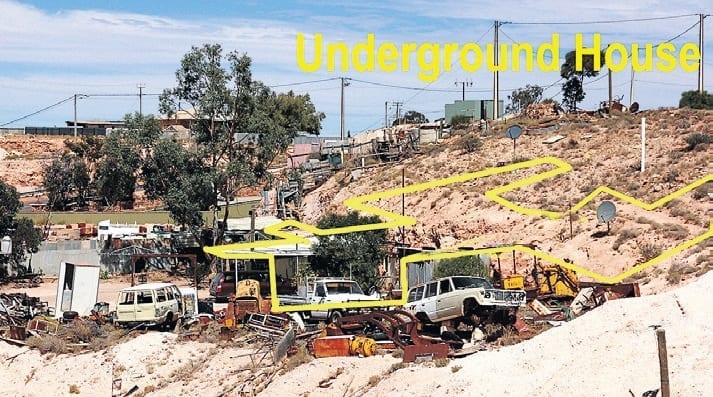
Although you can’t buy dynamite any more at the supermarket, blowing up things is a number one past time in Coober Pedy, and how otherwise do you settle a dust-up with a fellow miner or get a decent hole in the ground to find a vein of opal …if not with a big bang? And imagine digging out your own home …by hand? When you drive around town you often see a little tin shack on the edge of a sand hill, surrounded by lots of scrap metal and car carcasses.

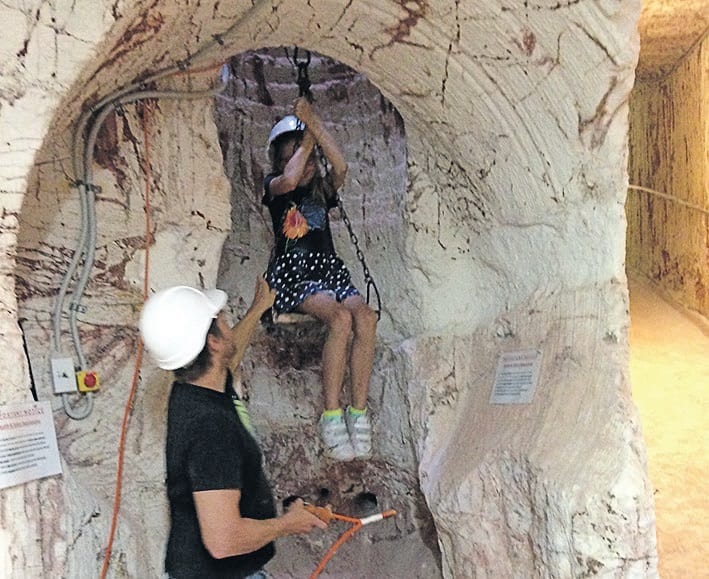
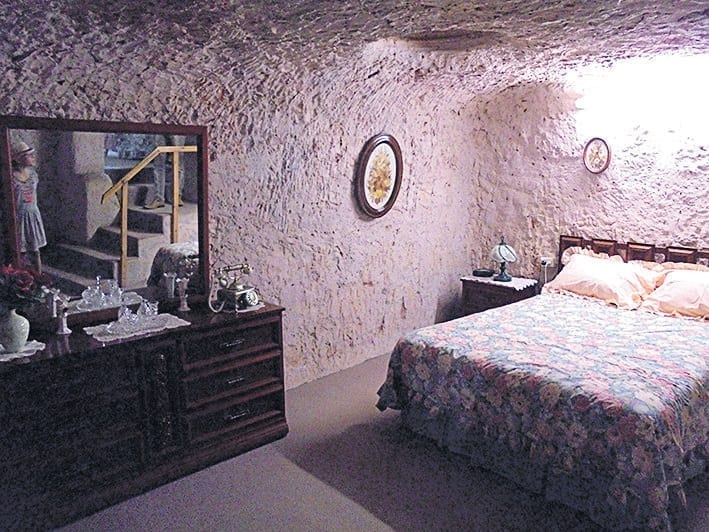
This tin shack is actually the entrance to a much bigger underground home, hidden from plain view. Some dugouts are big enough to put a whole church underground, to keep the praying community cool at their gatherings. With 60 per cent of homes being underground, often obsolete mine shafts are converted into homes, not just by tough males but also by females like famous Faye, who’s house includes a swimming pool and is now one of the top tourist attractions.

To keep the lights on in Coober Pedy with a current population of 3500 people, we were told by a local that they run 61 generators using 45.000 litres of diesel a week. The sun and wind were only recently discovered in this dry place and solar is slowly making its way into the electricity supply with a few hiccups including blackouts for hours at night time. But who needs light after being worn out by a long day of tourist attractions and outings. There was so much more to do at Coober Pedy and three days was barely enough to cover the grounds.

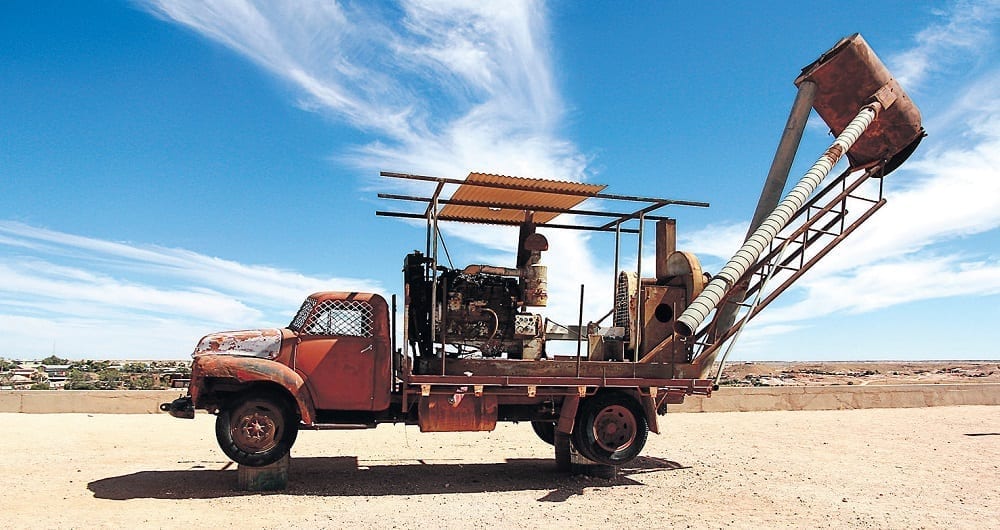
Watching the sunset over rock formations along the 9600km dog fence, or from the lookout over town, was the icing on the cake and set us up for the ‘desert vibe’. Although this is the end of this episode, I hope you can join me in the next edition of ‘The Bribie Islander’, when we head to Uluru on the ‘The Long Way Round to Bribie’! [email protected] Logo: This logo was inspired by the numerous hand converted trucks, (made from the car bodies mentioned earlier) building up extracted gravel into white stone hills, which can be seen all around Coober Pedy.

Other Articles

https://thebribieislander.com.au/touring-travel-australia-rolling-stone/

AUGUST @ VMR BRIBIE ISLAND

Tags: Boating safety tips. Volunteer marine rescue Queensland. Bribie Island

YEARLY RADIO ROOM STATISTICS

To 25th August 2018 8197 Calls, 2323 vessels logged on, 165 Vessel Assists, 77 Overdue vessels, 20 Vessel Tracking, 864 Sitreps, 415 Requests, 924 Radio Checks, 8 Securite Broadcasts, Mayday Calls 1. VHF calls 78.5%, – 27MHz calls 10.2%

AUGUST VESSEL ASSISTS:

WED 01/08 0457am – 15m Cruiser member with no forward gears, required a tow from Tangalooma to Scarborough Marina for repairs.

WED 01/08 0743am – 9m ½ Cabin member, sunk 130m North of Beachmere Ramp on the Eastern side of Caboolture River required a tow to Monty’s Marina, Beachmere.

WED 01/08 1403pm – 4.9m Tinny member broken down at Bongaree, just as Bribie Two left the pontoon we were advised that the tow was not required as vessel had restarted OK.

SAT 04/08 1431pm – 8m Cruiser member with engine problems, required a tow from Cape Moreton to Spinnaker Sound Marina.

SUN 05/08 0904am – MOP reported 9m Cruiser dragging anchor and beached at Bongaree, investigate. SUN 05/08 1517pm – 8m Cruiser member with electrical problems, required a tow from Tangalooma to Pacific Harbour Canal.

MON 06/08 0523am – Tasked by VKR for search for person reportedly jumped off South side of Bribie Bridge, also RSL Redcliffe and a helicopter were also activated.

MON 06/08 0911am – 9.5m Cruiser member reported drifting toward beach near Pacific Harbour.

WED 08/08 1302pm – 9.8m Cruiser reported sinking 200m off Toorbul. Investigated advised VKR owner contacted and attended – all OK.

THU 09/08 – 1332pm – 5m Runabout non-member out of fuel at Skirmish Point, required a tow to Bellara Ramp.

WED 15/08 1500pm – 4m runabout non-member with a flat battery requiring a jump start, couldn’t start, required a tow to Spinnaker Sound Marina from South of Bribie Island.

SAT 18/08 1602pm – 4m Runabout member, motor won’t start, required a tow to Tradewinds Canal.

SAT 18/08 1830pm – 2030pm: Sandstone Point Hotel Strawberry Festival Fireworks exclusion zone patrol.

SUN 19/08 0741am – 11m Cruiser non-member requested a jump start, but was unsuccessful and required a tow to from Sylvan Beach to Newport.

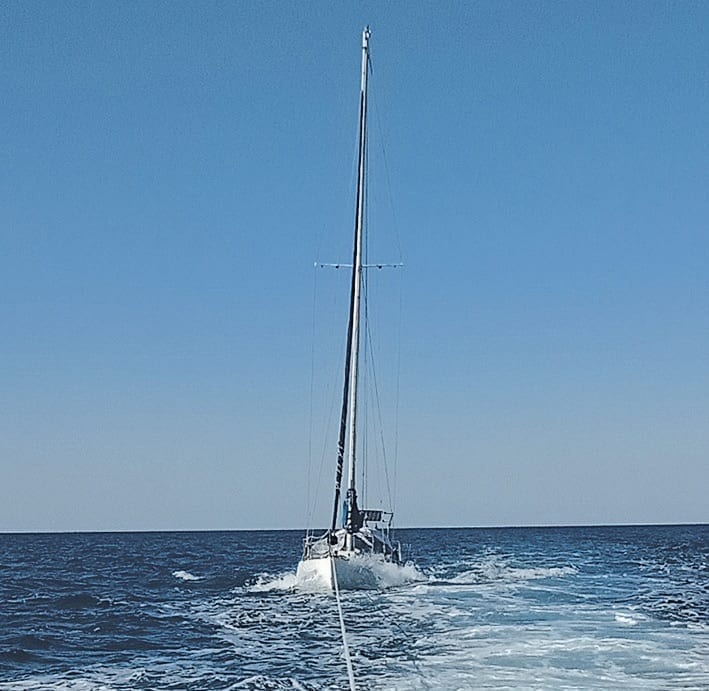
MON 20/08 1225pm – 12m Monohull vessel drifting at Spitfire Banks, required a tow to Bongaree Jetty.

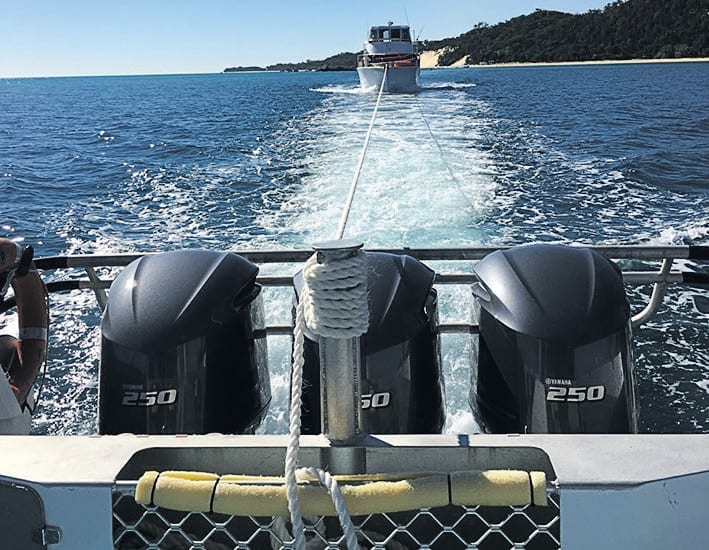
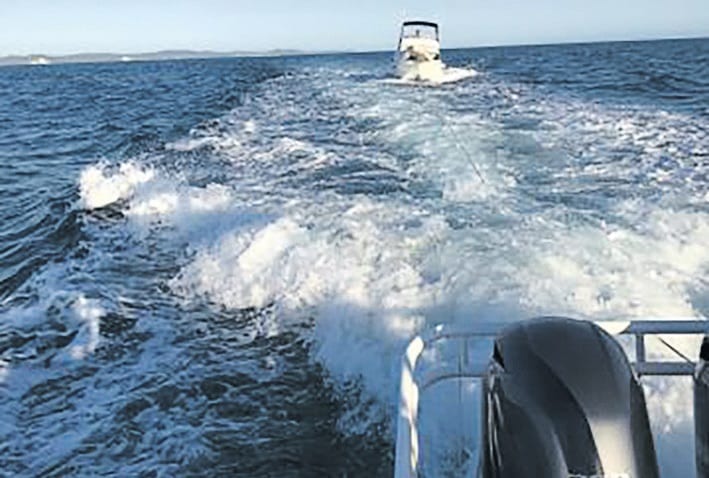
An Assist in the form of a tow from Tangalooma to Scarborough, a 15-metre flybridge cruiser, with no forward propulsion was towed to Scarborough for repairs, crew and passengers were transported back to Bribie Island. Bribie One was crewed by Skipper Bob Skinner and very able crew of Ian Grimes, Doug Lythgo and Ces Luscombe

DRONE DEMONSTRATION

Wednesday 1st August 2018 VMRAQ have been evaluating how drones could be useful to its squadrons operations. Tom Hudson VMRAQ State Training Officer and drone pilot Brendan Archie demonstrated the “Swell 3 Drone” at VMRBI Base

REPLACEMENT GEARBOXES FOR BRIBIE ONE:

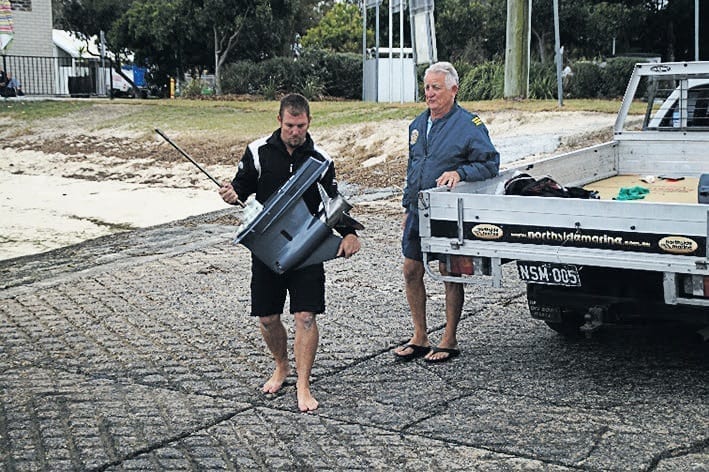
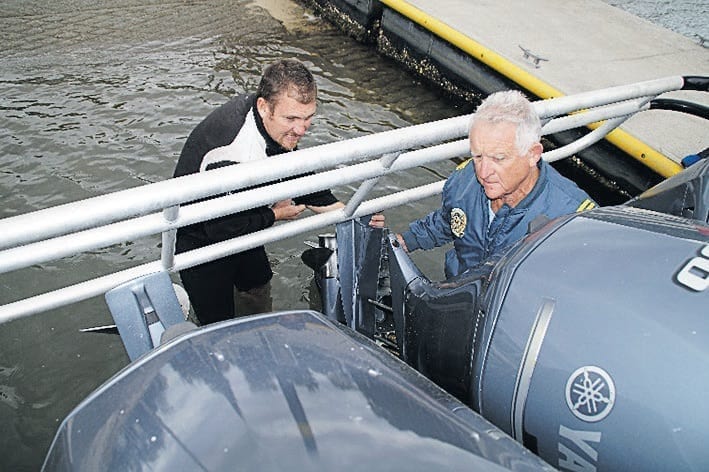
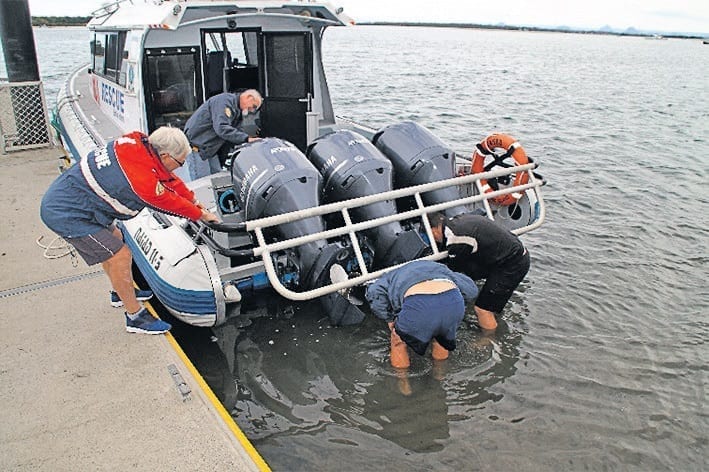
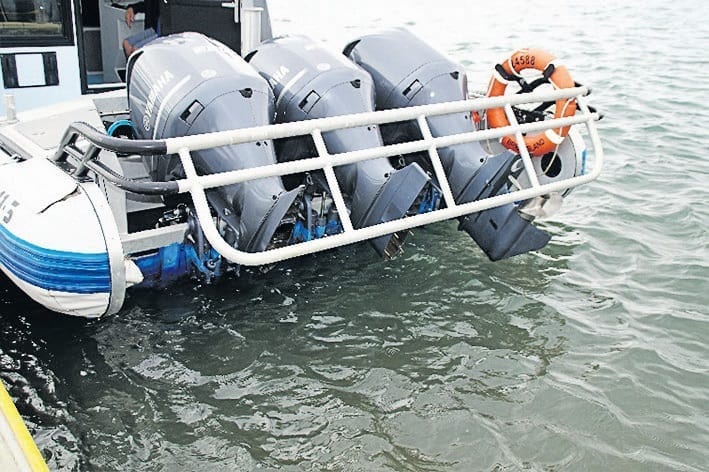
Tuesday 7th August 2018 Northside Marine has replaced the gearboxes of the port and centre outboard motors on Bribie One under warranty. Uneven wear on the drive shafts allowed the ingress of water, which mixed with the gearbox oil, necessitating the withdrawal from service for Bribie One last week. Thanks to Northside Marine they were promptly replaced this morning promptly returning Bribie One back into service. The seals will be checked on the starboard gearbox and most likely be replaced in the immediate future.

BRIBIE THREE REFURBISHMENT

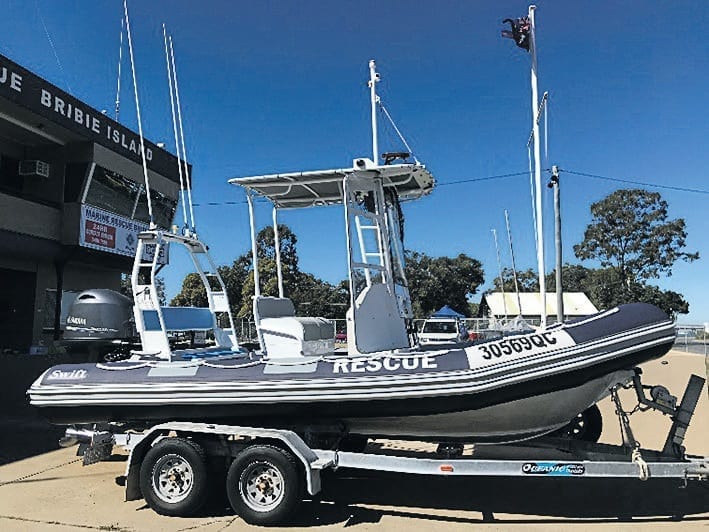
Wednesday 8th August 2018 Bribie Three refurbishment by Swift Marine of Molendinar is now complete and she is back at VMRBI for final fit out. At a cost of around $36,000, the extensive refurbishment has returned her to an almost new condition.

Bribie Three – almost new again

HAPPY HOUR

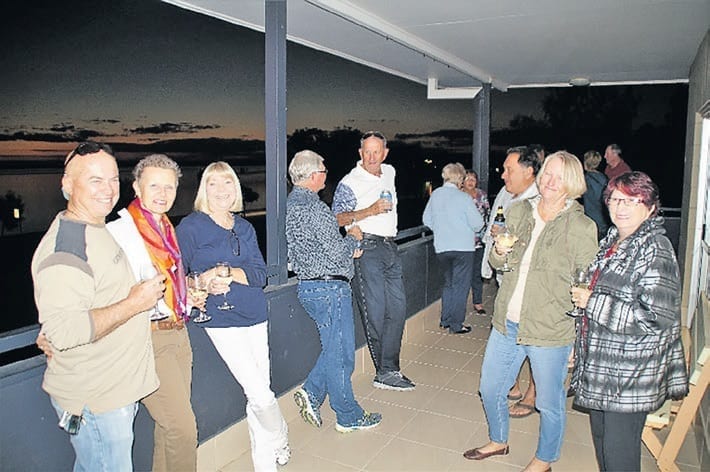
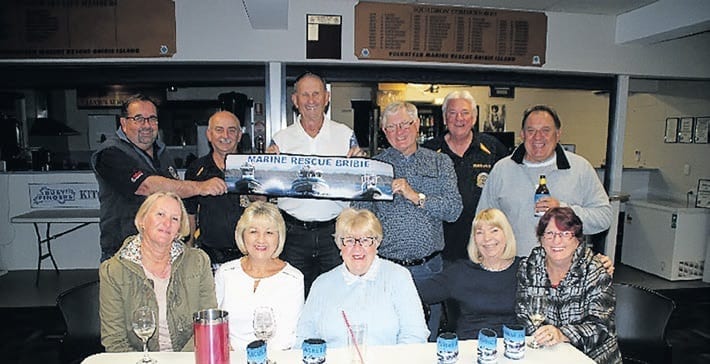
Friday 10th August 2018 With 5 Fridays this month, we were once again blessed with beautiful conditions for our Happy Hour. 21 members and guests turned out to watch hundreds of little black cormorants binge on bait fish with one of our renown sunsets as a backdrop.

TRIM YOUR BOAT

Boating Safety – Compiled by VMRBI Coxswain Simon Middap

It’s not all about the trim button! The ability to trim your vessel properly is both a safety and an efficiency issue. It is certainly possible to swamp or overturn a boat simply because it’s badly trimmed. It is very important indeed to understand trim and how to adjust it to suit different conditions, even more so in open water. Before getting into the effects of the dreaded “trim” button, it’s necessary to understand trim – and that begins at the same place in any boat – weight distribution, BEFORE you move the vessel.

It’s a skipper’s responsibility to ensure weight is distributed appropriately before a boat ever moves from a ramp or mooring. Positioning of passengers, iceboxes, portable fuel tanks and, in fact, any gear heavy enough to affect weight distribution and the stationary trim should be reviewed EVERY time a boat is loaded. Passengers can be asked to move and anything that’s not bolted down changed around to redistribute weight as necessary, even during the voyage. Remember too that you may need to move a fuel tank or an icebox as fuel is consumed or an icebox emptied.

Generally speaking then, static or stationary trim is about common sense; about simply balancing a boat by distributing weight to keep the hull floating level in the water or sometimes it may be better to bias some weight aft, but never bias to the bow. Bow down is never a good idea, a heavy bow boat won’t steer well making manoeuvring dangerous and take longer than they should to get onto the plane using excessive amounts of fuel. The overall concept of understanding trim is especially important in smaller vessels and dinghies that do not have any form of mechanical trim capability. Small outboards adjust manually by moving a pin along a series of holes in the mounting bracket altering the angle thrust from the propeller and the attitude (or trim,) of the boat to the water accordingly.

The motor trim button or trim tabs – speed trim.

Once a hull moves, speed introduces the effects of the hull’s hydrodynamics and speed magnifies the interaction between hull and surface conditions, wind chop, waves etc. At speed, appropriate trim for travel in one direction relative to a prevailing sea or even a substantial wind chop may not be appropriate for another. In larger vessels, speed trim adjustment at the literal touch of a switch is provided on planing powerboats – because it’s necessary to adjust trim to suit as and when conditions or direction of travel change. There are two common mechanisms of adjusting at speed trim: One of these is trim tabs (not fitted to every vessel), a pair of adjustable tabs or flaps mounted on the transom, which work much like the wing flaps on an aircraft.

Trim tabs work by adjusting (usually electric/hydraulically at the touch of a switch) the tab up away from contact with the passing water; or down (trimming in, or digging the tabs in) further into the water. Adjust the tabs down, into harder contact with the water if you like, and the aft end lifts and the bow lowers. Adjust them up, easing contact with the water, and the transom squats lower and the bow rises. The other is the trim button provided to adjust the angle of an outboard or sterndrive drive leg relative to the transom.

At speed with an outboard or sterndrive, adjusting the propeller closer to the transom, commonly referred to as trimming in, raises the transom and pushes the bow down. Trimming out, adjusting the leg away from the transom, lowers the stern and raises the bows. It’s important to stress, that while at speed trim adjustments will to some extent compensate for uneven weight distribution, they should never be used for that.

Here are the steps to properly trim a planing-hulled powerboat using the trim button:

1. With the engine in neutral, use the trim switch to tilt the drive down as far as it will go. Monitor the engine trim gauge (if present) or note the change in sound from the tilt motor that signals that the engine is trimmed fully down.

2. Put the engine into forward gear and throttle up steadily to cruising speed, noting the reading on your speedometer, GPS, or tachometer.

3. Using the trim switch, slowly tilt the engine up. You should feel the boat’s attitude toward the water change, with a slight rise of the bow, a lift of the entire boat, and an increase in speed.

4. Continue to tilt the engine up until you note a slight drop in speed from the GPS or speedometer, a sharp rise in the engine’s rpm, or until you hear your propeller begin to ventilate. The boat may also begin to “porpoise” or pound the water in a rhythmic pattern when the drive is trimmed too far up.

5. Tilt the engine down in small increments until the maximum speed/ consistent rpm is again reached, and/or no ventilation is noted. At that point, the boat is properly trimmed and operating at maximum efficiency.

From there, you may want to make adjustments to the trim to offer a more comfortable ride. For example, trimming the bow down a bit in a chop may decrease pounding from waves — but may also increase the amount of spray. Experience and experimenting with the engine’s trim functions will soon show you the best attitude for your boat and its load on a given outing.

Quite fine adjustments can make dramatic differences to how a boat handles, especially at sea. It takes a while to attune yourself to this and when not au fait with a particular boat’s individual character, the rougher the water, the harder it is to discern actual trim angles. To accelerate to planing speed, nearly all hulls like their tabs down, and/or their drive leg trimmed in. So, to start our familiarisation process, trim the leg all the way in, and/or apply maximum downward angle of the tabs, then give the throttle a burst to boost the hull onto the plane.

As a rule of thumb, an indication of good calm water trim angles is when the steering goes light. Try it a few times. Trim in/down and out/up until you feel this freeing or lightening in the steering. If you keep on trimming out, the propeller will eventually reach an angle where it goes too far and loses grip, revs climb and speed decreases. Knowing where this happens is important when adjusting trim for different sea conditions.

Then, find somewhere with plenty of room and not many other boats about and try some reasonably tight turns. You’ll find that trimming in prior to a turn allows tighter turns before the propeller loses grip. And trimming out for straight running gives more speed without applying any more throttle. When encountering surface chop, particularly smaller boats will deliver an unnecessarily bumpy ride if left trimmed at calm water angles.

Ride quality is improved significantly by trimming in, lowering the bow and using the sharpest part of the hull to slice through rather than crashing into the bumps. When travelling upwind, trimming in has other benefits too. It helps counteract the lifting effect of wind under the bows, which can be quite noticeable in lighter boats. At sea, in trim also minimises the tendency of the bows to loft into the air as the boat crests after climbing the steeper downwind side of a swell. In big swell conditions, it may become necessary to actually accelerate up the face of a swell and ease off for the crest, allowing the bows to drop gently onto the backside of the wave.

Further information on marine safety can be sourced from https://www.msq.qld.gov.au/Safety/ or watch out for VMR Bribie Island’s information sessions on boating and safety http://www.vmrbribie.com/.

Other Articles

https://thebribieislander.com.au/june-vmr-bribie-island/

THE BRIBIE WINELANDER – Wine talk

Tags: Wine. Red. White.

To say it is an understatement that we live in the lucky country when it comes to wine was emphasised when I recently received a wine book from my golfing chum Greg Paul who thought it may be of interest as it went back to the late 1980’s and it certainly threw up a few interesting facts. The book which showcased wines in 1988 costing between $3 and $20 shows Rosemount Shiraz and Chardonnay selling for around $9.20 on a dozen purchase and this week at Liquorland Sylvan Beach they cost $8 on special at half price, Houghton Classic White(White Burgundy) $10 in 1988 is now around $8, Windham Bin 555 and 777 was $7.20 and it is still possible to pick these up for around the same price.

Obviously many wines have gone up, for instance, Penfolds Bin 28 Kalimna Dry Red and Bin 28 were $8.75 and now they are around $30 but with costs going up probably 5 fold since the 1980’s it shows that it is still possible to find bargains if you are prepared to look around and in most cases the quality is still there. A couple of editions ago I mentioned the Northern Territory had intentions of putting a minimum floor price on wine, well it was passed this week in parliament and will come into force on October 1st this year. They are the first Australian jurisdiction to do so and effectively it puts an end to inexpensive wine regardless how responsible you are as a drinker, the cheapest bottle of wine will be about $10 and a four-litre cask will go to around $40.

Beer and spirits are unaffected, but this isn’t a tax so if anyone is prepared to buy these products the retailer will get the extra profit, however you can rest assured that it will be only a matter of time before this spreads around Australia and eventually The Federal Government will introduce it as a tax! I was going to present wines from either The Napa Valley in California or from France at the last Beefsteak and Burgundy evening when a day out to The Fortitude Valley changed all of that. We had lunch at Harvey’s and on the wine list was listed a Cabernet Merlot from Dutshke, one of my old agencies in The Barossa.

The wine was a new label simply named “Uncle” and sums up owner/winemaker Wayne’s outlook on life in the naming of his wines and he only makes red wines and fortified wines. For the last five vintages, a straight Merlot has been produced from grapes grown on the block 80 vineyard planted by his uncle Ken (Semmler) who planted the vines on The St. Jakobi Vineyard in 1980 and it is simply called “The Block 80” Merlot.

Houghton Wines. Wine. White. Red.

Normally blended with Cabernet it can, in the right winemakers’ hands, produce a full-bodied style in its own right and this is a good example of just that. The “GHR Neighbours” Shiraz which is named after the Gods Hill Road that leads to The St. Jakobi School and Church which is where his vineyard is situated and his neighbour’s vineyard where he sourced his grapes. The Cabernet is named “Sami” after his daughter Samantha who when at the age of just 6 weeks he introduced her to winemaking with his wife Brenda by dipping her feet into a bucket of Cabernet Sauvignon and then making footprints on a sheet of paper and sending it to her grandparents in America.

For the dinner at The Surf Club we had The Lanson Black Label Champagne on arrival, The Alan Scott Marlborough Sauvignon Blanc and The Dutschke Block 80 Merlot with the mushroom soup, The Dutshke ‘Uncle’ Blend and The Dutschke St. Jakobi Shiraz with a dish of pulled slow cooked lamb and finished with a sticky date pudding with The Dutschke Tokay and a great night was had by all.

In 1977 The Queen visited Australia as part of her Silver Jubilee and escorting her to The Kaiser Stuhl Chateau for lunch was Oscar Semmler the grandfather of Wayne and to celebrate the occasion Wayne has named his reserve label “The Oscar” Shiraz. When I sold the wine each bottle was wrapped in a copy of the front page of the local newspaper of the day but I think this exercise would have been very time consuming even though it added interest to the product.

When conditions are right and when doing a sampling of all the barrels of Shiraz, if one barrel stands out as exceptional Wayne will release 400 bottles of this wine with a limit of just two per customer, the wine, of course, is called “Single Barrel Shiraz” and since 2010 only two vintages have been released. In the fortified he calls his port “The Old Codger” and on a visit to Reno in Nevada a couple of years ago we came across this wine on a liquor store shelf, but Wayne also makes a Tokay, a Muscat and Bourbon Barrel Tawny, a 22 year old Tawny, and a Sundried Shiraz.

If you really are interested in drinking some of the finest wines made in The Barossa a few of the labels are sold in Dan Murphy’s and if you are visiting the Fortitude Valley The Cru Liquor store sells all the range including the fortified wines which are quite stunning. Talking of The Silver Jubilee brings back memories of my period with Kaiser Stuhl before the takeover by Penfolds. The Kaiser Stuhl label was the result of a joint venture by many of the smaller vineyards in The Barossa Valley and they formed a co-operative to survive. They built a Chateau as the face of the winery which still stands today but now carries the Penfold sign.

wine tips and tricks

In their day Kaiser Stuhl dominated the wine cask market, Summer Wine was the largest selling sparkling wine, and the Black Forest Moselle and The Gold Medal Rose were also very popular. Many of the individual vineyards had Germanic roots and were represented by the “Ribbon” range which consisted of a Green Ribbon Riesling, a Gold Ribbon Spatlese, a Purple Ribbon Auslese and a Black and Red Ribbon Shiraz. The Red Ribbon Shiraz won many awards including The Stodart Trophy awarded here at The Royal Brisbane Wine Show. The Kaiser Stuhl Silver Jubilee Port and The Kaiser Stuhl Gold Label “Champagne” were served at the lunch attended by The Queen on her visit to The Barossa in 1977.

As with many takeovers, The Kaiser Stuhl label disappeared in the mid-1990’s as it didn’t fit into the portfolio of the huge range which now falls under the Treasury Wine portfolio. Cheers, Philip Arlidge [email protected]

FROM TWO GUYS WHO SHOULD KNOW: “Wine is the most healthful and hygienic of beverages.” Alexander Fleming “Penicillin cures but a wine makes people happy.” Louis Pasteur

Other Articles

https://thebribieislander.com.au/wines-impact-private-labels/

Money – Responsible Lending – Responsible Borrowing

0

Tags: Money. Finance guides, tips and councilling. Financial advice.

MONEY TALK

with Peter Dallimore
Peter Dallimore is a volunteer Financial Counsellor at the Bribie Island Neighbourhood Centre

With the banking royal commission exposing some unacceptable practices in the banking industry I’m taking a break from the super series to write about responsible lending obligations that financial services providers are required to comply with but not all have been doing so. All too often I am asked to assist clients who have borrowed more than will ever be able to repay. In some cases, it is clear that the lender should not have provided the loan – and the borrower should not have borrowed the money. How was the borrower able to convince the lender to advance the money?

The National Consumer Credit Protection Act requires loan providers to make reasonable inquiries and take reasonable steps to verify information about the credit applicant’s finances to ensure that a borrower will be able to repay a loan without experiencing substantial hardship. The information that the lender should obtain includes the borrower’s income, continuity of employment prospects, expenses, assets, debts and credit history.

In addition, a key requirement is for the lender to take account of reasonably foreseeable changes to the borrower’s circumstances such as the end of a honeymoon period on a loan, potential loss of a second income in a two-income family or impending retirement. Notwithstanding the above, lender’s are permitted to use financial models incorporating typical income/spending parameters to assess a borrower’s capacity to service the debt. The use of financial models can speed up the assessment process so is an attractive option for lenders or brokers wanting to meet lending targets.

However, if the borrower defaults on a loan provided using a model, the lender must satisfy the regulator that the model gave a realistic assessment of the borrower’s capacity to service the loan. Proper consideration of a borrower’s capacity to pay makes good sense for both the lender and borrower but lending is a profitable business and borrowing feeds instant gratification so prudence does not always prevail. Borrowing gives consumers access to what the want now so the more they borrow the more they can have. The reality strikes home when they have to repay the debt and can’t do so.

If for whatever reason you are experiencing financial hardship and your debts include loans covered by the responsible lending obligations you may be able to obtain some relief from the lender if you can demonstrate that, at the time you obtained a loan, you did not have the capacity to service it.

Take up your case with the lender and if you don’t get a satisfactory response make a complaint to one of the financial ombudsman services – FOS or CIO. Their websites list which financial service providers that they cover. To conclude its always best if you can stay out of debt and keep control of your financial destiny.

Peter Dallimore is a volunteer Financial Counsellor at the Bribie Island Neighbourhood Centre. He can be contacted via email at [email protected] or you can make an appointment to see him by calling 3408 8440. The Financial Counselling service is free Other free Neighbourhood Centre services include family counselling, emergency relief and free food each Tuesday through Oz Harvest. In addition, the Centre hosts outreach services including Centrelink, Job Search, hearing services and supports some great initiatives including Tax Help and Broadband for Seniors. A small onsite Bargain Shop has super low prices. The Neighbourhood Centre is located at 9 Verdoni St Bellara.

Other Articles

https://thebribieislander.com.au/financial-advice-mortgages/
DUDE THAT’S DEEP

Dearest Bribie Islanders, I actually went to bed pretty early for me last night so I am currently writing this to you all in the wee hours of the morn’. It is still very dark outside, the rain is trickling gently down, no one else is yet awake and I have some quiet native American-flute music in the background.

It is lovely and peaceful. Not sure about you, but I remember being a small child and feeling like the world was so big all around me. So wondrous. I remember feeling that magical feeling of imagining what the future what would be like. I specifically recall a time in grade two where I turned to my then best friend and said, “I wonder what we will look like at 20”, – we were both so excited for such a time in adulthood to come. As a child, we were very aware that we were young and there was much to be learnt.

There were many things that told us there was a long way to go in our maturation process: school, older siblings and adults that seemed to be able to do a lot more things to name a few! For me personally, there was a strong sense of safety knowing that I had time to learn these things and that I could just enjoy being a kid. I suppose everyone’s childhood is different and for some, they had adult situations/ responsibilities thrust on them at too early an age. But even then, it is not too late to recapture the magic and wonder of childhood and make it come alive again.
That is where I want to guide this conversation today. You know how I said before that I felt safe knowing I had time to learn and grow. Well actually, it was more the, ‘not being aware of time’, that made me feel free. Time is a dimension we’ve been given on this earth to govern it, but really true life exists outside of time. When we are completely unaware of ourselves, things that must be done, the past or the future: that is where we are happiest. Do you remember what playing felt like? When you just completely got lost in the zone for hours and nothing else mattered.

It might have been Lego for some, Barbies/Bratz dolls for others, or simply dirt and trenches and drinking out of the hose for the outdoorsy kids. Sorry (not sorry 😉 Mum for ruining the backyard that one time with mine and Sam’s mud tunnels! Anyway, it doesn’t matter what it was that we were playing, but there was a magical element to it wasn’t there? So much freedom and creativity. Then at some point, it starts to fade and we become inundated with things to do.

Ideals, deadlines, assignments, goals. Life gets a bit more fidgety and complicated. Mostly, there are responsibilities that call our attention and we lose ourselves and our play. The crazy lie is that we can’t have responsibility AND play. But we can. Just because you grow up, doesn’t mean you should grow out of the magic of play and imagination and creativity. The trick is, not thinking you know everything already and that you’ve done growing. You see, it doesn’t matter how skilled or smart you get, or how successful even, there will always be another challenge, another level, something else to learn.

You will always be maturing. Life is always teaching us something new, but as we grow older we tend to get more comfortable in our own versions of knowledge. We become poorer learners because we think we know something or two. You will surely be doing a disservice to yourself if you think you’re knowledgeable because, at that point, you stop learning. And, you must be open to the simplest of things, like a child, being the one to impart wisdom to you, in order to keep learning. If your goal is just to get smart or skilled or become successful, you’ve lost the meaning of life.

These attributes should only ever be achieved in order to help not only yourself but your community to live well. Yet, that kind of attitude takes humility and a childlike heart. My prayer for you all today is that you begin to discover things that spark your play. To live for a minute, outside of time. To remember that life is about movement that is beautiful, fluid, pleasurable, carefree, strong but gentle.

It is not stop and go, forcing and pushing, striving and reaching. Remember that there is something else on the horizon waiting to be learnt by you. Treasures about earth and life are hidden but it will take a humble, inquisitive heart to find them. And I hope dearest Islanders, that once you have found them you will share them with us all. Until next time, Nikita

Other Articles

https://thebribieislander.com.au/adoring-our-animals/
ENTERTAINERS OF THE Island – NICK COMINO

Since I began to write articles for The Bribie Islander and The Mini Bribie Islander, I have pointed out on a couple of occasions that Elvis is alive and well and living on Bribie Island and in case anyone has been wondering just how I came to that conclusion, perhaps I should explain that I was talking about local entertainer, Nick Comino, aka Elvis Parsley.

Featured Image(above): Elvis Parsley entertained customers at the Grapelands fruit shop
in Woodford

The following article can be seen as an excellent example of how the right choice of words and quite a lot of talent enabled someone to use one career to pave the way for another. Nick was born in Gympie where his father was a farmer and fruit shop proprietor and after spending the youngest portion of his life in that area, he attended high school at Strathpine when his parents relocated to Kallangur. Jumping forward a few years, in what would seem to be a natural progression for someone who was brought up in a family of fruit growers and retailers, Nick became the owner of a fruit and vegetable shop in the town of Woodford.

‘The bloke next door knew that I liked to sing Elvis Presley songs and one day he said that I was Elvis Parsley because I sold fruit and vegies,’ Nick told me. ‘I sat on that for about a year and after a bit of thought, I decided to call my shop, “Grapelands,”’ he said. Nick explained about how from there on, the whole Elvis persona took shape. ‘I learned to sing properly and then, after getting together with a few local muso’s, we formed a band called, “Elvis Parsley and The Swinging Zucchinis” and did a couple of shows for the locals before starting to perform at the shop.

Making an appearance at Locals Only(left) and The King of Salad Roll(right)

It was then that I began to really play with words and thought, “I could be The King of Salad Roll.” Word got around fast and we started to get tour buses coming to the shop and then the media and someone suggested that I was the “Singing Salad Seller,”’ Nick recalled. When asked about where his artistic talent comes from, Nick credits his mum for passing on her abilities to him. Encouraged by the sudden popularity, Nick began to play with words and came up with song titles such as “Suspicious Limes,” “Artichoke Hotel” and “Viva Los Vegies” and television shows like Rove Live and Great Outdoors featured him in one of their segments.

Sadly, Nick closed “Grapelands” in 2010 and due to having made many visits to Bribie Island to indulge in his love of fishing, he moved here and has been a well-known member of the community ever since. He pointed out that he still owns the property where his rather famous shop stood and has left the “Grapelands” sign there for people to see. From when he moved to our beautiful part of the world, Nick has performed at a number of events including Locals Only and the Vibe Markets although he did say that he doesn’t do many shows anymore. ‘I definitely don’t perform off the island and I just liking helping out the community now,’ said Nick.

‘It is more of a hobby now and I spend time composting and composing. If Elvis were alive now I would sing a song to him that has the words, “A little more fruit and vegies – A little less fat in here,”’ he remarked. As well as his proven talent as a singer, “The King of Salad Roll is also an accomplished poet and I had the privilege of hearing him recite the following poem which was for his father. “Farming and fishing occupies my time – and also the odd word written in rhyme. My life is simple but its rewards are great – because it’s happiness I’ve found, that makes me relate.

Working with nature I see life in perfection – but man’s own doings take the other direction. The riches I have are not in wealth – but in the life I lead that brings happiness and good health.” As we sat on Nick’s balcony, I commented on all the herbs that he has growing in his front yard and it really didn’t surprise me when he replied with, ‘It’s parsley, I have to keep the name going,’ As another example of his love affair with all things green, when I arranged to pay him a visit, Nick told me that I should just look for the greenest grass at the front of any home in the street and, I must say, he definitely wasn’t exaggerating.

As I left after what was a very pleasant hour spent learning about this very popular entertainer, Nick presented me with a pot filled with parsley plants so I have called it Elvis. So for anybody who had doubts, I think that this is ample proof of Elvis being alive and well on Bribie Island and for a chance to hear him perform, I would suggest a visit to the Country Music Club’s October concert.

Other Articles

https://thebribieislander.com.au/entertainers-of-the-island-jack-james/

STRONGER COMMUNITIES – A MESSAGE FROM SUSAN

Many of you will receive my newsletter in the mail soon, thanking you for your support in the recent election. But it’s important you know how humbled I am to be chosen by you again to represent the people in this wonderful community. Since my re-election, some things have changed and some things have stayed the same. Scott Morrison is our new Prime Minister, although, we’ve got the same old Liberal policies. The cuts to our local schools and Caboolture Hospital are still being swept through and the Liberals are still fighting with each other. Meanwhile, I’m getting on with the job that you elected me to do. I’m continuing on, working with people in our community to improve our health care and education system, local services and jobs.

Your Electorate Office has hit the ground running, working on lots of important things like the Stronger Communities Programme. With help from a team of local community leaders, we’re working to identify funding for projects that will make our great area an even better place to live. We’ve also planned some upcoming mobile offices – you can find the details below. My team and I regularly get out and do community outreach, knocking on doors and helping people with issues. If you see us out-and-about, please stop by and say hi!

Susan Lamb MP – Federal Member for Longman

STANDING WITH OUR VETERANS – LABOR’S COMMITMENT TO SIGN A MILITARY COVENANT

Over time, Governments have provided a system of Veterans Affairs and support, which I think we can agree, has let our veteran community down at times. Whenever I hear of a veteran being let down by the system, it frustrates me. It frustrates me because I know about the sacrifices our veterans have made, and the physical and psychological trauma they’ve undergone to keep our country safe. It should be the government’s responsibility to stand behind and look after our defence force personnel.

Our veteran community desperately needs a solution, which is why I’ve made it a priority to work with a Shorten-Labor Government to sign a military covenant. This is a formal pact entered into by the Prime Minister and the Chief of Defence which promises to look after personnel who are currently serving, and those who have left. Part of Labor’s plan is to put in place a reporting and accountability mechanism which will require governments to report annually to parliament on how they are meeting their responsibilities under the covenant. I’ll be working hard to make sure Labor is elected so that we can put this important agreement in place and make sure that our defence personnel are getting the support they need.

“I know it’s hard trying to make it into the office during the week. So, we’re coming to you! Feel free to come along to any of the mobile offices below and raise any issues – we’re here to help!”

MOBILE OFFICES AND EVENTS

Saturday October 6
9:00am – 9:45am, Dickson Park: 143 Morayfield Road, Morayfield (Morayfield Road side)
10:00am – 10:45am: Corner Bribie Island Road and Beachmere Road, Caboolture
11:00am – 11:45am: Lehman Park West, 3 Biggs Avenue, Beachmere
1:00pm – 1:45pm: Ningi District Hall, 1320 Bribie Island Road, Ningi

Authorised by Susan Lamb MP, Australian Labor Party, Level 1, 69 King Street Caboolture Qld 4510.

FEVER ON SUNDERLAND DRIVE

Tags: Vibe markets. Bribie Island. Bribie Island. Caboolture

I didn’t want the heading of this article to be too long so I missed out the word “Spring” from before it but I was actually referring to the theme for the September Bribie Vibe Markets which organisers have told me is “Spring Fever.” ‘As well as all the other normal attractions for marketgoers which include stalls selling handcrafted items and fresh produce, displays by the Gem and Fossicking Club and the Woodcrafters, there will be a very special Spring raffle,’ said market coordinator Kelly Vass.

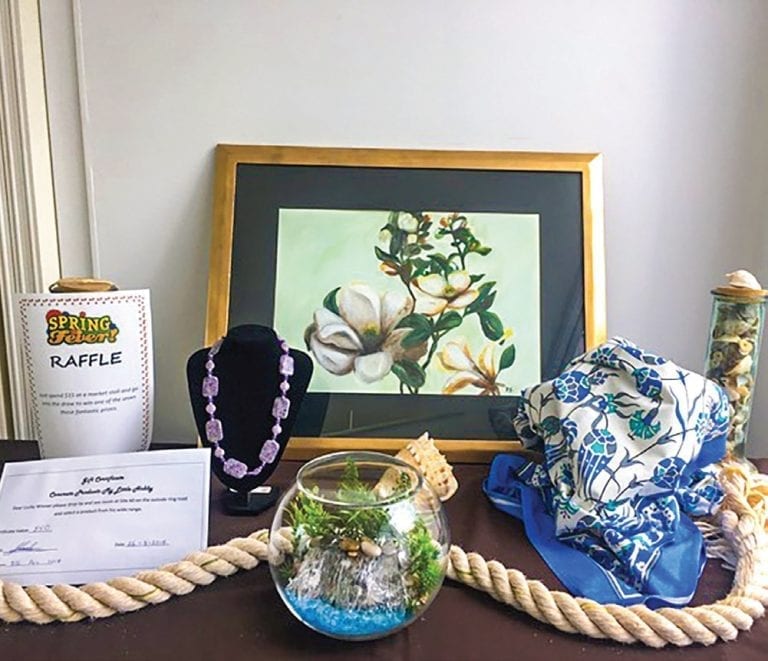
Featured Image(above): Great prizes to be won in the Spring raffle

‘There are seven prizes up for grabs and they all have been donated by our very own stallholders,’ she added. Kelly explained that the prizes for the Spring raffle are an original artwork by Dianne Sherras, a $50 gift voucher for Concrete Products, jewellery by Joyce Davies and craft from Crafty Di as well as a terrarium by Walkabout Creations, a macramé pot plant holder by Jackie Brice and a tablecloth by Michelle Louise. ‘To go into the draw, marketgoers only have to spend $15 at a market stall,’ Kelly told me.

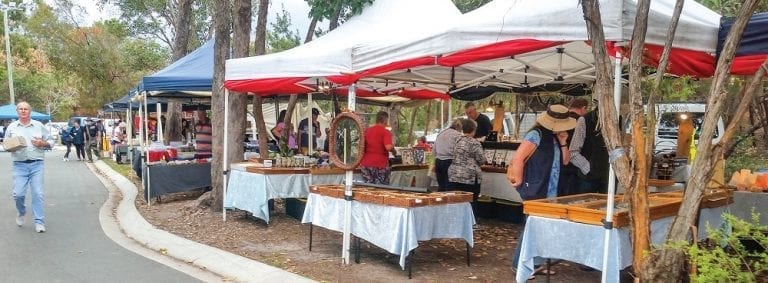
‘The raffle will be drawn on the day and this will be a great opportunity to pick up a handmade original gift for Christmas,’ she said. The Bribie Vibe Market is held on the last Sunday of each month at the Bribie Island Community Arts Centre on Sunderland Drive in Banksia Beach. The event offers a large number of stalls, children’s activities, food and music as well as a chance to view the art on display in the Mathew Flinders Gallery and, since its inception, it has been regarded by both locals and visitors as a great place to spend a Sunday morning.

Entertainment for the September Vibe Markets will be by The Celtic Fiddlers and the Country Music Club. Anyone who would like to find out more about the Bribie Vibe Markets is welcome to call either the Bribie Island Community Arts Centre on 3408 9288 or Kelly Vass on 0417 741 979.

Other Articles

https://thebribieislander.com.au/bribie-island-orchid-society-holds-show/


Bribie Island Orchid Society holds show

Tags: Bribie Island orchid club. Group. Brisbane. Queensland

ORCHIDS ORCHIDS ORCHIDS

When I spoke to Bribie Island Orchid Society Secretary Teresa Watson about the upcoming “Spring Orchid and Foliage” show recently, she told me that there are more varieties of orchid than there are of any other plant species known to man and I would reckon that a great percentage of those varieties could be found growing at the homes of the more than 140 members of the society. Founded thirty-one years ago the society has many very keen growing members and these include Zelda Holmes who has bred an orchid which has the registered name of The Zelda Star.

‘We also have two qualified judges and three other members who are training to become qualified judges,’ said society President Paul Thomas. ‘Judging orchids is quite a complicated process and even involves measuring certain parts of the plant with a micrometer,’ he added. The annual show has been held in the Orchid House on First Avenue at Bongaree for the previous eight years and in other locations before then and has always attracted the attention of orchid growers from far and wide.

From what both Teresa and Paul have said, this year’s event will be even bigger and better and those who attend will not be disappointed. As well as numerous displays of beautiful orchids, there will be plant sales, a cake and craft stall, a potting demonstration and a sausage sizzle.

Teresa mentioned that Mitre Ten have generously donated a wheelbarrow which is filled with gardening goodies to be raffled during the two-day show. ‘The only way for people to get a ticket in that raffle is for them to come along to the show,’ said Teresa. ‘We will also be selling tickets in another raffle which has a $150 Woolworths voucher and an orchid as first prize and a $50 Woolworths voucher and an orchid as second prize. These will be sold at a number of locations around the island prior to the event,’ she explained.

orchid society club group bribie island brisbane

An example of Teresa Watson’s orchid growing skills

The Bribie Island Orchid Society “Spring Orchid and Foliage” Show will be held in the Orchid House and the Indoor Bowls Hall on October 12th from 8.30 am to 4 pm and on October 13th from 8.30 am until 3 pm. The premises is wheelchair friendly and groups of ten or more will receive a discount on the admission price. The society is always ready to welcome new members or anyone who just wants to come along to a meeting or two for the chance to find out what goes on.

For more information about the show or the society itself, those interested should log onto the website which is www.bribieislandorchidsociety.com.au or give Teresa a call on 0407 782 290.

Other Articles

https://thebribieislander.com.au/eastern-yellow-robin-eopsaltria-australis/

History – LIGHT RAIL PLAN FOR BRIBIE ISLAND

0

Tags: Bribie Island History. Brisbane. Queensland. Historical.

Back in 1924, the very first road was built on Bribie Island from Bongaree Jetty to the Ocean Beach. The one and only car on the island had been driving on beach and bush tracks for five years before that first basic road was built. People walked everywhere or went by horse and buggy for short distances on sandy tracks.

Featured Image(above): Light rail tracks & Horse and Cart

The resident population was less than 50 people in those days, but Bribie Island had been a popular holiday destination for 12 years since the Jetty had been built in 1912, and thousands of people came from Brisbane on weekends and holidays to camp along the foreshore at Bongaree. Bribie was the first real tourist resort in Queensland in those days and the “Brisbane Tug & Steamship Company” had developed this from scratch since 1902 by leasing land, building a jetty and running regular steamship from Brisbane via Redcliffe. In 1913 a narrow gauge rail was laid on the Jetty as a tramway to carry luggage and stores ashore. From here it had to be carried by hand or by horse and cart.

In 1914 the idea of extending this light rail tramway across the island for passenger transport to the Ocean Beach was proposed. It took many years for this proposal to receive Government approval, but in 1922 work commenced on clearing the right-of-way across the island, but this was further delayed by industrial disputes with the Unions. George Campbell, the Tug Company director who was funding the project, eventually decided to cancel the idea of a light rail in favour of a vehicular road which would be more cost-effective and flexible.

To construct the road through undulating and swampy ground required large quantities of rock rubble and stones to be brought by ship from a quarry at Windsor and a temporary Jetty built in 1923 beside the existing Jetty at Bongaree to unload the ships. A narrow gauge rail track was laid on the temporary jetty using tipping wagons to carry material from ship to land for stockpiling and loading on to trucks.

Temporary Jetty for road construction

Bribie Island History. Brisbane. Queensland. Historical.

Light Rail tracks on Jetty 1924

By 1924 this first road on Bribie was completed and the new township of Woorim was declared at Ocean Beach. A journalist at the time claimed that this new Campbell Avenue, as it was originally known, was the best road around Brisbane. In view of the increased commercial business and visitors to the island, a telephone cable was laid on the seabed under the Passage to establish communication with the mainland. A small fleet of the old construction trucks began a regular service across the island and all this added to the popularity of the island as a holiday destination.

In 1926 two more legs were added to the Jetty at Bongaree to cope with the thousands of regular visitors coming and going. With three access ways on the Jetty, there was room for people coming off the ships, and those getting on, with the light rail for luggage and stores running on the central arm. By 1933 one million excursion visitors had made the trip from Brisbane to Bribie Island. The resident population was still less than 100.

Bribie Island History. Brisbane. Queensland. Historical.

Jetty 3 Walkways Centre Tramway

Bribie Island History. Brisbane. Queensland. Historical.

Crowds board the Doomba

“RANGER” RAN TO OCEAN BEACH

With easier access to the Ocean Beach the newly established Surf Club at Woorim became very popular and volunteer lifesavers came on weekends and holidays to patrol the crowds on the beach. The surf lifesavers had a very special friend and helper here on the island, a black retriever dog called “Ranger”. It seems that nobody in particular owned Ranger, but he was everybody’s friend when it came to being stroked and fed, and he eagerly awaited the arrival of his special lifesaver boys when they came on the steamships.

Patiently sitting on the Jetty as the ship made its three hour trip from Brisbane, crowds gathered when the smoke from the funnels was visible across the Bay. When the Surf boys boarded the transport Ranger the dog would run in front to be waiting for them when they reached the Clubhouse at Woorim. He saw himself as a key member of the team and would swim out as far as any of them, crashing through the waves he would be “on duty” all day. He was much loved by everyone for many years.

He was an active participant in all beach sports and competitions and marched with the surf patrol in their training and competitions. One day in 1936 he was not at his usual post. A search found him dead on the Passage side of the island where he may have been a victim of a poison bait or even a snake. Ranger was buried in the sand dunes near the Clubhouse and, a cross and plaque erected in his honour.

Bribie Island History. Brisbane. Queensland. Historical.

This cross and these touching words were a feature of Woorim beach from more than 25 years until it disappeared with the erosion of sand dunes.

“In memory of Ranger. Died May 8th, 1936. If there be an afterworld for such as thou –May the juiciest of bones be thy reward”

Bribie Island History. Brisbane. Queensland. Historical.

Maybe someone saved this memorial plaque in the 1960’s before it disappeared, and it sits covered in dust in the back of a shed somewhere. No photo of Ranger has come to light in all our years of collecting old photos …….until now.

An exhibition of the amazing Winston Family Heritage Collection of old photos and films from the 1920s and 30s is now on show at the Seaside Museum. At the opening event recently we noticed a black dog on the beach in a couple of these old plate glass images. Perhaps this is Ranger. You can also see the light rail tracks on the centre arm of the Jetty in some of these old photos. Go and see for yourself.

There are also a couple of old 8mm movie films being shown as part of the exhibition, which give you a wonderful feel for steamship excursions and holidays on Bribie in the 1920s. At our monthly Historical Society meetings we have had presentations on these stories by Lynne Hooper and Donna Holmes, and if you would like to read more look at our Blog Site http://bribieislandhistory.blogspot.com or contact us and ask a question on [email protected]

Other Articles

https://thebribieislander.com.au/major-events-bribie-history/

Beefy’s Bakery News

When we received the press release from one of our regular advertisers Beefy’s we had a close look at what they were saying and decided that there was more to this story then the PR release covered. So The Bribie Islander caught up with Beefy’s Chief Operating Officer Brett Hooper at the popular Beefy’s store located at the Seven-11 servo next to the Ningi roundabout on Bribie Island road to have a chat about the business first hand. Brett, who has been with the company for a little over four years, is a most affable fellow and his enthusiasm and knowledge in discussing their food business is to be commended.

Featured Image(above): Beefy’s Ningi store team members Taelah and Ethan

With more than 20 years experience in the food wholesale market, Brett knows his stuff when it comes to the food business. Brett explained that Beefy’s like all family-owned businesses started in a small way as a single store based in the Aussie World precinct on the Sunshine Coast back in 1997. “Ron and Shirley Hobbs, together with their son Mark and wife Belinda, are the business founders.

They are still very much part of our business today and their vision for Beefy’s to deliver ‘Bigger, Better, Beefier Meat Pies – Guaranteed’ has seen the business grow substantially,” he said. Brett said that the business has now grown to ten company-owned stores located in South East Queensland including the Ningi site. He said that Beefy’s now has approximately 160 employees and is HACCP (Hazard Analysis and Critical Control Points) certified for food manufacture.

As well the business also has developed a home delivery component for their gluten free range Australia wide. Brett tells us that one of Mark and Belinda’s children who suffers from coeliac disease and was the catalyst for the Hobbs to develop a gluten-free range of pies. “Ït would be a bit sad to run a bakery and not be unable to offer your child a pie!” said Brett. He said the Beefy’s team was overwhelmed by the support they received from their gluten-free customers when they attended Coeliac Queensland’s Gluten Free Expo at the Brisbane Exhibition and Convention Centre earlier in the year.

“In fact, our reputation as Australia’s best gluten-free bakery is growing, with the Beefy’s Gluten Free Signature Steak Pie having been awarded ‘WINNER Australia’s Best Gluten FREE Pie’ at the Official Great Aussie Meat Pie Competition in 2015 and 2016. Our other pies have received awards too. And while this makes us proud, what’s more, important is that we consistently keep the quality high and give our customers the very best from Beefy’s,” said Brett.

According to Brett innovation is part of Beefy’s culture and the latest innovation is the Loaded Pie. He says the Loaded Pie not only tastes amazing, but it has also opened the door to thousands of new flavour possibilities for customers. “Customers visiting Beefy’s can now select their favourite pie flavour, this includes pies from the Beefy’s gluten-free range, and then ask for their pie to be loaded with delicious toppings.

Toppers such as creamy mash, mushy peas, maple bacon, hot chips, sour cream, gravy, and a great range of sauces are available, all of which are gluten free except the mushy peas. Our customers are lining up to get loaded,” says Brett. As we chatted The Bribie Islander can certainly testify to the Ningi store’s popularity that’s for sure!

Other Articles

https://thebribieislander.com.au/family-business-41-years-finds-new-home/

A FAMILY BUSINESS OF 41 YEARS FINDS A NEW HOME

When locally owned and operated Holden dealership, Beecham Motors, purchased the Nissan dealership business from John Page Motors back in June of this year and relocated it to their Bribie Island Road premises at Caboolture they were prepared for a few bumps during the change over and moving phase.

According to Beecham Motors’ General Manager, Lockie Beecham, he and the team have been surprised at some of the hurdles they faced during the transition process. “We knew it was going to be challenging to ensure past John Page Motors customers knew about our new location for Nissan service, parts, and new vehicles,” said Lockie. Caboolture Nissan is the new trading name for the Nissan dealership, and the entire franchise and some existing John Page Motors staff have been fully incorporated into Beecham Motor’s purpose-built facility at 29 Bribie Island Road Caboolture.

“I’m proud of the hard work our team has done behind the scenes, as we’ve tried to a minimize disruption to our customers’ experience,” he said. Lockie said that he believed Beecham Motors’s reputation for customer service over the past 31 years with Holden would be translated across to new and existing Nissan owners in Caboolture. The purchase saw Caboolture Nissan bring across around 28 staff from the former Nissan dealership. The Beecham Motors dealership now employs around 50 people in the Sales, Service, Parts, Finance, and Pre-Delivery divisions.

He expressed his appreciation to new and existing customers for their patience and to his staff for their hard work during what was sometimes a challenging transition. “We would like to particularly thank John and Jan Page for their involvement in the local community over the past 41 years as a strong family owned and operated business. We saw the opportunity to continue those same values and family involvement by bringing Nissan onboard alongside our existing Holden franchise.”

While the business continues to adapt to the needs of local customers, the new Caboolture Nissan team is looking forward to proving that Good Service is Always in Fashion, is more than simply a slogan, and is instead a challenge to be met by his team.

Other Articles

https://thebribieislander.com.au/whos-the-captain-here/