Home Blog Page 48

6 Things You Thought You Knew About Salt That Just Aren’t True

Too much salt isn’t great, especially for our health. Salt – it’s a natural resource found everywhere from the ocean to our tears, it’s tasty and it can be really cheap to buy. But like many things, too much salt isn’t great, especially for our health. Because it’s linked to Australia’s biggest killer – cardiovascular disease – salt is talked about a lot in health messaging and the media. But some messages about salt need to be taken with a grain of, well, salt. We’ve busted some salt myths to make it easier for you to stay healthy.

MYTH 1: All salt is out to kill you and you shouldn’t eat any of it

Eating too much salt can contribute to high blood pressure, which is linked to conditions like heart failure and heart attack, kidney problems, fluid retention, stroke and osteoporosis. You might think this should mean you need to cut out salt completely, but salt is actually an important nutrient for the human body. Your body uses salt to balance fluids in the blood and maintain healthy blood pressure, and it is also essential for nerve and muscle function. It’s impossible to live a life without any salt (you’ll die!), but this isn’t a problem for most Australians; the average Australian is consuming double the recommended amount of salt.

So, while a little salt in your diet is necessary, it’s important to keep the amount in check. The Australian Dietary Guidelines recommend adults eat no more than 5 grams of salt a day, which is less than one teaspoon.

Most of us are consuming about 9 grams a day. To help you track how much salt you’re eating, you can find out how much salt is in packaged foods by looking at the food label for the ‘sodium’ level – salt is made up of sodium and chloride. Try to aim for items that have less than 120mg of sodium per 100 grams of the food. You should aim for a maximum of 2000mg of sodium a day.

MYTH 2: Pink/black/rock/sea/Himalayan salt is better for you than other types of salt
You might have seen some varieties of salt advertised as having extra health benefits that regular table salt doesn’t, like containing minerals that are good for your body. Consumer advocacy group CHOICE say that Australians should be wary of these kinds of health claims, as the minerals found in salts like Himalayan Sea Salt are often present only in very small amounts.

Himalayan salt, sea salt, rock salt, black salt, pink salt, unicorn salt – in the end, it’s all still salt. Upping your salt intake to try and get the benefits of an advertised mineral might lead you to consume far too much salt, putting yourself at risk of disease.

If you’re looking for a great way to get healthy minerals and other nutrients in your diet, fruits and veggies are a great source of these. Head on over to the Healthier. Happier. Colour Wheel to find out what nutrients are in your favourite fruit and veggies.

MYTH 3: Some people naturally crave more salt than others
Good news for those who think they’re naturally a salt eater – the taste for salty foods is learned, rather than built in. It’s possible to retrain your taste buds to like foods with less salt in them, it’ll just take a little time.

Try these tips from Eat for Health for eating less salt: •eat mostly fresh food instead of processed food which tend to be high in added salt • go for packaged and canned foods labelled ‘no added salt’, ‘low salt’ or ‘salt reduced’ • compare similar packaged foods by looking at the food labels and choosing the item with less sodium • swap deli meats like ham for canned fish (in spring water) or leftover meat from your last meal • use small amounts of sauces with a high salt content • flavour your cooking with a variety of herbs and spices • avoid adding salt at the table – you could even leave the salt grinder in the cupboard.

Himalayan salt, sea salt, rock salt, black salt, pink salt, unicorn salt – in the end, it’s all still salt.

MYTH 4: You can tell that a food is salty by tasting it
Some foods with a high salt content won’t taste very salty at all. Many packaged foods that contain a lot of salt have other ingredients that balance out the salty flavour, so that the salt is effectively hidden in the food.

You can visit the Heart Foundation and VicHealth’s website Unpack The Salt to find out more about reducing hidden salts in your diet.

MYTH 5: You should eat or drink more salt after working out.

Salt comes out of your body in two ways – through urine and through perspiration – but that doesn’t mean you need to add extra salt to your diet every time you break a sweat.

Some products, like sports drinks, are advertised as a good way to replace lost salts after working out. Under usual circumstances, sports drinks that contain electrolytes are not necessary for rehydration – the process of replacing lost fluids and salts. Tap water and consuming a healthy diet will help replace any nutrients lost during any activity. You can read more about good hydration and how to avoid dehydration here.

Sports drinks can be used to rehydrate if you have exercised continuously for 90 minutes or more. If you’re thinking about starting a new and more strenuous exercise regime and wondering about how to rehydrate properly, it’s a good idea to talk to your doctor about how this might affect your health and your dietary needs.

MYTH 6: If you had high blood pressure caused by too much salt, you’d be able to tell

More than 30% of Australian adults have high blood pressure, and according to the Heart Foundation, half of them don’t even know it.

Most people with high blood pressure don’t display any symptoms, so it’s important to get your blood pressure checked regularly. If you do have high blood pressure, reducing salt, along with getting regular physical activity, moderating alcohol intake, quitting smoking and reducing stress, might help manage it, reducing the risk of damage to your body.

You can find out more about blood pressure here.

It’s possible to retrain your taste buds to like foods with less salt in them, it’ll just take a little time.

The Bribie Islander Gloss Magazine June 19th 2020 Issue 116

Issue 116 OUT NOW. Get all your community news and information. Bribie Islands only community gloss magazine NOW EVERY TWO WEEKS! – Articles on boating, camping, fishing, life, drama, travel destinations, sports and what to see and do on Bribie Island. Covering charities, organisations, places, children’s activities, arts and crafts, tourist destinations, heritage parks, technology, science, music, gardening, and much more.

Download latest digital edition here. Or use the ebook below to view.


Streets of Bribie – Banksia Beach

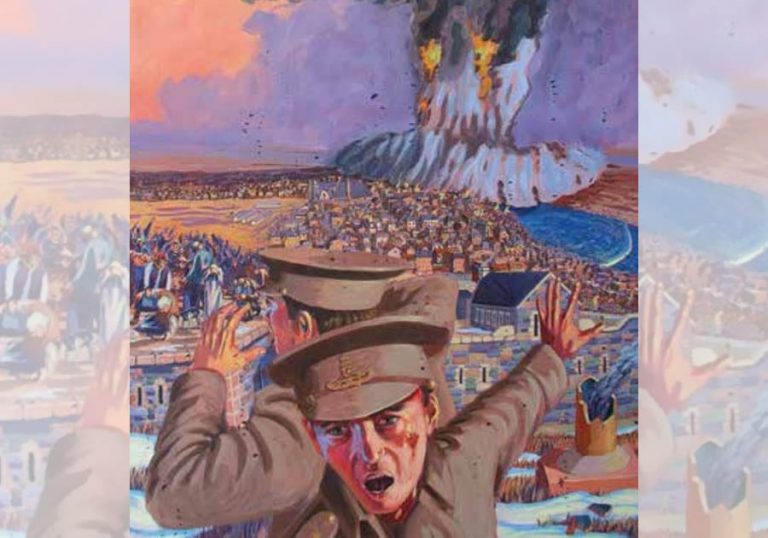
This article is about a few street and place names in Banksia Beach. This year is the 250th Anniversary of James Cook “discovering” and mapping the east coast of Australia. In mid-June 1770, his ship Endeavour beached for repair for 6 weeks near todays Cooktown, after hitting the Great Barrier Reef. Fortunately, for Cook and his crew, they eventually made remarkable repairs and were able to navigate out of the reef and return to England. History would have been very different if they had not, and we would not be living in the Australia we know today.

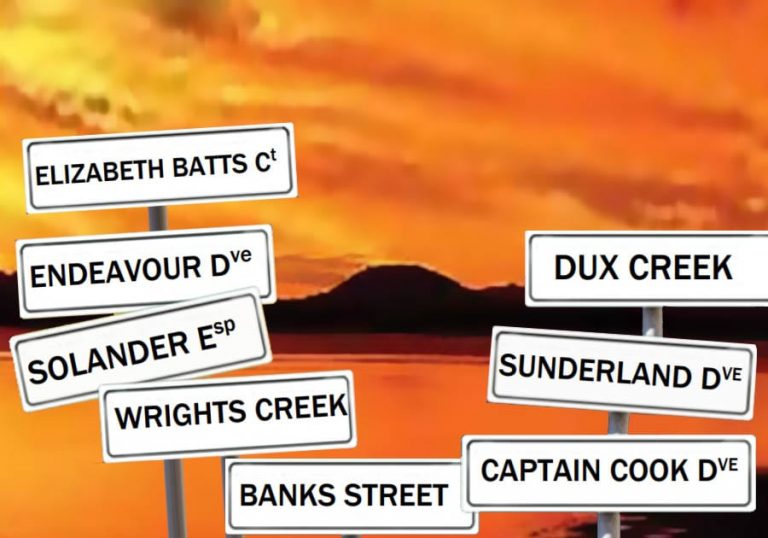
MEMORIES OF COOK. James Cook aboard Endeavour was way off the coast here, and did not see Bribie Island or Moreton Bay, so it is interesting that the initial developer of Banksia Beach decided to name several streets related to his voyage.

SOLANDER Esplanade runs along the foreshore. He was the assistant to the wealthy self-funded Scientist and Botanist Joseph BANKS, after whom many things were named, including BANKSIA Beach, the Tree and BANKS Street. Other street names include ENDEAVOUR Drive, and VENUS Court, from their observation of the Transit of Venus, prior to mapping NZ and Australia.

ELIZABETH BATTS Ct. honours James Cook’s wife, a remarkable woman who lived to the age of 93. They had six children, three died in childbirth, he never saw them, and she survived her husband by 56 years, and outlived all of her children.

GUSTAV DUX Banksia Beach was an isolated Bribie place in the early days, being north of the sprawling wet lands of DUX Creek, original known as Cobblers Peg Creek. Johann Gustav DUX was born in Prussia in 1852, and at age 18 as a navy seaman he jumped ship in Cooktown. He worked his way south to “German Station” near Nundah, where there were German missionaries. He met and married a 17-yearold Prussian, Bertha, and they moved to live on the Caboolture river in 1880’s. Dux Street also bears his name, beside the river, on approach to Caboolture. They had 10 children and made a living Fishing, catching Crabs and Oysters between the river and Bribie Island. It was a very long haul in a rowboat to Bribie, and he often camped overnight at what became known as DUX CREEK. He died in 1927 and his name lives on in memory.

DUX CREEK is now the main entrance to the extensive Pacific Harbour canal development, which began as a small development beside what was Solander Lake. The road to Banksia Beach is SUNDERLAND Drive, which crosses DUX creek near the boat pond, and over the Canal development at Banksia beach.

HARRY SUNDERLAND was a shearer with 227 acres of land at Banksia Beach back in 1945. The only access was by boat, when there were no roads in the area. When Harry was away shearing his wife Phyllis spent much time in isolation, feeding ducks and chooks, growing vegetables and battling dingoes and foxes, with a shotgun under her bed every night.

Fish were plentiful and good quality, and they gave away more than they kept. Harry and Phyllis interviewed in 1980 remembered remains of military training operations around Bribie after the War, including unexploded bombs and craters.

“The fishing is buggered now” he said simply “you don’t catch squire or parrot any more, the mangroves have been razed, and chemicals from Pine forests have found their way into the Passage to the detriment of seagrass beds and fish breeding areas” When Solander Lake Estate started in 1970’s and Sunderland Drive built as the main access road, they sold their land and retained a house block on Solander Esplanade.

COL FISCHER The north end of Banksia beach foreshore is named COL FISCHER Park.

Colin and his wife Bry were among the first residents building 33 Solander Esplanade in 1979. They were wonderful gardeners and won “Best Garden in the Shire” for three years. He also landscaped and beautified the public foreshore and gardens over many years, and constructed the replica models of the Glasshouses. Prior to his death in 2011 he published a book the “History of Banksia Beach” which Bry later launched at the Historical Society.

WHITE PATCH is north of Banksia Beach and Wrights creek. This was an aboriginal reserve back in 1877 and the planned site for Town of Bribie in 1887, before Bongaree settlement began.

White Patch named by the first white man to visit Bribie Island, Matthew Flinders in 1799. He beached his sloop Norfolk for repairs (a familiar story) with a small crew including aboriginal friend Bongaree.

They explored Moreton Bay and what he called the Pumicestone River and climbed a Glasshouse mountain.

WRIGHTS CREEK named for Harry Wright, Secretary of Licensed Victuallers Assoc. in Brisbane from the mid 1880’s. His riverfront home was flooded in 1893 floods and he lived on Bribie from 1907 to 1924, owning land around Wrights Creek and at Bongaree. In 1925, he proposed a grand “Ocean Club” development at Bongaree that did not eventuate.

The Bribie Islander Gloss Magazine June 5th 2020 Issue 115

Issue 115 OUT NOW. Get all your community news and information. Bribie Islands only community gloss magazine NOW EVERY TWO WEEKS! – Articles on boating, camping, fishing, life, drama, travel destinations, sports and what to see and do on Bribie Island. Covering charities, organisations, places, children’s activities, arts and crafts, tourist destinations, heritage parks, technology, science, music, gardening, and much more.

Download latest digital edition here.

A Life Well Lived

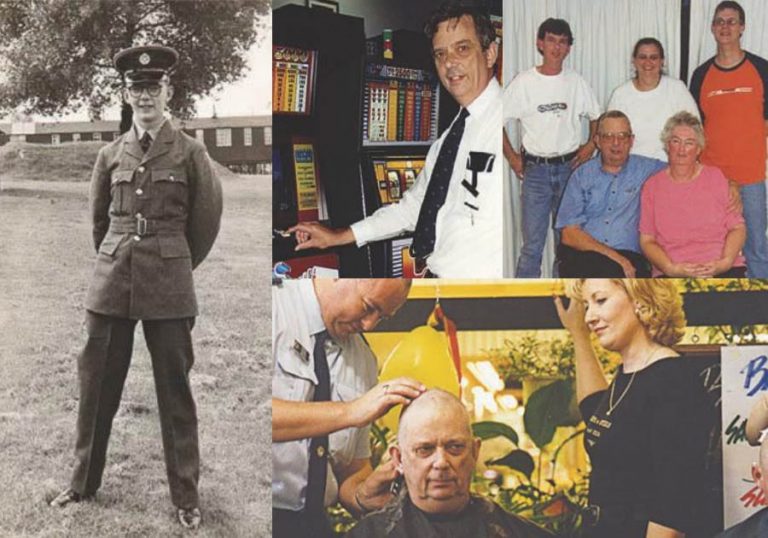
The 10th of May 1938 was 477 days before the outbreak of the 2nd world war. It was also the day in Ilford, Essex, that proud parents Thomas Bones Cornett (aircraft engineer) and Agnes Cornett (nee Powell) welcomed a baby boy into the world – Derek Thomas Cornett. The oldest child with 2 sisters Jean and Gillian.

Derek saw his early years as an adventure, growing up in London during the Blitz. At the age of 5, Derek started his first business, buying offcut timber from the sawmill, filling his cart and selling it to neighbours as firewood. This was his first of many businesses, always retail, find what people want and get it for them.

Education & Military Service Despite having grades high enough to go on to tertiary study, in Derek’s want for adventure, he chose to do his National Service. He joined the Airforce to be a chef, going to Cyprus by ship, spending his spare time riding shotgun on Army patrols. On his return to England, upon release from National Service, Derek joined the Sainsburys (supermarket) team. While working full time he went to night school studying business.

Arrives in Australia After the death of his mother in 1962 Derek was at a bit of a loss. He decided to immigrate to Australia as a “10-pound pom”, all set for a new adventure. He first arrived in Sydney, with a plan to spend some time in each Capital city before deciding where to settle down. One of the jobs he had was selling Encyclopedia Britannica subscriptions in the worker’s camps of the Snowy River scheme (one of the largest engineering undertakings in Australia’s history). After signing up an Italian family, he realised this job was not for him, his morals would not allow it. He could not live with himself signing up an immigrant family who spoke little to no English, living in a tent with nothing to their name, to a large ongoing financial commitment, that they neither could use or afford. The second city on Derek’s around Australia tour was Melbourne. Day 1: Check into a hostel and pay for the first week, 2 shillings left, wash shirts and hang out to dry, they are stolen off the line. Go for a job interview with Tom the Cheap grocer, with qualifications from study with Sainsbury’s at night school.

“Any references?” asked the interviewer. “No, but I have qualifications” said Derek “We want references, not qualifications, will let you know next week” was the interviewer’s response.

“I can’t afford to live until next week” was Derek’s reply.

Some 9 years later when Derek left Tom the Cheap, he was second in charge for Victoria for what was a large national grocery chain, personnel file still read “2 weeks trial”.

Family

It was working for Tom the Cheap where Derek met another “10-pound pom”, Joan Hutchinson. Joan had immigrated with a childhood friend Olga and her family, life-long friends to this day.

Derek & Joan Married on the 2nd of January 1965. Having 2 children in Victoria, Graham John 12/08/1966 and Debra Ann 18/12/1968 before moving to Queensland where Andrew Paul was born 17/07/73. Family life was very much centred around work and community service, with rare but much-loved family gatherings.

Business

The move to Queensland was to work for Tickles, a major Queensland grocery wholesaler (which can be traced to Metcash, the wholesaler for IGA). Derek had a bought and sold a store in Chermside, before buying a store in KippaRing.

In January 1978, while on family holidays, Derek said to Joan that he was going to buy a store at Bribie. Joan asked a couple of questions. “Do you know where it is?”

No, replied Derek. “Do you know if it is for sale?” No, responded Derek.

“Do we have the money?”

No, Derek answered again. By Easter that year Derek & Joan’s IGA Supermarket had been trading for 1 week. This was to be the foundation of what would become a chain of 50 stores spread across Queensland. Bribie Community Derek spent 42 years of his life being an active part of the Bribie community. Well recognised and highly respected he saw serving and supporting the community as a normal extension to business, life and everything.

Derek was RSL Club President between 1987- 1998 and was awarded an Honorary Life Membership in recognition of his contribution to the Club. It was Derek’s keen business acumen and committed guidance that saw the early establishment of the Returned Services Club. Derek committed countless volunteer hours to ensure the Club was sustainable and that the community were the direct recipients of its success.

The RSL Club and our community would not be what it is today without Derek’s contributions. In the days of the Queensland Ambulance Transport Board (QATB), the Ambulance Service did not have the government funding it has today.

The Ambulance Service was primarily funded by membership and the fundraising efforts of local Ambulance committees. Derek was an active committee member for several years.

Derek joined the Lions Club, Bribie Island on the 17th July, 1979. He was the recipient of many awards including the Melvin Jones award 1992, Life membership in June 2010, The President Appreciation award in 1983 & 1985, Perfect Attendance Award from 1980 –1989 and also the Monarch award.

Derek was given the status: Lion at Large in July 1992, then Privileged Lion in November 1994. He also held various director roles from 1982 to 1986. Derek supported Camp Quality for 29 years, Australia Day festivities, Memorial Gardens as well as many other Lions events.

Derek also supported most clubs and associations on the Island. Whether it was scouts, soccer, football, local schools, charity fundraisers or any other good cause, there was a good chance they saw support at some stage from Derek and his business.

It was never touted, but he supported and backed a large number of people. It was not unusual for Derek to personally help staff, and others in the community, facing personal hardship.

They say if you love what you do, you never need to work a day in your life. Derek put everything into everything he did, not just for business, but the community and others, putting money from his own pocket into many parts of the community.

There is so much you can say about a life lived; you could write a book, oh, hang-on, he already did. Derek was on the phone with the printers confirming the printing of his autobiography, in a limited print run, on the morning of Tuesday 19th of May, job done.

Derek Thomas Cornett, 10th of May 1938 to 19th of May 2020, this was a life that certainly was well lived.
Pale Headed Rosella – Platycercus adscitus

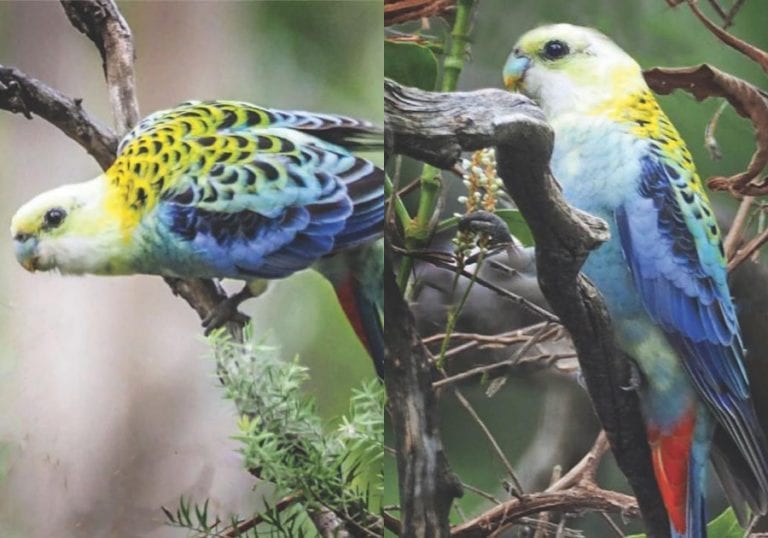
Pale-headed Rosellas are one of the most colourful birds we have in our area. They are fairly common, and you may be lucky enough to have them pay a visit to your garden.

The difference between rosellas and other parrots is that rosellas have broad tails and patches on their cheeks. Pale-headed Rosellas which are the only rosellas found on Bribie Island have white cheek patches. They are 28-32 cm in length and weigh 82-102 g. Heads are pale yellow, underparts pale blue with red under the tail and, black and yellow across their backs. Females are slightly paler and smaller than males and have a white stripe on their wings. Usually, they are quite timid and are easily bullied by the more gregarious Rainbow Lorikeets when searching for food and nesting sites. In far North Queensland, there is a blue cheeked form. Pale-headed Rosellas live up to 15 years in the wild. Their preferred habitats are in lowland areas in eastern Queensland in grassy and Savanah woodlands, farmlands and parks and gardens. Usually, they feed in pairs or small flocks on the ground or in the foliage of trees and shrubs looking for seeds, berries and insects and their larvae.

August to January are their preferred breeding months. Nests are in deep narrow hollows to about 1 m in dead or living trees usually near water. The bottoms of the hollows are lined with sawdust where a clutch of 5-6 white eggs is laid. Females incubate the eggs for 9-20 days. During this time males bring food to the females on the nest. When the eggs hatch both male and female tend to the chicks. After about 4 weeks the chicks are fully-fledged and leave the nest but are not fully independent for another 2 weeks.

Pale-headed Rosella numbers have been affected in some parts by loss of dead trees with suitable hollows and by the illegal exotic bird trade, particularly in the north. The good news is that they do well on farmlands with lots of trees. There conservation status in Queensland and NSW is secure. They are not present in other states.

Luxuries and Necessities Part 2

Last time, we saw that fresh fruit and veggies, servants, ready-made clothes, television, and the Internet have all graduated from luxury to necessity status. Here are a few more things.

When I was a child, another luxury item was a motor car. My father was a mechanic, so we owned a car, while most of our neighbours relied on public transport. At least in Sydney, the system is efficient and economical, but beyond the metropolitan area, it has become a necessity to own a car. The whole infrastructure of this country was constructed to be dependent on the car and trucks. We even destroyed railway tracks, when trucks took over.

But has the car’s luxury status completely disappeared? No. For people who can’t afford to run a car, it is necessary to live in accommodation close to public transport. So they congregate in the cities and suffer the rat-race with its attendant stresses. I’m glad I can afford a car to get away from it and explore this wonderful country.

Another item that is still a luxury in the 21st Century, is an overseas education. Back in the nineteen sixties, scholarships were available for deserving students. I was a lucky recipient, whose fees and board was provided by scholarships. While at U.N.E., I made friends with Colombo Plan students who were likewise rewarded. But the majority of students who arrive in Australia today are self-funded. Their parents who didn’t have the luxury of overseas education can now afford it for their children to benefit. And some Australian students enjoy a gap year at an overseas institution if their parents can afford it. My grandson spent a year in France. But for Australia, perhaps this is a luxury that we shouldn’t rely on. We can’t afford to rely on overseas money to subsidise the teaching of our own students, as the current crisis has demonstrated. These students are not only paying fees but also doing menial jobs to support themselves. Can we afford it? Likewise, we could come unstuck by relying on backpackers to service the agricultural industries.

Backpacking may be carried out with minimal funds, but it is still a luxury that poor people never contemplate. In my youth, I could not have afforded backpacking or any other holiday. I had to wait until I retired. Luxury travel by retirees is another source of income on which Australia is reliant.

Both time and money are contributing factors that make overseas travel a luxury. It would be nice if it wasn’t so because travel is the best form of education. It helps one understand how others live and teach the tolerance necessary to eliminate racism. But the majority of people in any country, cannot afford the luxury of travel. As with education, Australia cannot afford to rely on overseas travellers (tourists) to survive. Tourism is the first casualty of an economic downturn, even without a virus, so any country that relies on it has made a foolish choice. Yet, more and more countries today wouldn’t survive without tourism. Let’s not be one of them. We need to find other ways to support our economy.

Tourism should be no more essential than sports matches. We need sport as a form of exercise but professional matches fill a different role. They provide employment for those interested in physical rather than mental activity, entertainment for the masses, and a source of taxes through gambling. But are these necessities? Have we come to rely on passive entertainment for taxes and mental stability? We must find some other way to build resilience. In the past, one created one’s own entertainment – it was not passively consumed as it is today. Every child learned to make their own music, dance, or artwork. Those with the talent we paid by the rich to entertain them, create great architecture, etc.

And, just as giving is more rewarding than receiving, creating anything is more satisfying for the performer than the audience – a great way to maintain one’s mental health. Passive entertainment for the masses is a luxury, not a necessity. So let us replace it with active entertainment. Dancing is one of the healthiest activities both physically and mentally. Singing together releases endorphins just the same as any sporting success.

Every parent learns to say NO to luxuries if they recognise them as such. And every society needs to separate the luxuries from the necessities when budgeting. At present we can only afford to support the necessities. When we can get out and about, let’s rediscover some of the enjoyment we can get by foregoing luxuries.

The Wheels of Change

His day starts at sun-up with a walk along the beach followed by a swim, then a 30 second journey to work instead of his previous life that included 1.5 hour drive to work each day.

Who is this self-confessed nerd who has 20 half-built computers at home and has no interest in watching television? We introduce you to father of 3, Greg Copeland aka “Copey” the Service Manager for Bribie Island Meals on Wheels.

Where apparently, pure luck and nosey neighbours allowed him to become involved with this organization. He started as a volunteer for the organisation in IT Support and managed to put on the hat for most other roles within the organization before taking on the position of Service Manager.

Enabling change in this local Not for Profit from old school pen and paper to a more upgraded version whilst still providing meals to some of Bribie and surrounds vulnerable, disadvantaged and elderly. On any given day they service 170 clients with the help of 110 volunteers doing 8 runs covering Island and surrounding mainland. Copey says “without the volunteers,they wouldn’t be in operation”.

For 35 years of his working life, before living on Bribie Island, Copey was working in the IT industry, mainly telecommunications in state government and private enterprise.

An early childhood habit of pulling presents apart to see how they work lead this 1970’s influenced 16 year old to build his first computer. So what does he get from this role? On a personal level, Copey loves the opportunity to meet people in other services throughout the 140 Associations in Queensland. It gives him the opportunity to learn from them and see what can be incorporated into the services offered on the Island.

When asked if Meals on Wheels has the capacity to reach and help more people, Copey answered “Yes, historically Meals on Wheels is seen for the older generation, but that is not the case, as anyone can walk in our door and purchase the meals. It doesn’t matter if you are 16 or 60”. Plus it’s worth noting that NDIS participants may not be aware that they can receive fresh cooked meals as part of their NDIS package. Copey says his most interesting adventure occurred in 2015 when he allowed his 16 year old learner driver son with only 30 hours of driving experience under his belt to 4wdrive most of the way to Cape York over a period of a month. The story of this father and son became somewhat of a novelty as many fellow travelers were keen to meet the duo and understand why this crazy dad would take on such a huge adventure with his son. If he could change one thing “Locally, I would prefer there weren’t so many people here on the weekend. Ironically, I like telling people how good the Island is, the problem is if you do that you get people thinking, maybe we should move to the Island.”

Fascinating Facts About Bribie

Bribie island has a remarkable history, with so many aspects of it about which I can write. Most people just enjoy the wonderful lifestyle here, without much thought of the amazing things that happened here just a few years ago. This article provides a few facts about some things that may surprise you.

MORETON BAY – During the last glacial period there was no Moreton Bay or any islands, the sea and beach was more than 50 klms from here, east of Moreton Island, and the entire Bay was dry land.. The sea level rose more than 120 metres over a period of some 12,000 years, the Bay flooded and the islands progressively formed. The sea level was actually a few metres higher than it is now 5000 years ago.

ABORIGINAL SITES – there are numerous archaeological Aboriginal sites gazetted on the Island, indicating occupation of this land over many thousands of years. The Water Tower in Bongaree Caravan Park is the site of a large Aboriginal shell midden, known as The Hill, before it was levelled to fill the Bowling Greens and Caravan Park. The main photo that heads this article was taken from the top of the Water Tower back in 1963.

TOWN of BRIBIE – the area surveyed by the Government in 1887 as the initial offering of land on Bribie Island was called Town of Bribie, at what is now Whitepatch. This area had been a reserve back in 1877, for the few remaining indigenous people of the area. The planned Town of Bribie did not eventuate when the private Tug Company started to develop Bongaree a few years later.

RED BEACH – the area known as Red Beach is a name carried over from the Second World War when Australian and American troops practiced beach landing craft training at various beaches around the island, given colour-coded names. Red beach was the only name that stuck after the War, being close to the settlement of Bongaree.

AUSTRALIAN OPERA –the first Opera written and performed in Australia titled Auster was written by Emily Coungeau in her grand home on Banya Street, Bribie Island in 1916. The house still stands today and is known as Toc H.

ANZAC DAY – the initial concept of an ANZAC day commemoration for those lost in WW1 was initiated through the Mayor of Brisbane by a few prominent Brisbane businessmen on a fishing trip to Bongaree in January 1916.

ATOMIC CLOCK -In the 1960’s, Queensland University established an Ionospheric Research Centre on Bribie Island to study the behaviour of Radio signals in the upper atmosphere. For this ground breaking research an Atomic Clock was installed to monitor precise timing.

TAX EVASION – In 1968, after a long and complicated Tax evasion case, the last operator of the Bribie car ferry, before the Bridge opened, was required to pay $500,000 in back taxes. In today’s money that’s equivalent to well over $20 million.

BRIBIE SUCCESSION – Over the years, residents of Bribie Island have made three different, but unsuccessful, attempts to break away from Caboolture Shire Council and establish Bribie Island’s own Council. These attempts at secession were in 1914, 1932 and 1967, reflecting various periods of significant growth and change.

POPULATION – In 1911, the resident population of Bribie was just 61 people. In 1986, it was 5,261 and in 2011 was 17,045. Do you know what the population is now..…and what might it be in 2030?

RAINFALL -the average annual rainfall on Bribie Island is 1,320mm. In 2009 we had a total of 2,484 mm for the year. However, the greatest daily rainfall ever recorded in Australia in one day was 907mm, in 1893 by the Government weatherman Inigo Jones, just across the Pumicestone Passage near Peachester.

Brisbane was badly flooded, but nobody lived on Bribie back then. The 1974 heavy rainfall that flooded Brisbane was even heavier on Bribie, but caused no serious flooding.

MOTOR CAR– the first Motor car was floated to Bribie Island on a pontoon from Godwin beach in 1919. The first road was not built on the island until 1924. At that time, the speed limit for the few cars on all roads in Caboolture Shire was 8 miles per hour.

CEMETERIES – only two people have ever been buried on Bribie. A cemetery site was surveyed in 1920 near Red Beach, and Albert Sweeting was the only person ever buried there in 1935. That cemetery was declassified in 1954 and a new one established in the bush off First Avenue, where Victory Press stands today. Frank Lee was the only person buried there in 1967, before it too was declassified to make way for the development of an Industrial subdivision. His body was exhumed and relocated to Gympie, and there is no longer a cemetery on Bribie Island.

AQUARIUM & MARINA – A private seawater aquarium was constructed at Red Beach in 1961 as a tourist attraction. It was a failure, but the remains of the concrete tanks are still visible in the bush today. In the 1970’s there was a proposal to construct a large Boat Marina, also at Red Beach, beside Buckley’s Hole, which fortunately was not built.

The Road Less Travelled – Travellers Together

If you had asked anyone on New Year’s Day 2020, if they thought by March the entire World would have shut down, they would have laughed at you;

however, as the days and weeks have moved on, I am drawn to Marcus Aurelius’ comment, some 2000 years ago, ‘remember, that very little is needed to make a happy life’.

On 31 December 2019, when China reported the ‘unknown pneumonia’, to the World Health Organisation (WHO) they said just 59 people were infected, all in Wuhan, China. How quickly things changed. On 11 February WHO named this new pneumonia COVID-19 – Coronavirus Disease of 2019. Then on 11 March Dr Tedros Adhanom Ghebreyesus, the Director-General of WHO, declared that it was a global pandemic. As a result, people all over the world went into isolation. Countries and states closed their borders and everyone who could, started working and studying from home. Essential workers such as health professionals, emergency service workers and supermarket employees became `our heroes.

Today, after two months in isolation, I look back to New Year’s Day and realise just how vastly different the world looks now. I was in Brisbane with my family and texting 16-year-old Ema, who was Bribie Rotary’s 2020 National Youth Science Forum (NYSF) student. Ema was on her way to Canberra to attend the forum. She was so thrilled, and her enthusiasm was contagious. Unfortunately, due to the fires, NYSF was cut short. Then this pandemic happened, and everyone’s life and dreams went on hold.

To me, Ema and her fellow school captains at Bribie Island State High School, Amelia, Brooklyn, Elijah and Jazmine, represented the excitement and possibilities of a new decade. They were about to start their final year at school. Brooke and Jaz were to be Bribie Rotary’s representatives at this year’s Model United Nations Assembly (MUNA) in Canberra in August; however, MUNA has been postponed and because most Rotary Clubs have had to stop fundraising activities, it may not take place in 2020. All our Year 12 students have been ‘robbed’ of so many possibilities. Some are finding home schooling stressful. They are all relieved that classes resumed on 11 May. After recently texting them I found they are positive and know that this is just a hiccup in their life journey.

During this time in isolation, I have been regularly checking on family and friends. My dear friends Bill Peacock and Peter Sheehan never cease to amaze me with their energy and positivity. Bill is in a wheelchair as he suffers from post-polio syndrome. He is also a Disability Advocate and an active member of Rotary d9560 Passport Club. As well as continually advocating for those with disabilities, who have their own set of unique problems and vulnerabilities, in this pandemic they have completed various projects around the house. Peter has also created a beautiful new garden sanctuary. Cicero’s view that ‘if you have a garden and a library, you have everything you need’ applies here.

My cousin Kathryn Borrelli, who is a preparatory teacher in Melbourne and a regular visitor to Bribie – she has helped at the Rotary markets – is being highly creative with her remote teaching sessions. Her husband is also working from home and has taken over the study with two computer screens, his laptop, and headphones. So, Kathryn prepares her sessions with her laptop mounted on storage boxes. Kathryn’s mother, my Aunt Eileen, turned 101 on 29 April and although in isolation in a Nursing Home is in fine spirits.

In rural Victoria, my cousin Megan is online teaching Grades 5 and 6 from her home. At the same time, she is supervising her own 3 teenage children who have computers set up in their bedrooms. At the end of the school day, Megan then has online sessions with school staff. Husband and Father Jeff has a 35-minute drive to and from his workplace. Megan’s parents Pauline and Brian, also regular visitors to Bribie, are helping with meals and shopping. A busy, hectic time for all. They are coping well but will be glad when things return to normal.

As for me, fortunately I am living with two ‘introverts’ and a very loving Golden Retriever, who make sure their ‘extrovert’ wife and mother is coping with social isolation. I am also grateful to an incredibly special group of friends on Bribie Island who keep me occupied with various jokes and email challenges.

It is heartbreaking that so many have lost their jobs and that our local businesses are struggling to survive. So many are finding isolation difficult and not coping without going to restaurants, pubs, theatres and night clubs; however, compared to the hardships of previous generations who suffered through WWI, the Spanish Flu, the Great Depression, WWII, the Korean War and the Vietnam War, this pandemic is causing minimal hardship and will not drag on for years. Recovery will take time, but it is starting to happen and I think the majority of us will come out with a better understanding of what is important in life.

Here on Bribie Island we can be grateful for our beautiful surrounds, our warm weather, our peace and tranquillity, and the wildlife. Over the past weeks, we have been following the progress of a kangaroo and her joey as it ventures out of the pouch. They “live” at our back fence and we marvel at nature, and our amazing sunsets.So Bribarians don’t give up hope. An old Persian adage tells us, ‘this too shall pass’!

Getting Older

My regular readers will, by now, have worked out that I am no longer in the first flush of youth. Far from it, yet I do not yearn for my younger years, there are many advantages to getting older. Yes, the physical sometimes interfere, but on the whole, my health is reasonable for my age and my mind remains clear with only the occasional hiccup.

I, like many of my contemporaries, have a habit of mislaying objects. You put them down and then they disappear into the ether before popping up again right in front of your nose. Generally speaking, that is. There is a pale blue purse in my house that I distinctly remember hiding but cannot remember where. God knows where or why I hid it, as there was not a fortune contained within, so I can only warn any masked, balaclava-clad midnight visitors that it is not worth their time or trouble trying to turn over my home in the attempt to find it. Believe you me, I have been there before you. I worried about the purse not so much because of the contents but because I thought this might be the first slip on the slide to dementia. However, when I told some friends whose mental acuity I have no reason to doubt, they reassured me that they too might have similar problems if they did not take the following precautions. They gave me several helpful hints to prevent the Mislayingsyndrome from ever happening again. One said that she always made a cryptic clue in her diary as to where she has hidden any precious item that she has hidden, another friend said this would not necessarily be a good plan for him as he was not an expert at cryptic crosswords and he would find it difficult to decipher. However, a straight-forward entry would have been a good idea as it would have helped him to recover the photo he has been looking for in the last few months. Again, he remembers putting it somewhere safe. Always a Fatal Move! No doubt, it is lurking with my blue purse.

Another friend said that as the years rolled by, she was taking an increased interest in the Hereafter. Thinking that perhaps she was getting a little morbid, I asked if I could help. “No,” she replied, “it is only that when I enter a room, I have to think, “What am I here after?” Dah!

The advantages of being older are numerous. Only yesterday, when faced with an ATM different to the one that I am familiar with, some kind, younger person offered me guidance as to how to navigate it’s intricacies. Later, the Hereto-Help Lady assisted me in cashing out my groceries and Jack and Susie at my post office always address my parcels and letters for me, “ in order to give the Postman a sporting chance”. I smile sweetly and am genuinely grateful for all the help I receive as a result of my advanced age. Perhaps I am most proud of the piece of paper stating that I am competent in mind, memory and understanding. I will not go into the details as to why it was necessary for me to obtain this accolade, suffice it to say, I have been known to wave it in front of my son and my daughter and ask them to show me their equivalent! I have shown you mine, now you show me yours.

Yes, I know I am fortunate and perhaps a little smug, but I love being older. I would not exchange this time of my life for Youth with all its insecurities and angst. Selfishly perhaps, but I do not have to worry about the State of the World as it will not be that long before I make my final exit off-stage. Meanwhile, I appreciate my friends, family, and the love and laughter they bring me.

The Bribie Islander Gloss Magazine May 22nd 2020 Issue 114

Issue 114 OUT NOW. Get all your community news and information. Bribie Islands only community gloss magazine NOW EVERY TWO WEEKS! – Articles on boating, camping, fishing, life, drama, travel destinations, sports and what to see and do on Bribie Island. Covering charities, organisations, places, children’s activities, arts and crafts, tourist destinations, heritage parks, technology, science, music, gardening, and much more.

Download latest digital edition here.

The Joy of Bribie Island

Every day here on Bribie begins with knowing how fortunate we are to be able to live in such a unique environment. Surrounded by water with views to the Glasshouse Mountains across Pumestone passage and from Worrim across to Moreton Island. The community begins its day with the sounds of life with excellent schools, workplaces and activities to suit all ages, those who have to travel to work or do business elsewhere are able to access roads and transport without the obstructions in so many other places.

We may want to complain but we have all chosen to live on Bribie Island to fulfil a dream. There will always be room for improvement and with the continuing infrastructure, development and environmental care our future looks bright even in these difficult times of restrictions and social distancing. The awesome work of Global Care Bribie Island and Corey at Café 191 truly demonstrates the spirit of Bribie Island.

The community initiatives have demonstrated what a caring and compassionate community we are. Now with the easing of some restrictions we will once again have access to the exceptional Library, Art Centre and limited access to the restaurants, clubs, and other activities we have been missing. We need to continue to wherever possible shop locally and support those businesses who have seen us through some of the toughest times.

Sadly, we have seen many businesses having to close and they will influence our recovering commercial environment. The community has been cared for by our State (Pumestone) and Federal (Longman) Parliamentary members and the Division 1 Moreton Bay Regional Council representative. The local press continues to enlighten along with the strength of editorial input to ensure that we never lose the power of the word to encourage, entertain and give us knowledge through advertisers to meet our local needs. We are proud of the small business’s that have hung in there, it is now our time to continue to support them and shop local as often as possible.

Often we are reminded of a few incidents that have made life difficult for some people and the anger and frustration of isolation has brought out the ugly side of human nature but these incidents are very few as it is mostly smiles compassion, understanding and care. We must salute all our Doctors, Nurses, Dentists, Pharmacies and their staff, Health Care workers, the staff in sales and to all of the Bribie Island Community for keeping us safe.

We are all accountable to see that our community becomes stronger in service, economy, and contributors to all that we love about this community that we cherish in this our Island home.

Many visitors to the Island have enjoyed the experience as a holiday destination, the facilities and the accessibility of our parklands and water ways. There are many requests to have the Bribie Islander forwarded on after they leave, and many copies are posted out interstate and around the world as a sense of being part of the life on Bribie Island, and this is Our Home how fortunate are.

I long to go to the sea again the lonely sea and the sky, and all I ask is a tall ship to steer her by. John Masefield.