
Issue 233 OUT NOW. Get all your community news and information. Bribie Islands only community gloss magazine NOW EVERY TWO WEEKS! – Articles on boating, camping, fishing, life, drama, travel destinations, sports, and what to see and do on Bribie Island. Covering charities, organizations, places, children’s activities, arts and crafts, tourist destinations, heritage parks, technology, science, music, gardening, and much more.
The Bribie Islander Gloss Magazine February 6, 2025 Issue 232

Issue 232 OUT NOW. Get all your community news and information. Bribie Islands only community gloss magazine NOW EVERY TWO WEEKS! – Articles on boating, camping, fishing, life, drama, travel destinations, sports, and what to see and do on Bribie Island. Covering charities, organizations, places, children’s activities, arts and crafts, tourist destinations, heritage parks, technology, science, music, gardening, and much more.
Fishing Report – January 24, 2025
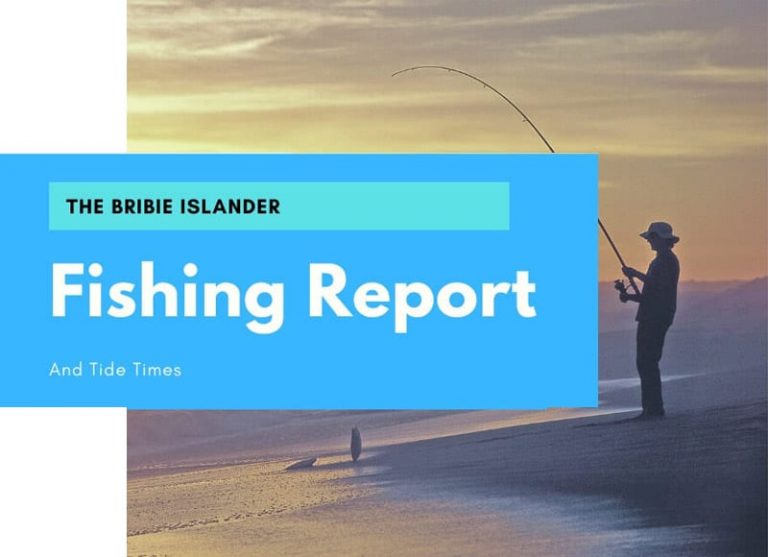
We’ve seen fairly standard summer fishing so far this year. There has been a big variety of fish caught, lots of them just a little too small to keep but enough really nice ones to keep us interested. Great for families on school holidays, when it’s all about the fishing and everything is going back in anyway.
The weather bureau is still talking about the “possible onset of La Nina,” which brings frequent rains and stormy weather. Well, it looks like La Nina weather already—only six days of the first twenty in January have been rain-free, almost all have been fairly overcast, and most of our strongest winds are coming from the north.
The rains have been regular but not often heavy enough to flush out the creeks, so the flathead has gone off the radar a little. We have still been getting the very occasional biggie, but they’ve been hard to find lately, although there has been some luck using lures. The water being very warm (more than 27 degrees), fishing for flathead on the sandflats hasn’t always been successful, although that’s where you’ll find them on the cloudy days. It was a miserable, wet, windy day when Dave and Charlie caught a 60cm flathead just north of Turner’s Camp. They also brought in three 30+cm bream. Further up the Passage, there have been some good flathead catches around the mouths of both Elimbah and Bullock Creeks, but there haven’t been many reports from further north. Reggie and Levi had a couple of trips to Bribie over January and spent most of their time fishing. They’d scoot up to Mission Point to get a bucket of yabbies, but they weren’t having much fun up there, so they’d then come down south of the bridge for a better time of it. The best baits for flathead have been small prawns, squid and pilchards. Try to buy small bait prawns – the quality of the larger prawns hasn’t been great, and small ones are definitely working better. A word of warning – it is illegal to use supermarket prawns as bait. You must buy prawns from a bait shop (or cast for them yourself) and use them locally – to protect our wild crustaceans from introduced diseases.
There have been good catches of bream near the oyster leases at the mouth of Ningi Creek as well as up among the mangroves – silver bream, grunters and tarwhine all tend to hang around there. Jeff and a mate had a few bream to take home recently after spending an afternoon between the Avon wreck and Ningi Creek. Jeff said that prawns were the only bait that was working for them.
Squid has probably been the most reliable bait through the summer – perhaps because there are so many youngsters flinging the rods around and squid stays on the longest! Guy and his family caught six very big bream (and lots of undersized ones too) up at White Patch, as well as a 70cm longtom and an 80cm shovelnose – all on squid.
White Patch is nicely protected from the north/easterly winds and there’s been plenty of undersized fish there, as well as keeper snapper, bream, grassy sweetlip and the occasional trevally, but be wary – the Wright’s Creek marker is still missing, and you can find yourselves sitting out the low tide if you go in too far.
The deeper water in the middle of the Passage and around the bridge is holding lots of grassy sweetlip and moses perch, as is usual over the summer. The tidal run through that part of the Passage is strong, so try to choose a period of time over the change of tide if you want to anchor up. There has also been some good snapper around the bridge, as well as around the ripples at Pacific Harbour.
Try drifting from the bridge on a falling tide towards IGA supermarket, about 100 metres off the shore of Bribie, or use the rising tide to sneak over the weed beds west of the second green marker. Evan and Tamara found a spot they liked – “on the line between the second green and the IGA, in 34 ft of water”. Tamara said pilchards were the only bait working for them – mullet, prawns and even fresh yabbies failed to bring in the fish. They had a great time with a variety of fish – most of them undersized but enough keepers to feed the family; then “the catfish came in, slimed up our gear, ruined the fishing”, so they gave it up. Richard, too, was at the second green marker earlier in the month, during a spot of lovely weather and just after the high tide, when he hooked up an 85cm cobia! If you’re land-based, Airforce Park on a falling tide and Buckley’s Hole on a rising tide – always worth a try!
The Bribie Islander Gloss Magazine January 24, 2025 Issue 231

Issue 231 OUT NOW. Get all your community news and information. Bribie Islands only community gloss magazine NOW EVERY TWO WEEKS! – Articles on boating, camping, fishing, life, drama, travel destinations, sports, and what to see and do on Bribie Island. Covering charities, organizations, places, children’s activities, arts and crafts, tourist destinations, heritage parks, technology, science, music, gardening, and much more.
The Bribie Islander Gloss Magazine December 13, 2024 Issue 230

Issue 230 OUT NOW. Get all your community news and information. Bribie Islands only community gloss magazine NOW EVERY TWO WEEKS! – Articles on boating, camping, fishing, life, drama, travel destinations, sports, and what to see and do on Bribie Island. Covering charities, organizations, places, children’s activities, arts and crafts, tourist destinations, heritage parks, technology, science, music, gardening, and much more.
The Bribie Islander Gloss Magazine November 29, 2024 Issue 229

Issue 229 OUT NOW. Get all your community news and information. Bribie Islands only community gloss magazine NOW EVERY TWO WEEKS! – Articles on boating, camping, fishing, life, drama, travel destinations, sports, and what to see and do on Bribie Island. Covering charities, organizations, places, children’s activities, arts and crafts, tourist destinations, heritage parks, technology, science, music, gardening, and much more.
The Bribie Islander Gloss Magazine November 15, 2024 Issue 228

Issue 228 OUT NOW. Get all your community news and information. Bribie Islands only community gloss magazine NOW EVERY TWO WEEKS! – Articles on boating, camping, fishing, life, drama, travel destinations, sports, and what to see and do on Bribie Island. Covering charities, organizations, places, children’s activities, arts and crafts, tourist destinations, heritage parks, technology, science, music, gardening, and much more.
Fishing Report – November 1, 2024
Snapper are still running red hot, with predictable catches being the norm. Most anglers are catching their bag limits in one or two hours of fishing. Bigger baits are producing bigger fish, with fillets of Bonito, Mackerel, Tailor and Mullet all The passage is always reliable for breadand-butter species. B
en and his daughter Ella had a great father-and-daughter day floating around the passage, accumulating a great mixed bag with a couple of crabs in the mix. As the water starts to warm, crabs are starting to move about. It’s a good working well. Prawns and Yabbies have also managed a couple of reds and are great fun on light gear. Filleting fish to eat is sometimes harder than it looks, with blunt knives being a large part of the problem. If you are struggling to remove time to start dropping pots. The biggest whiting is going 415mm, which is a cracker.
Any combination of bait will work Yabbies, prawns, worms or a fillet of a pilchard; mullet will see you come up tight. It’s worth trying to come down on your line class to 6lb and, even better, 4lb line, which is a good fillet, remember whole fried fish is delicious. Score sides of fish, rub in salt and dust with corn flour. Pan-fry in light oil until the flesh is white and firm. With absolutely zero waste as bones are easily removed almost invisible to fish, resulting in a lot more hookups. Rods with a slow taper are quite whippy and allow the fish to run without breaking the line. A 1000 to 2500 reel with a smooth drag is all that’s needed to catch a quality feed of fish.
Flathead has been on the chew, and larger than average fish have been caught. The next generation of anglers is already putting us on notice with great catches. I’m always impressed by how young anglers can master catching fish with ease, and it won’t be long before they outfish most of us. Jett once again has managed a 56cm flathead on a lightly weighted pilly, And Ella managed for some a fish of a lifetime, landing a 79cm flathead on half a pilchard. Ella’s flathead was perfectly supported for a quick photo before being safely released back into the passage. Great effort, guys.
Winelander – November 1, 2024

Has it actually been ten months since Christmas? I know as you get older, the months seem to get shorter, and time flies by, but here we are looking at November with the Race that stops the Nation, followed by Christmas and then the New Year. Wow, it’s time to start planning the drinks to stock up on to make these events special.
Champagnes
Champagnes come in different styles, but Brut is the most popular, and Australia, being the sixth largest product consumer, is always a great choice. The Melbourne Cup, Christmas and New Year can only get better with a glass of bubbles to get the celebrations underway. My favourites include Mumm, Piper Heidsieck, Tattinger or Moet, Chandon, and Veuve Clicquot. Right now, Liquorland has Royal Montcourt Brut Grand Cuvee at $40, and that price should get the party going.
Sparkling Wine.
The Australian equivalent to Champagne is the House of Arras in Tasmania, and nowadays, the costs are equivalent to Champagne. However, winemaker Ed Carr makes this possible if you want the best and prefer to support the local industry. For something from left field, serve a Seppelt Sparkling Shiraz; this could be the day’s talking point, available in non-vintage or vintage, an absolutely excellent wine. There are a number of Sparkling Shiraz on the market, a good alternative with the turkey at Christmas, and it’s an Australian classic made by a Frenchman using Methode Champenoise in the 1800’s.
New Zealand and Australian Sauvignon Blancs
The perfect wine to enjoy on a hot summer’s day, especially with shellfish such as oysters natural with a sprinkling of lemon juice over them. A recipe of ours entails covering each oyster with a slice of smoked salmon, a dob of sour cream, a topping of caviar and finishing with a squeeze of lemon juice.
Right now, Liquorland has The Ned and Rapaura Springs on special. BWS have Cape Campbell 2 for $24 and Kim Crawford 2 for $30 Australian Sauvignon Blancs are totally different to New Zealand wine and are more of a classic dry white style; try a Sauvignon Blanc from The Adelaide Hills or Margaret River; again, any food that carries a lemon dressing will suit. As with the New Zealand wines, these wines don’t particularly age well and are best drank young and zesty, so anything with a 2022 vintage and 2023 vintage will be drinking well. If you can find Wicks Estate at Dan Murphys, you will be surprised it is a very good wine; BWS also have Nepenthe Adelaide Hills at $19 and an old classic Western Australian blend, Evans and Tate Classic Margaret River Semillon Sauvignon Blanc at $16.
Riesling Australian
Riesling offers a wine style at prices that are probably not much more than twenty years ago, and because of the citrus characters of the wine, matching them with oysters with a lemon dressing or almost any white fish dish and chicken is a perfect match. Riesling grows well in every State regardless of climate. However, The Clare Valley, Eden Valley, and Barossa Valley in South Australia, plus a very good one from The Coonawarra with the Wynns Coonawarra Riesling, The Great Southern in Western Australia is another area to look for. Other favourites that can be found locally are Jim Barry ‘W’, Jim Barry Watervale $20, Yalumba Y series $10 and Taylors Clare Valley $16.
Chardonnay
Still the most planted white wine grape variety in Australia, it produces many great wines and grows well in every State. Jacobs Creek Double Barrel Chardonnay is a good choice.
Fiano, Pinot Gris, Pinot Grigio, Vermentino
These are fairly new varieties worth a place on the table for lunch or dinner. They offer a difference from the more popular wines and are talking points about which wines tend to be.
Cabernet Sauvignon
This grape variety matches most red meat dishes, especially roast beef and steak. It also blends well with Merlot. The best regions for this grape are the Coonawarra and Margaret River. Taylors Clare Valley Jaraman Cabernet Sauvignon and Wynn’s Black Label Coonawarra Cabernet Sauvignon are a couple that will grace the table.
Shiraz
Australia’s favourite son, there is a style to suit everyone. They range from medium-bodied to full-bodied and are priced to match your wallet. It is grown everywhere, but the best regions are the Hunter Valley, McLaren Vale, and The Clare Valley.
Taylors Jaraman Clare Valley Shiraz is as good as it gets.
Cheers.
Philip Arlidge [email protected] Eduardo Galeano
We are all mortal until the first kiss and the second glass of wine. Anon. (or Philip Arlidge) Life is too short to drink bad wine.
“A Way to Win a Nobel Prize.” By Bob King

Of the numerous awards and honours in which we humans can be awarded for our effort to assist or advance the human condition; none can surpass the long-honoured Nobel Prize. For those of you who have not won such a gong and want to – let me suggest a pursuit that may give you a more than even monetary chance of doing so.
To make hindsight readily available to all would improve mankind immeasurably. For many years now, in my small laboratory (my bar sink), I have been attempting to solve the problem of manufacturing such a product. When I’m successful, I intend to bottle it and have Coles and Woolworths place it at eye level on their shelves. The product will be called “IF ONLY,” but Aldi may have their own name for it, maybe “Good Hindsight, Different Hindsight.”
Only those who do not learn from history will see the need to purchase it. This fact, however, will be the major hurdle that the advertising industry will have to address in their television and other forms of advertising. Some of the catchphrases that could be used to promote sales are “I told you so” or “Why, Why, Why” and “Bloody Hell, I Didn’t See That Coming.”
Much thought has been given to how the doses or meals of the product may or could be administered.
Should “IF ONLY” be eaten with a spoon, inhaled, or drunk straight from the bottle? What will be important is that a large portion should be taken daily, even before getting out of bed. For this reason, a mouthful from a six-pack at the bedside table will, and must, become as important as one’s daily ablutions.
What flavour should be used? Something bittersweet in the mouth could be a good idea; better before than after.
A couple of errors that have taken place over time and would have been prevented are “It was a good idea at the time”, “I Do”, and “I promise I will withdraw”. And how many times have you heard, “She’ll be right mate”?
Such a product should be free of GST and covered by Medicare. Because of all the good side effects and benefits that “IF ONLY” would achieve worldwide, it would not be surprising that the deserved gong could be awarded in any of the following categories. PEACE: No more, or maybe less anyway, wars. Less nagging from wives would be a major improvement for many men, or “Please get yourself a hearing aid,” the common lament of many wives that may cease.
PHYSICS: Just being able to cram such a large subject into a 500mg bottle and then be able to keep the lid on will be Newtonian.
CHEMISTRY: No animals will be used in its development or manufacture, but owls’ blood could speed up the process. Be sure to get RSPCA approval first.
LITERATURE: The panel that does the judging would now be able to report that anyone in need of hindsight, or if they thought of it sooner, could write “War and Peace”, “Hamlet”, Elgar’s “Sea Pictures” or “Waiting for Godo”, but it’s hard to understand why anyone else would want to be the first to write that shocker
All good science should be shared with the rest of the world for the benefit of all Mankind – but make your millions first – then be charitable and give free samples to those in most need, such as military generals, politicians, opening batsmen who flash outside their off stump or “Mate it’s a cert”. You will need to sacrifice many units, but such charity will also prove to be a substantial tax deduction.
Well, there you have it. I have given you the idea. Now, go and make it. For the world’s sake, I will not be disappointed if you beat me to it. If you are successful, I hope you have a good tax accountant to assist with the millions you will make. Don’t forget my ten per cent and my first-class airfare to Norway accompanying you. Ten per cent will be a small price to pay in lieu of the millions of lawyers who will make it if my copyright is infringed.
I suppose I should include the date when I came up with the idea (1/1/1960) to cover the copyright.
Yes, it has been a long time. I can’t understand why, “If necessity is the mother of invention,” such a needy product doesn’t exist.
The Bribie Islander Gloss Magazine November 1, 2024 Issue 227

Issue 227 OUT NOW. Get all your community news and information. Bribie Islands only community gloss magazine NOW EVERY TWO WEEKS! – Articles on boating, camping, fishing, life, drama, travel destinations, sports, and what to see and do on Bribie Island. Covering charities, organizations, places, children’s activities, arts and crafts, tourist destinations, heritage parks, technology, science, music, gardening, and much more.
Fishing Report – October 18, 2024
October 2024 Fishing Report Fishing has been erratic lately, which is fairly typical for spring. This is never the easiest fishing season – the changeable weather and October storms make it difficult to get out for a fish. The rains have put a bit of colour in the water, though, so it might be a good opportunity to get the lures out. The sudden drops in barometric pressure get a few fish going, too, if you can time things around a storm…
Fishability Qld had to fit their fishing trips between bouts of weather- but it’s always worth the effort. Some good-sized bream and flathead have been brought each time; prawns and pillies were the favoured baits. Flathead, bream and whiting are the standards for this time of year. This past winter has been a very good one for flathead, tailor and winter whiting and there are still plenty of great tailor and whiting catches. Although the reports of bigger whiting are patchy, there are some great reports coming up around Mission Point and Coochin Creek. Flathead have been reliable finds in the main channel, over the top of tide off IGA supermarket or near Turner’s camp. Some of the best springtime flathead fishing can be in shallow water, over weed or sand and not far from mangroves or rocky sections, which will break up the current. Zman curly tails have been making quite a comeback in recent weeks, with several good flatties taken!
When the breeze comes from E/NE, the most pleasant fishing is from the Bribie shore of the Passage. White Patch is nicely protected from north-easterlies or anchoring your boat in towards Wright’s Creek is another option. Joel caught his first ever fish there, under the tutelage of his Dad, casting out a clear soft-plastic 70mm Squidgee, and landing a 47cm flathead for dinner.
Richard tells me “There seem to be lots of fish all the way from Red Beach up into the Passage and towards Sandstone Point… good whiting hanging around the lock entrance and more good fish at the Bribie end of the bridge.” He took his grandson, Bodhi, fishing at Sandstone Point on a fairly quiet day (weatherwise!) and came away with four snapper, three flathead, three tailor and a bream!
A couple of weeks later, Richard and his mate, Loris, were happy enough to fish around the bridge during a SW morning breeze, using pillies and prawns, and had seven snapper (37-54cm) and a 37cm bream to show for it. The recent long weekend started out windy, rainy and cold – not great for those wanting a full day’s fishing! Jamie and a mate spent most of their day sheltering in Ningi Creek and came home with two big bream and a “giant sand crab!” (to be fair, it was 13.5cm and quite full.) Ron and his young grandson, Vinnie, were up for the long weekend’s fishing and crabbing, too. Ron was expecting his usual run of good luck with the crab pots, but only scored eight keepers over the three days. He said he’d been talking with a few people who all noticed that the sand crab numbers had dropped off. The fishing wasn’t so bad, though – they caught four flathead up at Turner’s Camp, all between 55-65cm, all on pilchards. Over at the ripples, they tried using mullet and grinner for bait, but again pilchards did the trick, bringing in five snapper between them, 38-47cm. Vinnie’s was the biggest, which made him pretty happy!
Over the school holidays, we saw lots of families fishing – who often just want the excitement of catching a fish, and not necessarily the trouble of keeping it – killing, scaling, cleaning, and cooking a fish can be a bit tricky. Also, a lot of fish are under-sized and can’t be kept anyway. Which brings me to the other tricky business – how to release a fish in good enough order to survive another day. There are some fairly common-sense things to keep in mind:
- Keep the fish out of water for as little time as possible, or release it while it’s still in the water, if you can.
- Don’t suspend the fish from the hook. If you need a photo, hold it under its belly, and avoid touching the midline. And don’t let the kids poke it in the eye!
- If the hook is easily removed, that’s fine, but if it’s been swallowed, then cut the line as close to the hook as possible – its chance of survival should be much higher than if you damage the mouth or cause excessive bleeding.
- If you’ve had to keep the fish out of water too long, it might be sluggish – hold it into the current to help revive it, until it’s ready to swim off.
Pros of Eating Out

Convenience:
Eating out saves time and effort in meal preparation, especially for individuals with busy schedules or those lacking cooking skills. It provides a quick and hassle-free option for satisfying hunger and enjoying a variety of cuisines without the need for grocery shopping or cleaning up afterwards. For example, a working professional with long hours may find it more convenient to grab a meal at a nearby restaurant than cook at home. Socialisation: Dining out is a perfect opportunity to socialize and spend quality time with friends, family, or colleagues in a relaxed setting. It fosters connections over a meal, creating memorable experiences and strengthening relationships. For example, a dinner with friends can be a delightful way to catch up and engage in conversations outside the usual routine.
Exploring Culinary Experiences: Eating out is an adventure that offers the thrill of trying new foods, flavours, and culinary styles that may not be easily replicated at home. It allows individuals to broaden their taste preferences, expand their culinary knowledge, and discover unique dishes from different cultures. For example, visiting a sushi restaurant can be an exciting journey into the intricacies of Japanese cuisine and the art of sushimaking.
Variety and Specialties:
Restaurants often specialise in specific types of cuisine or dishes, offering a diverse range of options that cater to different tastes and dietary preferences. This variety can benefit those with specific dietary needs or restrictions, such as vegan, gluten-free, or allergy-friendly options. For instance, a vegetarian can find specialised restaurants that offer a wide range of plant-based dishes.
Professional Cooking and Presentation:
Eating out is a treat for the senses, allowing individuals to indulge in the expertise of professional chefs who have honed their culinary skills. Restaurants strive to create visually appealing and well-presented dishes that are not only delicious but also aesthetically pleasing. This attention to detail enhances the dining experience, making it a pampering treat. For example, a beautifully plated dessert at a fine dining restaurant can be a work of art that indulges your taste buds and your eyes. No Cleanup or Dishwashing: Eating out can help individuals avoid the timeconsuming task of cleaning up after a meal. They can enjoy their food without worrying about washing dishes, wiping counters, or doing other kitchen chores. This can be especially beneficial for those who dislike or have limited time for cleaning. For instance, going out for dinner after a long day at work can provide a break from household responsibilities.
Opportunity for Relaxation:
Dining out offers a break from the daily routine and provides an opportunity to relax and unwind. Individuals can enjoy the restaurant’s ambience, be served by waitstaff, and have their meals prepared and brought to them. This can create a more leisurely experience compared to the hustle of cooking and serving at home. For example, having a cozy dinner at a waterfront restaurant can provide a tranquil and serene atmosphere.
Celebratory Occasions:
Eating out is often associated with special occasions and celebrations, such as birthdays, anniversaries, or holidays. It adds a sense of festivity and indulgence, allowing individuals to mark significant life events. Restaurants often offer special menus or services for such occasions, creating a memorable and enjoyable experience. For instance, going to a fancy restaurant to celebrate an anniversary can make the occasion feel more special.
Exposure to Different Cultures:
Dining out can be a cultural experience as it allows individuals to immerse themselves in the customs and traditions associated with various cuisines. It provides an opportunity to learn about different cultures, their culinary heritage, and the stories behind specific dishes. For example, dining at an authentic Indian restaurant can introduce someone to the vibrant flavours and rich history of Indian cuisine.
Supporting Local Businesses:
Individuals can contribute to the local economy and support small businesses by eating out at local restaurants. This support helps create jobs, fosters entrepreneurship and maintains the vibrancy of the community. For instance, choosing to dine at a familyowned restaurant instead of a chain establishment can positively impact the local economy.