Home Blog Page 42

Cost of Living Help for Seniors during COVID-19

Older Queenslanders built our state and they deserve respect! COVID-19 has reminded us how valuable our Seniors are. Whether it’s ourselves, treasured grandparents or community elders, it’s heartwrenching that Seniors are vulnerable to this terrible virus.

COVID-19 has been tough on Seniors. Visits from family were risky and home care services were sometimes patchy. The things that give life its sparkle, like lunch at the Club or a game of golf were cancelled.

Yet we’ve also seen community spirit at work! Nearly 30,000 people joined the Care Army to support vulnerable and older people. Neighbours dropped off groceries and walked pets. Everyone pulled together to support local businesses. In the thousands of calls, I made to older people during COVID-19, one thing came up over and over. There were tragic stories, like Ray who lost his wife and couldn’t hold a normal funeral. But everyone said, “There are people out there much worse off than me – it’s THEM I’m most worried about”.

It’s testament to the generous spirit of our community that Seniors’ first thoughts were for others. Every Queenslander can be proud of our amazing health response. Premier Annastacia Palaszczuk took action to close our borders and our community worked together to keep cases low. Because of that strong health response, we can now focus on Queensland’s economic recovery.

A big part of Queensland’s economic recovery plan is making sure Seniors get a helping hand.

By now you should have received $200 off your utility bill, most often as a credit on your power bill. People say it’s been a big help, like Joan who told me the extra money in her budget meant she could buy soccer boots for her grandson.

Even better – another $50 will come off your bill around September.

We want Seniors to know what concessions they can claim. That’s where the Smart Savings website comes in. You’ll find Smart Savings at www.qld.gov.au/concessions From transport to Council rates to power bills and a special section just for Seniors, the Smart Savings website lets you apply for a whole range of concessions in one place.

There’s some you might not have heard of! Most Seniors know about water rebates, but did you know that you are entitled to free glasses through the Spectacle Supply Scheme?

I’m sure you know about discounted public transport, but did you realise that you can head off on a low-cost long-distance train trip, or get concession rates to visit one of our wonderful Queensland Museums?

What is Elder Abuse?

Elder abuse can take many different forms. The most common forms of elder abuse are financial abuse and neglect.

ELDER PHYSICAL ABUSE

Physical abuse describes any deliberate act that causes pain for, injury to, or intimidation of, an older person. This includes all forms of physical assault, along with the use of restraint by physical or chemical methods

ELDER PSYCHOLOGICAL/ EMOTIONAL ABUSE

Psychological or emotional abuse involves any action or threat that causes fear of violence, isolation, deprivation, humiliation or powerlessness.

For example, treating the elder like a child, preventing access to services, making threats (such as preventing them from seeing loved ones) or telling them they have dementia.

ELDER SOCIAL ABUSE

Social abuse is forced isolation that prevents or restricts the older person’s contact with friends, family or the community.

This could involve withholding or controlling mail or phone calls, preventing them from attending religious or cultural events, or taking over their home without consent. Social isolation often allows other forms of abuse to take place.

ELDER FINANCIAL ABUSE

This is the illegal, mismanagement or improper use of the older person’s finances.

This includes stealing money or possessions, controlling their finances without permission, threats or coercion to gain Power of Attorney or pressuring them for early inheritances.

ELDER SEXUAL ABUSE

Any sexual contact, language or display of pornography without the older person’s consent, or through coercion.

For example, making obscene phone calls in the person’s presence, inappropriate handling when undertaking personal care activities, or making the person perform a sexual act they don’t want.

ELDER NEGLECT

Neglect involves the failure of a carer to provide basic necessities such as food, shelter, or medical care, or preventing someone else from providing them.

WHEN IS ELDER ABUSE LIKELY TO OCCUR?

Some of the possible risk factors for elder abuse include situations where:

  • the carer is experiencing high levels of stress, for example, health or financial pressures
  • the older person is unable to stop or report abuse due to cognitive impairment or physical limitations
  • there is isolation as a result of location, cultural or language barriers, or health complications
  • the carer or older person is dealing with addiction
  • the carer or older person is dependent on the other person for support, for example, financially, socially, or physically.

WHAT SHOULD YOU DO IF YOU ARE BEING EXPLOITED OR MISTREATED?

The first priority is your safety. If you feel threatened or unsafe, call 000. The police can assist you in removing an abusive person from your home, or help you to find safe accommodation.

If you decide to stay in the situation, having a safety plan can help you know what to do in an emergency.

Finding someone to talk to and share your concerns with can be very helpful. This could be a trusted friend, family member or a trained person from a professional organisation. If someone close to you is placing unwelcome restrictions on you, is emotionally mistreating you, or taking advantage of you financially, you may want to try to resolve things with them informally. Elder support services such as those provided by Relationships Australia could help to improve your situation.

You may be protective of the person mistreating or exploiting you, particularly if they are your adult children. It is important to remember that you have a right to feel comfortable and safe, and that people, including adult children, can get help for their problems. They may not be aware of the impact of their behaviour. You may be protective of the person mistreating or exploiting you, particularly if they are your adult children. It is important to remember that you have a right to feel comfortable and safe, and that people, including adult children, can get help for their problems. They may not be aware of the impact of their behaviour.

WHAT SHOULD I DO IF I SUSPECT ELDER ABUSE?

Elder abuse is distressing, and finding someone who understands the sensitive and confidential nature of the issue can help you in deciding what to do if you suspect an older person is being mistreated or exploited.

If someone is in immediate danger, call 000. Remember that physical and sexual abuse are criminal acts. Other types of abuse are assessed on their particular circumstances. Where it is appropriate, ask general questions about the person’s wellbeing and their relationships.

Blame and judgement are never helpful. Listen to what the older person says and be understanding.

Understand that older people are often hesitant to cause trouble, as they may feel ashamed or worried about possible consequences. Often, an older person feels protective of their adult children who may be mistreating or exploiting them. The adult child may have drug or alcohol dependency, mental health issues or difficult circumstances or challenges that are contributing to the abusive situation. An older person is more likely to accept help if they think their adult child’s needs will be considered and addressed.

Keep a record of events. Taking note of signs and symptoms may help those who investigate, to effectively address the abuse. It is generally not advisable to confront the abuser without careful thought.

Reassure the older person that there is help available. If the older person is willing to get support, help them contact a relevant organisation. See where to get help below.

If they are unwilling to get help, provide them with emotional support and offer contact details of support services should they want them later. Keep checking in on them where possible.It’s important that an older person feels in control of the help seeking process.

Where to get help Relationships Australia Queensland 1300 063 232 Elder Abuse Prevention Unit 1300 651 192

Best Things About Growing Old…

A Happier Outlook It may surprise some, but studies show that seniors are among the happiest groups of people and that they are significantly happier than their middle-aged counterparts. This could be due to better coping abilities. Older people tend to have internal mechanisms to deal better with hardship or negative circumstances than those who are younger. Another reason seniors may also be happier is that age means that they are “more comfortable being themselves.”

Grandchildren

Grandparents often get to experience the joys of little children without nappy changes and sleepless nights. Grandparents love their grandchildren, and this love lightens their own heart while simultaneously benefiting the grandchildren who receive this love.

Research shows children need four to six involved, caring adults in their lives to fully develop emotionally and socially and that the grandparent/grandchild relationship is second in emotional importance only to the parent/child relationship.

More Time for Loved Ones

Retirement isn’t inherently joyful or relaxing — its how that time is used that makes it special. One of the best parts of retirement is spending time with family, friends and other loved ones.

Opportunity to Pursue Your Dreams

The time gained during retirement is an excellent opportunity to pursue dreams and passions that you might have put on hold. For instance, you can learn a new language, take that trip you’ve always dreamed of, or write the novel in your head that’s been waiting to get out.

Guaranteed Minimum Income, Medicare and Social Security

While poverty is still a big problem among seniors, safety-net programs such as Medicare and the pension, seniors should have a guaranteed minimum income and health insurance even if they aren’t wealthy and don’t have children who can support them.

Senior Discounts

As trivial as senior discounts may seem, there must have been a time you envied them. The discounts offered to seniors can help people save money in a period when income tends to be fixed and limited. These discounts also provide a great incentive for seniors to make the most of their retirement, for the discounts are often for the exact types of services that help seniors stay engaged and active, such as dining, medication, entertainment and transportation.

Sense of Accomplishment

Older people often have a healthy sense of pride that comes from their accomplishments. These accomplishments needn’t be great feats.

Seemingly ordinary achievements like raising a healthy and happy child, being happily married, serving in defence of the nation, or retiring from a job in good-standing after years of dedicated service, can be the foundation of pleasant contentment in old age.

Vanhub Caravan & RV Specialists

Vanhub is your one stop hub for caravan sales, inspection, valuations and assessments. If you’re in the market for a new caravan or require a caravan inspection or valuation, Vanhub can assist. Their 40 plus years of expertise and personalised service will ensure an amazing caravan journey ahead for you and your family.

Vanhub pride themselves on the service side of their business offering a mobile service for customers which is so much easier than having to move your caravan every time you need work done. They want to offer more to travellers, purchasers and the industry. Sharing time with partners and or family exploring this amazing country of ours is such an amazing experience. They want to help customers enjoy their journeys safely with the independent and expert advice they deserve.

Vanhub is a new business, however with over 40 years combined experience within the caravan industry, running large RV businesses in QLD this is the place you need to see if you are looking for a caravan.

Vanhub is a family business owned by two mates Dan & Glen. These guys are truly passionate about their chosen industry, love camping, caravanning and the outdoors. Glen has travelled Australia for nearly 6 years, leaving with wife Amiee and one child and returning with two more!

Both Dan and Glen are Qld Hvras officers, with Dan spending two years on the board of Caravan Industry Victoria.

Then you add Ron Williams to the team…

Ron is a veteran of the industry and he heads up the service and repair centre which is located at 3/15 Cessna Drive Caboolture. Ron takes great pride in his work and makes sure he maintains the highest safety standards in the business. The new service centre has been established to service all brands not only Vanhub’s. They guarantee quality and workmanship and safe future travels…Insurance specialists in the event of accidents, hail damage etc.

Vanhub’s business is all about giving clients true, accurate information allowing them to make a fantastic choice when buying their van or camper, very few have the experience to model & design a caravan not knowing the variables in weight changes when planning.

Vanhub offer a range of products from the full off road hybrid’s by Altitude Campers, Eternity Caravans and their very own Australian built custom vans “Iconic Caravans”.

They also offer a pre-purchase inspection that helps our clients make a great decision and investment when considering a used van…a little like an RACQ inspection for cars, but caravan specific! If there’s water leaks that are covered over, maybe the tyres are not correctly load rated, just to name two? Vanhub will give you peace of mind.

Times have changed and now people aged from 20, through to the retired love camping, and seeing our amazing country and we cater for all. Customers will leave Vanhub with information that you cannot find elsewhere. They will be very well educated after their visit helping them to make a great choice!

Bribie Island State School is a garden of growth

Bribie Island State School is a garden of growth. Many people consider gardening a great way to relax and renew depleted energies, specially community gardens which help to grow healthier communities. Schools are also considered gardens of growth, areas of space where people of many ages come together to learn skills, build friendships and experience the joy of life as only gardens can bring.

Bribie Island State School has its own garden which is tended by many students and supervised by our wonderful Mrs Rosi Riek who has a passion for both gardens and education and encourages our students to get involved in recycling waste from around the schoolyard and composting plant and vegetable matter to assist in building the soil quality in the gardens. Mrs Riek told me, “Gardens are like children, you have to feed them well and provide love and warmth for them to grow”. A fantastic analogy for our school community and the support the wonderful staff at Bribie Island State provide for their students.

Many of our very young students require an early introduction to being away from home and family. Julie Thomas coordinates a team of motivated Prep Teachers engaged in the successful Bribie Island State School Pre-Prep program. Mrs Thomas is enthusiastic about the program and had holds the opinion that these types of programs are beneficial because “they prepare young children for life at school and have a lot of fun learning basic academic skills as well as social skills they need to be successful. Parents can send their children here knowing they will be in a safe environment and in a place where they can explore their interests and get a head start on their education”. Life over the past months for us all has been demanding and complicated to say the least but with the situation in Queensland remaining stable, our school community is getting back to normal. Students are at their desks and enjoying the social and academic aspects they did not realise they had. One student has mentioned that he couldn’t wait to get back to school to see his friends and have his teacher in the classroom with him.

Although we are all back at school the risk remains and simple precautions are always required to stay safe. Covid-19 is a disease caused by a new strain of coronavirus. Symptoms can include fever, cough and shortness of breath. In more severe cases, the infection can cause pneumonia or breathing difficulties. As this is a new virus, we are still learning about how it affects children.

As with other respiratory infections like the flu or the common cold, public health measures are critical to slow the spread of illnesses. Public health measures are everyday preventive actions that include:

  • Staying home when sick;
  • Covering mouth and nose with flexed elbow or tissue when coughing or sneezing. Dispose of used tissue immediately;
  • Washing hands often with soap and water;
  • Cleaning frequently touched surfaces and objects.

As we learn more about COVID-19 public health officials may recommend additional actions but for now, if your child is showing signs of not being well, advise the school of their absence and stay safe.

A long-awaited re-opening of the school tuckshop has happened with Sandy and her team from the School P&C preparing and delivering fabulously delicious, homestyle healthy food alternatives for all staff and students at Bribie Island State School. Many thanks go out to our strong team of volunteers and sponsors of school events and projects. Without your support, many activities could not happen.

Meet the New Owners of Bellara Newsagency

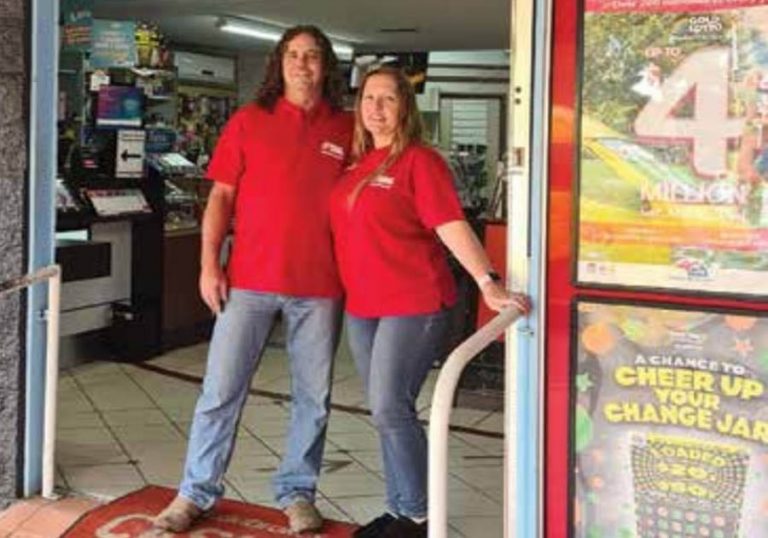
On Monday the 3rd of August long time Bribie Island locals took over the ownership and running of Bellara Newsagency. Angela and Darrin Kratzmann purchased the business off the previous owner’s Gayle and Darryl Ferguson who has owned the business for 6 years however sold due to retirement. Angela & Darrin Kratzmann said they are thrilled with the warm welcome they have received from customers, family and friends, “Everyone has been so welcoming and embraced us as the new owners,” said Angela. Angela and Darrin have spent over 30 years each on Bribie Island and have raised 3 children on the Island as well. “We love Bribie.” Said Darrin, “I was born and bred in Brisbane and have been coming to the Island since I was a baby, so when the opportunity to buy a business on Bribie came up, we couldn’t refuse.”

The new owners plan on making some minor changes to the store over the next few months including expanding the gift line on offer. Bellara News offers a good variety of lotto, scratchies, newspapers, magazines, cold drinks, groceries, Ladbrokes top-ups, parcel pickups, dry cleaning and more.

Bellara News is located at Shop 1/25 Benabrow Avenue in Bellara Arcade off the first roundabout as you come onto Bribie Island. For any further enquiries phone 3408 8285.

Celebrating Queensland Seniors – 15-23 August 2020

Around this time each year I’m usually busy arranging cakes to deliver to our wonderful Seniors in aged care. This year will be a little different due to COVID-19. Instead I’ll be giving away 15 beautiful gift hampers to some very special and deserving seniors.

I really want to honour the outstanding and valuable contributions that older people make to the Pumicestone Electorate and so I’m asking you to nominate a senior who deserves some special recognition for the great work they do in our community.

Please email your nominations to pumicestone@ parliament.qld.gov.au and be sure to include their full details so I can deliver the hampers during Seniors Week – with a great big Pumicestone smile! Warm regards, Simone #lovepumicestone #QSW20

Show Respect for Your Elders
When you see an elderly person looking for a place to sit,
Get up and offer your chair so he or she can sit in it.
When you see a senior citizen trying to open a heavy door,
Hold it open yourself;
don’t let that senior struggle anymore.
When you see an elder anxiously trying to cross a busy road,
Help him or her across;
you’ve no idea of the gift you’ve bestowed.
When you see an elderly person sitting quietly alone in a park,
Stop and strike up a conversation;
your kindness will surely leave its mark.
When an elder speaks to you,
try to focus and listen,
There’s often wisdom in those words that you just might be missing.
Let’s show our elders we respect and honour all that they’ve lived through.
Don’t forget that if we’re lucky,
someday we’ll be elders too.

Candice Care Boutique Community Services

DO YOU WANT TO KEEP LIVING INDEPENDENTLY IN YOUR OWN HOME, BUT NEED SOME HELP TO ACHIEVE THIS? CANDICE CARE IS HERE TO HELP.

Candice Care was established in 2017, after CEO & Founder Candice Dover identified a gap in local Community Support services. As a result, she pledged to provide a fresh and unsurpassed level of Aged Care & Disability Support, that would positively impact the lives of People We Support. Candice Care is proud to be an approved provider of government-subsidised Home Care Packages. We believe everyone deserves to live independently in their own home for as long as they can – we are here to help you achieve that.

Home Care Packages are subsidies provided by the Government to older Australians who need some help to remain living independently at home. This subsidy allows you to select a provider of your choice to deliver services to meet your individual needs. This can range from lowlevel needs such as cleaning and meal preparation at home, to high-level care. In order to obtain a Home Care Package, you will need to apply via My Aged Care, which is an Australian Government department, to get an assessment to establish your needs and eligibility. Candice Care will happily talk you through this process and assist you with your application to My Aged Care, as we understand things can get confusing and we would like to make things as easy as possible for you.

Once you have been approved for a Home Care Package, Candice Care is here to provide you with the services and support you need. We provide supports on all levels and will work with you to identify how we can best assist you – we are simply here to help you live your life, the way you want. Our team can for example help you with your shopping, drive you to appointments, attend social activities with you, or assist with personal care such as showering, toileting, dressing and more. Our list of what we can do is much more extensive – please get in touch with us to see how we can help you or your loved one.

Candice Care’s team consists of qualified employees who have all the necessary qualifications and mandatory checks. Every team member at Candice Care is driven by our strong belief that respect, integrity and heart are the solid foundations of community spirit.

We are all passionate about delivering all of our services with these values and beliefs.

We will work with you to ensure we provide a package of supports tailored to your needs, including a dedicated team of professional Support Workers, so you can remain living independently in your own home.

If you are looking for some support for yourself or a loved one, please give us a call on 1800 226 342 or send an email to hello@ candicecare.org.au. Our team is here to assist you and answer your questions. www.candicecare.org.au

On the Road – The Best Australian-Built Classic Cars pre 1980’s

THERE’S SOMETHING TO BE SAID ABOUT A CLASSIC CAR.

FROM THEIR BEAUTIFUL FORM TO THEIR LACK OF FANCY ELECTRONICS LEAVING THE RUNNING OF THE VEHICLE PURELY BETWEEN MAN AND MACHINE, THEY HAVE STOOD THE TEST OF TIME (GIVEN THE RIGHT AMOUNT OF CARE AND MAINTENANCE OF COURSE). THINK OF THE IMMENSE POWER OF A 70’S V8 MUSCLE CAR OR A HEAD-TURNING HOT ROD.

Countless car shows and drag challenges around the country put these magnificent beasts on display to show off their amazing curves, brand new or restored engines and perhaps a few with some extra modifications that might make a purist’s blood turn cold but give that extra bit of grunt when you want to show off.

HOLDEN FJ

The Holden FJ, also referred to as the FX, was one of the first affordable Australian made cars in the 1950s. Its sedan line had three models: the Standard, the Business, and the Special. Of the three, the Holden Special was the most popular model because it was more comfortable to drive than the other two. It has a six-cylinder engine with a maximum power output of 65 bhp at 4,000 rpm and a three-speed column shift manual gearbox.

1971 FORD XY FALCON GT-HO PHASE III

With only 300 units released in 1971, a Falcon GTHO Phase III was once sold for a record-breaking $683,000 at auction. With a 5.8 Litre Cleveland V8 engine with a four-speed top loader gearbox and Detroit locker nine-inch differential that makes it a heavily equipped version of the Ford Falcon. This model was also considered the fastest four-door sedan in the world in 1972 when it reached 7,000 rpm at fourth gear. It was one of the most powerful cars around and with only half of them still believed to have survived, quite rare.

1977 Holden Torana A9X

The Holden LX Torana with the A9X option was specially designed to compete and has a 5.0 litre V8 SLR 5000 engine and a 4-speed manual transmission. The rear-facing bonnet scoop of the A9X helps produce maximum power in racing applications by increasing the airflow into the engine bay. The A9X had both front and rear disc brakes with heavy-duty axles and a 10-bolt differential. All that helped the A9X (driven by Peter Brock and Bob Morris) win the 1978 and 79 Australian Touring Car Championships. About 400 A9Xs were made (about 300 sedans and 100 hatchbacks) so they’re highly sought after and highly valued – one A9X that was recently uncovered in a Sydney storage unit and in pristine condition was expected to fetch between $200,000 and $250,000 at auction.

1973 Ford Falcon XB GT Coupe

This list wouldn’t be complete without mentioning the Falcon XB GT. For anyone that’s seen Mad Max, the “Pursuit Special” 351 cu with a 5.8-litre V8 engine is the ultimate Aussie muscle car. Alan Moffat won the ’74 Sandown 250 and the ’76 Australian Touring Car Championship driving an XB Falcon GT Hardtop, as well as the 1977 Australian Touring Car Championship driving an XB GT Hardtop and an XC Falcon GS Hardtop. Touring Car Championships.

Fishing Report – August 14, 2020

The weather has been quite favourable for the past fortnight, and there have been some very nice fish taken. Have a look at this prize Flathead of 72cm caught by Claude on soft plastics, drifting the Pebble Beach bank. Claude has caught some beautiful fish during the last couple of weeks drifting over that bank with fresh hardiheads, baby blue pilchards (which are available from Bribie Bait Tackle and Bikes), and casting soft plastics as he goes. By doing so, he covers many avenues and many species. The baby blue is out there just in case there is a tailor around, and all anglers know that the hardihead is the favourite tucker of the big Bream. It appears that the summer Whiting is showing up early. Normally we don’t see too many until about the second week in September, but traditionally over the last 40 odd years, the dyed in the wool Whiting anglers have always had a crack from Exhibition Day on. Have a look at the lovely Whiting caught by Danny’s brother, Clinton. He got 6 in total, just before the first lagoon on the Woorim beach, on our special live blood worms.

I have mentioned the sand spit on the northern side of the Pacific Harbour canal as a “hot” spot in my last couple of reports, and here are 3 good fish taken by Kegan there. The Flathead went 73cm and 45cm and the Bream 30cm”. There has also been some beautiful Whiting taken there on yabbies.

By the time you receive this report, the Snapper season should be open once again. With that in mind, we have a full moon on Wednesday 19th August, and the Almanac says our hot time is 20th, 21st, and 22nd August. This would be a great time to have a crack at catching a “knobby”. As I mentioned earlier, many of the ‘old-timers’ start fishing for summer Whiting on Red Beach and the main beach from Ekka day onwards, and for the last 2 years, they have had success with these earlier fish. Why not have a try for our prize-winning Whiting during the above almanac period? Also, tradition says that we usually get cold westerly winds during the Ekka period.

Hopefully, this will be the case this year which should stir up the Tailor once again.

Remember – all very successful anglers vary their methods and locations, so, have a go at the few methods I have mentioned in this and past reports.

All for now.

Keep safe and tight lines

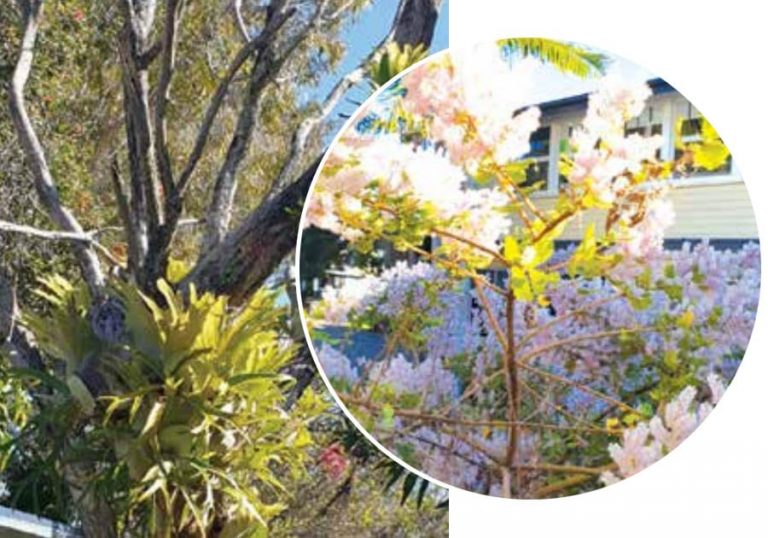
The Plant Patch – Hedging Young Future, Naturally!

Enjoy living in coastal communities but like your private spaces too? Time to consider growing a hedge or two around your home today.

Traditionally, hedges were more commonly found in formal, manicured gardens but over the decades have evolved to suit many outdoor settings.

The reasons for growing hedges vary. Perhaps you need privacy from the neighbours, the street, or a resilient windbreak for the brisk, coastal Moreton Bay breezes. Do you love repetition-style plantings, or want to create a wildlife habitat or corridor? Are you seeking a “green” fence? Whatever the reason, your purpose will influence the types of plants you choose.

Decide on the overall dimensions of your hedge and select plants that will grow comfortably into those spaces. Also, consider the maintenance of your hedge. Do you want to trim it regularly or are you more into “free-spirited” growth? Some plants will drop a lot of leaf litter – this could be a problem near swimming pools and ponds.

Some popular types of hedge plants are the Lilly Pilly, Coastal Rosemary, Mock Orange (Murraya), Clumping bamboo varieties, Japanese Box, Sasanqua camellia & Photinia Red Robin.

Once you have selected your plant type, the next step is to figure out how many plants you require. We suggest a 1/3 guide. Multiply your preferred hedge height by 1/3 to get your horizontal plant spacing distance. If you want a 1m height hedge, allow 33 cm between each of your plants. For the taller hedges, it might be better to reduce the ratio so that you still end up with a tight foliage spread. Also, consider root competition. Some bigger plants have an extensive root system and need more water & nutrients from the surrounding soil so you might need to feed your hedge semi-regularly.

To help you get the correct alignment, mark out your plant holes with spot paint first. If you are planting in a straight line, use a string line to help determine your plant locations. For a curved hedge, use a garden hose to map out the shapes. Then dig out holes for your plants – ensure that the depth of the hole is slightly less than the height of the soil in the plant pots. Take the opportunity to mix your extracted soil with some organic compost, ready for backfilling.

Position your plants next to their holes and rotate the pots so that the sides of each plant that present the greatest number of branches face along the hedge direction.

Water the holes first before placing the plants in them. Then backfill with your enriched soil and gently tamp down the soil to remove pockets of air. Generously water in the plants and use a seaweed fertiliser solution to give them a good head-start.

Minimise water evaporation & weed growth by mulching around the plants – keep away from the plant trunks.

Then tip prune all plants to the same height – this will encourage more growth to occur on the sides. Focus on getting the lower half of the plants filling out correctly first. As your hedge grows through the years, keeping pruning to create your desired shape.

Keep feeding your hedges regularly so they will bring you many years of natural beauty for your coastal homes.

The Bribie Islander Gloss Magazine August 14, 2020 Issue 120

Issue 120 OUT NOW. Get all your community news and information. Bribie Islands only community gloss magazine NOW EVERY TWO WEEKS! – Articles on boating, camping, fishing, life, drama, travel destinations, sports and what to see and do on Bribie Island. Covering charities, organisations, places, children’s activities, arts and crafts, tourist destinations, heritage parks, technology, science, music, gardening, and much more.

Download latest digital edition here. Or use the ebook below to view.

Two Famous Bribie Artists

Bribie Island’s most famous resident lived a solitary life in a grass hut in the Bribie bush for 21 years before his death in 1974. His works now hang in Art Galleries around the world. Books have been written and films made about his amazing life, and there is a permanent display at the Bribie Museum. This was Ian Fairweather. Another famous and more recent Bribie artist also has works in galleries around the world, is better known locally for his huge, recently refurbished, Welcome to Bribie Mural that stands near the bridge.

The artist is Dale Marsh. When the Bribie Seaside Museum opened ten years ago the big Welcome Mural was replaced with a Fairweather painting for a while to promote the new Museum.

As a young man back in the 1950s and 60’s, Dale Marsh spent time with Ian Fairweather in his Bribie hut and later painted his famous portrait just days before he died.

Dale Marsh recently invited me to visit him at his Studio at Kurwongbah where he shared some vivid memories of time spent with Ian Fairweather, and stories of his Bribie childhood more than 70 years ago.

The life and memories of these two remarkable artists will be told in two parts.

This article is Part 1 and tells of their initial meeting.

IAN FAIRWEATHER

Ian Fairweather lived and painted on Bribie Island over a period of 21 years from 1953 until he died in 1974.

Born in Scotland in 1891, the ninth and youngest son of a military doctor, he was raised by two maiden aunts, while the rest of his family lived in India. He joined the Army in 1914, was captured on the first day of World War I, and spent four years in prison, despite five attempts to escape.

In 1920’s he studied at the Slade Art School in London, then travelled extensively in Canada, China, South East Asia & India, where he again joined the Army as a Captain in World War 2.

After the war, he was jailed in Indonesia as a suspected spy after sailing a homemade raft from Darwin to Timor. He was lucky to survive that adventure. Ian Fairweather came to the quiet of Bribie Island in 1953, seeking a lifestyle of isolation, and a chance to live life and paint in his own unique way He built a Polynesian style grass-hut, with a thatched roof and earth floor, where he lived and painted, and pursued his interest in Oriental studies and Chinese translation.

The international art world had long since recognised his talent, but Bribie Islanders saw little of him and even less of his unusual work. He was seen as a weird and unhealthy hermit, living in the bush, without power or water, at one with nature, and keeping to himself. He lived close to the rubbish tip, the source of many of his painting surfaces, and after 21 years of this unusual lifestyle, and in declining health, he died in 1973 at the age of 83.

DALE MARSH

Was born in Brisbane in 1940 and has lived and visited Bribie Island most of his life. Many exhibitions of his work have been held throughout the world, prestigious Awards won, and books about his life and works have been published. Bribie scenes feature in much of his work hanging in major Art galleries.

Dale continues to paint at his bush hideaway in Kurwongbah, and a recent exhibition Bribie Museum showed many remarkable paintings. His huge “Welcome to Bribie” mural by the bridge has recently been refurbished, and during my recent visit, he showed me the painting he offered as a replacement for the Welcome to Bribie Mural.

MARSH met FAIRWEATHER in 1954

The following words are some of the memories Dale Marsh shared with me, as he reflected on the impact of his relationship with Ian Fairweather, after meeting him almost 70 years ago…

I was obsessed with painting and drawing as a child, the passion didn’t die out in me as it does with most kids, but instead continued to build all through my teenage years. When I was about 14 years old I was still working in watercolour from a little paint box I would carry about with me. At about this time I heard from my Aunt that the famous painter Ian Fairweather had come to live on Bribie Island.

“He’s an old hobo with a bushy beard and long matted hair and he lives in the bush in a bark humpy just in from the Bongaree end of the main island road. He won’t talk to anyone and when he goes to the little Bribie cinema in the church hall, no one will sit near him because he smells.” Such was the local opinion at that time of one of Australia’s most prominent artists.

I was intrigued. In the depths of my secret soul, this was how I would have preferred to live too. I disliked suburbia intensely and longed to live away by myself in some peaceful place where no one would bother me, but felt powerless to change.

With the prospect of a real artist nearby, I desperately wanted to meet him, so one morning I gathered my watercolours and set off to meet the man that was so famous, that the Courier Mail had written stories about him.

I found the tree archway that was the entry to Fairweather’s place and at the end of a sandy track, hidden away amongst a clump of Bribie pine trees stood two bark huts. There was nothing to knock on so I called out his name several times. The door opened, and Ian Fairweather stood at the entrance. I introduced myself, said I was an aspiring painter and proceeded to show him my watercolours. Simple plain subjects of sailboats, trees, sand dunes and beaches. He looked carefully at each one and finally shook his head, turned his blue eyes full on me and said in a gentle voice, “I don’t understand them”. This bewildered me. As far as I knew, there was nothing to understand in my simple pictures.

He then invited me into the bark hut to look at his paintings. Just inside the doorway was a huge carpet snake. “Step over the snake” he said, “He’s digesting a possum”. The interior of the hut was chaos. There along one wall was his bed made from tee tree saplings, raised off the ground probably because of snakes. There was a shabby small table with two chairs that looked as though they had been reclaimed from a tip.

The light streamed in through a panel of translucent plastic in the roof stretched between two logs, and gave an eerie glow to the interior. Another bench was jam-packed with half-used tins of house paint in a variety of colours, and jam jars of old brushes encrusted with paint. On another bench stood a welldaubed plywood panel with paintings pinned to it. Those paintings were a revelation of colour, form, and a curious sort of primitive spiritual strength. I felt shivers go up to my spine to the top of my head. There on that studio wall were the forms of the bracken fern and twisted tree shapes that were part of that environment. It captured the essence of the island that I was always aware of. A spiritual thing, I could always feel it, was aware of it. You felt close to it, especially where the Bribie pines grew.

I called it the spirit of Bribie. The forms in the paintings combined with the quiet colour harmonies soared high with the intensity of an angelic choir. There were no recognisable objects anywhere in his pictures. This shocked me. Just shapes, coloured forms, and lines that snaked through the composition. It was my first encounter with abstract art. I simply said to him “I don’t understand them”.

My own modest pictures now seemed to me so empty and simplistic. The experience peeled my eyes and I saw for the first time the really enormous and profound potential of painting. I think it was the man’s calmness that fascinated me most of all. There seemed to be a great mystery about him, a deep serenity that radiated all about his person. Even his environment, the huts, and the sweet-smelling pine grove emanated this quality. He possessed a quiet dignity quite rare in human beings, as though his mind was a lake of perfectly still water without the slightest ripple. In conversation, the power of his intellect amazed me. There was such an incongruity between what he said and the gentle way he spoke and his physical appearance. He looked like a hobo. Long unkempt hair, bushy beard, wearing dirty old pyjamas in the daytime. His toenails grew out from his unwashed feet and curled around underneath his feet making it difficult for him to walk.

He spoke of the hardness of his life, always travelling in foreign countries, always in poverty, and always the outsider. We talked for a time about art and life then I felt I had already taken up too much of his time. I should go and let him get on with his work. Actually, my heart was bursting with newfound inspiration I needed to get away and express it all in a painting. Even after I had left and headed home, something of his serenity stayed with me a while. I did not revisit Fairweather for the rest of that holiday, did not feel I should take up his time, but for every subsequent year, I came to the island I would always call on him. I was never quite sure if he remembered me.