Tags: Native wildlife. Birds. Bribie Island. Moreton Bay. Queensland. Australia
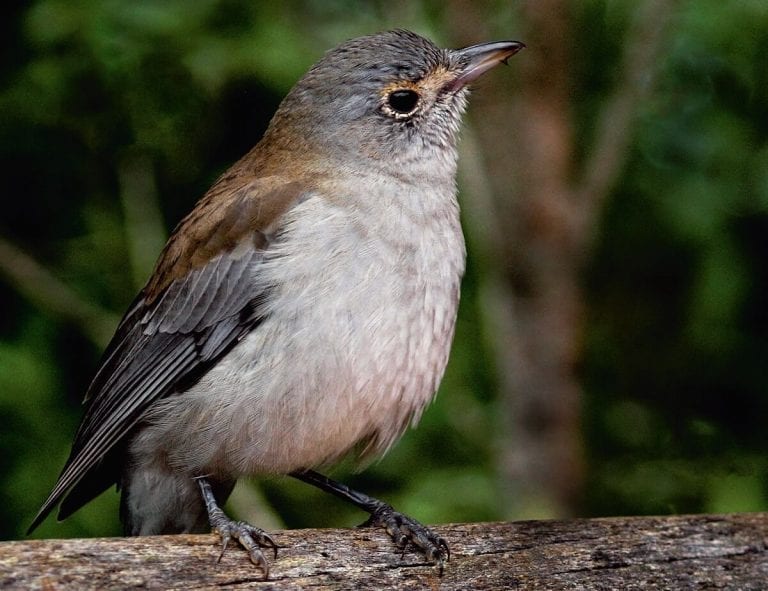
Grey Shrike-thrushes are moderately common on Bribie Island in forest areas and occasionally venture into suburbia. Their melodious call is often a signal that this rather plain bird is nearby. Throughout Australia, there are several variations with colouring differing slightly in each area. The birds we are likely to see on Bribie have a rather drab colouring with greyish brown backs and pale grey undersides.
Featured Image(above): Grey Shrike-thrush in bushland
Heads are thick and bills are black. There is not a lot of difference between male and female in our area except the females have more heavily streaked throats and breasts and the males have a white patch in front of the eye. They are 22-25 cm in length and weigh 70-84 g. Grey Shrike-thrushes have some of the most beautiful and varied calls in Australia. Also known as the Harmonious Thrush they have over a hundred clear, sharp and melodious songs.
In Australia, there are four species of Shrike-thrush with the Grey being the most widespread. The only other species we are likely to see on Bribie Island is the Little Shrike-thrush which is much smaller, a lovely rufous colour and a fairly common resident. Grey Shrike-thrushes can live in most parts of Australia and in very diverse habitats such as wooded coastal areas, tropical areas and arid areas of the interior where there are trees and water.
They are also found in PNG. Usually, they stay in pairs and remain in the same territory which is about 10 hectares for their entire lives. Grey Shrike-thrushes can become quite used to people and will often come into a garden for a drink of water or come to the balcony of a restaurant looking for handouts. A large variety of food is on the menu as they are omnivores which eat meat as well as vegetable matter. Invertebrates, small reptiles, frogs, mice, nestlings and eggs of other birds and sometimes seeds and fruit are just some of the items on their varied diet.
They usually feed on the ground, scratching around in the undergrowth and around rotting timber, but will feed in foliage in trees and under bark looking for insects and larvae. Breeding takes place from July to March or after rain in arid regions. Nest sites are well hidden and quite varied and may be built in shallow hollows in trees, in stumps, crevices on cliff faces and in logs on forest floors. Shrike-thrushes have even been known to nest in parks and in hanging pots in gardens. Nests are in the shape of bowls built of bark strips and lined with fine material found in the area.
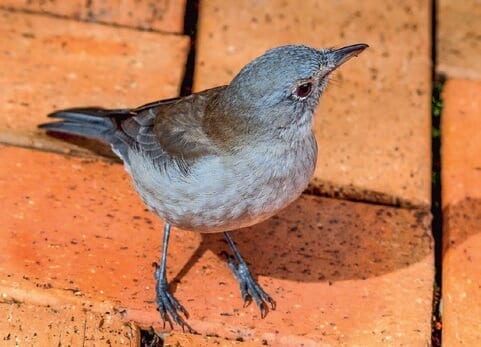
Grey Shrike-thrush looking for a handout
Clutches of 2-4 creamy, blotched eggs are laid. Males help with the nest building, incubation of 17-18 days and tending the young. Nestlings fledge in about 17 days and there could be several clutches produced during the season if conditions are right. The same nest sites are sometimes used year after year. Parents generally stay together for life.
A common name amongst birdwatchers is GST (Grey Shrike-Thrush). They were given the scientific name Harmonica from the Latin meaning “skilled in music” and Colluricincla which is derived from two Greek words meaning “shrike”. Oddly enough they are neither Shrikes nor Thrushes but were called “Shrikes” because of their predatory bills and “Thrushes” after the melodious Thrushes of Europe. They belong to the same family as the Whistlers and Shrike-tits and were studied and cataloged by John Latham in 1802.
John Latham contributed largely to our early ornithology knowledge and first documented many of the birds in the late 1700s and early 1800s. They are often attacked by other birds because of their tendency to raid nests for eggs and chicks. Because they feed mainly on the ground their main threats are from cats, dogs, and foxes.
Feral cats are a huge problem in Australia with an estimated 6.3 million occupying our wild and suburban areas. If one cat eats one bird each day that is over six million birds eaten every day in the wild and if it were only half that number, it is still an enormous daily loss of wildlife. This is a huge problem for the bird and small mammal world. Grey Shrike-thrushes conservation status is secure but in some areas, they appear to be on the decline.








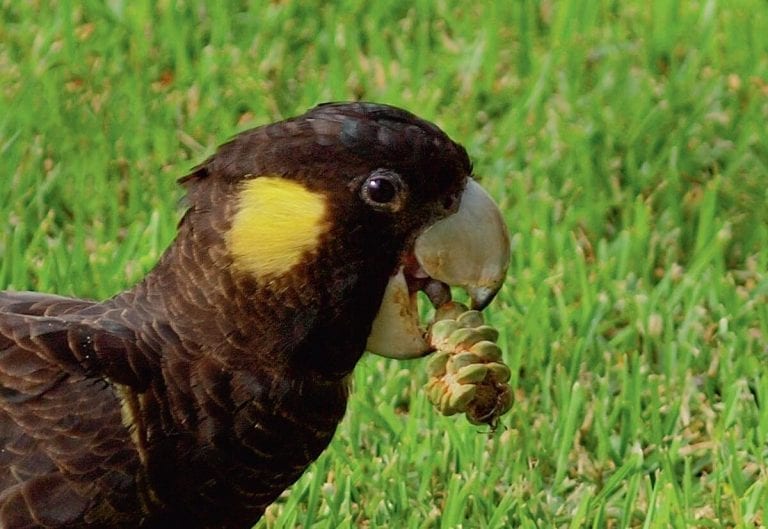
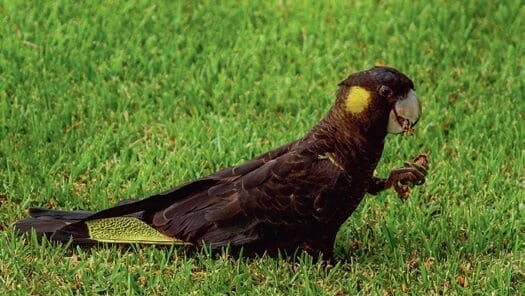 It is common to see the Cockatoos holding their food with their feet while eating. Beetles and moth larvae are extracted from under the bark of wattle trees and with their strong bills, they dig into the wood several centimetres to obtain this food. Over the years they have begun to feed on the exotic pinecones. In fact, in one area in South Australia, they have become quite reliant on these imported trees. Their long breeding season begins in October and can extend through to May but is variable. Nests are built high up in large, old, tree hollows. Nest diameters are about 40cm and hollows from 1-2 m deep, so the hollows have to be very large indeed.
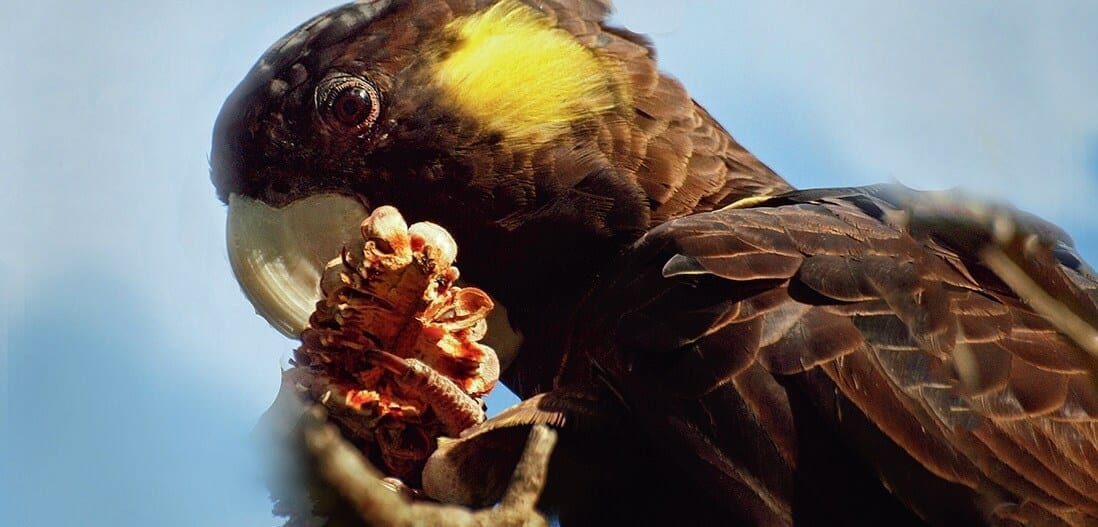 It is believed that Black-Cockatoos evolved in Gondwanaland before it broke up. Naturalist George Shaw was the first to record the Yellow-tailed Black-Cockatoo in 1794. Their scientific name funereus means “dressed for a funeral” referring to their black coat. The genus name Calyptorhynchus is derived from two Greek words calyplos meaning “hidden” and rhynchos meaning “beak”. Black-Cockatoos are regarded as pests in some areas because they strip the young foliage and branches from the plantation Eucalypt and Pine trees.
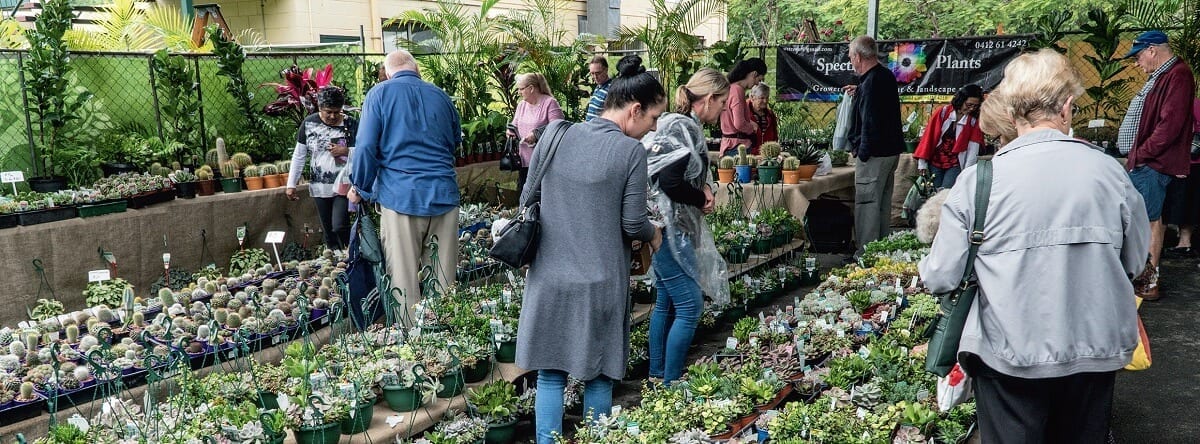
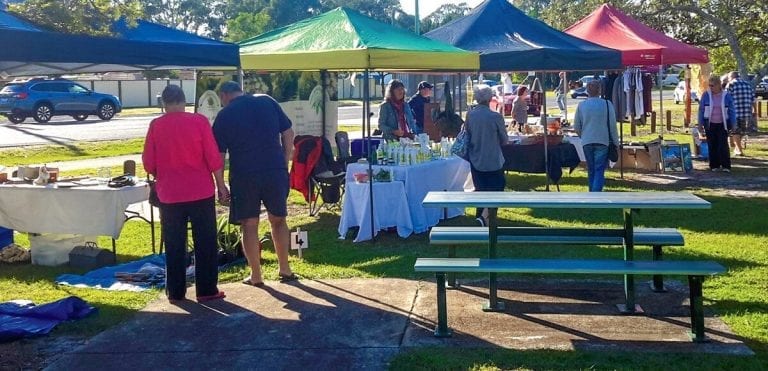
 According to Eric Banham, Sandstone Point Lion, MarketPlace co-ordinator and initiator of the idea of holding a regular market in the heart of Ningi, “MarketPlace, has a great community feel and village atmosphere, it’s a new place to hang out on the first Saturday of the month before or after kids sport, you can enjoy a Bacon and Egg muffin brekky, cooked perfectly by a Sandstone Point Lion, relax over a barista made coffee from the ‘Coffee Man’, and to top it off stroll around MarketPlace and pick up a bargain or two at one of the many market outlets.”
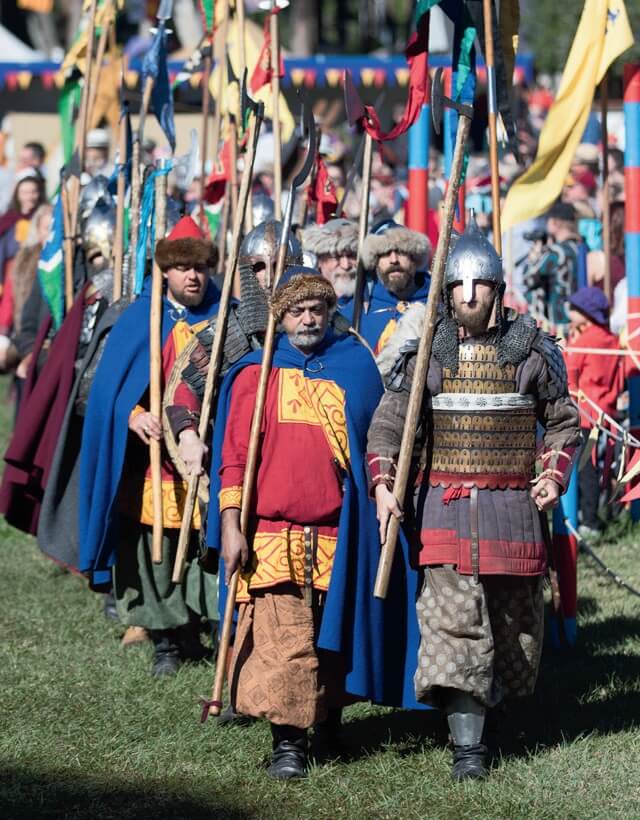 “The history of the festival is also a huge draw. There are families who have been coming for decades, and we see children whose parents and grandparents have attended the festival since its inception” she said. In 2019 the Abbey Medieval Festival includes the Medieval Banquet – Saturday 29th June and Saturday 6th July – with live entertainment and a grand medieval feast, in addition to the Kids Dig It! Medieval Family Fun week – Monday 1st July to Friday 5th July.