Home Blog Page 68

THE PURSUIT OF PEACE

A few Wednesdays ago I woke up in a terrible mood. I can’t remember the specific reason why, but I do remember feeling overall a dull shade of grey. My usual things that bring me happiness just weren’t sparking as they would do normally so my mother – being heaven sent – decided to take me on a drive. We didn’t reach a destination but just drove through some streets branching off Bribie Island road I’d not been down before. At the beginning of the drive, I didn’t even have the energy to look at mum when she spoke or look around at the beautiful scenery.

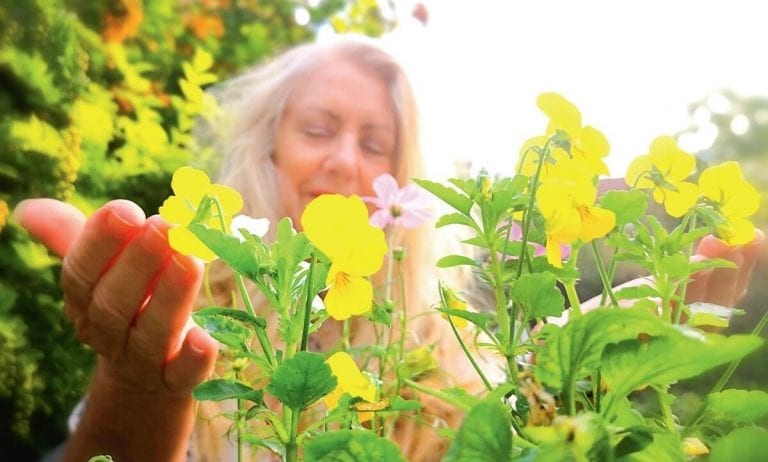
I just stared blankly out the window looking at whatever fell into my direct view. Joyful eh? Anyway by the time we reached home again I was feeling a tad lighter and seeing all the properties and their gardens made me want to spend time with my plants nurturing them. I have a collection of tropical and indoor plants which usually have big leaves. The leaves catch dirt, fluff and sometimes pests so I thought I’d spent the next little while cleaning each individual leaf with water and a Chux and applying white oil for protection and sheen. I put on some calming nature music and away I went.

As each hour went by I could feel my spirit lifting once again. The slow process of paying close attention to the leaves steadied my thoughts and the beauty of plants and their unique markings filled my soul with colour. Three hours went by and the process was complete. Not only were my babies looking healthy and clean but I felt back to normal and happy again! I’ve always loved plants and gardening but that little moment made me appreciate them just that little bit more.

I suppose my dear Islanders, I’m realizing that pursuing peace doesn’t have to be some mega mission. It’s in the simple cost-free things that peace can be found in plenty. Moreover, and maybe not so liked, it can be found in discipline. Repetitious, focused, diligent discipline. There is a necessary place where happiness can be found in fun. But it is in the everyday healthy hardworking simple habits of life that steady joy rests in.

When we put our lives into balance (and we all know our areas we need to work on) then peace arrives into our hearts. Our breathing is steady and deep, thoughts align, eyes closed with relief and a gentle smile emerges. Until next time Islanders, Remember to eat your citrus during these cooler months, breathe in the salty sea air and get some sunshine onto your skin. Xo Nikita

The bribie Winelander May 2019

If you want to see the colour drain from a winemaker’s face just mention the word Phylloxera, this is an aphid-like root louse that destroys grapevines and devastated over 70% of Europe’s vineyards, notably France, towards the end of the 19th century. It was introduced to Europe by botanists in Victorian England who collected specimens of American vines in the 1850s.

Phylloxera is native to North America where the native grape varieties are partially resistant, by contrast, the European wine grape varieties were very susceptible to the louse and the vineyards in Britain then Europe was devastated almost wiping out nearly two-thirds of all of the European vineyards or around 6 million acres of vines. In France one of the desperate measures by grape growers was to bury a live toad under each vine to draw out the ‘poison’, this sounds familiar, doesn’t it! The industry in Europe started again when resistant rootstock was brought from America and grafted onto the existing vines but it still rears its ugly head from time to time.

Here in Australia Phylloxera first appeared in Geelong in 1877, then New South Wales in 1884, and Queensland in 1910 destroying vineyards and devastating the industry. South Australia, Western Australia, and Tasmania had banned the movement of vine material and remained disease-free and this banning of the movement of cuttings and other materials remains in force today which is why some of the vines in South Australia are claimed to be amongst the oldest wine producing vines in the world.

Phylloxera infestation cannot be successfully cured and replanting is the only option and is very expensive. In 2017 Vinehealth Australia calculated the cost at $60,000 per hectare, the pest has not been entirely eradicated and there are several areas such as The Yarra Valley have been declared a Phylloxera infested Zone and great care has to be taken in these regions when growing grapes. Talking of Queensland it is not commonly known that after planting vines in Farm Cove New South Wales Captain Arthur Phillips chose the Granite Belt region as the second area to be planted with grape vines in 1820 preceding Victoria and South Australia by more than 15 years.

Winemaking. White wines and Red wines. Wine. One of the problems which hold the region back is a large number of small wineries in the area without proper representation at the retail level and who survive by promoting their products at cellar door and mail order, which was a similar case in Western Australia some forty years ago, until the larger wineries became popular and then tourism took off, the rest they say is history and Margaret River now boasts some of the finest wineries in Australia and is responsible for over 30% of Australia’s premium wine production whilst accounting for only around 10% of the country’s total wine production.

Queensland’s oldest working vineyard is Ballandean Estate Wines which has been in the Cardillo and Puglisi family for more than 80 years and they have high hopes for this year’s vintage despite climate challenges throwing up a warmer and drier season, but the region was still cooler than other wine growing areas around the country. The Granite Belt also excels in alternative styles and while it produces mainstream varieties such as Shiraz, Cabernet Sauvignon, and Chardonnay it is also growing Fiano, Vermentino, Chenin Blanc, Savagnin, Barbera, Graciano, Durif, Nebbiolo, and Tannant.

Being at an altitude of over 750 metres the climate in Ballandean is both cool and continental which accounts for the successful growth of many European grape varieties. For the last thirteen years, there has been a competition which recognises the talents of young winemakers and known as ‘The Young Gun” of wine. Andrew Scott of La Petit Mort Winery secured the first ever final 12 places for Queensland and he will compete for the title ‘Young Gun of the Year’ which will be held in Adelaide on June 3rd.

wine wineries red wine white wineLa Petit Mort is a part of The Bent Road Wine Family in Ballandean and specialises in producing small batch experimental wines with minimal winemaking intervention and is bottled without filtering or fining as was the case in the distant past, allowing Scott’s winemaking talents to shine through. Due to the difficulties of the growing conditions around the country this year the grape crush in January is expected to be around 5% down which is quite significant given that the annual crush is around $4.4 billion dollars, Ballandean Estate is expecting a reduction of 30% but the quality looks like it could be amazing, however decisions will have to be made where the wines are going to go.
This week we tried a couple of wines from Liquorland, a Devil’s Lair Fifth Leg 2017 Cabernet Sauvignon, Shiraz, Merlot which at $10 instead of $18 was excellent drinking. Dan Murphy had the floor special Barwang Shiraz 2017 $15 for two bottles, which is half price, on the members’ card or available if you purchased 6 bottles of anything else, again outstanding value from The McWilliams Wine Company. Cheers, Philip Arlidge [email protected]

BRIBIE LIONS FUND PREPS’ HEARING TEST

Tags: Bribie Island Lions Club. hearing tests.

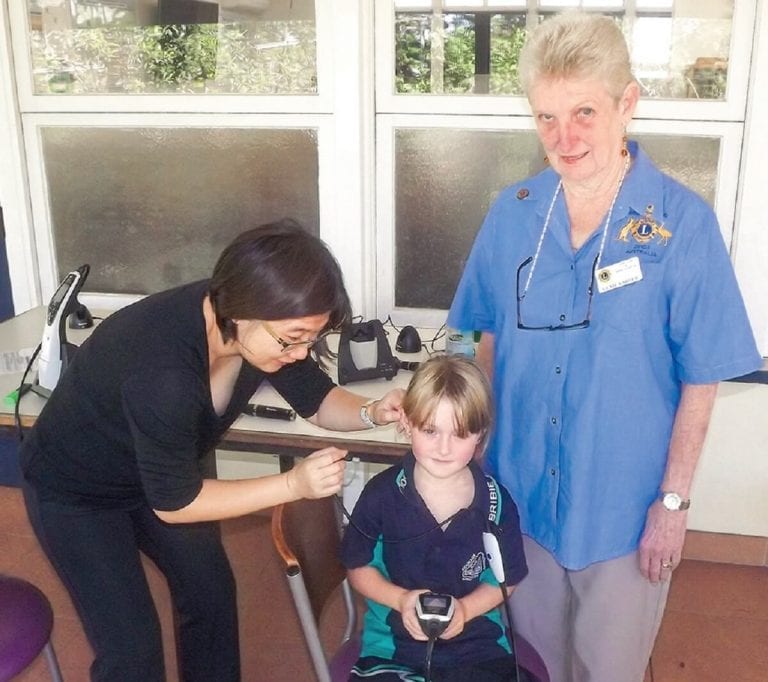
It is very important to identify hearing problems before a child starts school,” says Rosita Chan, Clinical Educator from the University of Queensland Health and Rehabilitation Clinics, at the Bribie Island State Primary School where her students from UQHR-Audiology Clinic School Hearing Screening conducted hearing tests for Prep Schoolers.

Each year Bribie Island Lions meet the cost to get the Prep schoolers’ hearing tested before they go into Primary School. “Hearing is very important for a child’s development in learning, language communication, etc. and a lot of the problems are through middle ear infections,” said Rosita.

She said hearing is tested when a child is born and again before they start school. Julie Thomas, the support teacher who organized the day, said out of the 93 children tested 17 needed further investigation.

She thanked the Lions Club of Bribie Island for their continued support. Genie Kahler from the Lions Club of Bribie Island said the club has been sponsoring these tests for Prep Schoolers for some six years and it is the Lions’ way of giving back to their community.

RIDE FOR RED SUCCESS NOT DAMPENED BY RAIN

A very wet Saturday did not deter the Gronks Social Riders club from running their Third Annual Ride for Red raising much-needed funds to support Cancer Council Queensland in their quest to cure cancer.

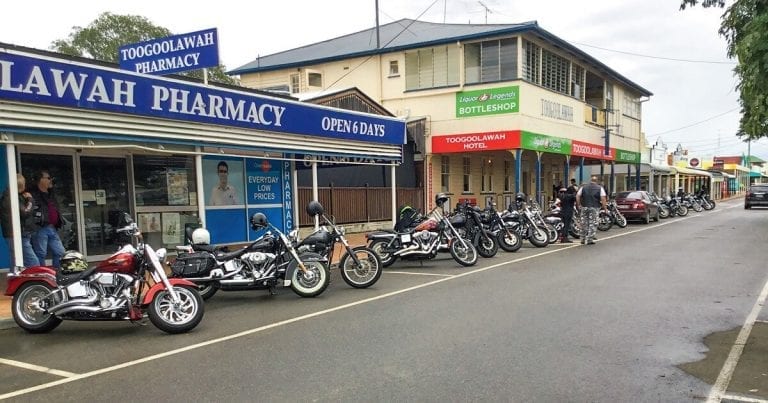
The gathering at Wamuran saw 43 bikes and numerous cars departing for Blackbutt’s Bunya Nut Café for a vanilla slice and coffee.

Featured Image(above): Last stop at Toogoolawah Hotel, bikes lined up

Raffles were held and from Blackbutt riders arrived at Maidenwell for a buffet lunch, again in support of the Queensland Cancer Council. Whilst the rain tumbled down at lunchtime the ride to Toogoolawah was mostly dry for an overnight stay and fundraising auction and raffles.

Funds raised combining raffles, auctions and donations along with donations made online through the Do-It-For-Cancer fundraising page totaled $7021.00, a mammoth achievement with having set the goal of $6,000.00.

cure for cancer ride cancer council queensland fundraiser (1)

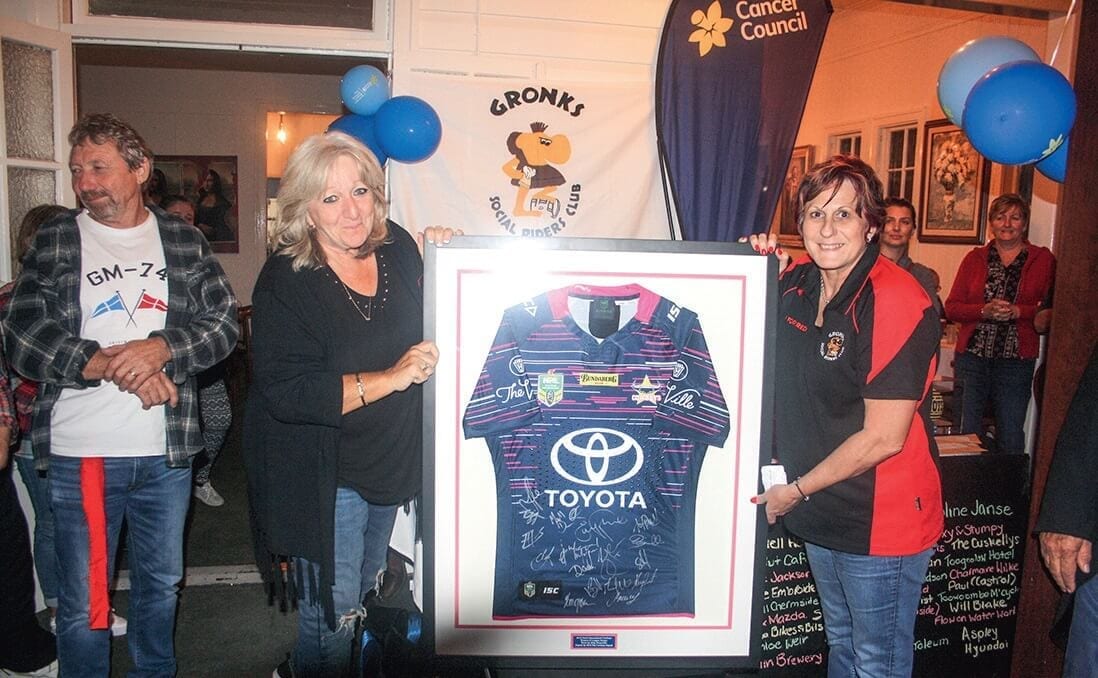
Winner of major raffle Debbie Hunter (left) and organiser Helen Weir (right). Framed North Queensland Cowboys Women In League jersey was worn by Jake Granville and signed by the 2019 North Queensland Cowboys squad. Debbie donated the jersey back for auction.

Mr. Gary Blake of the Gronks Social Riders Club said: “Today was very gratifying to see the support from the community. We decided to hold an annual ride after a very good mate (Red) passed away from brain cancer to assist in some way towards the cure of cancer. Each year we have surpassed the previous year and the Ride for Red will continue for many years to come.

The support from businesses and the community continues to grow and without their help, a successful event would not be possible, and for that, we thank each and every-one helping to find a cure for this insidious disease.” One of the participants in the ride was Councillor Cheryl Gaedtke from the Somerset Regional Council. Cheryl thanked the organisers, Gary Blake, and Helen Weir, “It was such a warm and personal ride to commemorate a dear departed friend.

cure for cancer ride cancer council queensland fundraiser (1)

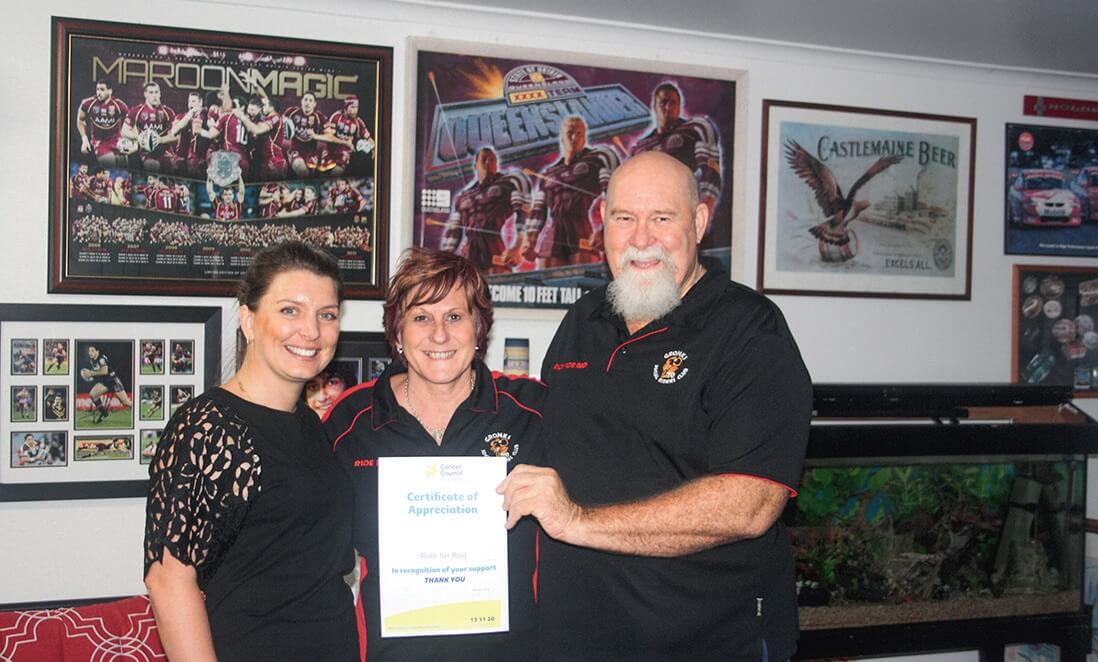
Tara Evans (left) with Gronks Social Riders Club and event organisers Helen Weir (middle), Gary Blake (right).

The ride provides Red’s family and friends with even more treasured memories and also funds to help combat brain cancer.” The Ride for Red is an annual event and is held on the same long weekend in May every year and the Gronks Social Riders Club extends the invitation to anyone who would like to get involved in supporting the Cancer Council in finding a cure for Cancer.

The Bribie Island Surf Club

Tags: Surf Club. Bribie Island. Moreton Bay. Brisbane. Queensland

FUN FOR ALL THE FAMILY

Bribie Island Surf Club is located on the Eastern Side of the island and is the closest surf beach to Brisbane. Woorim beach is particularly well known for its well protected, safe, and very popular swimming environment. Like most other beaches in Queensland, Woorim can experience strong currents, inshore holes, and can be susceptible to blue bottle stings in strong north-easterly conditions.

Our advice is always to swim between the flags and always when patrolled. Bribie Island Surf Life Saving Club has a longstanding patrolling history at Woorim Beach that dates back to the 1920s. The club has a large and very successful junior activities section, we like to call these our future lifesavers, that range from the age of 6-13 years old. These juniors spend their weekends developing their confidence in the surf and on the sand. The senior side of the club is equally as successful and you will find them mastering their skills in the water, on the sand, and in competition.

When they aren’t perfecting their surf safety skills, you will find them on the beach yearly from September to the very last weekend of April. Surf Life Saving is a relatively inexpensive sport to participate in. However, we rely heavily on funding from the government and the public to keep our flags up and flying. My role at the club is an active patrolling member. I do help as an IRB coach alongside Matthew Bull who is the senior main coach of our team.


bribie island surf clube moreton bay brisbane queensland (1)


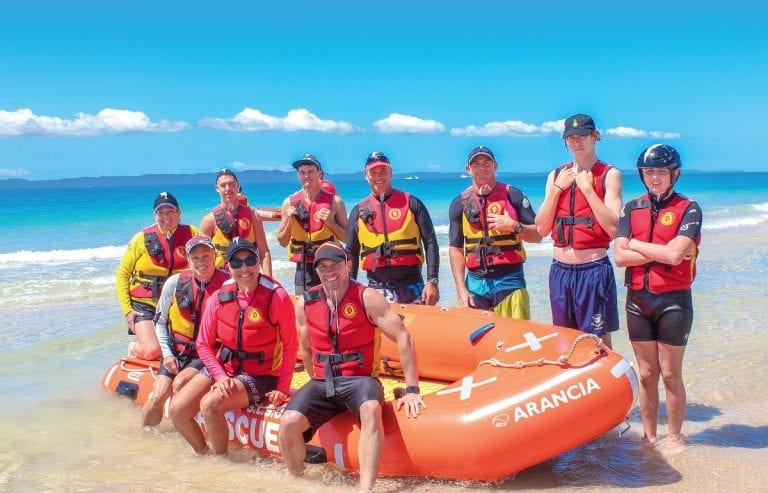
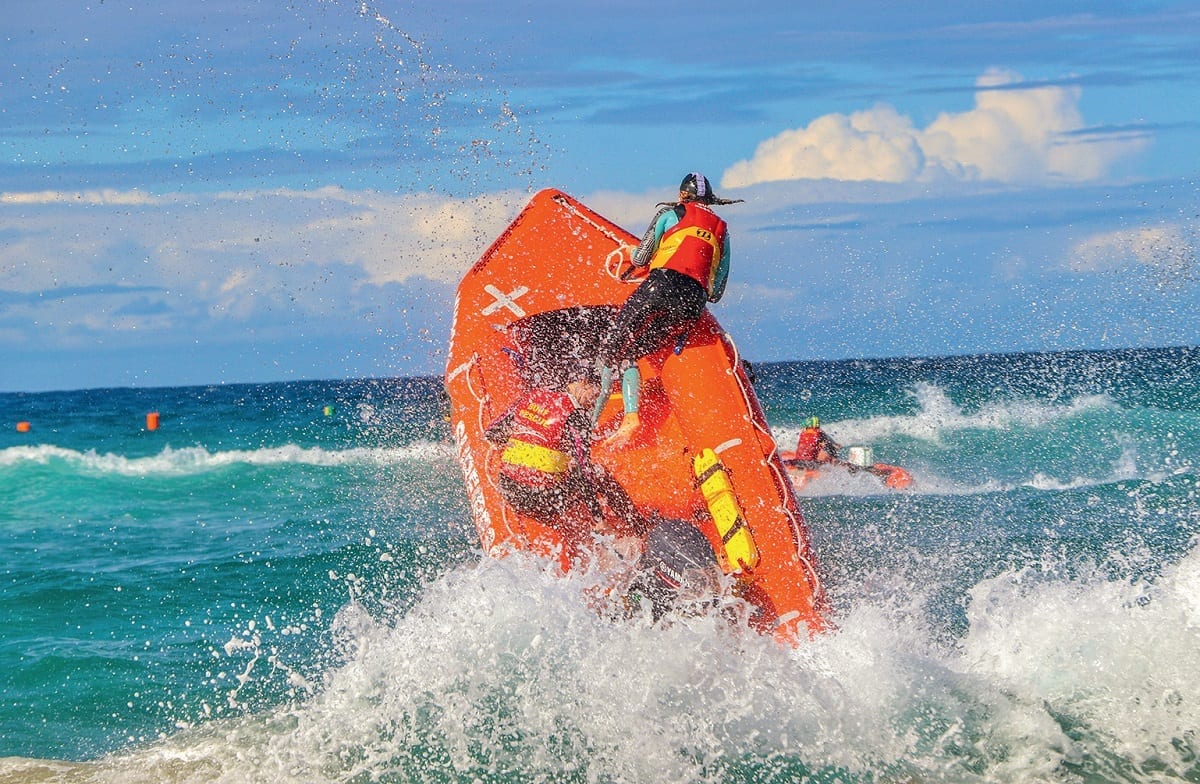
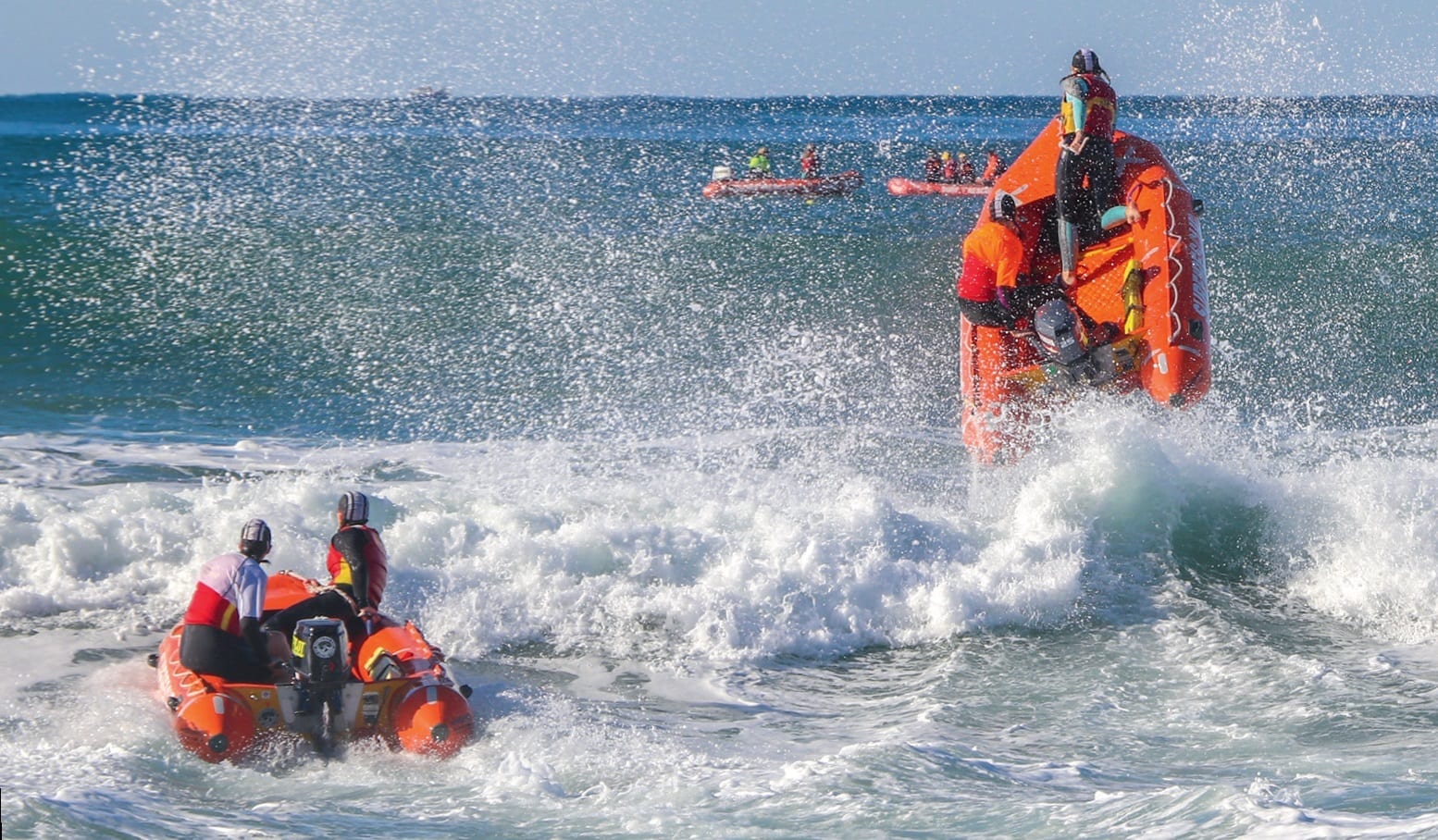
I have been volunteering for 15 years now and I started my journey with Surf Life Saving in nippers. In that time, I have managed to gain 46 different nationally recognised awards that I am able to use within and outside of the club. These opportunities that lifesaving have given me have taken me to some pretty incredible places outside of the surf club. The sport I participate in mainly is IRB racing (inflatable rescue boat racing). These are the orange inflatable boats that you see on the beach.

The idea around the sport is to further perfect our rescue skills in often high-pressure situations. It allows us to race against other surf clubs wanting to also further perfect their skills. It puts us in a similar high-pressure situation to one that we would experience in a rescue. The equipment we use is the exact same equipment that you see us use on the beach. Just to give you an example of the cost of keeping this kind of equipment operational; a boat costs roughly $13,000, motor costs about $6000, $300 out of the box prop and a further $600 to fine tune them, $100+ for the fuel to run the boat for an entire weekend. So just to have one boat on the beach you are looking at an upfront cost of $20,000 and this money comes primarily from grants or donations to the surf club.

We have a lot of equipment that we need on the beach to be operational we use, radios, ATV’s, 4wd’s, signs, flags, boards, tubes, uniforms, and the use and upkeep of the amenities. As you can imagine, if a single boat costs $20,000 to be operational, trying to keep everything mentioned operational is no small or cheap feat. I guess what I am trying to say, is that you get back from lifesaving what you put into it. I have spent 15 years of my life standing on the water’s edge voluntarily.


bribie island surf clube moreton bay brisbane queensland (1)


In that time, I have performed more rescues than I have fingers to count and prevented even more than that from happening. I’ve met people that I would now call family and I’ve got a place I can go to that I can call home. I have gained skills and awards that I am able to use to help people on and off the beach that most people only dream of gaining. I give up my weekends every year to either help keep the beaches safe or continuing to perfect my skills and there isn’t a thing in the world that would change that. Why I love this sport so much is because it is so family orientated.

I race with my sister I drive the boat and she crews the boat. Mum comes down to watch and often helps out with the team managing. Not only do I get to race with her but I patrol with her too! It’s kind of forced time together but I love it. You’ll find many stories like this within our team. Our team manager, Greg Bulluss is a father to another one of our crewies Georgie Bulluss. Selene Wooton’s mum will often stay with the team and will help cook and keep the team healthy.

Alexander Cybulski’s mum Rhonda Cybulski and sister Nadia Cybulski both official at our carnivals and his dad George Cybulski helps to set up and pack up all of the carnivals. Then we have the rest of the team’s parents that spend their entire day standing on the beach supporting us, It really is a family affair at our carnivals! To get involved you can contact the club by calling (07) 3408 1188 or email [email protected]. For more information, you can visit our website www.bribieislandsurfclub.com.au or we’ve even set up a new Instagram page that can keep the public up to date on what we are doing its handle is @bribie_irb.

Gloss Magazine Bribie Islander 12th Edition June 7 2019 Issue 89

The Bribie Islander Magazine

Get all your community news and information Bribie’s only community gloss magazine NOW EVERY TWO WEEKS! – Articles on boating, camping, fishing, life, drama, travel destinations, sports and what to see and do on Bribie Island. Covering charities, organisations, places, children’s activities, arts and crafts, tourist destinations, heritage parks, technology, science, music, gardening and much more.

You can now download the Bribie Islander digital edition by clicking here.


MOVIE REVIEW – Breakthrough

Survival against the odds; a medical miracle never before was seen…Both have been used to describe the events depicted in this film. Based on a true story, this film tells the remarkable story of a fourteen-year-old boy named John Smith, played by Marcel Ruiz. It was 19 January in 2015 when John, on a day off from school with two of his friends, decided to have some fun on the iced-over lake near his home.

Unbeknown to them, the ice had begun to melt that fateful day and cracked beneath them. They all fell into its icy waters. Although John’s two friends surfaced, John did not. After 15 minutes submerged, John’s lifeless body was recovered. Despite every effort to revive John, there were no signs of life.

That is until his mother, played by Chrissy Metz, arrived and prayed over her son. To the astonishment of John’s entire medical team, a faint heartbeat was detected. That, though, is not where the story ends.

No one was prepared for what followed, including John’s father, played by Josh Lucus. Watch what unfolds as the story continues. Stay for the credits and meet the real Smith family. This is a moving story not to be missed.

ITA – INSPIRATION THROUGH ART ANNUAL EXHIBITION

0

Tags: Artist. Art gallery. Bribie Island. Moreton Bay. Brisbane. Queensland. Australia

ITA’s Annual Exhibition will be held in the Matthew Flinders Gallery, Bribie Island Community Arts Centre, 191 Sunderland Drive, Banksia Beach. The Official Opening will be on Friday 31st May (5 – 7 pm) with Guest Speaker Simone Wilson, Local Member for Pumicestone. Come and meet the artists and enjoy drinks and nibbles while you view the artwork. All work is for sale.

No booking required, but a gold coin entry is appreciated. The Exhibition will showcase an eclectic range of subjects & mediums ranging through oils, acrylic, watercolour, coloured pencil & mixed medium. Each year the group selects a range of 10 new subjects, plus one of their own choice, from which to challenge their creative talents & imagination.

This year will also feature some beautiful pottery by Sue Harrison and her Ningi Pottery Group. Formed over 12 years ago, ITA’s core membership has remained strong and although a couple of people have moved on, new members have joined and brought fresh ideas and talents to the group.

The artists meet each Thursday at The Crafty Shed, Ningi where they paint together, swap ideas, encourage each other, and of course sort out all the problems of the world! Currently, the membership is 16 strong, and new members are always welcome. ITA would like to acknowledge & thank The Crafty Shed for their support and sponsorship.

HELLY’S CELEBRITIES OF THE 20TH CENTURY – Stirling Moss

Tags: Celebrities. Actors. Famous People. Stirling Moss

Widely described as the greatest Formula 1 racing driver of all time, Stirling Moss, in spite of winning 212 races, 16 of them being Grands Prix and being the 1st ever British F1 driver to win his home race, Stirling never wins the World Championship. I have often wondered why. It certainly is not his driving ability.

But Mossie, as I always call him, is a difficult, dominant man, who must always have his own way, and maybe his personality is partly responsible. One of his greatest victories is the 1961 Monaco Grand Prix, where he wins in a Lotus against the much faster Ferraris, as well as setting a new track record in the famous 1,000 miles 1955 Mille Miglia race, right around Italy. Being very much interested in F1 racing, I attempt all the official channels to gain an interview with Moss on my arrival in London in 1968.

No luck! So it’s five years later when I finally get his private phone number in London’s Mayfair. I not only introduce myself on the phone but make a daring suggestion, with which, surprisingly, he is delighted: A 3-day interview weekend attending the 1973 NUERBURGRING GERMAN GRAND PRIX.

Quite a surprise, as I have never met the man and know he dislikes journalists! When I ask him later why he agreed so quickly, he simply states, “I liked your super-sounding voice on the phone.” So far so good! Or maybe he thinks we are going to have a romantic weekend?? But then everybody forewarns me not to let him drive my car, as apparently, the F1 icon is not the perfect driver on mortals’ roads, allegedly having been involved in some accidents.

DAY ONE

Mossie begins our weekend date in typical fashion when I arrive one minute before our agreed 5.45 am meeting time. There he stands, tapping his foot on the step outside his Mayfair home. He hates wasting time, opens the boot with one hand, tosses his luggage in with the other and greets me with the third, (He has a third – I’ll swear it!) He pales a little when I insist on driving my own car. So I hastily grab the driver’s seat, wave him into the one beside me and smile, hopefully in a very firm manner.

“I hereby appoint you navigator for the trip, Mossie!” He does not favour nick-names, but grins at that and keeps grinning, no doubt having decided how quickly to remove me from the steering wheel. I immediately discover he is the worst back seat driver ever, so constant and irritating, that between London and the Dover Hovercraft to take us across the Channel, I already vacate the driver’s seat.

But to his credit, during the 12 years I own my 280 SL Mercedes sports car, before bringing it back to Australia with me in 1980, no one ever achieves the low fuel consumption the 43-year-old Mossie masters on this trip. After all sorts of confrontations including officials at the dock and Mossie being convinced we are going to be left behind at the port, and then in Calais, a restaurant that he considers is overcharging…. Very hungry on our two hours drive to Germany we finally find a little snack-bar for lunch.

It’s 11 years since Mossie’s retirement from racing, but I get a perfect glimpse of how a true star never fades. He is immediately recognised by the owner who proudly announces his discovery, and the autograph hunters pounce, bubbling all sorts of German phrases Mossie doesn’t understand. Having, at last, arrived at Nuerburg, I’m thrilled to hear Jackie Stewart is scheduled in pole position for tomorrow’s race, as I like him very much, (you may remember the photo in my Keith Williams piece where Jackie was my observer when Keith took me water skiing).

At last, Mossie relaxes and the blissful look on his face now reminds me of something Jackie once said about taking a fast bend being like an orgasm. So I raise the point. “I wouldn’t say it was a sexual thrill, Mossie replies, “but related to sex. The exhilaration, the satisfaction and the pleasure that one gets from flirting and having a relationship with a woman, is one of the few things that are as satisfying as going around a corner at the very limit. “A motor race is a multiple climax, all the time, every corner, and therefore it’s on a lower plane than an orgasm, but equally satisfying.

“I think women are like cars in this way: how far you can push a woman depends on how expert you are in handling her, and how well you know her. “In the same way, if you get into a car that you don’t know, and you don’t have the expertise that particular car demands, you’ll get into a corner and oversteer. And wham! You’re in trouble. “If you know the car well and you understand the ‘feeling’ and the balance, you can take slight liberties and get away with it.

Celebrities. Actors. Famous People. Stirling Moss (2) “Women and cars are the same if you treat them well. It all depends on how compatible you are with each individual one of them. One woman will come alive with one guy and be quite dowdy with another. Some women can definitely bring out the best in a man. And so can some cars.” I know Mossie and I will be friends, but nothing more. So just in case, he might consider me a possibility as the “some women,” from above, I let him know immediately that I not only have a boyfriend but a young baby as well. And for our whole weekend, Mossie is the perfect gentleman.

(DAYS TWO and THREE to be continued in the Bribie Islander Issue 88)

FLORAL TRIBUTE FOR DOMESTIC VIOLENCE

Each May, Queensland marks Domestic and Family Violence Prevention Month, themed ‘Domestic and Family Violence – Not Now Not Ever’, to raise community awareness of the issue and to send a clear message that this violence will not be tolerated. On Thursday, a representative of the Caboolture Domestic Violence Service presented a floral exhibition to Bribie Island and District Neighbourhood Centre, where it will be exhibited along the front entry walk during the month of May.

These lovely hand-crafted flowers are a gift to the Moreton Bay community to say ‘Thank you for keeping our region safe’. They were created by women and their families who have been affected by domestic and family violence as representations of how women can go on to grow, blossom and stand tall after experiencing domestic and family violence. Symbolically, the flowers are an ‘Expression of feelings, our message of blossoming, flowers that grow, taking us beyond domestic violence (Anon)’.

They have been transformed from used bottles to formations of colourful beauty and grace, standing independently or connected together in support of each other, depicting the changing of lives, re-emerging through recovery and healing. The colourful display can be viewed at the Centre at 9 Verdoni Street, Bellara.

History – Welcome to Bribie

Tags: History. Bribie Island. Historical. Moreton Bay. Brisbane. Queensland. Australia

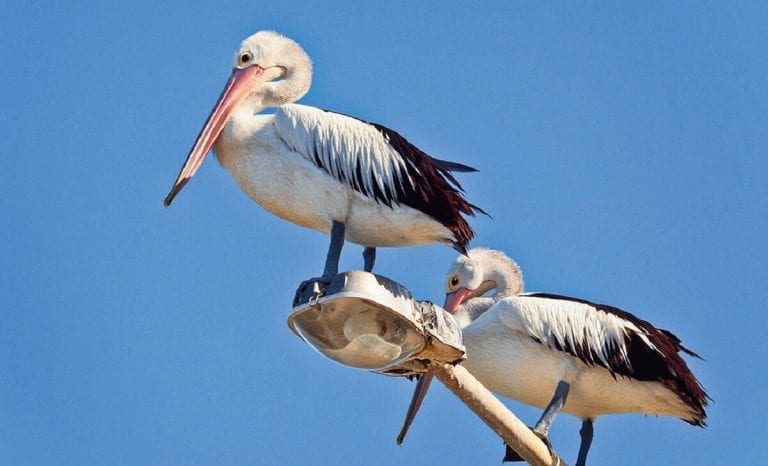
There has been some community discussion in recent weeks about replacement of the large “WELCOME to BRIBIE” mural, seen as you reach the island. This is one of the longstanding iconic images of Bribie, along with the parade of Pelicans on the Bridge lights.

The community expresses strong views about such things being removed or changed without appropriate discussion and understanding. This week’s History Page tells the full story about the “Welcome” Poster mural that may not be known to many.

WELCOME MURAL IDEA.

This was conceived as a Community Project in 1988, the Bicentenary year of Australia, to mark the 25th anniversary of the 1963 opening of the Bribie Island Bridge. That was the same year that Rotary International chartered the Rotary Club of Bribie Island in March 1988, and initiated by a few local Rotarians residents led by Roy Pierce. To mark the Bicentenary, residents had approached the Chamber of Commerce, who then played a very active role in commercial aspects of the island.

History. Bribie Island. Historical. Moreton Bay. Brisbane. Queensland. Australia (3)

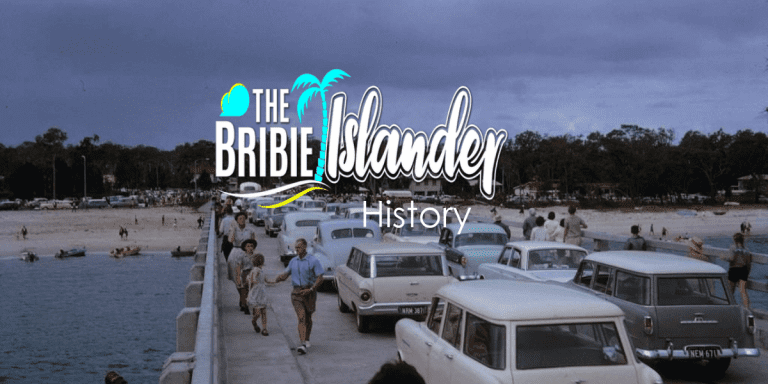
Bribie Bridge Postcard 1970’s

The idea was to erect something “Typically Bribie” to mark the 25th Anniversary of the Bridge. At that time there was a rather ugly metal framework beside the road in Bellara, that held a variety of advertising signs for local businesses. A plan was developed by the Chamber of Commerce and Rotary to replace the unsightly advertising hoarding with a large and unique painting.

Advertisers were contacted and they agreed to forego the remainder of their display contracts in favour of a large and original “Welcome Mural Painting” in the same location. Local artist Dale Marsh was contacted and agreed on a voluntary basis to paint an original mural. He prepared a small modern colour composite drawing for approval, showing typical Bribie faces, and Council agreed for a large version to be created on the Council ground on which the old hoarding stood.

The new Rotary Club of Bribie Island raised the remarkable sum of $6000 to have the old billboard dismantled, de-rusted, zinc coated, re-erected and strengthened to withstand cyclonic winds. Many volunteers became involved with this significant Bribie project and the artist Dale Marsh later wrote;

“The tireless and hard selling head of the Chamber of Commerce, Mr David Goode, managed to secure the services of a Brisbane based sign writer to work with me on the project. Dig Maher turned out to be just the man needed. He was experienced in mural work and had just completed some large projects for Brisbane’s World Expo 88. We got on well together” Dig Maher working in the studio, went about scaling up my detailed drawing using the grid system; scaling up by means of squares, and an overhead projector to produce a full-sized cartoon of the original on large overlapping sheets of white poster paper numbered in sequence.

The lines of the drawing were then pricked using a spur wheel. When the paper was in position on the mural surface, we only had to rub lightly with a cloth bag of dry pigment or draw over it with soft charcoal to transfer the drawing onto the panel. It’s an old technique; Michelangelo and Leonardo used it, Working on a plank up in the sky, you cannot step back and see what you are doing and working on heads that size you need to. There is only one way: … climb all the way down the scaffold, walk across the road, spot the errors, climb back up again, fix them, go back down for another look and so on”.

History. Bribie Island. Historical. Moreton Bay. Brisbane. Queensland. Australia (3)

Dale Marsh Original poster painting(above)

Welcome Mural painted in 1989(below)

History. Bribie Island. Historical. Moreton Bay. Brisbane. Queensland. Australia (3)FIRST MURAL UNVEILED

Although slightly later than the actual 25th Anniversary of the Bridge in October 1988, the finished work was unveiled on 28th January 1989 and a plaque on a stone plinth reads;

This Plaque unveiled by Shire Chairman Stan Muldoon commemorates the official unveiling of the Dale Marsh Mural depicting Bribie Islands lifestyle. A Place of Peace in a troubled world 28-1-89

The “Canvas” on which the artists painted the mural is 13.5 metres long and 6 metres high. Artists’ oil paints were used for the entire project and when completed, Dale said: “Bribie Island has a public mural, which I expect will last a long time – well at least until the Queensland afternoon sun fades it – and I suppose I will have to touch it up!”

Regrettably, its longevity was underestimated, and with continual heating of the metal “canvas”, cooling at night, salt-air and weather, all combined to cause fading and deterioration. A couple of other things had been added to the Bridge since its original construction in 1963. The 13 lights on which the Pelicans have until recently been able to perch as another

“Welcome” to Bribie were a later addition, as is the light blue painted guard rail between the footpath and road, which was added after a young boy slipped and was fatally run over by a car. After only five years the magnificent oil painting mural was at the end of its useful life and by 1994 it was evident that the much-loved mural would need to be replaced.

REPLACEMENT MURAL

There was a strong community commitment to replace the mural and Dale Marsh very graciously offered to provide the community with another new one. His suggestion this time was for a classic scene of family fun on a Bribie beach, which he prepared as another small original painting for consideration.

The skills of the artist and modern computerised technology were then combined to reproduce Dale’s new oil painting as a large print on canvas that was erected on the existing structure. The replacement mural showing three children playing on the beach was unveiled on 11th October 1995. The small boy pictured with the two girls playing in the sand dunes was a young Timothy Gould who was featured on the front page of the last edition of this magazine.

Dale Marsh new Mural 1995

This inspiring young man, now a 27-year-old former local resident, went on to become a Gold and multiple Medal winner for tennis and swimming at several special Olympics. Another Plaque was unveiled below the new mural with the almost identical words…

This Plaque unveiled by MAYOR JOHN WHITE commemorates the official unveiling of the Dale Marsh Mural depicting Bribie Islands lifestyle. A Place of Peace in a troubled world 11-10-95

The original small oil paintings for both of the murals can be viewed at the Bribie Island Community Arts Centre where they are on permanent display.

WELCOME SOMETHING NEW

The much-admired replacement “printed” mural continued to be the “Welcome” image to Bribie for a further 15 years, until 2010 when the Mural was temporarily replaced to advertise and promote a new Bribie attraction. The Seaside Museum at Bongaree opened in 2010 and the Welcome Poster was replaced with a Moreton Bay Regional Council poster, showing an Ian Fairweather abstract painting and details about the new Bribie Seaside Museum.

This came as a surprise to Bribie residents and visitors, many of whom had no real knowledge or appreciation of this remarkable if not unusual man. Ian Fairweather was undoubtedly the most Internationally famous person ever to live on Bribie, albeit as a recluse hermit in a grass hut, for 21 years from 1953 to 1974. If you did not know or appreciate his artistic style, the Mural was a sharp contrast to the Bribie Island Lifestyle that had become an iconic image for residents and visitors.

I certainly knew nothing of Ian Fairweather, or his life on Bribie Island, when I came to live here in 2004. However, it was one of my first Projects with Bribie Rotary when I found out that the original memorial plaque, at the site of his grass hut in Fairweather Park, had long since been vandalised. There was no signage or information to inform people about this historic site.

History. Bribie Island. Historical. Moreton Bay. Brisbane. Queensland. Australia (3)

Fairweather Museum Mural 2010/11(above)

Ian Fairweather Plaque(below)

History. Bribie Island. Historical. Moreton Bay. Brisbane. Queensland. Australia (3)In 2005, to mark the Centenary of Rotary International, I proposed the installation of a Bronze replacement plaque. I arranged to have a new plaque made and organised an unveiling ceremony attended by a large crowd including the Mayor and Councillor, and many Bribie old-timers who had known Ian Fairweather personally. This was my first real exposure to Bribie History because before that I certainly had no knowledge or interest. At that time there was little documented information about local history, but I was amazed to discover how Bribie Island had played such an important role in the development of Australia and Queensland.

Replacing the Ian Fairweather memorial plaque seemed to be a trigger for the growing interest in the man, which led to a Documentary film about his life and work to be made for the ABC. I was delighted to be involved in this project, selecting filming locations and conducting interviews with many long term Bribie characters. When the new Seaside Museum opened in 2010 it includes a permanent display of Ian Fairweather’s international travels and unique artworks, and several of his original and personal items passed to me, on permanent loan.

The 60-minute documentary film (Fairweather Man) took several years to make and can be viewed at any time in the Seaside Museum Theatre. My knowledge and interest in Bribie History continued to expand and I soon became a Tutor at U3A and in 2008 formed the Bribie Island Historical Society. It seems that the Welcome mural will soon need replacement. It is certainly an integral part of the great feeling people have when they reach Bribie Island. With today’s technology and techniques, there may be opportunities for the community to be involved in creating the next lasting image.

MORE LOCAL HISTORY

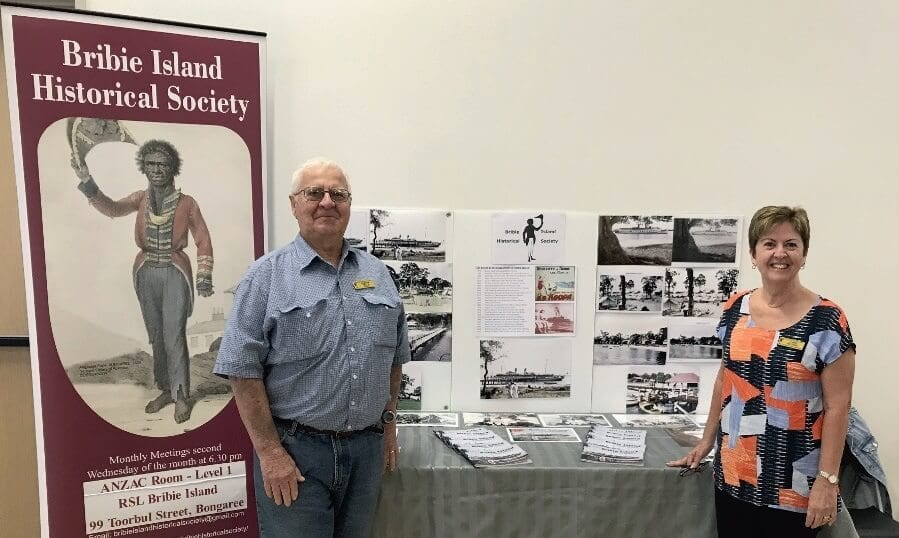
The Historical Society has monthly public meetings at the RSL Club on the second Wednesday of each month commencing at 6:30 pm. with interesting guest speakers on a wide range of topics, and you can see many more photos and articles on our Blog Site at http://bribieislandhistory.blogspot.com or contact us on [email protected]

Bribie Wildlife – LITTLE CORELLA (CACATUA SANGUINE)

0

Tags: Wildlife. Corella. Birds. Nature. Native. Parrots. Bribie Island. Brisbane. Queensland. Australian.

Every resident on Bribie Island I am sure would be familiar with the Little Corella which populates the Island in large noisy flocks. They are mainly to be found in residential neighbourhoods and at Bongaree around the jetty area is a favourite haunt. Little Corellas are largish, white Cockatoos about 36-39 cm in length and weighing 300-400 g. They have small crests, blue skin around their eyes and pink to red feathers around their bills. Their scientific name Cacatua sanguine which means blood-stained cockatoo.

Featured Image(above): Alcoholic Corella

This refers to these markings. Both male and female are similar in plumage and size. It’s not so long ago that there were no Little Corellas in coastal areas as they were confined to arid outback areas where the conditions were mainly boom and bust. In good seasons the Little Corellas thrived but drought spelled disaster for their population. Gradually during these dry periods, the Corellas began moving towards the coast.

During the Millennium drought of 1996 to mid-2010, there was a sizable migration towards the cities where our living conditions suit them very well and where there is an abundance of food and water. Now they are widespread throughout Australia. Increased agriculture also played a part in their movement towards the coast in the late nineties. Their main foods are grass seeds, grains and occasionally fruit.

I have watched Corellas at Bongaree attacking a patch of grass, pulling out the plants and eating small bulbs from the root system. One of their habits is to strip leaves from trees, sometimes defoliating an entire tree in a few days. This habit makes them unpopular with gardeners and horticulturists, while their tendency to destroy whole grain crops exasperates the farmers. So Little Corellas are unpopular with a fairly large range of people. This is a pity as they are so entertaining and are sometimes referred to as “The Court Jesters of the Bird World”.

I sometimes sit and watch them while they are frolicking on the ground or in trees performing the most extraordinary feats. I have seen them slippery-sliding down steep corrugated iron roofs and going back and repeating the act over and over. They sometimes hang upside down and swing from a tree branch and on the ground when they are feeding, they get up to all sorts of tricks and look as if they are really enjoying themselves. Of course, there are lots of squabbles as well which adds to the entertainment.

I don’t know if they breed on Bribie Island as I am yet to see them nesting. Little Corellas are thought to be monogamous. They make their nests in large almost vertical hollows in trees near water, in high river banks and sometimes in termite nests. Their nests are often used for many years. Clutches of 2-4 white eggs are laid on the wood chip lining of the nest and are incubated by both parents for about 24 days. Chicks are born completely naked and helpless. After a while, they develop a yellowish down before growing feathers. They fledge at about 6-8 weeks.

Corellas nest in large colonies so require many suitable hollows. This can lead to displacing other species that also require hollows which are fast dwindling with continued development. Other common names for Little Corellas are “Little Cockatoo” and “Blue-eyed Cockatoo”. “Birdirra” was the name given to them by an aboriginal tribe in Western Australia. They were kept as pets, cooked for food and the feathers were used in ceremonies.

There are two other species of Corella in Australia. Both are larger but we are unlikely to see them in the wild on Bribie Island unless there is a cage escapee. They are easy to tame and are sometimes kept as pets and can live up to 50-60 years in captivity. Their range is widening with more land clearing and more water outlets being made available. To date, Corellas have overcome most threats and are thriving with the help of the human species.

The Bribie Winelander – May 2019

Tags: Wine. Wineries. White. Red

When thinking about many of the great wines Australian winemakers have made over the last two hundred years we tend to think of companies such as Penfolds, Yalumba, Orlando, etc. but very little mention is made of some of the great wine writers who have affected our purchases of wines we may never otherwise have considered, in this article we shall look at how two such wine writers have made such an impact on the styles of wines we drink and their importance to our great industry.

Firstly a Pom Leonard Paul Evans AO OBE arrived on our shores in 1955 arriving from New Zealand where he had emigrated to from England in 1953. Len Evans was born in Felixstowe of Welsh parents in 1930 and soon developed a passion for Australian wines which at this time mainly consisted of sweet fortified wines and sweet white wines. He felt it was important that wine is demystified and the basic understanding of wines be available to everyone and not to the educated elite.

He became the first wine columnist in Australia and started with a column in The Australian Women’s Weekly discussing various wines, especially those that were reasonably priced and in a language that everyone understood, perhaps there are some writers today that could learn a lesson here when I read of some descriptions given to the characters that wines are supposed to have! In 1965 he was the founding director of The Australian Wine Bureau and in 1973 wrote the first major Encyclopedia of Australian wine.

wines wineries wine red white brisbane bribie island moreton bayHe was one of the first leaders to recognise the value of Australian table wines and their future rather than sweet fortified wines. He also championed the pleasure of drinking wine with food and co-authored a book with the famous cook Graham Kerr with whom they became known as The Galloping Gourmets a nickname they got from a 35-day worldwide trek visiting some of the finest restaurants around the world.

He started the winery in The Hunter Valley known as Rothbury Estate in 1969 until it was sold in 1996, I wonder what his feeling would be today when his brainchild now appears on wine lists as a house wine basically exclusive to restaurants only or some wine clubs. He was also involved with Petaluma from 1978 until 1992 and these wines still excel to this day, he was also chairman of Evans Family Wines from 1980 and Tower Estate from 1998 which is now owned by Evans close friends Matthew Cowley and Ken Cowley.

If you have ever attended a wine tasting only to be confronted by bottles of wines disguised in paper bags and you have to try to work out the variety, the age and where it comes from then blame Len Evans because he transformed blind tastings into a competition sport through his creating and developing the options game. For his dedication to the wine industry, he received many awards including the Epicurean Award for services to the Wine and Food Industry, The Charles Heidsieck Award for Wine Writing.

He was appointed an Officer of The Order of The British Empire in 1982 and an Officer of The Order of Australia in 1999, after a history of heart disease dating back to 1976 Len Evans died of a heart attack in 2006. In 2014 The Len Evans Memorial Lookout was unveiled in the heart of The Hunter Valley at Constable Estate. James Halliday has been described as a protégé of Len Evans and his successor as “Australia’s leading wine writer”, which is a long way from being a partner at leading law firm Clayton Utz where he worked from 1966 to 1988.

James Halliday was born in 1938 and is a wine writer, critic, winemaker, and senior competition judge. Since 1979 he has written and co-authored more than 40 books on wine and since 1986 has published an annual overview of Australian Wine vineyard by vineyard since 2000 this book has become known as the James Halliday Annual Wine Companion and is available from newsagents and bookshops.

He has received numerous awards for his writing including The Julia Child award for Best Wine, Spirits or Beer Book in 1994 and The Maurice O’Shea Award for Outstanding Contribution to The Australian wine industry in 1995. Mr. Halliday was made a Member of the Order of Australia (AM) in 2010 for his services to the industry as a winemaker, judge, author and promoter of Australian wines domestically and internationally. As a winemaker in 1985, he established The Brokenwood winery in The Hunter region in 1970 and The Coldstream Hills Winery in The Yarra Valley in 1985 which was acquired by Southcorp Wines (now Treasury Estate Wines) in 1996 where he took up the position of Group Winemaker, Regional Wineries.

He started judging in 1977 and has been accorded the role of Chairman of judges of The Victorian Wine Show, The Sydney International Winemakers Competition, The Adelaide Wine Show and National Wine Show in Canberra. You can join his wine club Hallidays Wine Companion and receive regular updates on what’s happening in the wine world and weekly wine suggestions, very worthwhile if you enjoy wines and want to learn from the best. Other notable Australian wine writers include Peter Bourne, Jeremy Oliver, Huon Hooke, Peter Forrestal, Tyson Stelzer (Champagnes and sparkling wines) and Andrew Cailard.

In America, wine drinkers live on every word written by Robert Parker but for a concise description of wines from around the world read the workings from Jancis Robinson. This week I see Dan Murphy’s had a one day special on Grange at $699, but closer to home Brancott Estate New Zealand Sauvignon Blanc is excellent buying at $7.99 and for Dans members Penley Estate Phoenix Cabernet Sauvignon $19.99 for 2 bottles.

Liquorland has the Linderman’s range at $5 which is half price and very acceptable in quality for everyday drinking, Devils Lair Range $10 and a William Hardy Langhorne Creek Shiraz at $10. Cheers, Philip Arlidge [email protected]

Annon
Wine is the answer, sorry what was the question?
Annon.
Tonight’s forecast. A 99% chance of wine.