Home Blog Page 76

Australian Native Birds – BROLGA – GRUS RIBICUNDA

0

Tags: Bribie Island. Native birds. Wildlife BROLGA – GRUS RIBICUNDA.

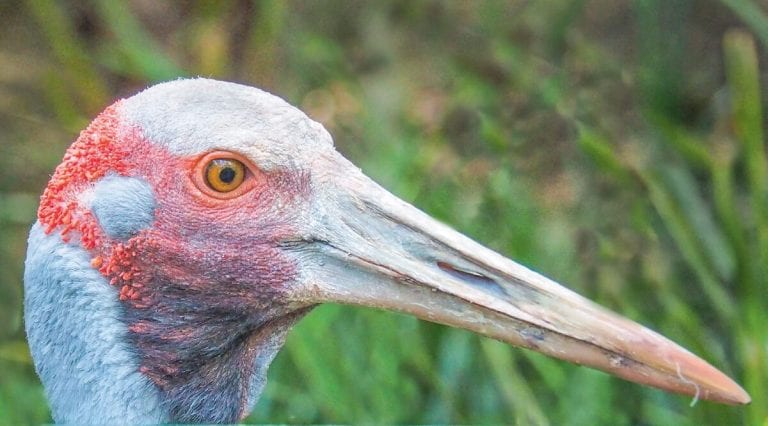
Now they are rarely seen but do pop up on the island from time to time. When there is water at Bishop’s Marsh on the road to Toorbul Brolgas are often seen in the water or feeding in the nearby grass. Brolgas are tall, graceful, grey cranes standing up to 1.5 m with a wingspan of around 2 m and are one of Australia’s largest flying birds. Their most noticeable feature is the red band across their featherless heads. They have dark gular pouches under their bill and yellow eyes.

Featured image(above): Note red band, dark gular pouch, and long strong bill.

Male and female are similar with the female smaller weighing about 6 kg while the male is around 7 kg. Neck and legs are Not long ago before the Banksia Beach development Brolgas were fairly common around that area on outstretched when in flight which is an awesome sight to witness. They are also very comfortable soaring high in the thermals. Lifespan is thought to be around seven years.

There are only two Crane species in Australia, the other being the Saris Cranes which look very much like Brolgas but have a much wider red band which extends down past their necks. Saris Cranes have been in Australia for thousands of years but were only discovered in the 1960s in the Northern regions of Australia. In John Gould’s book “Birds of Australia” which was published in 1865 The Brolga was referred to as the “Australian Crane”. Habitats can be very diverse from tropical, arid, pastoral, sometimes at river mouths and in mangroves but they are usually found somewhere near water.
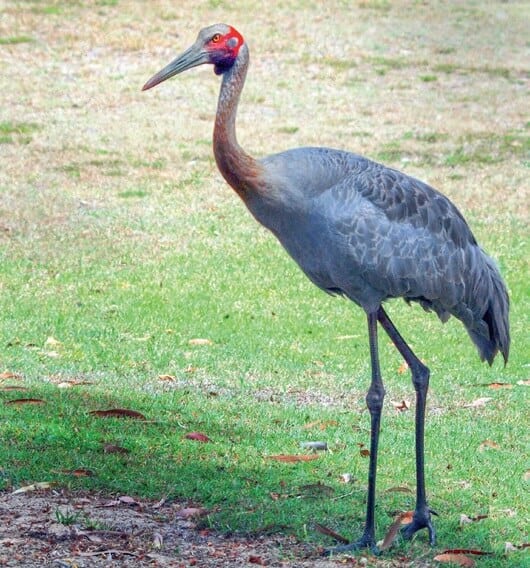
Bribie Island. Native birds. Wildlife BROLGA – GRUS RIBICUNDA.In the North of Australia, huge flocks of up to 20,000 birds will gather near water during the dry season and will fly off in pairs to nest when it rains. They are not migratory as such but will travel great distances to different places to be near water. Brolgas feed on bulbs and aquatic vegetation, molluscs, insects, amphibians, mice, and seeds including grain crops. Their bills are used to dig food from the ground.
Bribie Island. Native birds. Wildlife BROLGA – GRUS RIBICUNDA.

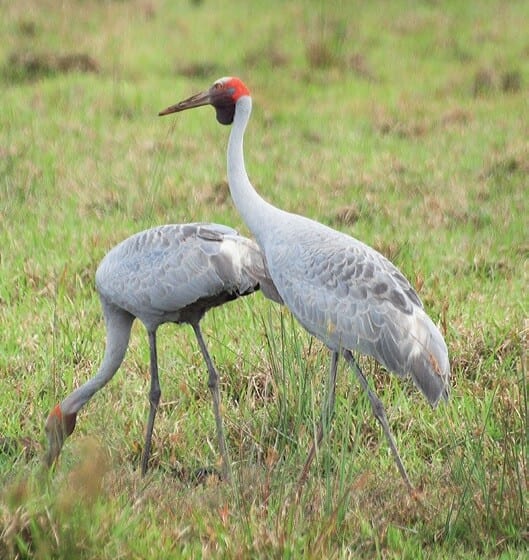
Brolga Bishops March

They feed in swamps and on grasslands and in cultivated areas. Not long ago they were shot or poisoned by some farmers because of the damage they caused to their crops. During breeding season pairs will put on a wonderful dancing display with heads high, trumpeting loudly and often jumping a metre into the air with wings outstretched. This dancing routine not only occurs during courting but can happen at any time of the year. It is not known why they dance but is an amazing sight to see. August to December is the usual breeding season and the pairs mate for life.

Sites are chosen with good views in all directions. Most nests are large mounds of grass and reeds and are up to 1.5 m in diameter and built in swamps in water to about 30cm deep. They are built from the bottom upward making sure that the eggs will be above water level. Other nests are built on land but close to water. Two white eggs 94x60mm with brownish markings is the usual clutch size.
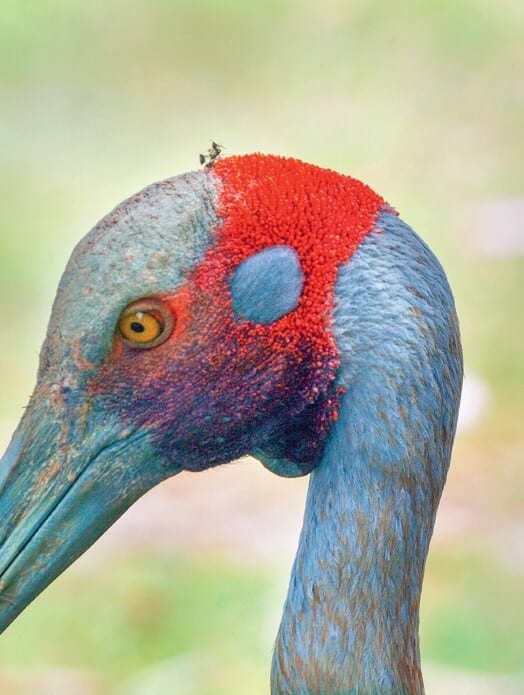
Bribie Island. Native birds. Wildlife BROLGA – GRUS RIBICUNDA.Eggs are incubated by both parents for about a month and both parents tend to the nestlings. Young chicks leave the nest and begin to feed themselves within 1-2 days and can fly off after about 14 weeks. In captivity, Brolgas and Saris Cranes have been known to interbreed but it is not known if this happens in the wild. There are several Aboriginal legends pertaining to Brolgas. One is that a young girl who loved to dance was turned into a Brolga. Many Aboriginal dances are based on the graceful portrayal of the Brolga’s dance movements.

The Gamilaraay Aboriginal word “Burralga” has been adapted to “Brolga” in the English form. Threats to Brolgas come in the form of increased agriculture, wetland drainage for agriculture and development, feral pigs in the north and foxes in the south. Sometimes their dance routine is used to scare off predators. Conservation status varies from state to state. Northern areas of Qld, NT, and WA are secure while in NSW, Vic and SA numbers are declining and they have become vulnerable. Since 1986 several large properties in NW New South Wales have been made safe havens for Brolgas. Their habitat is being looked after and feral animals removed to try and rejuvenate declining numbers.


Health and wellbeing – BRIBIE SIMPLY HEALTHY

0

Tags: Health and nutrition. What is Fulvic acid?. Benefits. Vitamins. Nutrients. Skin care.

NATURE’S MIRACLE MOLECULE – FULVIC ACID

Fulvic acid is created in extremely small amounts by millions of beneficial microbes that went through the compost procedure. It combines with a variety of minerals to create a complex molecule. It is often recognized as ‘nature’s miracle molecule’. The molecule of fulvic acid has 15 tetra trillion electrons, which can donate to the human cell to repair free radicals. Fulvic acid is to be said free radical quencher.

When you’re feeling tired you just feel run down, you just don’t have a lot of energy on a cellular level. Your cells aren’t carrying an electrical charge very well. When you can recharge the battery suddenly you have energy again. Things start functioning the way they should. The whole function here is enhancing the electrical capacity, converting free radicals back into nutrition.

Fulvic acid also acts as the delivery system. Fulvic acid is a micro Nano molecule, therefore it crosses all barriers in the body including brain barrier. Fulvic acid can carry nutrients to whatever tissue whatever cells wherever you need them to go. The interesting thing about fulvic acid is that it delivers the nutrients also it takes the waste such as heavy metals, pesticides or anything that the cell doesn’t want will bond and carry out of the system. Oxidative stress contributes to the development of illnesses including heart disease, cancer, autoimmune disorders, and aging.

what is fulvic-acid-skincare

To combat oxidative stress we need to balance free radicals and antioxidant defenses. Our bodies are comprised of billions of molecular cells held together by electronic bonds. Sometimes these molecules are held together by a weak bond and can split apart resulting in an unstable molecule with an unpaired electron. This molecule is known as a free radical. When it comes to cancer, the cancer cells have very low electrical activity. So if we can raise its electrical activity, the cancer cell will die off.

Therefore a high electrical activity kills cancer cells. Fulvic acid has the electrolyte capacity to raise the electrical activity in the cells and it destroys cancer cells. It also has the capacity of removing the waste delivering the nutrition. Fulvic acid is high in carbon, high in hydrogen and high in oxygen. We use fulvic acid for balancing our body’s composition cells. Why we haven’t heard about these wonderful natural treatments?

Pharmaceutical companies control many aspects of our lives such as media, education and the food industry. Like all other businesses, the pharmaceutical industry’s primary focus is on making money. If they cannot patent the treatment, they can’t maximize the profits. Therefore it’s not beneficial for them to promote any natural remedies. If they can sell patented medications to patients to keep them alive, not necessarily make them healthy, more people will buy their products therefore they proffer!

Sadly this is a business of medicine today. However now people are starting to wake up, and doing their own research and seeks natural ways of curing themselves rather than relying on harmful medication.

Please Note: Bribie Simply Healthy has newly stocked natural organic soaps please come have look. Search for … Bribie Simply Healthy

WHAT A LOAD OF RUBBISH!

0

Tags: Rotary Club of Bribie Island. National Clean up Day

It might surprise some of us, but the average Australian produces 1.5 tonnes of waste each and every year. While some waste is unavoidable, much household waste is quite avoidable. Good examples are plastic packaging and food waste. Many people also “consciously or unconsciously” drop litter around (paper, wrappings, etc).

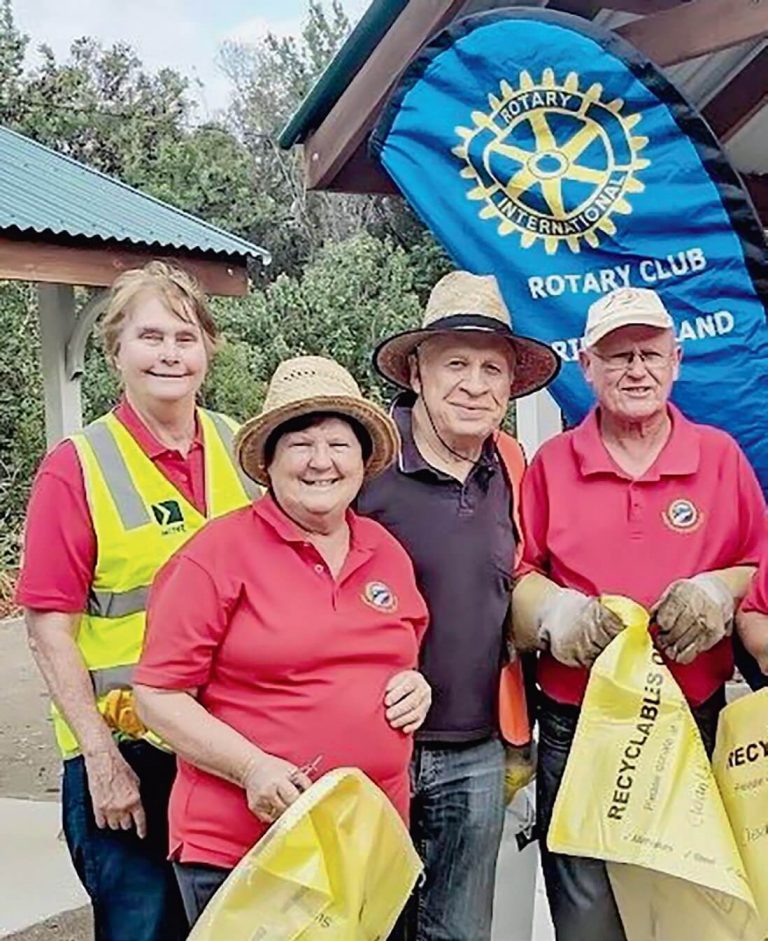
Featured image(above): Ready to start

The rubbish we create through mass consumption is choking our streets, beaches, parks, bushland, and waterways. Along the way, it is also killing the beauty of our natural world – including our animals and sea creatures. It has been 30 years since the very first Clean Up Sydney Harbour event was started by Ian Kiernan, AO in 1989. Today, it is a National event and community groups, families and friends join together to “clean up” our communities. On Sunday 3 March, members of the Rotary Club of Bribie Island joined Australians around the country to Clean up Australia.

Bribie Rotary is always involved in National Clean up Day on the Island. By spending a few hours this way, we not only enjoy the exercise and comradeship of doing something useful, but we also realise how easy it is to clean up and preserve the beautiful environment we have on Bribie. The public spirit of Rotarians was at the fore again, and it was wonderful just having the company of this very special group and simply getting involved in an action that makes our world a better place.

Rotary Club of Bribie Island. National Clean up Day-1

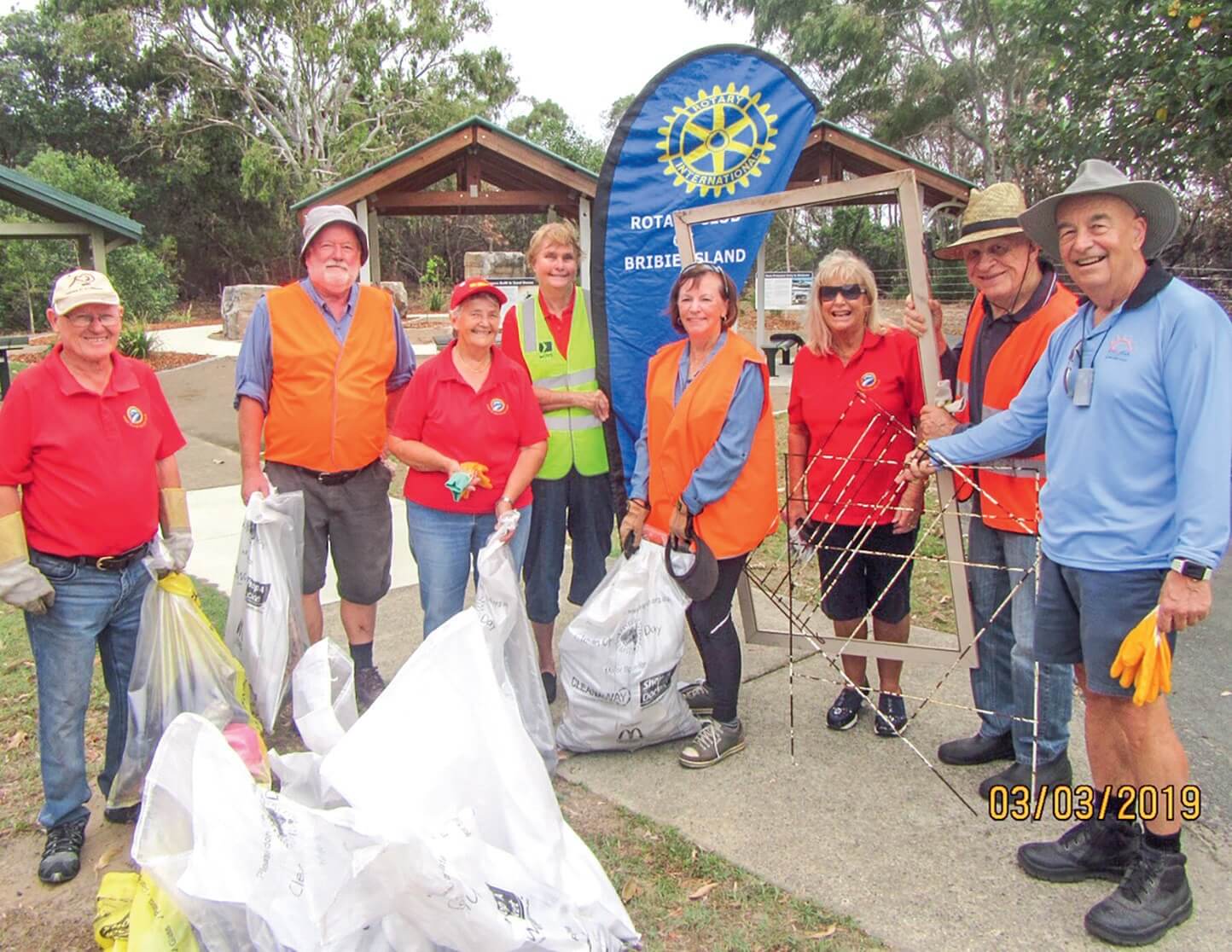
Club members with the collected rubbish

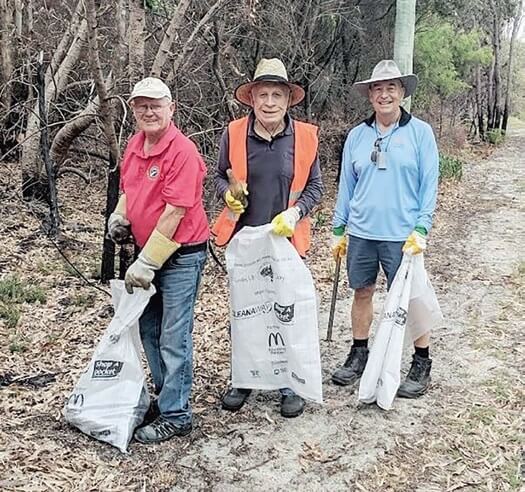
It was like a treasure hunt really – walking through the bush and dunes around Rotary Park in Woorim. We found car parts, bottles, cans, polystyrene drink containers, bottle tops, cigarette butts and a couple of caps. Of course, we also found the fast food wrappings and cups from the usual suspects – just discarded where their owners had sat to eat and drink their contents. People are too lazy to carry them to the bin – perhaps 100 metres away. Just thrown, or dropped and forgotten – to blow into the bush or surf.

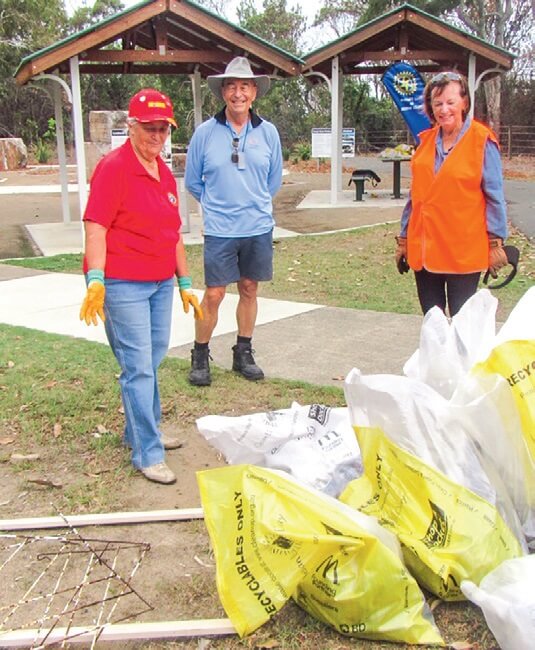
Last year the prize for the most unusual item went to John Oxenford and Ron Ward who dragged a mattress from the bush. This year I claimed the prize when I found a window frame and clothesline deep in the bush – I managed to drag them to the road and then, a fellow member, Rick Thornton helped me get it back to the collection point. We might well ask why anyone with any public spirit or pride would dispose of items like this – just throw them into the bush!

Perhaps if everyone took responsibility for their own rubbish, and “put it in the bin” then days like this would not be necessary. What a thought – what a resolution for us all!

My Police – Traffic operation conducted in Bribie Island

Police from Bribie Island and the Road Policing Unit have conducted Operation Quid over the past  24 hours at First Avenue, Bongaree and  Bribie Island Road, Ningi.

They produced some interesting results which has shown decreasing numbers of drink drivers.

Officers conducted 511 roadside breath tests, resulting in no positive test results, however, six positive roadside drug tests were detected with offenders aged 25 to 49 years old.

15 traffic infringement notices were issued including; two defect notices and one unregistered vehicle notice. One unlicensed driver was also detected and issued with an infringement notice.

Officers will continue to monitor road users as we come into the Easter period.

If you have information for police, contact Policelink on 131 444 or provide information using the online form 24hrs per day.

You can report information about crime anonymously to Crime Stoppers, a registered charity and community volunteer organisation, by calling 1800 333 000 or via crimestoppersqld.com.au 24hrs per day.

Bribie Island sport – LITTLE ATHLETICS STATE CHAMPIONSHIPS

0

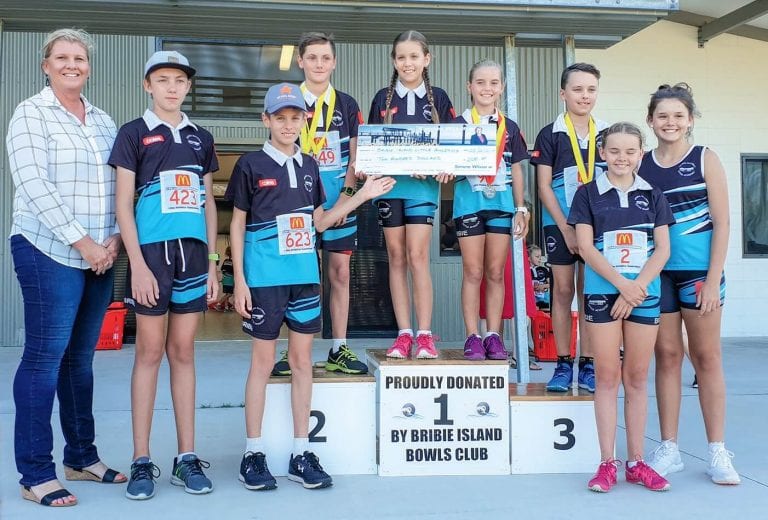
Ten Bribie District Little Athletics kids will be representing their Centre to a whole new level next weekend when they make the trek north for the McDonalds Little Athletics State Championships. This Year held in Townsville. Fourteen of our athletes made it to States though some, unfortunately, can’t make it.

These athletes will compete in many sprint races, Sprint Hurdles, Long Distance Running, Race Walking, Discus, Long Jump, and High Jump. To make it to this level each of these athletes had to finish in the top four places at Regional Championships and many of the posted Personal Bests in doing so.

Even with the terrible effects that Cyclone Oma had on Townsville and the track being underwater at one stage, the city was keen for the event to go on. Our families are looking forward to the Townsville visit to support their city and our athletes. Bribie District Little Athletics has come along way in two short years, the Centre was formed on a whim, with no funding on equipment to go along with it.

Through the generosity of our Community organisations, Businesses, and individuals we now have the equipment that we can call our own, that can cater to the 165 athletes that signed on this year. Next year however we are faced with another challenge. Little Athletic Australia passed a rule a few years back that collapsible hurdles will be made mandatory from the 2019/20 season. This means that Bribie District Little Athletes must come up with 80 new hurdles for next season.

We have been lucky enough to acquire 10 hurdles through a McDonalds Australia Grant. Many more are however needed, and we are asking for help from our local community again. Each hurdle is $110, and if any businesses are interested in sponsoring one or many, your business name and phone number will be printed on it.

Any assistance we can get is greatly appreciated by us and the children we provide these opportunities too. If you have any questions, please contact us at [email protected]

Cheers, Team Bribie!

DEMENTIA TRAINING CRITICAL FOR CARE WORKERS

Tags: Dementia Australia.

Around 440,000 Australians live with dementia and almost 1.5 million Australians are involved in their care. However, dementia training is currently not mandatory for aged care and home care workers. Dementia Australia chief executive Maree McCabe recently told the Royal Commission into Aged Care Quality that about 70 percent of the aged care workforce did not receive any training about dementia as part of their training.

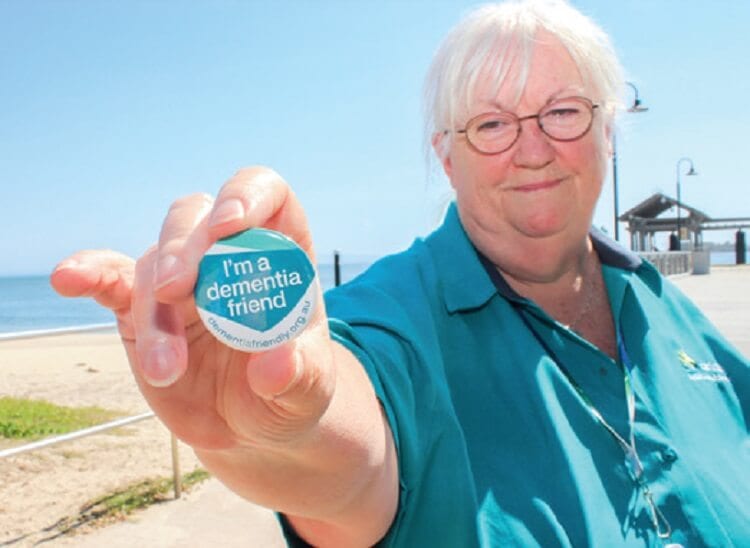
Featured image(above): Julie Harrison from Carinity Home Care Bribie Island

The team from Carinity Home Care Bribie Island is passionate about providing specialised quality service to older residents experiencing dementia, including conditions such as Alzheimer’s. All of Carinity Home Care Bribie Island’s lifestyle carers are completing dementia-specific training through Dementia Australia and the University of Tasmania. Carinity Home Care Bribie Island Lifestyle Coordinator Julie Harrison says it is important that her team members be skilled in understanding the complexities of dementia. “Dementia is one of the most prevalent conditions to affect the older members of the community.

Therefore, it is important that our care staff are supported in accessing knowledge in understanding dementia and learning skills how to best communicate and encourage persons affected by this disease,” Julie says. “This Carinity team have taken advantage of every opportunity to complete courses in dementia care, whether online, at workshops or at university.

“Knowing how to communicate effectively with persons affected by dementia means Carinity carers can support our clients in not just the activities of daily living but also participating in activities that bring enjoyment to their lives.” The Carinity Home Care Bribie Island team, who all live on Bribie Island or in Caboolture, also support the local Dementia Support Group and the Dementia Friendly Communities initiative.

Julie says Carinity Home Care will soon begin hosting a Dementia Support Group in Caboolture which will meet regularly at community hubs and in dementia-friendly cafés. Carinity Home Care offers a full range of service to support seniors to remain living independently at home including household support, nursing care, personal grooming, and getting them out and about to the shops and with friends in their local community.

For more on Carinity Home Care Bribie Island visit CarinityHomeCare.org.au or phone 0490 441 184.

HELPING ANIMALS IN NEED

Tags: Bribie Island volunteers. Pet care. Adoption. Bribie Island

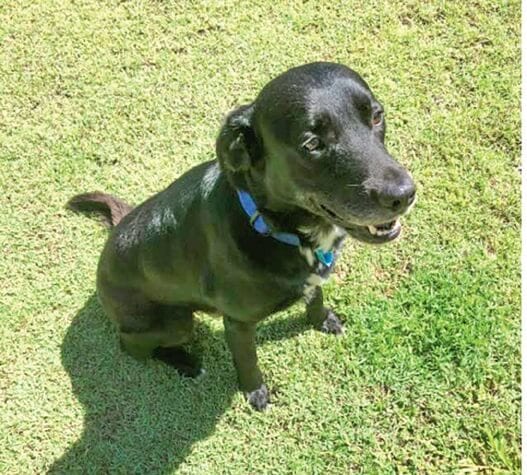
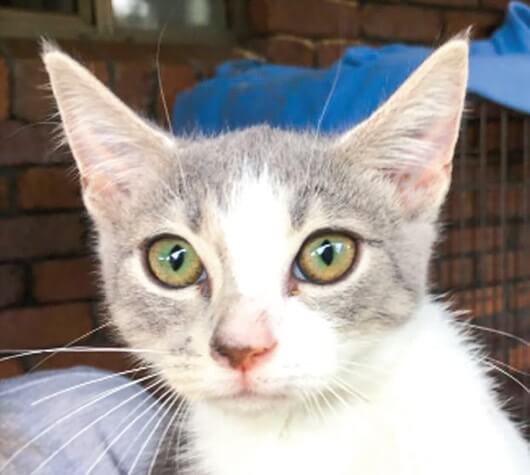
According to Graeme Goodall, Operations Manager of Caboolture and District Animal Welfare Inc., it is a volunteer organisation that has been established for almost 30 years, set up for the purpose of re-homing surrendered cats and dogs in the Bribie and Caboolture area. “To help cover costs we operate two pre-loved shops situated at the Woolworths complex in Bongaree and the other at 3 King St Caboolture,” said Graeme. “At any one time, we have a number of cats, kittens, puppies, and dogs placed with our foster carers waiting to be re-homed.

All our adopted animals come vet checked, up to date vaccinations, micro chipped and de-sexed,” he said. Graeme says your potential new pet can be viewed at www.petrescue.com.au. or to check out the adoption photos at either shop. “We are also always looking for people who have a passion for animals to join our foster caring team. All costs (vet, food, etc) are covered whilst in care,” he said.

If you wish to come on board as a carer or are interested in re-homing one of their pets you can call their Animal Co-Ordinator on 0455 778 166 or the Operations Manager on 0477 581 286.

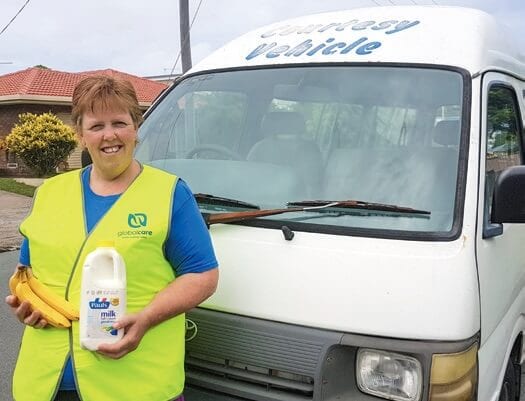
GLOBAL CARE SUPPORTS LOCAL COMMUNITY

Tags: Global Care. Charity. Not for profit. Bribie Island. Moreton Bay. Brisbane.

According to Clara Thompson, PA to Senior Pastors of Awesome Church Bribie Island, Global Care Bribie Island is here to stay. “Global Care Bribie Island is a branch of Global Care Australia which is the Social Justice and Disaster Response arm of International Network of Churches: INC. Global Care Bribie Island commenced operations in 2011, the year of the Brisbane Floods,” Clara told The Bribie Islander recently.

“Teams of volunteers from Bribie attended the Lockyer Valley and inner city helping to clean up flooded areas. Since then we have become second responders to Bribie itself during emergency flooding and provide support backup to the SES and Fire Services. Also, we have supplied emergency supplies to North Qld following cyclonic damage and also flood-stricken Logan in 2017,” she said.

So you can see the organisation have already been heavily involved in the wider community. “Our Primary Goal is to continue to support individuals, families, and communities to thrive and assist in growing our island’s social, spiritual and economic health. Our shop is open from 11 am to 12.30pm or until sold out on Wednesdays. Eligible customers must have proof of low income.

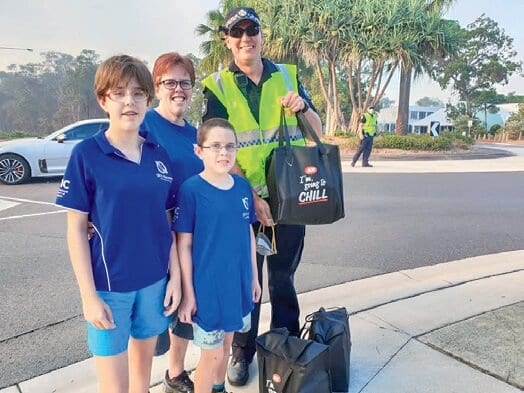
The shop is signposted and is located in Toorbul Lane behind the Antique shop,” said Clara. She said a major impact within the community is via the school breakfasts they provide. “During the 2017 year, we served 27,200 nutritional breakfasts at the 3 local schools. We are enduring – this is our 7th year. We have seen our children graduate primary to senior school. Watched them grow.

global care bribie island australia-2

Rebecca and Van 300(above)

Recent Bushfire feeding the emergency services HR(below)

global care bribie island australia-1A small community group like ours has the heart to beat in sync with its growing population and to monitor and guard the weak against social and economic predators,” she said. Clara says that last year they provided 1,178 food parcels, supplied 305 Christmas hampers and gifts, visited Aged Care residences 600 occasions and raised and donated $10,028.80 to local, national and international causes.

“Last year Global Care Bribie distributed gifts to local community agencies, emergency service personnel and members of the general public in appreciation of their contribution to the local community during National Others Week – which is about being kind and generous to people in our community,” she said. “Other organisations have tried and failed. Global Care Bribie Island is here to stay.

Such is our mandated commitment. Ever ready. Ever present. We are always looking for volunteers to help in the schools – must have a blue card or be able to get one.” If you are interested in volunteering to contact Clara Thompson on 3408 0429 or email [email protected]

They can also be found on Facebook here: https://www.facebook.com/Global-Care-Bribie-Island-452294868230163/

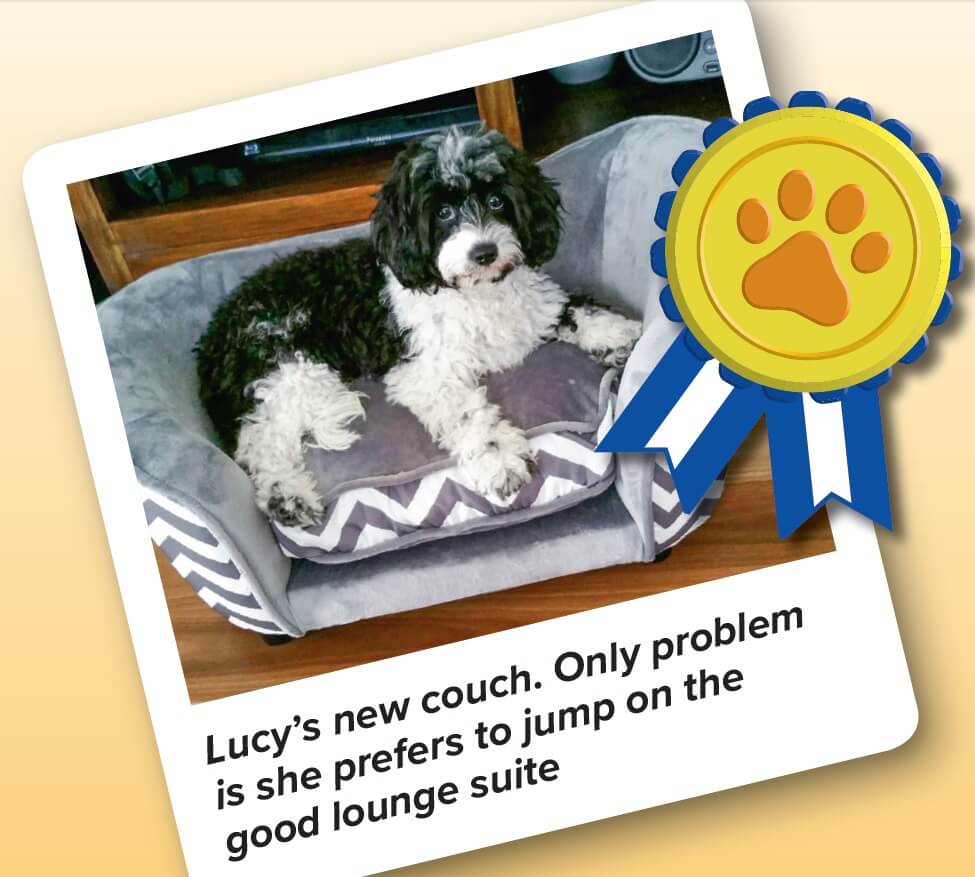
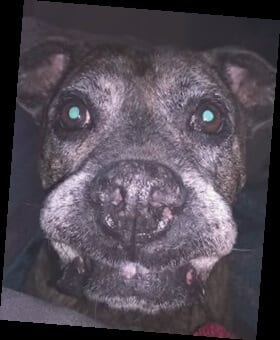
Funny pet photos and pictures March 2019

SHARE YOUR FUNNY PET PICS WITH THE MINI BRIBIE ISLANDER…
SEND TO: [email protected]

Visit our Facebook page: https://www.facebook.com/thebribieislander/ and send us your pics as well!

funny pet pics and images photos

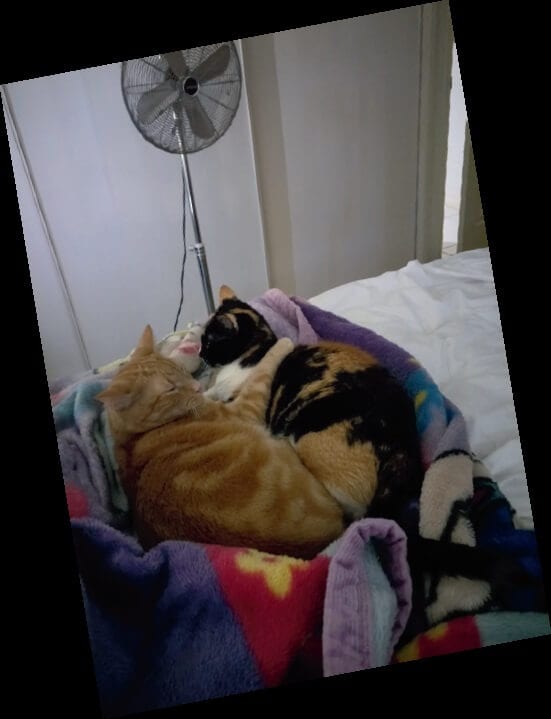
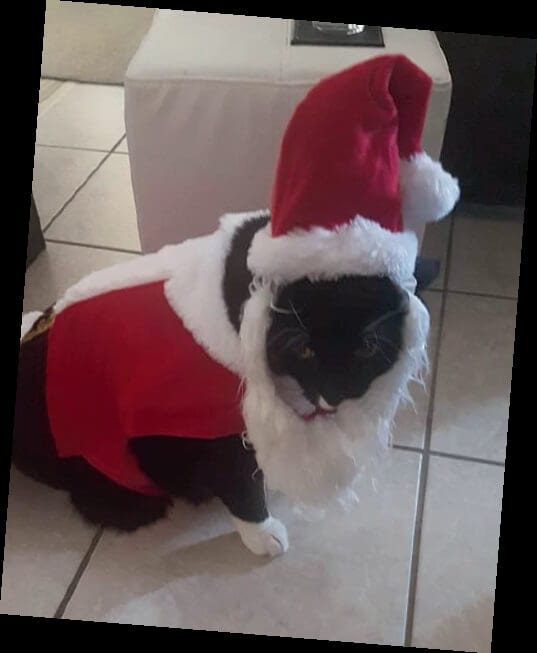
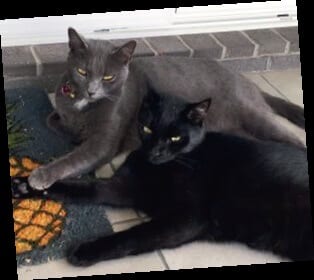
This month’s winner

The Bribie Winelander March 2019

Tags: Wine tips and advice. Australian wineries. Red wine. White wine.

We are just about to get the wine show circuit underway for another year and how influenced are you to buy a bottle of wine by the awards the wine has won, which are generally shown on the label as medals in gold, silver or bronze?

As I have mentioned before it is unlikely the wine in that bottle is exactly the same as the one placed in front of the judges at any show, especially a red wine, if it has been sent from a large producer who has selected the wine from maybe one of dozens of barrels and that one barrel is deemed to have wine in it better than all the rest, when at the end of the day all the barrels are mixed together before bottling and that’s what you buy. One day I thought how interesting it would be to get two teams together, one a standard wine judging team comprising of winemakers, wine writers and people who have such knowledge of wines they have all kinds of degrees attained by passing exams.

The second team comprises of a group of everyday wine drinkers like you and me who just buy whatever is on the shelf at a price which is affordable and a variety which we enjoy, then see what the normal public would award the wines compared to the so-called experts, I can imagine a lot of interesting comparisons. Firstly we need to know how a wine judging event takes place, wine shows happen all over the world and in Australia all over the country, some senior shows sample wines submitted from wineries from every region others just concentrate on local wines.

Senior wine shows are usually held in capital cities such as Brisbane, Adelaide, Canberra, Melbourne, Perth and Sydney and often have the prefix “royal’ in front such as The Perth Royal Wine Show and are often held in conjunction with the annual country meets city show. However if you see a round blue sticker with the words Blue Gold on the label it is from The Sydney Wine Show where the wines submitted are actually tasted in groups with certain types of food, a single blue gold is important but a double blue gold is equivalent to a trophy and this is what the winemakers try to achieve.

Vineyards. Wineries. Wines. Wine. Australian. QueenslandWe had the pleasure some years ago to be invited to the lunch in Sydney after the awards were made where we could taste all the single blue gold winners then sat down to lunch where the food presented was the same as the judging alongside the double blue gold medal-winning wines and what an eye opener this proved to be. At the other major shows the wines are divided into a number of sections, dry whites, dry reds, the age of the wines, fortified wines, sugar levels, etc.
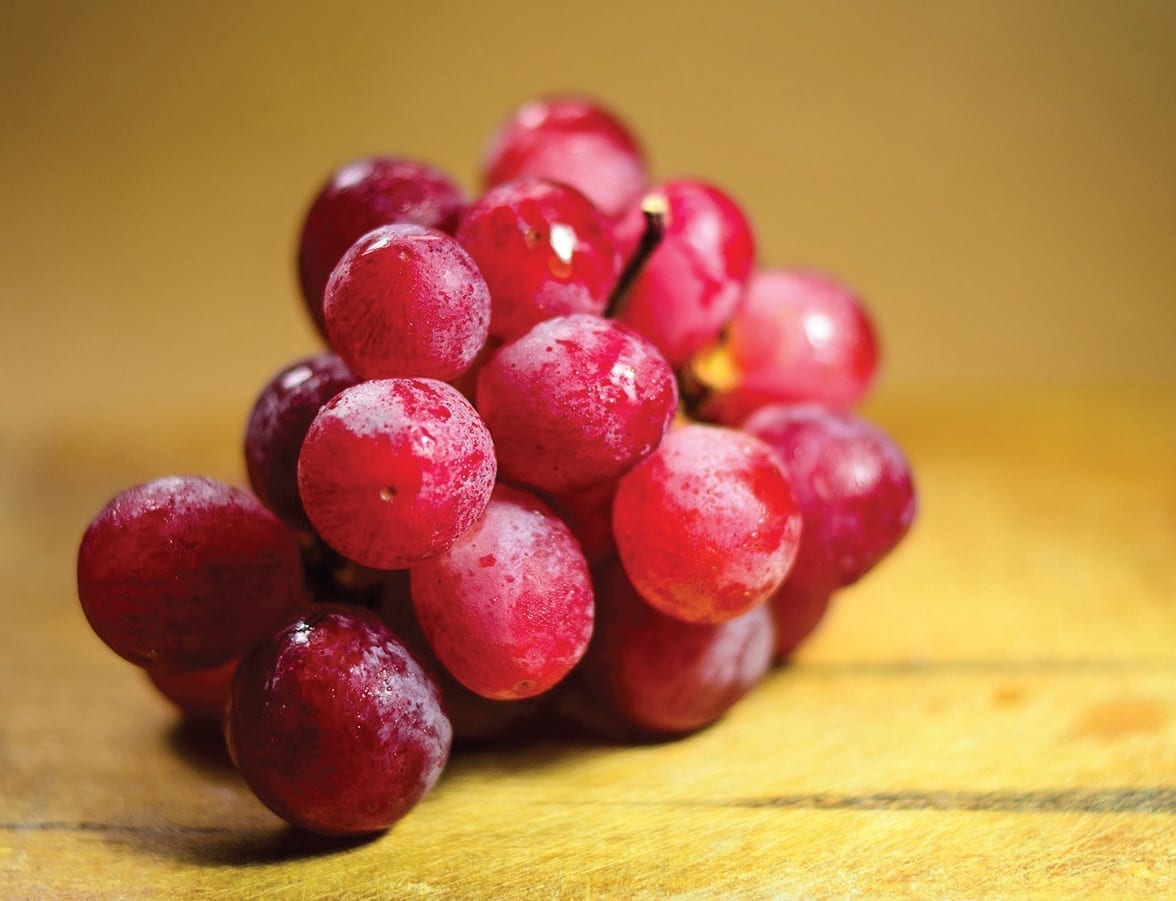
So when submitting the wines the producers have to ensure they pick the right segment or the wine is rejected. The wines that are submitted are unlabelled with just a show sticker on the bottle and the segment the wine has been submitted into so the judge has no idea of its origin, producer or winemaker and the number of wines submitted can run into the thousands and at Perth, for example, there are over twenty trophy winning categories so there is a lot of sniffing, tasting and spitting done over the several days of competition.

Around the globe, there are two point scoring systems one marked out of twenty points, the other out of a hundred points but at the end of the day, it is about bronze, silver, gold medals and a trophy, or good, outstanding and classic.

In the 20 point system 3 points are awarded for colour, if the wine isn’t clear or vibrant it won’t go any further, 7 points for the smell, any nasties here and again the wine will be rejected and finally ten points for taste, medals that are awarded are Bronze 15.5/16.9 points, Silver 17/18.4 points and gold 18.5 to 20 points, in theory every wine presented could win a gold medal, although this would never happen, but there can only be one trophy winner in each category.

In the hundred points system 85-89 points the wine is deemed very good, 90-94 points outstanding and 95- 100 a classic wine, Robert Parker, for example, the top American Wine Critic, has awarded several wines 100 points over the years and the wine drinking public go crazy and usually buy every bottle produced regardless of price and in this system there can be more than one 100 point wine.

Italian wines. Red. White. Wine. If you are a buyer who likes to purchase wines with awards on the labels and get the real medal winning wine then if you look for a smaller producer and the chances are they have taken an unlabelled bottle out of stock before putting a show label on or in my case once I received a phone call from a supplier to soak the original label off and put the show label on then take the wine down to the show grounds and leave it there, and yes it won a gold medal!
If you are a cricket fan and buy through “Cellarmasters” keep an eye out for a new range labeled Botham, it is the latest offering from a long line of celebrities such as golfers, actors and now cricketers who like to put their name on a wine label to sell their product. Retired cricketer Sir Ian “Beefy” Botham selected a range of Australian Wines, actually blended the wines himself and wanted to create a collection of wines accessible to all wine drinkers so has come up with a three-tier range.

The first tier is a Shiraz and Chardonnay selling for around $11, the second tier at around $18 comprises of a Margaret River Chardonnay, a Barossa Shiraz and a Coonawarra Cabernet Sauvignon. The third tier is a premium selection at around $100 and is a single vineyard range with a Barossa Shiraz and an Adelaide Hills Chardonnay and when asked which was his favourite replied that “it’s very difficult to pick one as there’s not a wine that I wouldn’t serve on my table”, howzat?

No doubt the Woolworths chain will eventually release the wines through their other stores BWS and Dan Murphy’s if there is sufficient interest. Looking for a good red wine at the right price then try the 2017 Crowded Hour McLaren Vale Shiraz at around $13 from Liquorland, the colour is good and deep, the bouquet spicy, meaty, chocolaty and is quite approachable and drinking very well now. Cheers, Philip Arlidge [email protected]

BUSY FINGERS HELPING HAND

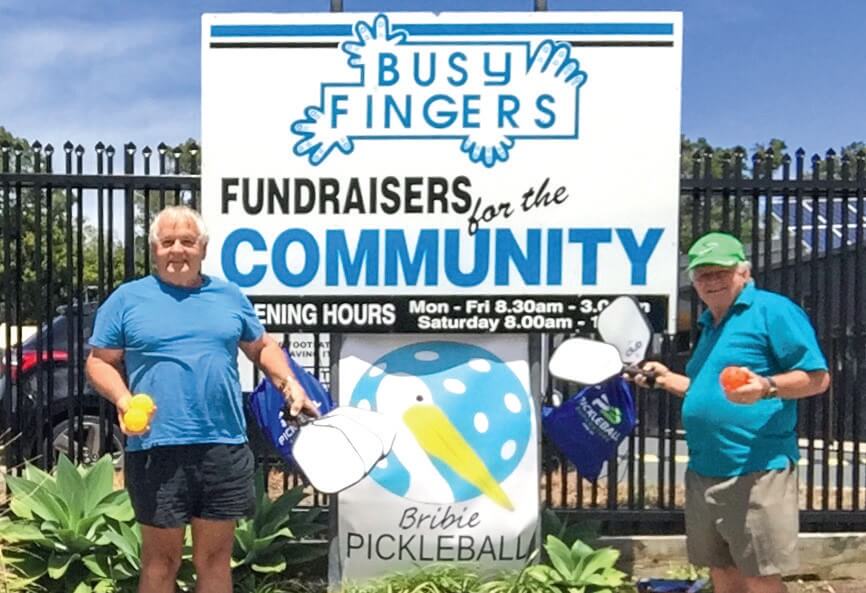
Busy Fingers Fundraising is well known on Bribie Island for its generous support of local clubs and charities. One of the latest recipients of Busy Fingers aid is the Bribie Pickleball Club. President Harry Fielding and Vice President in charge of development, Peter Fielding, wish to express their deep appreciation that their grant application for assistance to purchase basic equipment such as nets, balls, and paddles (bats) was recently granted in full by the Busy Fingers fundraising committee.

The Bribie Pickleball Club is a fledgling organization established in October last year. With Moreton Bay Council support, it uses temporary courts behind the U3A Recreation Hall in First Avenue, while more permanent possibilities are being explored. Up until the Busy Fingers grant was obtained, the Bribie club has been using borrowed gear and the members are thrilled to be able to now use their own equipment.

Pickleball is one of the fastest growing sports in the world and the sport in Australia is also growing very quickly. In just 4 months, pickleball on Bribie Island has attracted more than 80 players who participate in both club activities and games run through the Bribie Island U3A. Whilst it attracts a lot of senior players (because of the moderate exercise and well-documented health benefits), it is a game suited to all ages. The inaugural national championships were held in Sydney last year and participants were from 15 through 76 years old.

Peter and Harry Fielding with a small sample of the gear provided by Busy Fingers

The second national championships will be held in Noosa in October this year. Pickleball was invented in the USA in the mid-1960s and now has over 3 million players in that country alone. It is played both indoor and outdoor on a badminton-size court with the net just a fraction lower than a tennis net. A plastic ball, similar to a whiffle ball is used. The game is named after Pickles, a dog owned by the family who invented the game. Apparently, Pickles used to enjoy the game as much as the humans who were playing and was a great retriever of wayward balls!

Professional tennis players have turned to pickleball and Pat Cash recently gave the game a ringing endorsement. It is an easy and enjoyable game to learn, but a word of caution: you may become addicted! If you want to try your hand at playing or just come along to watch, contact Harry Fielding (0409131395) or Peter Fielding (0401780928) or email [email protected] for details of playing times and venues. You can also just google “pickleball” to see videos of the game in action.

TURTLE HATCHLINGS DO THE BRIBIE BEACH HUSTLE

0

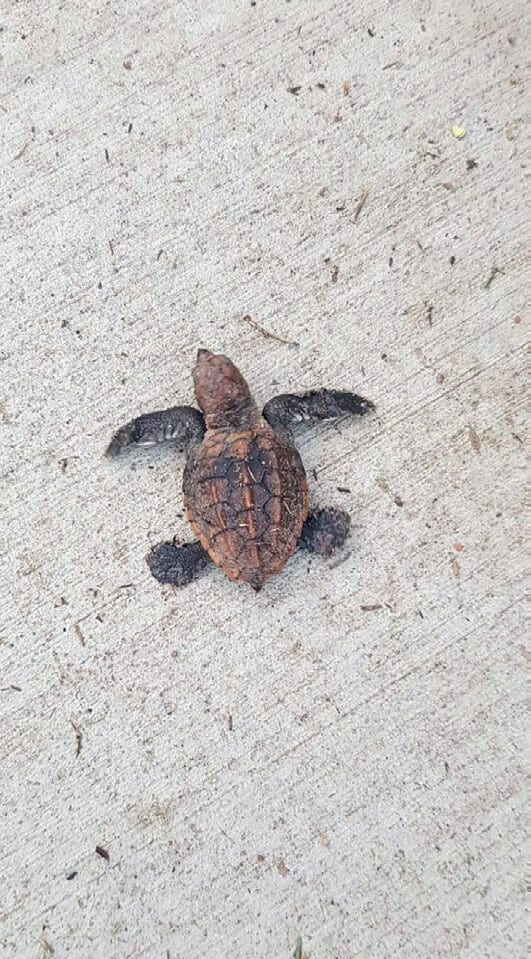
Diane Oxenford, who is among many other things, a passionate advocate and champion of all things turtles, kindly shared these photos with The Bribie Islander. She says she has been kept really busy now that Bribie is in the middle of the turtle nesting and now hatching season. “We just had a clutch run last night.

So was on the beach digging and counting the nest at 5.00 the next morning. The mother loggerhead laid (4th January 2019) a total of 149 eggs and 147 hatched successfully (98.66% success rate). That is an amazing success rate – which Bribie is noted for,” Diane said. “Ït’s the reason we lobby so hard to protect the health and integrity of our dunes (not just to protect the real estate!).

And…… the nest was in the middle of an access path to the beach….. It would have been trampled over. Luckily it is not one of the most popular access routes. Shows how resilient this species can be and probably why marine turtles survived the dinosaur era. I often wonder if they will survive our era.”

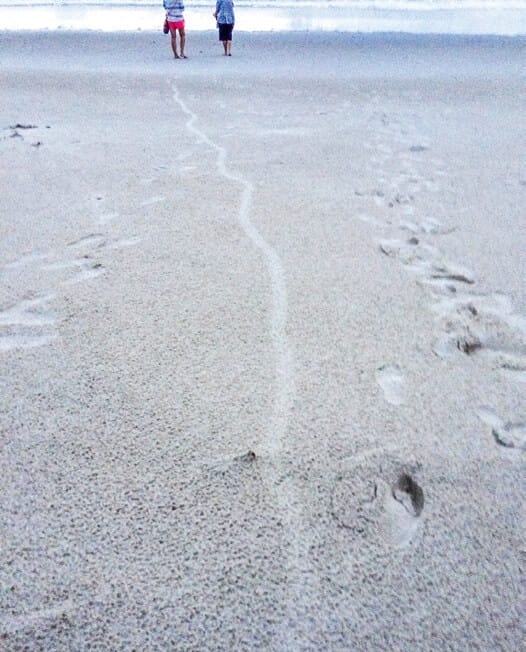
Diane says they found one sleepy hatchling still in the nest. Here are photos of him and his tracks heading towards the sea after they released him.

THE CLIMATE CHANGE DEBATE

Tags: Climate change. Weather.

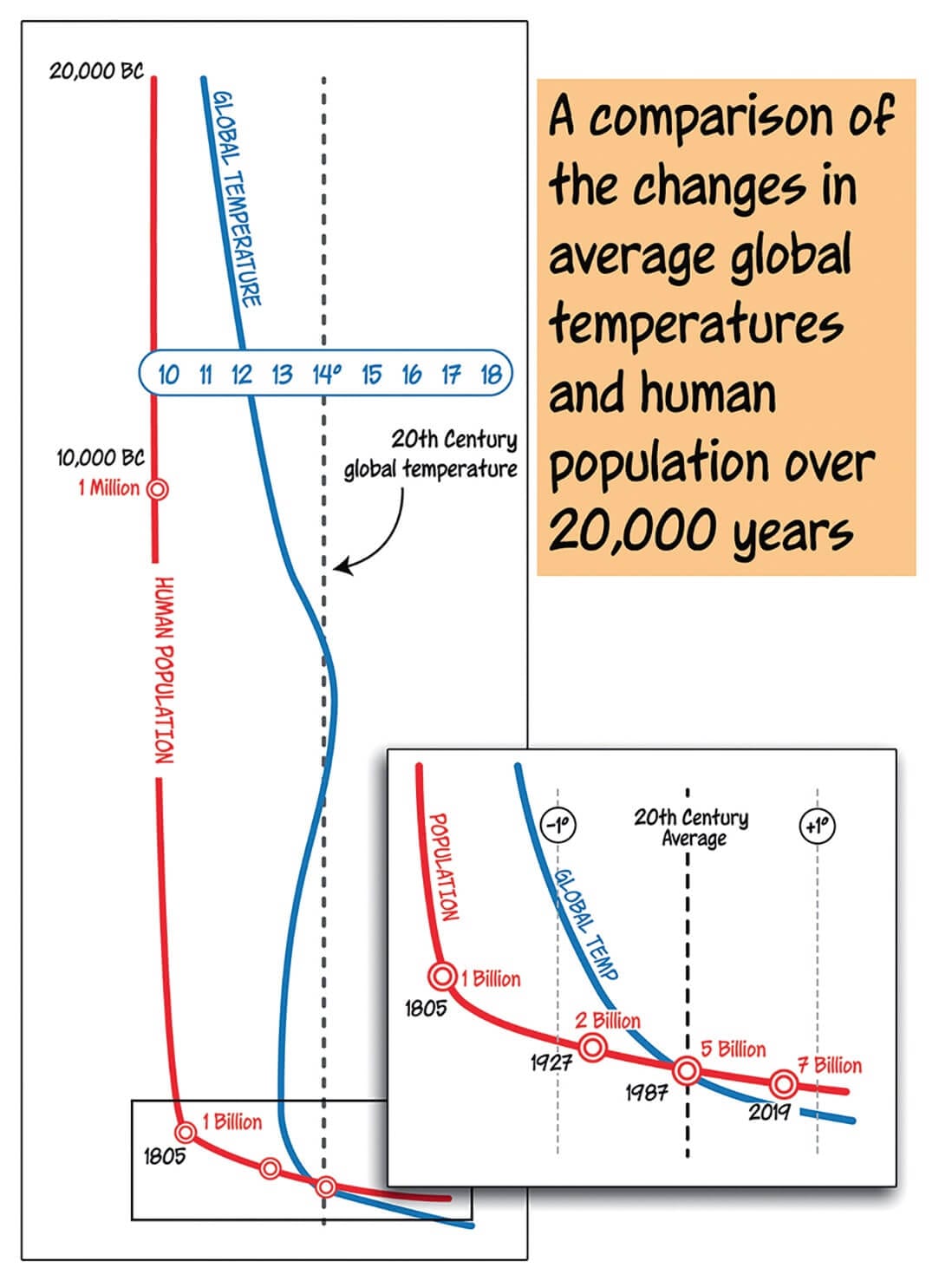
A letter in The Bribie Islander regarding carbon dioxide (CO2) and climate change prompted me to do a little research of my own on the topic. Natural climate changes are, on a human scale, pretty slow. To understand the scale, we need a reference point, so let’s take the “normal climate” or “global temperature” to be what most of us grew up with – the world’s climate in the 20th Century.

Featured image(above): Screenshot from NASA A Year in the Life of Earth’s CO2

This equates to a global average temperature of about 14°C. In 20,000 BC, there were only about half a million humans in the world, and the global temperature was a full 4° cooler than our 20th Century average – it was a major Ice Age. Over a period of some 16,000 years, by 4,000 BC, the Earth’s temperature rose to about .5° above our 20th Century norm. By about 1300 BC, the global average was around 14° and remained fairly constant until about 1200 AD – so it was steady for about 2,500 years.

Then it fell by just half a degree Celsius, and gave us the era known as “The Little Ice Age”. So, a fall of just .5° in the global temperature resulted in the European rivers freezing over in winter, increased glaciation, and major crop failures and famine. But that fall occurred over 400 years, not the few decades we are witnessing with the current warming cycle. The global average temperature stayed at 13.5 until the early 1800s – that’s when humans come into calculations.

It took from 20,000 BC to 1805 AD for the human population to reach 1 billion. Then the Industrial Revolution started, ushering in the era of giant-scale use of coal and oil, and the pumping of significant amounts of carbon into our atmosphere. Look up a YouTube video from NASA called “A Year in the Life of Earth’s CO2”. It shows that 90% of the world’s atmospheric CO2 is in the northern half of the globe.

Is it a coincidence that the Northern Hemisphere’s share of the human population is also about 90%? No, of course not. After taking 20,000 years to reach 1 billion people, it took just 120 years to add another billion. By 1987 we had 5 billion (3 billion extra in 60 years!) and the global temperature was at the overall 20th Century average. We are now at 7.7 billion, and the global temperature is up .6°.

weather climate changeWhen scientists talk about a further .4° increase in global temperatures, it’s not the local weather forecast – it’s a GLOBAL change, covering not just Australia, but the Arctic, Antarctic, Himalayas and the Russian tundras – so .4° is of major significance. The last five years have been the world’s hottest on record, and there’s more to come. Meanwhile, warming over the Arctic has pushed super-cold air south, leading to record-breaking winters in Europe and North America – it’s strange to see warming leading to freezing, but when long established conditions change over decades instead of thousands of years, the whole system is thrown violently out of kilter, like gently turning wind-chimes suddenly getting hit by a basketball (or Earth by a meteor, as the dinosaurs discovered).

Some people like to say that the climate has always changed and always will, implying that humans can have no effect and no control. But it’s flawed logic to say that just because something has happened naturally, that humans can’t cause it too. Species have always gone extinct naturally, but that doesn’t mean that humans haven’t caused extinctions – just ask the next Dodo, Moa or Tasmanian Tiger you see in your travels. The evidence is out there – global warming is happening, climate change is real, and the rapid increase in the human generation of the greenhouse gas CO2 is the cause.