2. Prep a piece of baking paper by placing a dinner plate on it and tracing around it. Flip the paper over. Put it on a baking tray.
3. Whip the egg whites in an electric mixer until thick.
4. Add the sugar a tablespoon at a time, ensuring to whip it in completely before adding the next.
5. Add the cornflour, vinegar, and vanilla and continue to whip for a further 5 minutes.
6. At this stage the mixture should hold stiff peaks and be able to be turned upside in the bowl, if it can’t, whip it for a few minutes more.
7. Fill in the centre of the circle on the baking paper then move to the outer edges, trying to create a crown. Lift up the peaks with a fork to make them high.
8. Bake at 120 degrees for 1 hour then allow to cool in the oven with the door ajar for another hour.
The live music scene on Bribie Island has been invigorated with a shot of Celtic music with the CELTIC MINSTRELS who have quickly developed a strong following as they offer something “different” to the live music scene on Bribie.
Like a single malt whiskey to a Scot or Irishman, music lovers are now being exposed to the smooth style of the Celtic Minstrel who put the Tart in Tartan and the Fling in the Highlands. The Celtic Minstrels were born following members of a local Celtic Fiddle Group taking up the challenge of performing live at the Medieval Festival in 2019.
A great challenge that was accepted and conquered and we’ve been booked again for 2020. The magnificent seven are: Mike Watts and Beth Sowter have been playing Celtic music, mostly in Tasmania for more than 30 years in bands, session music and especially “bush bands”.
They are the proud owners of “Celtic Southern Cross” culminating in the production of 4 CDs to accompany the iconic tune book, “Begged, Borrowed and Stolen” which is the unofficial “Bible” of those entering the world of Celtic Music. For 17 years they ran the Celtic Summer School “Music under the Mountains”. This was a weeklong program dedicated to the improvement of technique in Irish, Scottish, Australian and Canadian fiddling, harp, concertina, mandolin, guitar, and vocals.
Mike plays mandolin and English Concertina, and Beth plays fiddle, guitar and occasionally sings. Sarah Harris (guitar, tin whistle, vocals): Growing up in a musical family, music has always been a major influence on Sarah’s early life, from High School productions to choir ensembles. Her Irish heritage shaped later projects, including performing as a duo – The Dalys – with her brother Matt Harris. Session work introduced Sarah to fellow musicians who would later collaborate to form Celtic Fusion.
Now, as a member of the Celtic Minstrels, Sarah contributes to lead vocals and harmonies and is the principal guitarist. She also plays tin whistle and enjoys helping interpret traditional and progressive Celtic songs and tunes. Ted Burton (Irish banjo, mandolin, 5-string banjo, guitar, u bass, vocals): Ted started out as a teen rock guitarist in Ireland but soon came under the influence of The Dubliners, Chieftans, Fureys, etc. at informal pub sessions.
Upon arrival in Sydney, he founded The Irish Drovers and turned professional shortly after, appearing each week morning on Channel Nine’s Super Flying Fun Show. A one-year tour of Canada followed, and he returned to live in Adelaide where he founded the group Rafterai. Ted dropped music for a number of years while working in the Middle East and returned to Brisbane to continue his Ph.D. at UQ. He started playing at local sessions and joined Sarah Harris as a founding member of Celtic Fusion.
Now, as part of the Celtic Minstrels, Ted brings all his years of experience to the fore and is a driving linchpin of the Minstrel’s exciting brand of Celtic-inspired entertainment. Laura Campbell. Laura is also a classically trained violinist but soaked up the Celtic feel from her father and other family members and local musicians. She rediscovered Celtic Music when her young daughter joined the Moreton Celtic Fiddle Club and it has become a family affair with her husband and three children being members joining in.
She is now a lead fiddler with this high energy group which plays at many music festivals and not much can be said about Laura other than, “hang onto your hats as this lass will rock your tartan socks off” when she picks up the fiddle. Laura is also the fiddler for Celtic Fusion, winner of 2019 Celtic Album of the Year at the Australian Celtic Music Awards She’s also a keen guitarist and loves nothing more than a campfire singalong with her family. Being born in Edinburgh she has Celtic music flowing through her veins.
Maria Boland is a classically trained violinist who picked up the violin after a 40- year break. Now the lead violinist with the Bribie Island Orchestra she has taken up the challenge of Celtic Fiddle after being asked to be part of the Bribie Celtic Fiddlers. Music also flows through her veins as most members of her large family are also accomplished musicians with her father being a fiddler in bush bands on the Monaro in Southern NSW. No challenge is too great for this highly talented fiddler who is revelling in retirement after 50 years of nursing as she can now spend more time “fiddling”. John Boland.
Better known as a former Australian Paralympic Swim Coach and his musical background can be written on the back of a postage stamp with room for footnotes. He could be described as Autodidactic as he has the ability to teach himself to play most musical instruments.
As the Bodhran player in the group, he also enjoys vocals. He has sung locally with the Gleemen and sang in many musical comedies (primarily Gilbert and Sullivan) and had vocal training at the Red Music School for a number of years. His highlight was to be asked to audition as a soloist for the Lord Mayors Christmas Concert Audition which he saw as a major experience performing at the Queens Street Mall.
Come and enjoy our first performance for the new decade on January 17 at Serenity Restaurant, Bongaree from 6:00 pm. Book a table early and enjoy a few hours of great music. To book our band for further gigs, call John on 0422 770 252.
Tags: Timber Industry History. Bribie Island. Moreton Bay. Queensland. Australia
A few Aborigines were still on Bribie Island in 1881, before white settlers were residents, when a large Timber Mill operated on Coochin Creek, up Pumicestone Passage opposite Bribie Island.
Pioneers were embarking on new commercial ventures at that time with Oyster dredging in Pumicestone Passage, and Sugar plantations on Caboolture River and “Morayfield”. Brisbane was growing rapidly and lots of wood was required for construction, so securing, and cutting large hardwood trees provided major opportunities.
This was very challenging, tough, lonely and demanding work for those pioneers who ventured into the Blackall Range in search of big Cedar trees.
Big Cedar Logs
TIMBER GETTERS
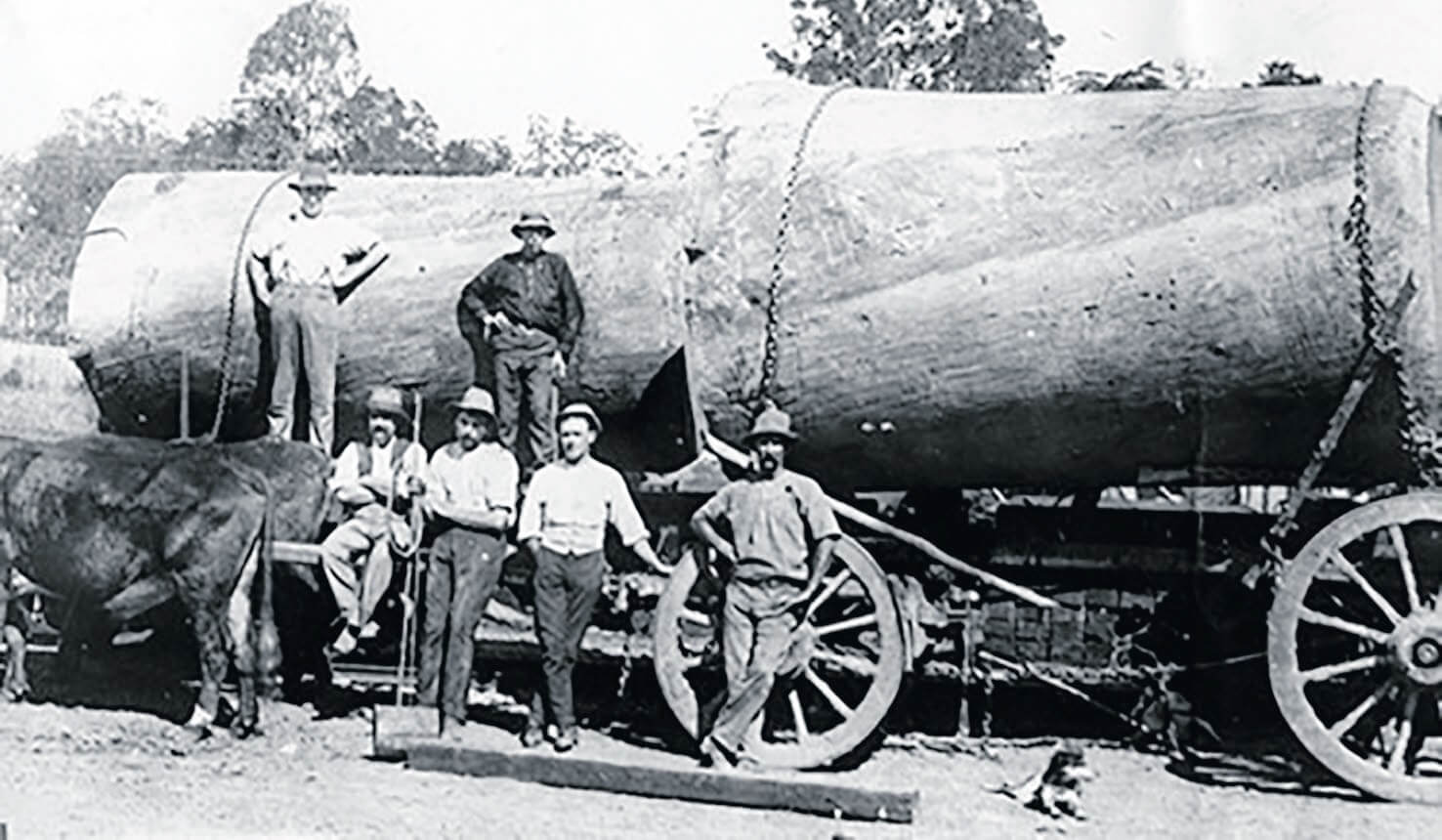
Massive trees were difficult to access and cut down. They required large bullock teams to drag them to dangerous “Chutes” down the mountain, and then rafts of logs floated down creeks and towed to Brisbane. Records show in 1877 the first white man ventured up to a place known as “McCarthy’s Chute”, near the present Mary Cairncross Park at the southern end of the Blackall range.
Some timber getters took wives and family with them to these remote locations where they were often left alone in bush camps for weeks at a time. These early pioneers and white settlers observed large groups of aborigines gathering every third year, in February and March to enjoy their Bunya Nut feast and festival.
JAMES CAMPBELL
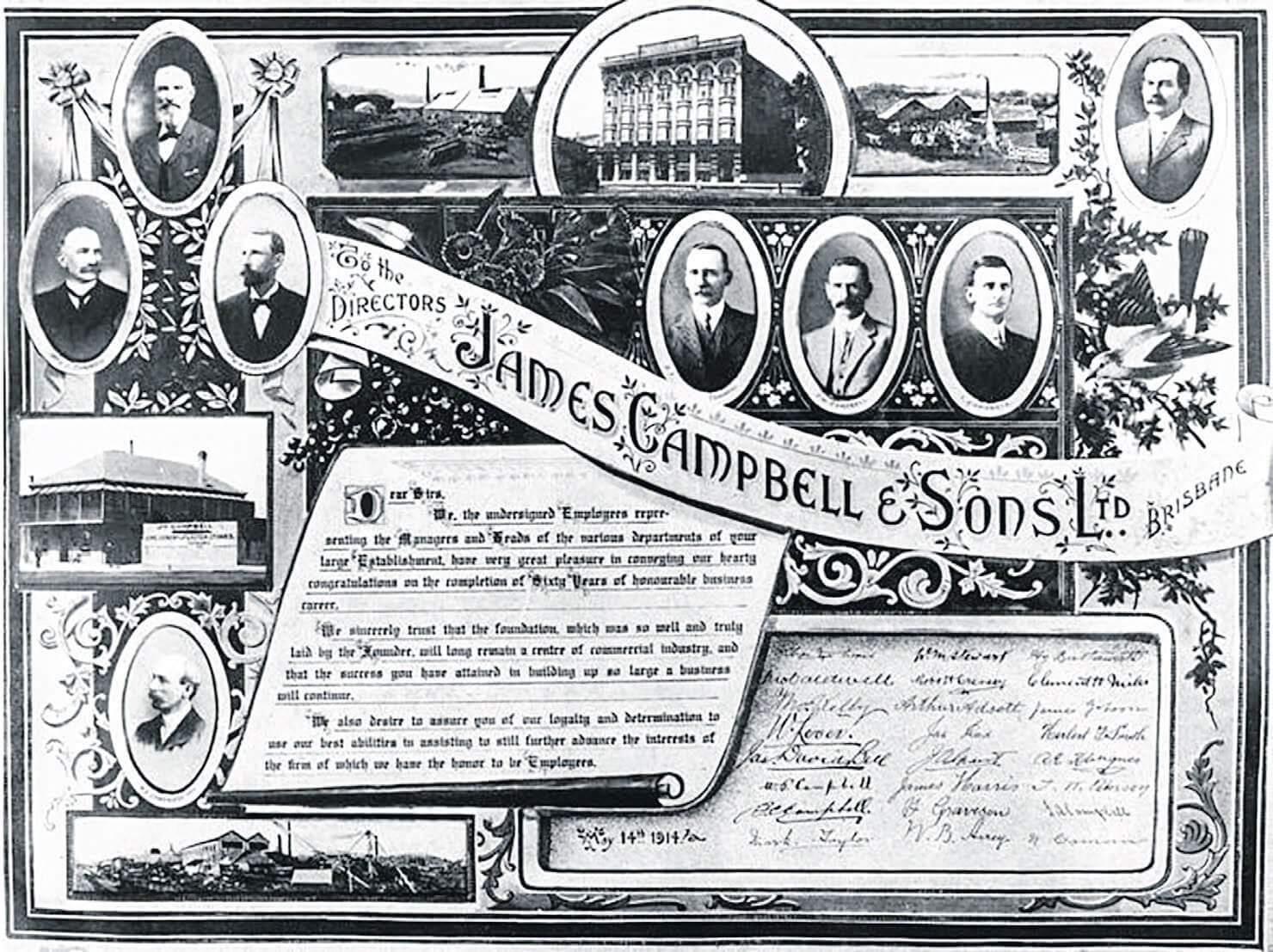
One of the early timber pioneers was James Campbell who arrived in Brisbane from Scotland in 1853 at the age of 23 and set up a building supply business, which became one of the largest in the Commonwealth. Campbell initially bought timber from the “Getters” in the Blackall Ranges and in 1881 set up his own large Sawmill on Coochin Creek off Pumicestone Passage.
Bullock Wagons Cedar Log
This was at its junction with Mellum Creek, a navigable waterway in those days, above the tidal point, where fresh water was available for the Mill boilers. The Mill settlement of “Campbellville” was a thriving business for the next 10 years. As well as the hinterland, hardwood logs were obtained from creeks along Pumicestone Passage and on Bribie Island. There are still some huge old tree stumps on Bribie if you know where to look.
LONDON EXHIBITION TIMBER
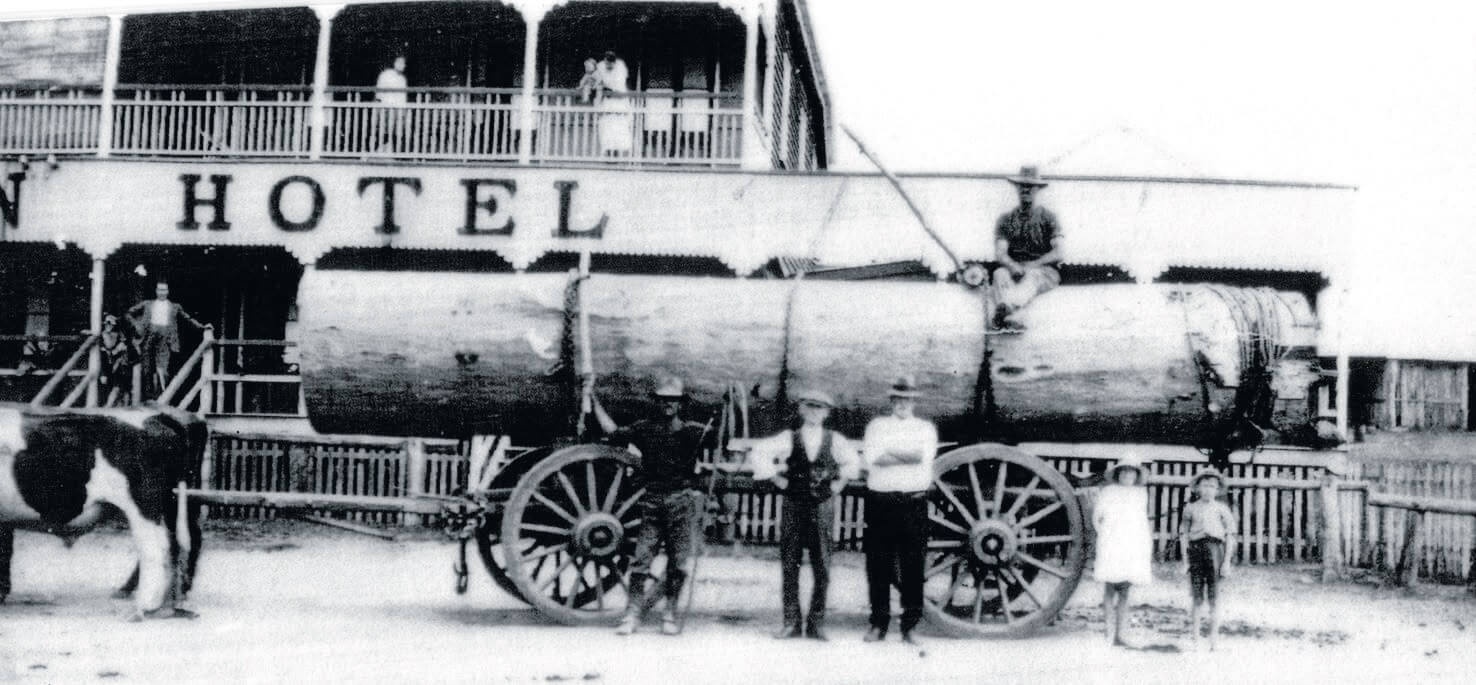
One huge Red Cedar log required a team of 60 Bullocks to haul it up “Walkers Pinch” near Maleny. Another log over 4 metres long and 5 metres girth, containing over 4000 super feet of timber, was towed to Brisbane and shipped to London to be exhibited at the “Indian & Colonial Exhibition” in 1886.
After the Exhibition, the log was offered for sale but there were no buyers as it was beyond the capacity of any equipment in England. Eventually, explosives had to be used to reduce it to manageable pieces.
This was a costly lesson for James Campbell & Sons. James Campbell & Sons went on to control eleven Sawmills, owned and operated 28 shipping vessels, the Landsboro Hotel and Buderim Mountain Sugar Mill, and supplied pre-fabricated kit homes. Campbellville became a bustling Mill, trading centre and township of over 100 people.
James Campbell 60th Anniversary 1914
THE CAMPBELL FAMILY
The Campbell family was well represented at Campbellville. As well as the founder James Campbell, there were his three sons John Dunmore, George Peter and Charles William holding various positions of authority at the mill.
The second manager was George Campbell who was just 17 when he first held that office. John Campbell, the first son of the founder, was elected to the Caboolture Divisional Board in 1883 and was instrumental in having the North Coast Railway line built-in 1886. He later became Minister for Railways and represented the Electorate of Moreton.
The building of that Railway line led to the demise of Campbellville as a Mill and water transport hub in 1890, and the equipment was relocated to Albion. Money was scarce for the early settlers and a delayed bartering system developed whereby the settlers forwarded timber down to the Mill, after which they received their food supplies and other necessities, often months later.
CAMPBELLVILLE TOWNSHIP
Various sailing cutters carted timber down Pumicestone Passage to Brisbane before the paddle wheeler “Mavis” was built in 1883 to transport timber from Campbellville. A double-ended paddlewheel steamer named “Bribie” was built at Coochin Creek, to run between Brisbane and Caloundra, and tow pontoons of logs and sawn timber to the steamer “Mavis”.
At the height of its industry, an article published in “The Queenslander” in 1885, describes it as follows… “The large Millhouse, the many houses, sheds the noise from the engines, the wharf, and huge cranes caused a scene of bustle and industry. Messrs Campbell has done much for this district in developing its timber resources.
One hundred men are on the pay list besides contracts for various purposes, indeed the population of the little Mill Township including wives and youngsters is about 100 souls. A School has been erected by the proprietors, the average attendance at which is 20.” Apart from this brief description, little is known of the location of buildings and houses, which once formed the township of Campbellville.
The School was in fact a Provisional School, not being large enough to be classified as a State School. We do know there was a Post Office, which opened in January 1883 for which the postal official received 6 Pounds a year ($12) until it closed in 1891.
BUILDING THE RAILWAY
The construction of the north coast Railway enabled wider and more efficient transport of Timber. In 1893 the great floods which devastated Brisbane and surroundings, also destroyed what remained of Campbellville, causing creeks to flood and the Pumicestone Passage to silt up to the difficult shallow waterway it is today.
A few people did stay on at Campbellville for about three years after the equipment was moved to Albion, and the firm continued logging in the area until about 1910.
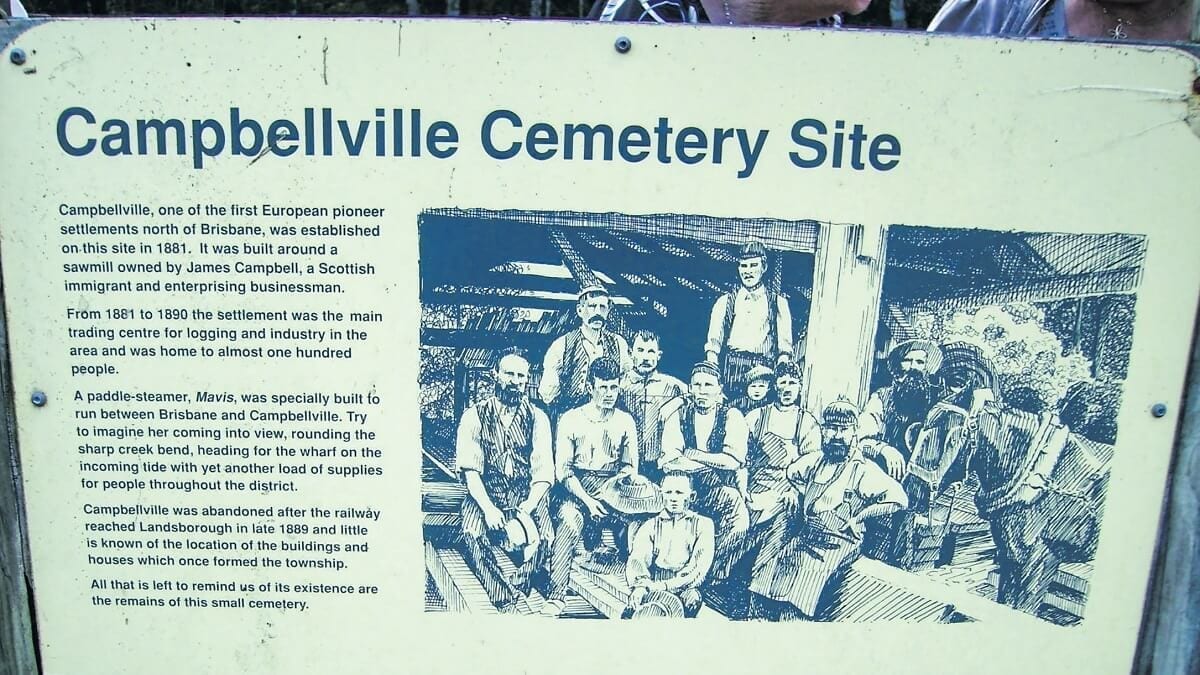
Campbellville Cemetery Sign
CAMPBELLVILLE CEMETERY
In April 1966 Forestry workers were clearing a road and firebreak in the area and found some old wooden posts that marked the site of the little cemetery of Campbellville, more than 80 years after the first burial had taken place. Research has revealed the names of 4 of the possible 9 pioneer residents who were buried there.
Mrs. Harry Blake – wife of the saw sharpener and Mill Engineer.W.Petersen – all we know is that he was a biggish man.
Frank Lovesey – who died suddenly while step dancing
Baby Assen – child of Frank Assen, yardman at the mill and owner of 80 acres of land adjoining Coochin creek.
It is believed that the headstones marking the graves were wooden and disintegrated long ago, and the only evidence of a burial site was the hardwood posts bordering the graves found in 1966.
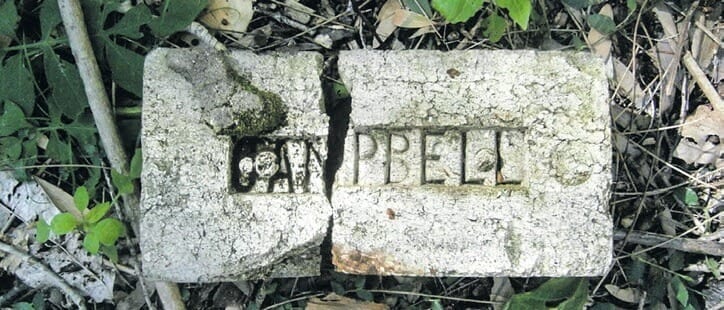
Campbell Brick
NOTHING LEFT TODAY
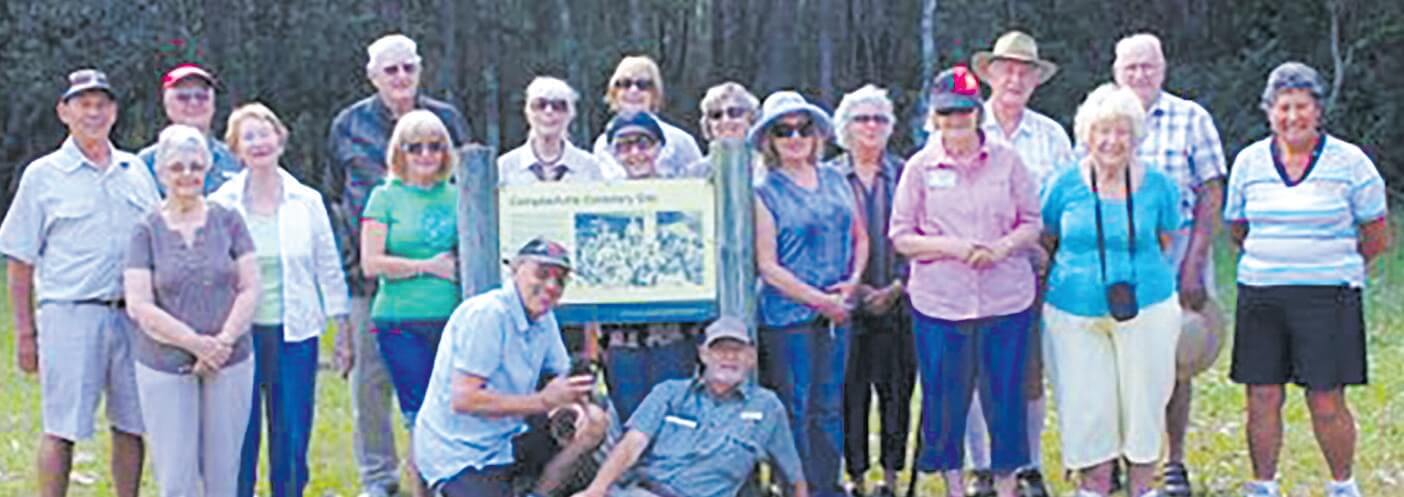
Today all that gives any indication of this once thriving operation at Campbellville is a small sign telling about CAMPBELLVILLE CEMETERY 1880-1893. I took some members of the Historical Society for a visit a few years ago.
It is not an easy place to find, but drive down “Roys Road” you will see the sign. Also scattered in the bush are a few bricks bearing the name “Campbellville” which would have been made in the Ipswich area.
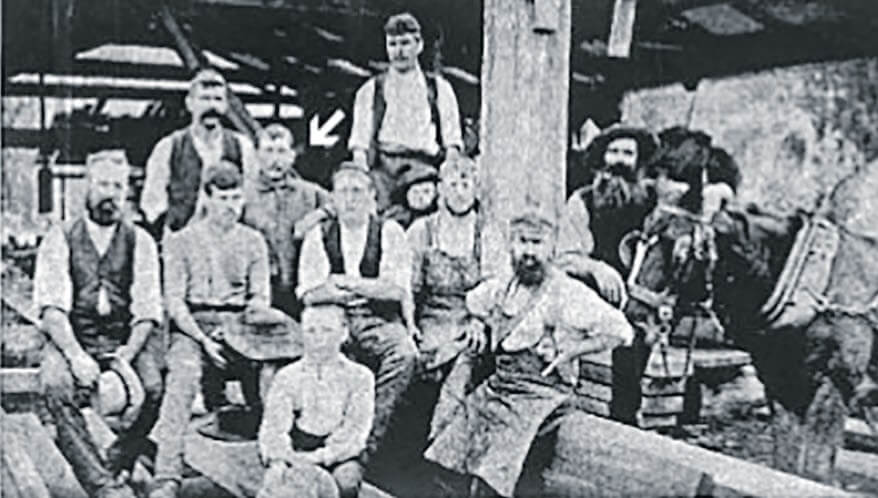
Campbellville site visit 2012Campbellville Mill Workers
CAMPBELLVILLE CONNECTIONS
I made a brief mention of Campbellville in one of my recent articles in this newspaper. Several people with interesting connections to Cambellville contacted me. One was Mrs. Val Widt of Delaney’s Creek, who is the granddaughter of Frank Assen who worked and had land there in the mid 1880s.
One of his daughters was one of those identified as buried at the cemetery site. There is only one known photo taken at Campbellville showing a group of about ten Mill workers at an unknown date. Only one person in this photo has so far been identified and that is John Robins, a Mill Sawyer, who is marked with a white arrow in the photo.
BRIBIE CONNECTIONS.
John Robins worked at Campbellville with his brother William. William also worked with Frank Assen, (Val Widt’s grandfather) who had a farm nearby, where he met and married his daughter Florence Assen.
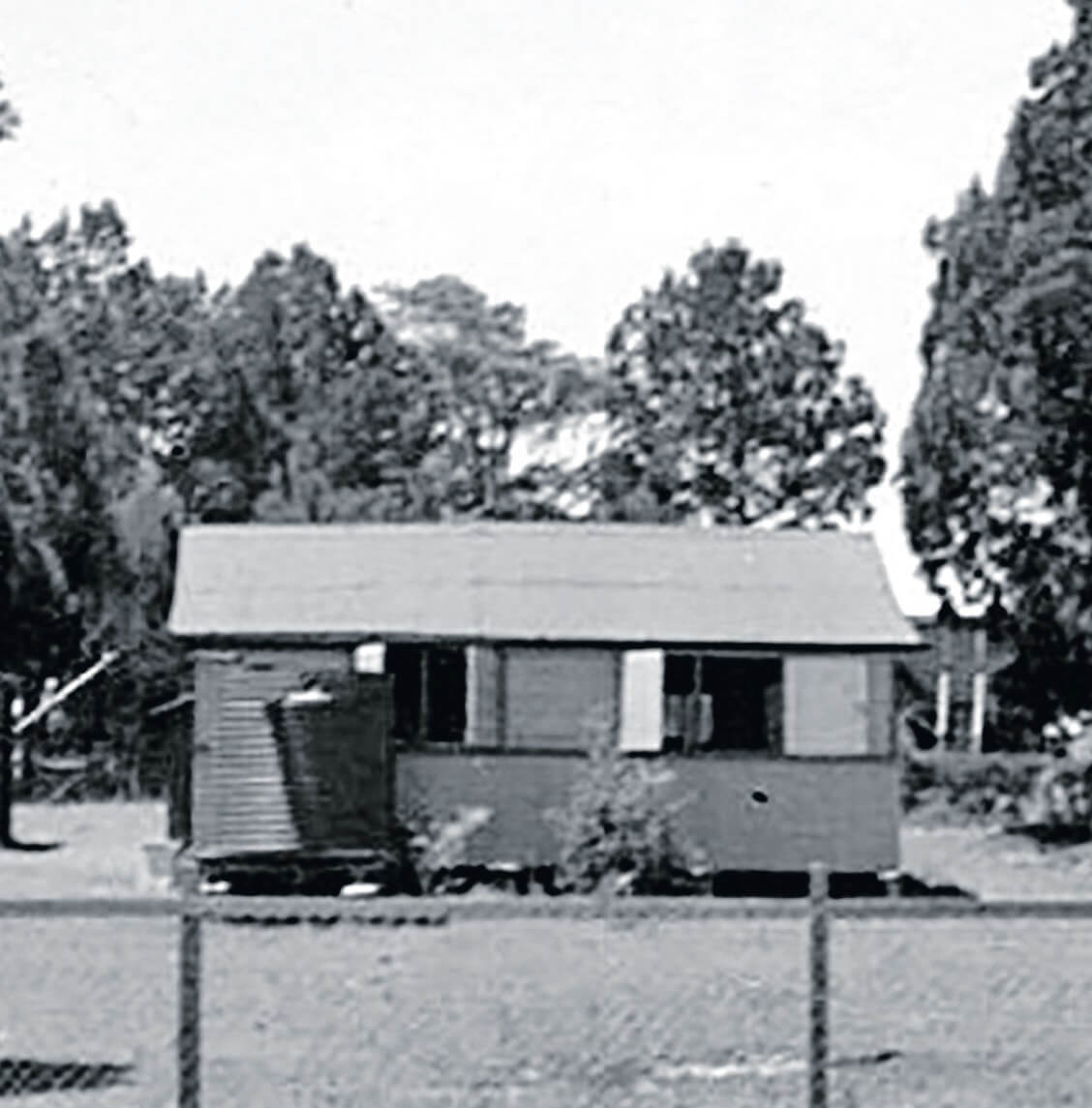
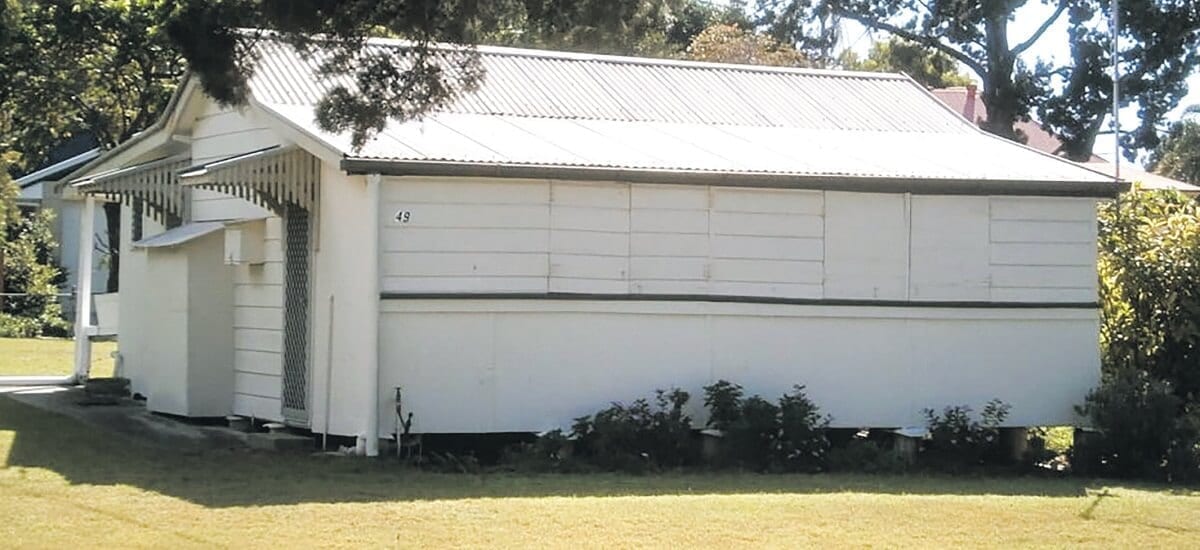
They married in Caboolture and went to work for James Campbell & Son at Albion. In 1912 William built a holiday cottage on Bribie Island when the island was first opened up to residents, which was later inherited by his son Charles (Chick).
When Charles eventually retired from work, it ended over 100 years of service by the Robins family with James Campbell & Sons.
139 YEARS OF HISTORY
The cottage at 49 Toorbul Street, Bongaree is still there today, and still in the family. Charles Robins left the cottage to his two daughters Joan and Rita. Joan still lives on Bribie Island with her husband Jeff Barber, and Sister Rita owns the holiday cottage.
Robins House 1940’sRobins Cottage 49 Toorbul St
It is fascinating to uncover this 139-year family connection to the old Campbellville site, with three generations of the Robins family working for almost 100 years for James Campbell & Sons, and their cottage at 49 Toorbul Street still in the family after 107 years.
It is quite rewarding when I write something about a piece of history close to Bribie, and little known by anyone results in what I have been able to write for you in this article. Thanks to Val Widt and Joan (nee Robins) Barber for their photos and information provided for this article.
BRIBIE HOUSES
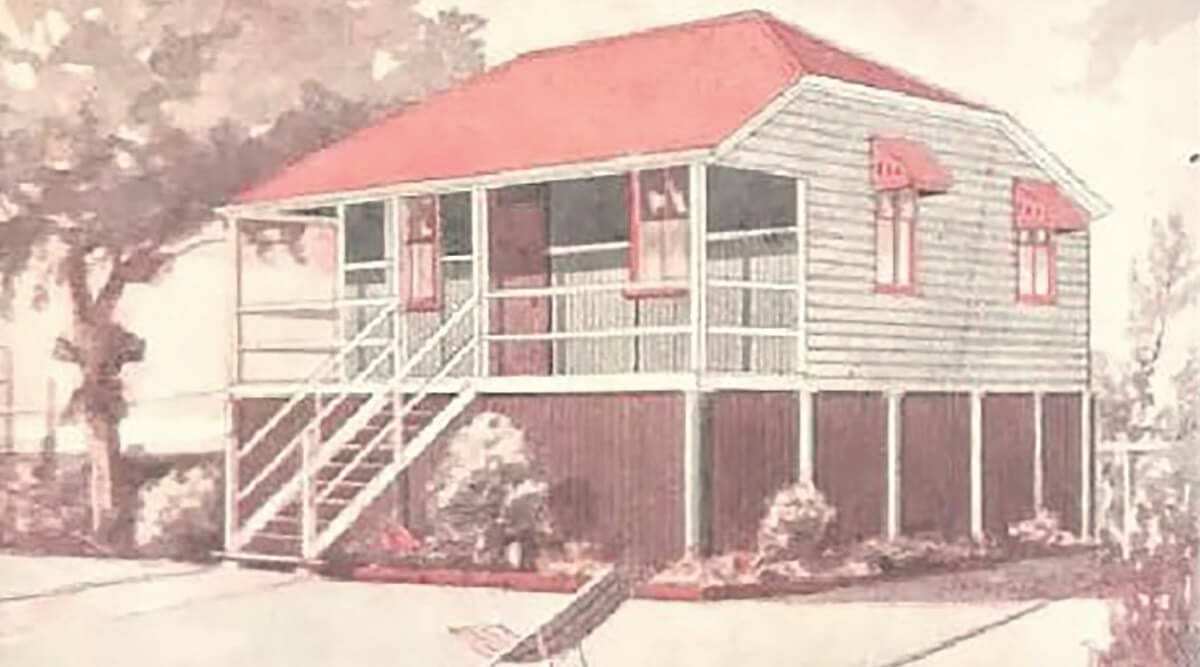
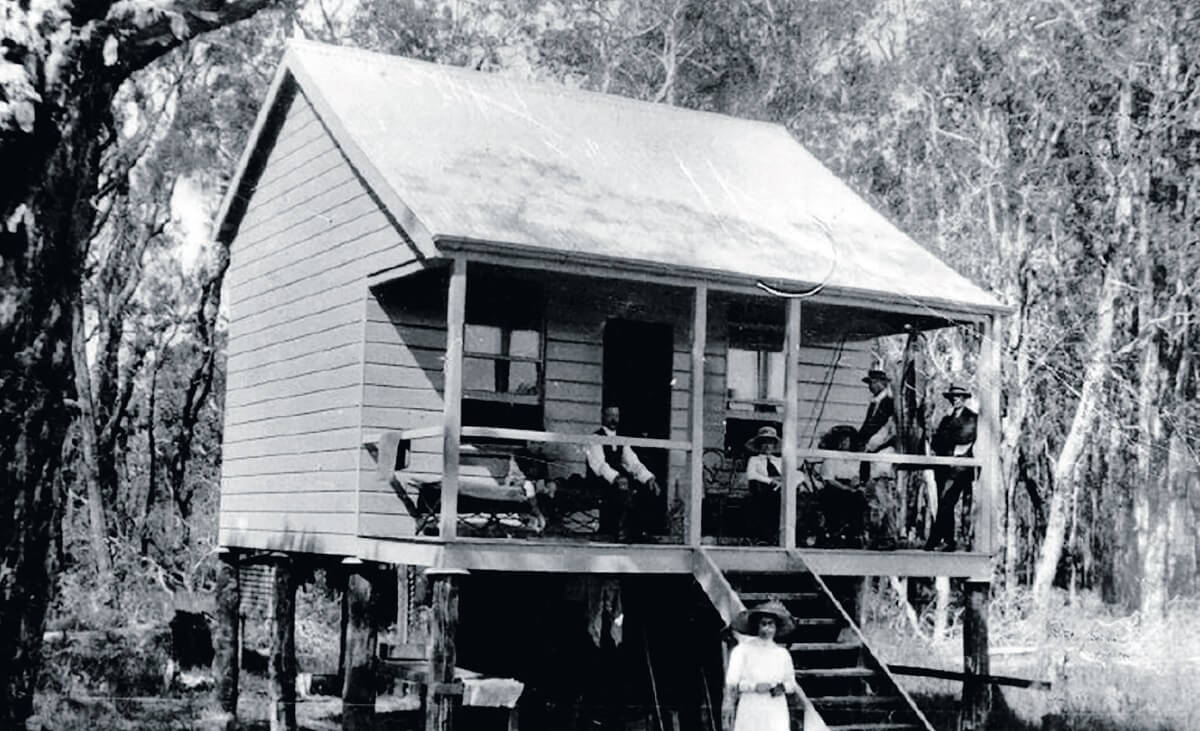
James Campbell & Sons business went on to manufacture various designs of prefabricated houses, one of which was named “The Bribie”, examples of which can still be seen on Bribie island today. The Campbell family also built their holiday homes on Bribie in 1913.
The Bribie Campbell house
Campbells first house on Bribie 1913
MORE BRIBIE HISTORY
The Historical Society have monthly public meetings at the RSL Club on the second Wednesday of each month commencing at 6:30 pm with interesting guest speakers on a wide range of topics. Come along. You can see many more photos and articles on our Blog Site at http://bribieislandhistory.blogspot.com or contact us on [email protected]
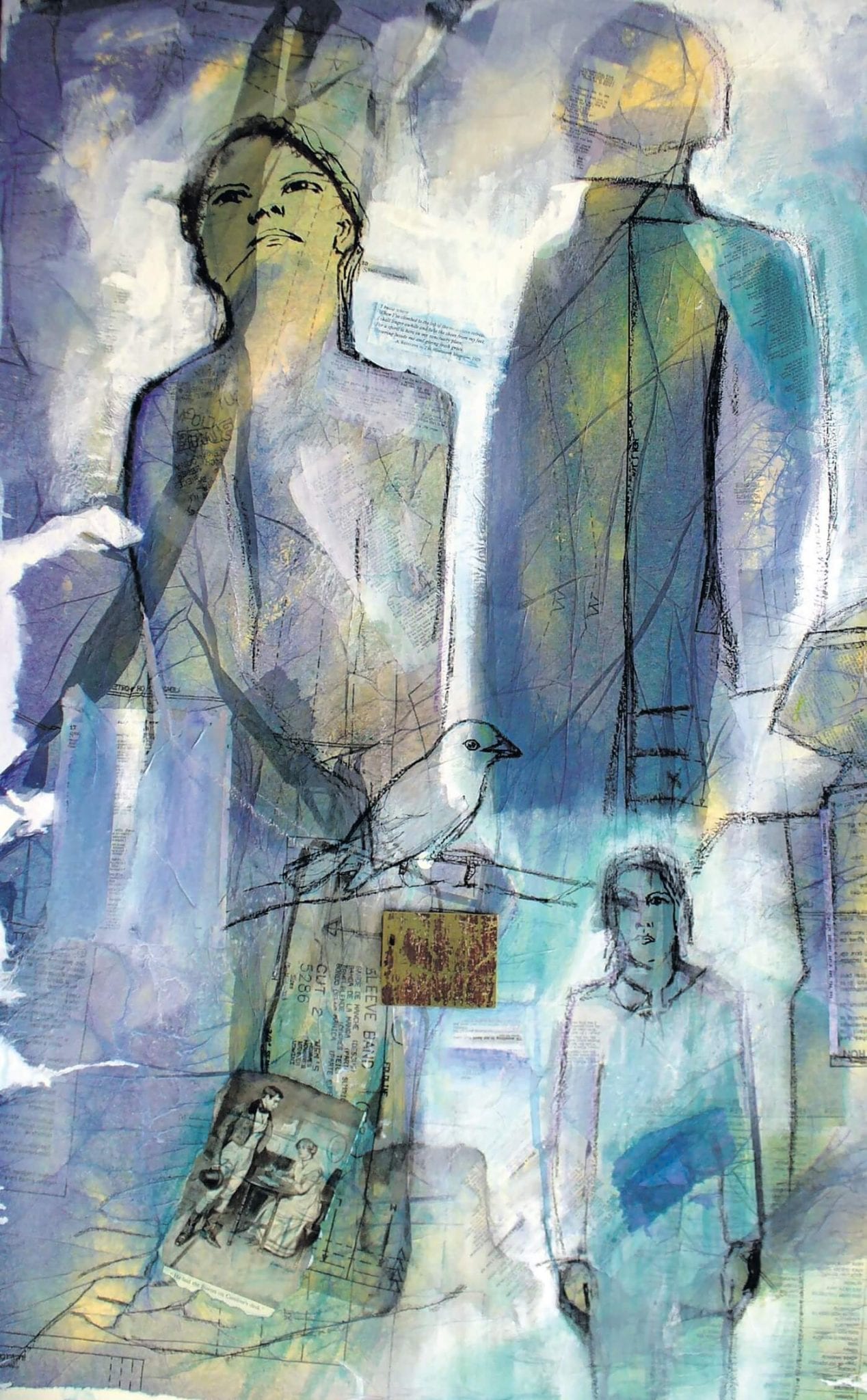
My current paintings are inspired by unspoken words.
Messages that have been created over many years, in some cases decades, then some words that are more recent.
Words by friends, by family by strangers and some by self. Statements of love, letters of thanks, letters of sadness, political views and sexual references.
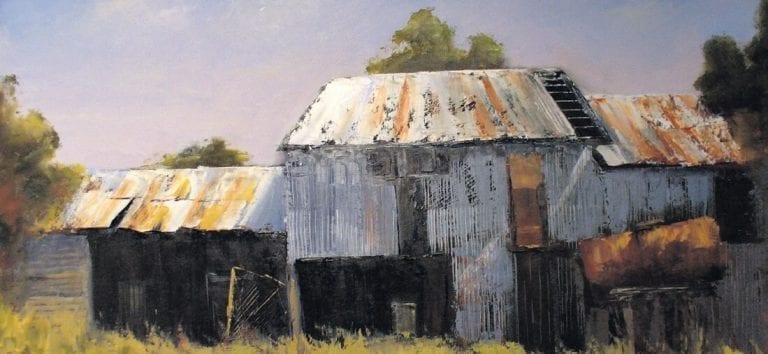
Safe Harbour
As Gum Leaves Fall
In some cases, layers of words, letters, and numbers displayed in a public space for the viewer to read or ignore. Decades of marks, some acted upon, ignored and some provoking a controversial conversation.
A record of silent statement, an image, a thought that may only exist for seconds. Selected words erased, covered up or exposed.
My paintings are created in a similar way, thus leaving the viewer to create their own opinion.
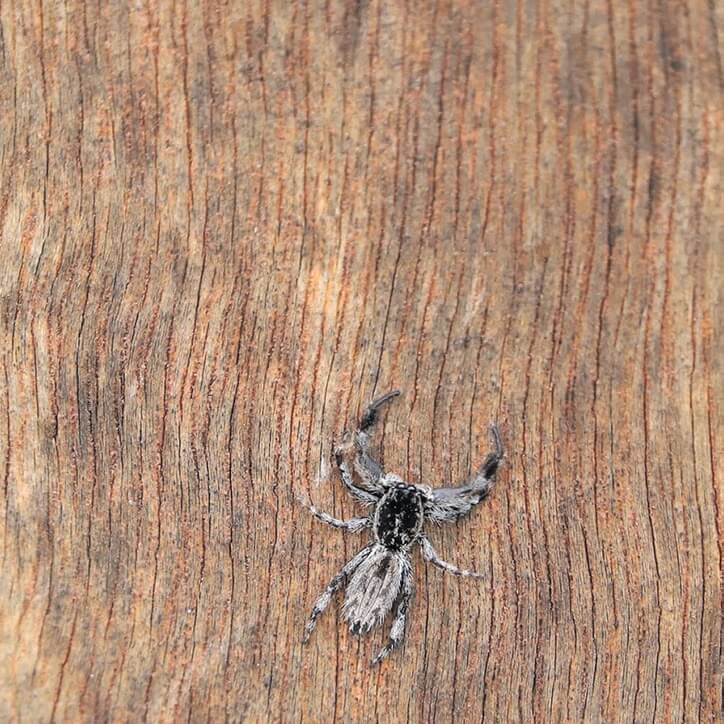
The theme for the month was “Texture” and Gordon Bentzen was the winner with “I Live Here” which was a photo of a spider on a wall showing the texture on the body of the spider as well as an interesting background texture.
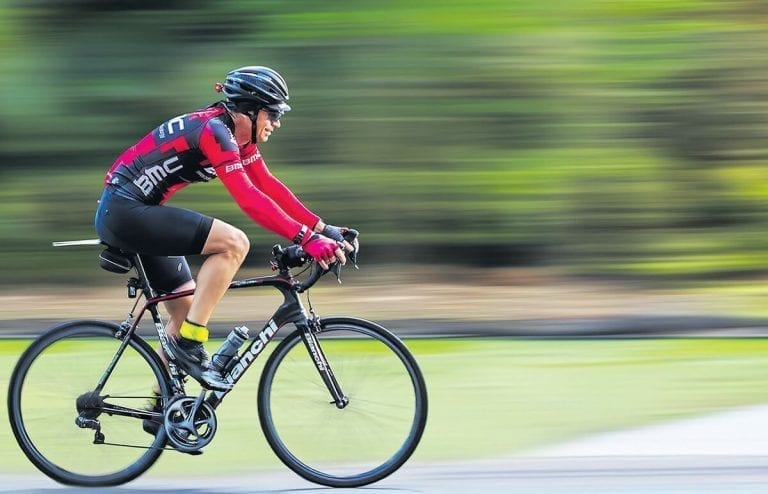
Featured Image(above): Cycling Away by Alain Chardon
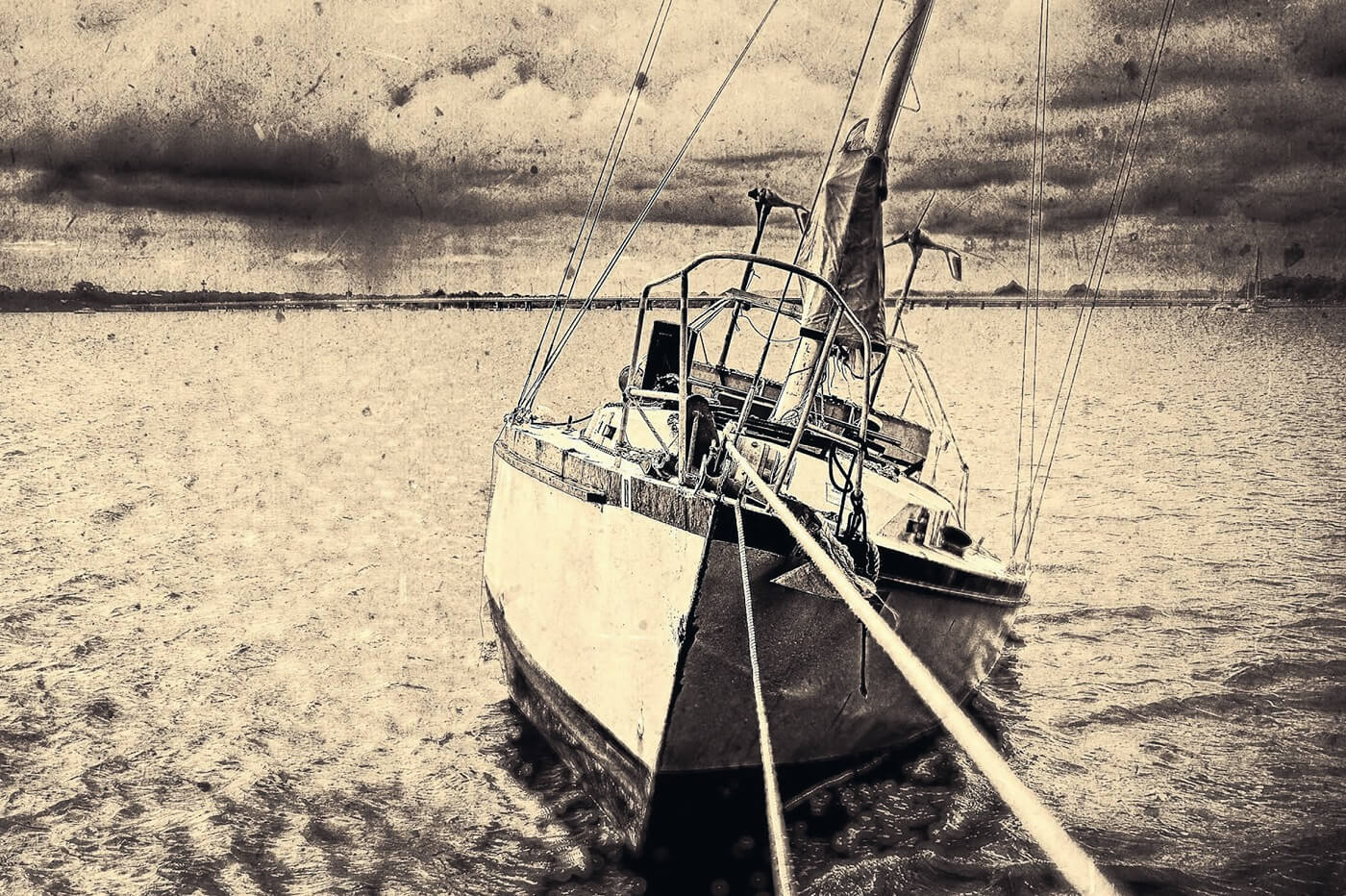
Winner of the Mono Print, as well as the Photo of the Month, was Roger Bawden with his eye-catching sepiatoned “Hanging on Tight”. This was a photo of a yacht that recently came to grief in the Pumicestone Passage during strong winds. Alain Chardon with a great action shot of a cyclist “Cycling Away” won the Colour print section.
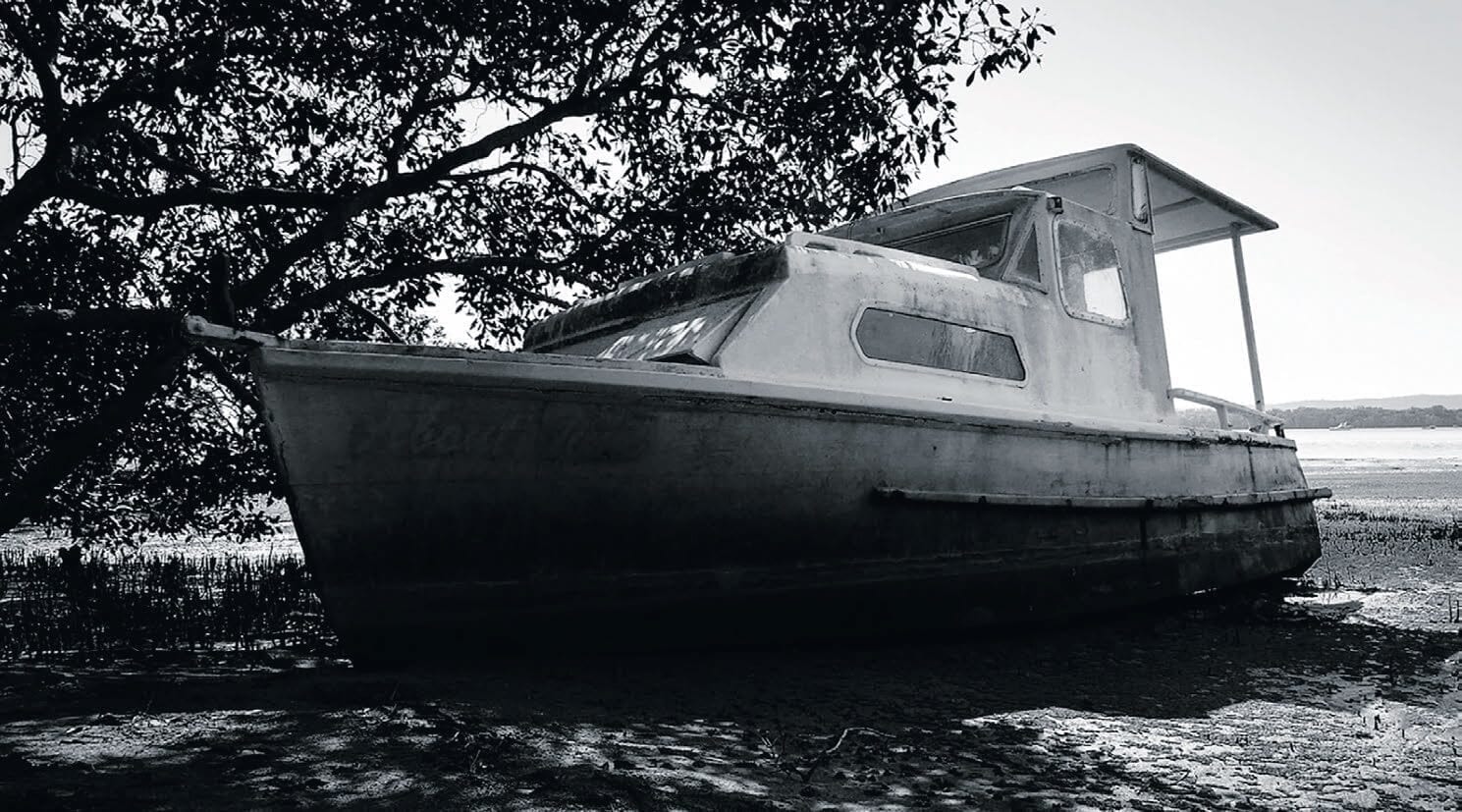
Vince Bowser with a brilliantly executed shot taken at Southbank during a recent photoshoot was the winner of the Colour PI. Gail Goodair won the Mono PI with a great shot of a derelict boat taken on our recent trip to Tin Can Bay “Abandoned”. Our judge Wendy Geddes travelled from the Sunshine Coast for the night and critiqued with many useful tips each photograph presented on the night.
Abandoned by Gail Goodair
Nightfall by Vince Bowser
I Live Here by Gordon Bentzens
Hanging on Tight by Roger Bawden
Our educational videos had to be abandoned due to computer problems. Several of our members were present during the Camp Quality Xmas celebrations taking photos of the children enjoying themselves and receiving gifts from Santa.
These photos go to the children and their families. The Bribie Island Photography Club meets on the fourth Monday of each month except December at 7 pm in the Boardroom at the back of the Arts Centre on Sunderland Drive. New members are always welcome. The first two meetings are free. If you wish to come along ring Gordon at 3408 2649 or Gail at 0419638865.
Upcoming Art Events & Exhibitions
Coming Events: For our January 2020 meeting we will be running workshops on Painting with Light and Studio Lighting. There will not be a competition on that night. There will be a Photography Club exhibit at the Arts Centre’s “Showcase” display running from 4th -22nd February.
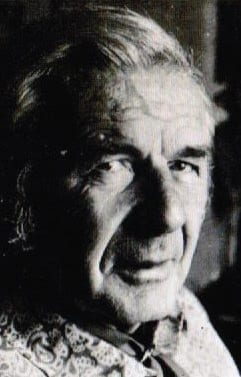
I wonder how many authors there are with more than 10 metres of collection space of 72 boxes of written material in THE NATIONAL LIBRARY OF AUSTRALIA, than that of one of the loveliest and most amazing men I have ever met: OLAF RUHEN.
The Australian Literature Resource also credits him with 78 books. Born in Dunedin, New Zealand, in 1911 and serving as a bomber pilot, with the RNZAF during World War II, Olaf moved to Sydney in 1947 working as a journalist and establishing himself as a freelance writer during the 1950s, with short stories published in the prestigious American SATURDAY EVENING POST.
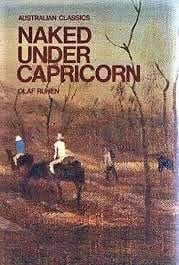
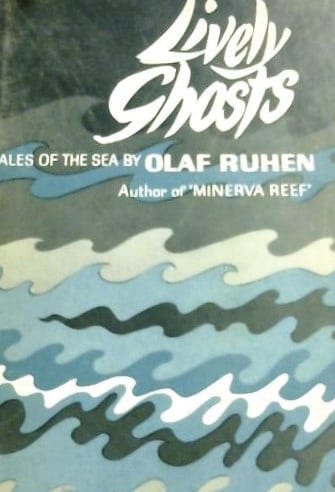
Over 300 short stories were published in magazines and anthologies in addition to Olaf’s major novels and documentary books world-wide, including NAKED UNDER CAPRICORN (1958), MOUNTAINS IN THE CLOUD (1963), LIVELY GHOSTS (1964), SCAN THE DARK COAST (1969) and the lovely children’s book THE DAY OF THE DIPROTODON (1976).
The first four words of the old ‘JACK OF ALL TRADES and master of none’ temporarily applied to Olaf’s early life, when he had successfully worked as a fisherman, skipper, farm labourer, timber worker, reporter, and freelance writer.
The weathered face of Olaf Ruhen
First major success published 1958
Published 1964
But after he moved to Mosman in Sydney he was soon recognised as a serious documentary and fictional author and critic – the true master of prose – writing mostly about Australasia, based on his extensive travels throughout Australia, New Guinea, and the South Pacific regions. A man of vision, gifted with natural leadership and guidance, Olaf inspired many young writers, yours truly included, to reach their dreams.
He was reputed not to be demonstrative, showing his love and affection, but on the occasions, I was invited to spend time with Olaf and his wife Madeleine at their Mosman home since the sixties, that did not seem to be true.
As my father was assassinated in 1945 when I was only six years old, I looked at Olaf as a kind of father figure because of his warmth towards the family and me. All my Ruhen books are not just autographed but were gifted to me by Olaf, as each was published.
And finally 31 years after the publication of HIS FIRST GREAT SUCCESS, Olaf’s 1958 novel, NAKED UNDER CAPRICORN, it was made into a TV movie, released in September 1989, starring NIGEL HAVERS, NONI HAZLEHURST, and the delightful DAVID GULPILIL.
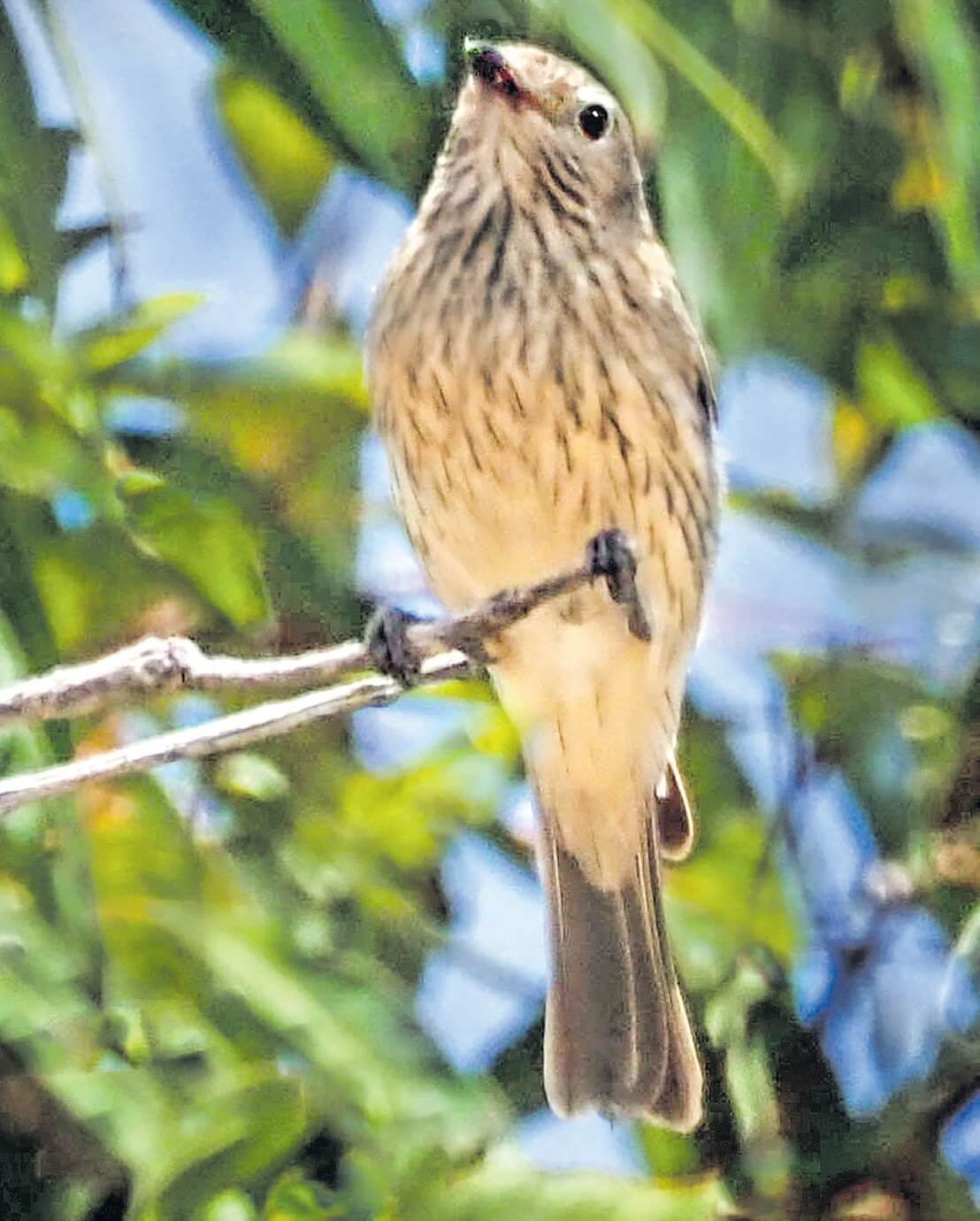
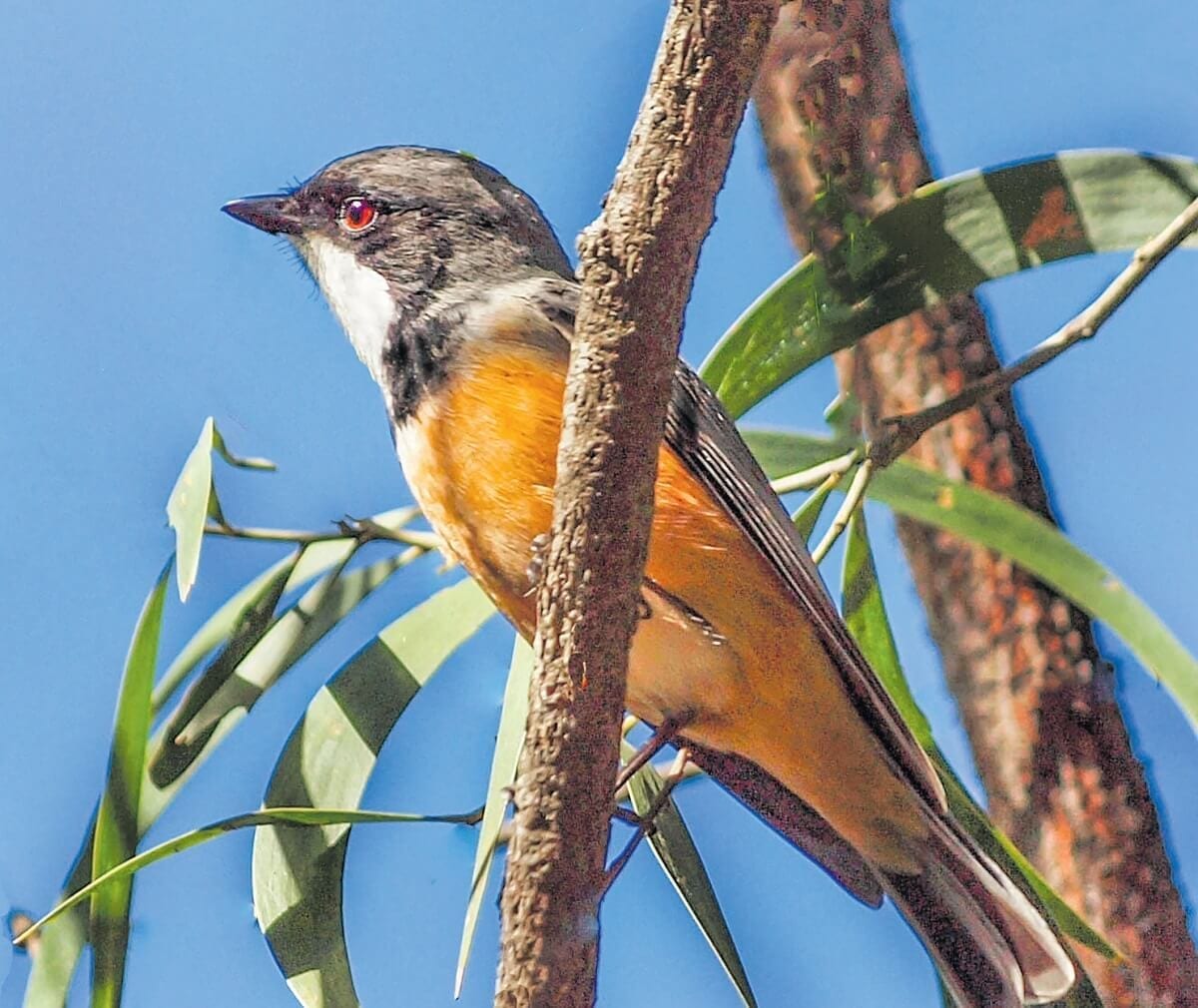
Rufous Whistlers are very common birds residing in wooded areas and wallum heathland on Bribie Island and local areas. There are several species of whistlers in Australia but only two, the Rufous and the Golden Whistlers are found here. Rufous Whistlers, the most common of the whistlers in Australia are small birds 16-17 cm in length and weighing only 18-32 g. Males and females are different in appearance.
Males have large heads, rufous breasts with white throats underlined by a black band and are a brownish colour above. This plumage is not acquired by males until about 3 years old. Males are not likely to be confused with any other birds because of their unique plumage. Females and immature birds are also brownish above but their underparts are a light buff with black streaks. Tails of both sexes are almost as long as their bodies.
Their most striking feature is the variety of melodious, complex calls that ring through the bush on a regular basis, particularly during spring and early summer. Loud noises are often the trigger for the whistlers to commence calling. They are indeed one of Australia’s most outstanding songbirds.
Throughout Australia where conditions are right in woodlands, arid inland areas where there are trees, and in parks and gardens close to nature reserves are places where they are most likely to be seen. They are mainly sedentary but there is some movement in the south of Australia to the north in autumn and back south during summer. Wet areas such as rainforests are usually avoided.
Rufous Whistler – Female
Rufous Whistler – Male
Rufous Whistler – Male
They are also found in New Caledonia. Food is mainly insects with some seeds, a little fruit, and vegetation. They forage systematically alone or in pairs in the canopies of high trees or shrubs. Occasionally they hover in search of food. They do not feed on the ground and are rarely if ever seen there.
Before breeding commences usually from Sept- Feb the young from the previous brood are driven away to fend for themselves. Rufous fantails are monogamous and the males each year begin their courting rituals with what is called the “Bob and Bow”. These rituals are performed for the females when the males bob and bow while continually whistling.
Females select the nest sites which are usually in the forks of trees with clumps of leaves hiding the nests if possible. Flimsy, untidy nests are built by the females alone. These nests are between 1-8 m high but are usually on the lower end of the scale and are constructed with twigs and forest materials and bound together with cobwebs.
They are so thin that in most cases the eggs can be seen through the bottom of the nest. Males step in to help with the incubation of 2-4 freckled olive eggs. After 14-15 days the eggs hatch and the males help with the rearing of the young. Two broods may be produced each year.
In 1801 Rufous Fantails came to the attention of John Latham and were studied from samples sent from Australia to his premises in England. Because the nests are built reasonably close to the ground the eggs and babies are often prey to reptiles, other birds and feral and domestic cats.
Land clearing and development take away much of their habitat and bushfires are a danger during the summer months. Even so, their conservation status is still considered secure. With bushfires raging throughout much of Australia at the time of writing it is worrying to think about the small birds trapped in their nests and adult birds and animals not able to escape the blaze in time.
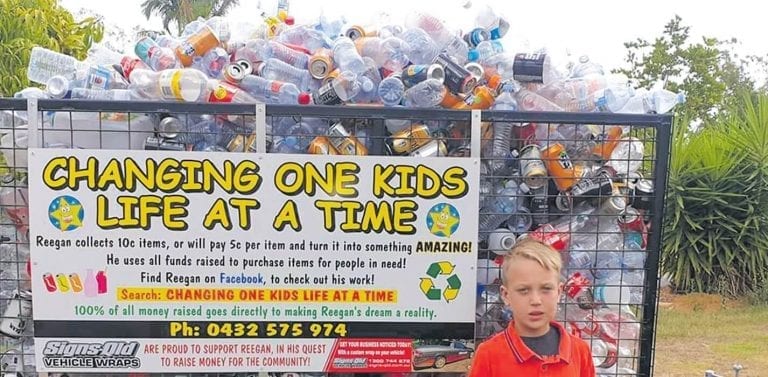
I must say it I was brought to tears writing this story about such an amazing little boy. Reegan is only 9 years old and has already achieved so much with his big heart and helping hands.
I can only imagine how proud his family must be of him. Reegan has made it his mission to help as many kids and families in need as he can and let me say, he is doing a fantastic job! Reegan collects cans and bottles and uses 100% of the money made on helping those in need.
He has been doing this for the past year and is now expanding with old scrap items and pulling them apart to raise more revenue. Look at what Reegan has achieved in this year alone.
• Helped a family with children’s clothes after a house fire on Australia day
• Supplied 3 families in Stanthorpe with animal food after the bushfires
• Assisted a little boy in CPL with a cut-out table
• Supplied 2 Care bags for foster kids
• Assisted a little girl in CPL with pool therapy toys
• Provided Christmas presents for kids in foster care
• Bought food and other items for Caboolture Community Action Centre for the homeless
• Supplied water for an evacuation centre at the Sunshine Coast during the bushfires
• Paid for and presented Christmas and school supplies for families out west including Dalby, Westmar State School, St George, and Cullamulla
• Given water, for Stanthorpe to assist with their drought
• Supplied water for an evacuation centre at the Sunshine Coast during the bushfires
• Given therapy toys to CPL Mt Gravatt
• Paid for and presented Christmas and school supplies for families out west including Dalby, Westmar State School, St George, and Cullamulla.
Reegans latest goals are helping a boy who is visually impaired get medical equipment so he can start high school. And after he has accomplished that he wants to take food hampers to the struggling families in Westmar at Easter time.
Reegan is an exceptional little boy who deserves a massive round of applause for all the help he has given to others expecting nothing in return.
The Wallum Action Group Community Nursery uses funds that are raised by plant sales to provide assistance for many causes and over the years this has included providing wheelchairs to the Caboolture Hospital, paying for the training of an assistance dog, donating defibrillators to various organisations and helping many others in times of crisis.
With this in mind, it comes as no surprise that President David Wearne describes the past twelve months as arguably their most active year to date. ‘We kicked the year off by donating several torches to the SES and followed it up with the donation of another four defibrillators.
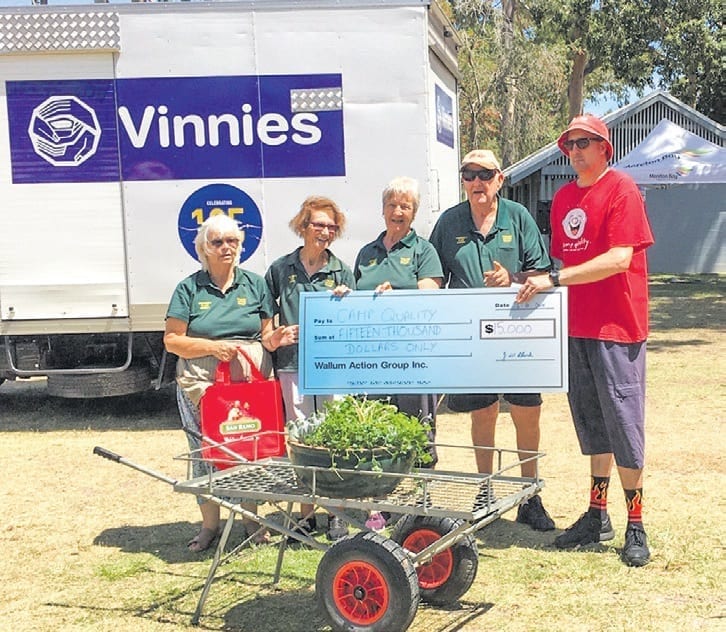
More recently, we funded the purchase of three television sets for the Caboolture Hospital and made a donation of $15,000 to Camp Quality,’ said David. ‘As well as that, the nursery has assisted Wildlife Rescue and BIKES as well as sponsoring the Bribie Island and Sandstone Point Carols events,’ he added.
The Wallum Action Group presented
a $15.000 cheque to Camp Quality
Millie Vuksan (L) and Ann Ward
received recognition for over 20
years of volunteering with the
Wallum Action Group
Speaking about the Wallum Action Group’s attendance at the annual Camp Quality family Christmas party which was held at Brennan Park, David said that volunteers from the nursery held raffles and sold plants to raise funds for the Camp Quality families. ‘Our donation of $15,000 will allow fifteen families to go on a weeklong holiday,’ he pointed out.
As more gardening enthusiasts are finding out about the Bribie Island Community Nursery, it recently became necessary to extend the opening hours to cater to the demand and the new hours are from 8 am to Noon on weekdays as well as on the first Saturday of each month. The nursery offers customers an exceptional range of very competitively priced plants to choose from.
As do many organisations at this time of year, the Wallum Action Group recently held their Christmas Party and during the very well attended event which was held in the spacious Orchid House, long-time volunteers Ann Ward (who only recently retired from the role of Treasurer) and Millie Vuksan were recognised for over twenty years of service to the group.
The Wallum Action Group Community Nursery is located on First Avenue next door to the Orchid House and during the Christmas and New Year period will be closed from Noon on December 20th and will re-open on January 6th.
Anyone needing further information about the nursery should either pay a visit to the well-stocked premises or call 0407 699 953.
More of the same… Or will you do something new and different to keep your brain stimulated and your body more active? All Bribie Seniors should consider taking on a new hobby, interest or social involvement this year. It is important for all-round health and wellbeing to keep the mind stimulated, and do something new with like-minded people.
You will certainly make many new friends at Bribie Island University of the Third Age (U3A). There are no entry requirements, no tests or exams……just simply “Learning for Fun and Pleasure” with lots of nice people. You have a choice of almost 170 different and stimulating classes, five days a week, shown on the detailed daily Timetable, which is available online at www.u3abribie.org.au or pick it up at the Bribie Library, Visitor and Neighbourhood Centres.
MANY THINGS TO DO
People just like you enjoy a variety of Arts & Craft, Music, Culture, History and Language classes, while others choose Mind & Board Games, Cards, Dance, Exercise or Computer skills. Whatever your background or interests you are sure to find something to suits you in Term 1 2020 Timetable for Bribie Island U3A.
It is never too late to learn something new, and the pleasure of doing it with like-minded people is very enjoyable. Foreign languages include Italian, Indonesian, Spanish, German, Mandarin, and French. Arts and Crafts include Acrylic & Watercolour, Pen and Pencil Drawing, Card and Thread card making, Handcrafts, Pottery, Crochet, Printmaking, Quilting & Sewing, Scrapbooking, and Silk Painting. Music includes Keyboard, Guitar, Ukulele, and Singalong, and there are many table games such as Cribbage, Mah Jong, Chess, Bridge, and Trivia Quiz.
Things more physical include Pilates, Pickle ball, Table Tennis, Tai Chi, Lawn Bowls, Boules, Indoor Bowls, Croquet, Greek, Line and Ballroom Dancing, Salsa, Jazz and Burlesque on a chair and Rock & Roll. Looking back includes Family, Global and Australian History, Modern World, Exploring DNA or try Sociology.
Inventions and Discoveries, How Life Works, or an overview of Trains, Planes, Ships & Automobiles. For something more inward-looking you could try Sociology, Meditation, Yoga, Practical Philosophy or Mind Matters while others enjoy Poetry Appreciation, Classic Novels, Drama Workshops or the Movie Group. Topics specific to Bribie Island, especially for newcomers include Bribie’s Natural Environment, Birding and Bribie Island History- an Introduction.
SOMETHING DIFFERENT
If you are still not inspired by any of the above and want to do something completely different you could join the Trading Academy class on Friday mornings. This new class by an experienced Market Trader will reveal some insiders secrets and show how to trade the world markets in these difficult times.
As the other end of the spectrum, you could be Seeing Life Differently on Wednesday afternoons by looking at your inner self and understanding what has made you what and who you are today. And if you have some hidden performance talent waiting to be released join the U3A Players and take a small part in a future stage performance, or simply enjoy the delights of Shakespeare Plays on Monday mornings.
ENROLMENT for Term 1 2020
U3A is now closed until Term 1 commences on Tuesday 28th January. Enrolment for current students has already taken place, but new enrolment for Term 1 classes takes place at the U3A Centre in the Recreation Hall on First Avenue on Saturday 18th January from 9 am till noon and Wednesday 22nd January from 9 am till 11 am.
Membership of U3A is just $10 for the year, with payment in advance for most classes at $15 for the Term. Some classes are already full or have limited places, but many classes offer interesting topics and will welcome new joiners. Pick up a copy of the Timetable from the Bribie Library, Visitor Information, and Neighbourhood Centre and you may find a topic, time and day of the week that suits you.
Fishing report and tide times for Bribie Island, Moreton Bay, Bongaree, Ningi, Beachmere, Sandstone Point, Banksia Beach, Bellara, Woorim, Toorbul, DonnyBrook & surrounding areas.
What a catastrophic fire season Australia has experienced in the last half of 2019. Looking at the new Himawari 8 satellite imagery from the Japanese meteorological agency brings an unbelievable view of the weather system’s approaching Australia, the devastating fires and the shocking state of much of the country.
Hopefully, 2020 brings much needed regular rains and east coast lows pushing water where it’s needed the most. The drought affects nearly every single living organism in Australia, whether it’s on the land or in the water, everything uses water in one way or another.
Anyways hope you guys had a great Christmas and New Year’s break, and wow once again the laser show and New Year’s Eve party’s on the waterfront was definitely the best way to spend the last days of 2019. Moreton Bay is an absolute wonder of Queensland.
It takes a trip or two down though the southern bay to discover how awesome this piece of water is. It’s such a huge national park that requires constant monitoring and protecting. The fishing around the local area has been, well somewhat busy but still very productive if you know where and when to go.
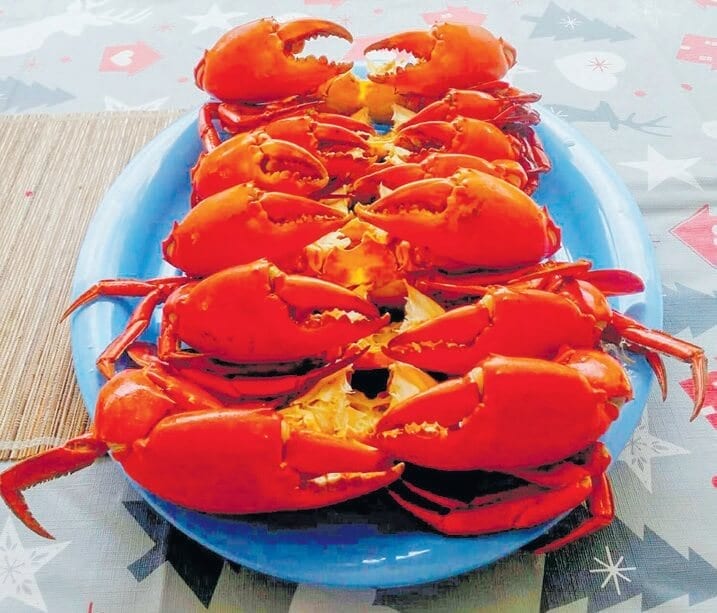
Mud Crabs for tea anyone?
The sand crabbing and mud crabbing has been awesome with some quality crabs getting caught throughout the passage and bay. The only problem is the number of people out there share farming.
What’s even worse is when you lose a few pots, and usually, with the pot, rope, float and bait bag costing 100 dollars, it’s pretty frustrating. The flattys, jacks, cod and summer whiting have been on the chew, with nearly all of the passage worthwhile having a look at. Working soft plastics a great way to cover water and catch most species.
3inch to 5inch plastics work best, match the jig head size with the depth of water your fishing and colours usually depend on the visibility in the water. Out in the bay, the mackerel, tuna and yellowtail kings have been smashing lures, live baits and slugs.
The reefies now have been going off with all the usual summer reef species getting caught. Fresh flesh baits, pillys, octopus, squid and live baits the go. Using the right rigs and tackle will depend on the day’s weather conditions.
On the Woorim surf beach, there’s been some great size summer whiting. So with 2020 here, it’s time to get out there and focus on enjoying the great outdoors and fishing. So don’t destroy what you come to enjoy and have a great start to 2020.
Get all your community news and information. Bribie Islands only community gloss magazine NOW EVERY TWO WEEKS! – Articles on boating, camping, fishing, life, drama, travel destinations, sports and what to see and do on Bribie Island. Covering charities, organisations, places, children’s activities, arts and crafts, tourist destinations, heritage parks, technology, science, music, gardening, and much more.
Get all your community news and information. Bribie Islands only community gloss magazine NOW EVERY TWO WEEKS! – Articles on boating, camping, fishing, life, drama, travel destinations, sports and what to see and do on Bribie Island. Covering charities, organisations, places, children’s activities, arts and crafts, tourist destinations, heritage parks, technology, science, music, gardening, and much more.







 Reegans latest goals are helping a boy who is visually impaired get medical equipment so he can start high school. And after he has accomplished that he wants to take food hampers to the struggling families in Westmar at Easter time.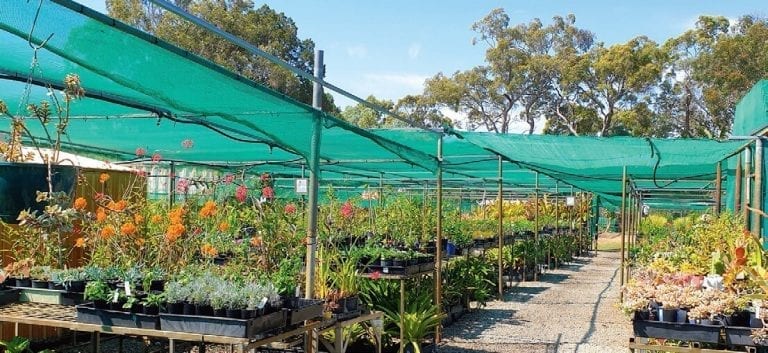


 MANY THINGS TO DO
 SOMETHING DIFFERENT