Home Blog Page 57

Rotary Traditions and History – a Reflection!

0

There is currently much debate occurring in Rotary regarding the value of traditions and whether they matter in our modern world. Membership numbers are stagnated and we are not attracting younger members. Many believe this is due to our old-fashioned traditions and style.

To me, however, ‘Traditions’ represent an important part of our culture and are the foundations of our society. If we ignore our traditions, we risk losing our identity. Notwithstanding this, we must also learn to adapt and welcome new ideas. Welcome new members – especially younger members.

Bribie Rotary is ageing and can only survive by attracting new, and younger, members. Rotary traditions include a Classification system, a motto, a Four Way Test and the symbol, the Rotary Wheel. It is a nonreligious and non-political service Club.

Classification System

Rotary’s founder Paul Harris was a lawyer. When he started the organisation, in Chicago, in 1905, his idea was to bring people together to learn how other trades and professions worked and thought.

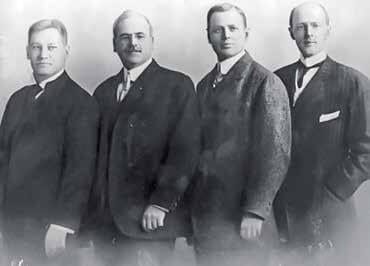
He introduced a classification system for each member according to their profession. Founding members were Paul Harris, Lawyer; Silvester Schiele, Coal merchant; Gustavus Loehr, Mining engineer; and Hiram Shorey, Merchant tailor. Bribie Rotary still maintains the tradition, and for me it is always a talking point when meeting new members. For example, who could ever forget, the late, great Ira Quirke, whose classification was Eschatology!

Origin of the Rotary Name

Paul Harris named the new club ‘Rotary’ because members met in “rotation” at their various places of business.

Motto

The first motto of Rotary International, ‘He Profits Most Who Serves Best’, was approved at the second Rotary Convention, held in Portland, Oregon, in 1911. The phrase was first stated by a Chicago Rotarian, Art Sheldon.

At about the same time, Ben Collins, president of the Rotary Club of Minneapolis, Minnesota, commented that the proper way to organise a Rotary club was through the principle his club had adopted – ‘Service, Not Self’. In 1989 ‘Service Above Self’ was established as the principal motto of Rotary, because it best explained the philosophy of unselfish volunteer service.

The Four Way Test

One of the most widely quoted statements of business ethics in the world is the Rotary Four Way Test. It was created by Rotarian Herbert J. Taylor in 1932 and was adopted by Rotary in 1943. In 1954-55 when Herb Taylor became Rotary International President he donated the copyright to the organisation.

We ask ‘Of the things we think, say or do: 1. Is it the TRUTH? 2. Is it FAIR to all concerned? 3. Will it build GOODWILL and BETTER FRIENDSHIPS? 4. Will it be BENEFICIAL to all concerned?’

The Rotary Wheel

The first wheel design was made in 1905 by Montague Bear, a member of the Rotary Club of Chicago who was also an engraver. The wheel was said to illustrate ‘Civilisation, Movement and Service’ work in action. In 1922, it was decided that all Rotary clubs should adopt a single design as the exclusive emblem of Rotarians.

So In 1923 the present gear wheel with 24 clogs and six spokes was adopted by the ’Rotary International Association.’ In 1923 the keyway was added to the wheel to signify the wheel was a “worker and not an idler.” The keyway in the centre of the hub represents the individual Rotarian member, the key factor in every club. The gear teeth around the outside of the wheel represent the fact that work is to be done. The six spokes represent the inner direction and path of Rotary’s Vocational Service system.

The spokes represent an outward distribution path of Rotary’s ideals of service and the Four Way Test. At the 1929 Rotary International Convention, it was determined that blue and gold would be the official colours of the organisation, so the wheel was designed with these colours. The four blue bands within the outer radius of the gear represent our four “avenues” of service. The ‘avenues’ refer to the four elements of the Object of Rotary – Club Service, Vocational Service, Community Service and International Service.

The design which we now know was formally adopted as the official Rotary International emblem. Today, the Rotary Wheel is recognised throughout the World as the symbol of Rotary. It is also referred to as ‘The Mark of Excellence.’

Conclusion:

When Paul Harris died on 27 January 1947, Rotary had grown from an informal meeting of four likeminded men to an organisation of 6,000 Clubs. Today there are 1.2 million Rotarians in 33,000 Clubs in 200 countries. So, as you can see, Rotary traditions have meaning and are important.

Because of our traditions we leave our political views and differences outside the meeting room and come together to do good in the World. In my view, sadly, it is not the traditions that are stopping this wonderful Service Organisation from growing.

Rather, reasons for non-growth include lack of time to volunteer; resistance of current members to new ideas, or reluctance to change; lack of information sharing and publicity; and a sense that the club is not diverse, equal and inclusive of all cultures, experience and identities.

I believe many people would love to help if they knew they were needed and welcome. If you are reading this article, and feel YOU want to make a difference and help us make the changes needed then contact our Membership Director, Greg Whymark, via email: [email protected] or mobile: 0418 158 701. You will be most welcome.

Other Articles

Bribie Island Weather – Severe Thunderstorms with heavy rain likely

0

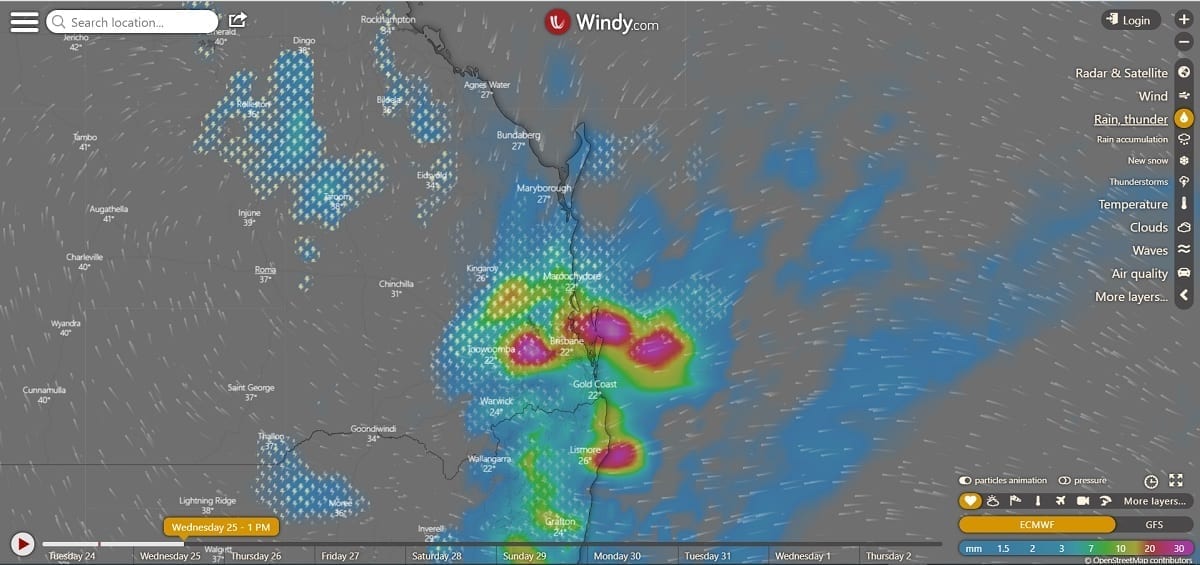
Showers and thunderstorms will start developing over the ranges this afternoon with some of these thunderstorms becoming severe.

The possibility of large hail, frequent lightning, heavy rain, and strong to damaging winds may form.

The situation:

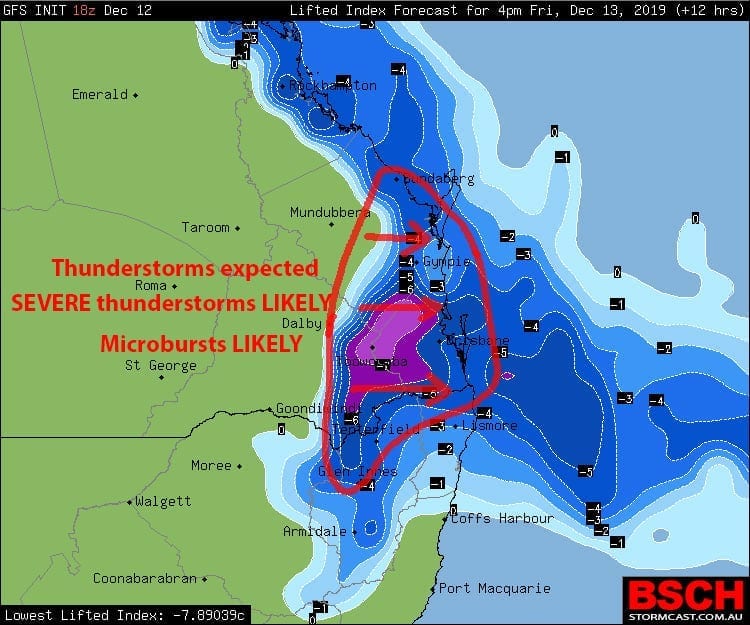
A low-pressure trough extends down into southern Queensland combined with an upper-level trough. These two factors in combination with high humidity, moisture and heat are going to produce widespread rain and thunderstorms across much of SE Queensland.

These severe thunderstorms are more likely from just north of Brisbane to the Sunshine Coast.

Microbursts are likely, these intense, sudden downpours of extremely heavy rain cause destructive wind gusts that develop from the heavy rain, extending outwards.

Video of a microburst from YouTube.

Please be prepared for severe thunderstorms with accompanying severe weather.  Storm development will be explosive and storms can become severe within minutes.

Keep an eye on the BOM radar or visit Higgins Storm Chasing or South Brisbane Storms for live updates and news.

BOM Radar: http://www.bom.gov.au/products/IDR663.loop.shtml

Higgins Storm Chasing: https://www.facebook.com/HigginsStormChasing

South Brisbane Storms: https://www.facebook.com/SevereWeatherAustralia/

Further reading:

What is a microburst?

How lightning helps plants grow

0

How does lightning form?

Lightning is the product of particles in a cumulo-nimbus or other large cloud formations rubbing together to form giant sparks that can form within these clouds or from the cloud to the ground or even from the ground to the cloud if conditions are right.

Lightning can form in almost any conductive environment from thunder clouds to volcanic eruptions clouds and pyro-cumulus clouds that form from large bushfires.

They are similar to static electricity charges you get when the air is dry and you rub two pieces of conductive material together and you get a zap, only much larger.

lightningHow does lightning help plants grow?
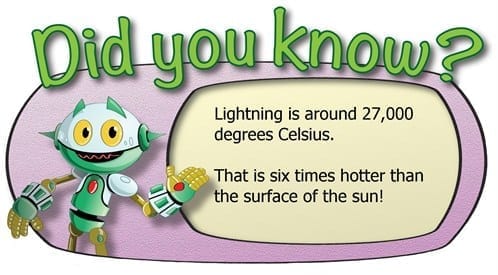
Lightning contains many nutrients that it absorbs from the surrounding elements.  The heat produced from lightning interacts with the nitrogen and oxygen surrounding the lightning charge.  The result is nitrates are formed.

When this nitrate is dissolved in the rain within the cloud, it becomes a natural fertiliser.  This is why you see a greener and better grass a few days after a thunderstorm.

So basically, thunderstorms are giant fertilisers and in combination with high rainfall can turn once barren landscapes into flourishing landscapes especially if thunderstorms occur more than once over a period of time.

Lightning is also commonly associated with the beginning of life and how it may have formed on earth.

Further reading

Mental Health – Human Instincts In The Modern World – Part 2

0

Go to Human Instincts Part 1

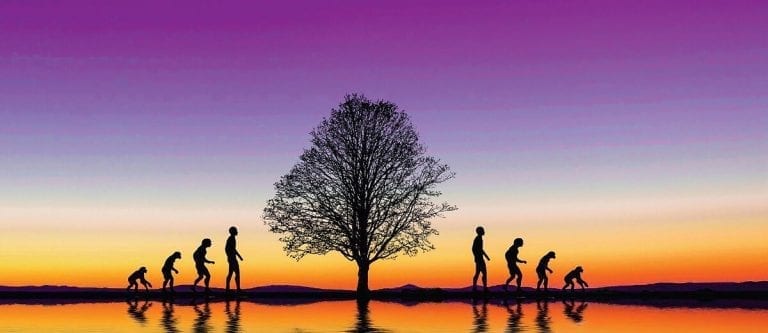
“We exist in a bizarre combination of Stone Age emotions, medieval beliefs, and god-like technology.”

Edward O. Wilson

Our instinctive behaviours were adaptive during prehistoric times (they enhanced our ability to survive and reproduce), we see that some of our instinctive emotions (mental health) have become serious impediments and may threaten our very survival. The human instinct is to fit in by being connected to others.

In today’s world, we have evolved an obsession with what others think of us, a craving for social approval and admiration, and a paralysing fear of being disliked. If we look at today’s mental health issues, depression, social anxiety and Obsessive-Compulsive Disorder (OCD) these may be instinctual behaviours from our ancient ancestors, and how they dealt with survival in the world of their times.

Depression

In today’s world, depression can dictate withdrawal from day to day life and these experiencing this disorder are often totally consumed with the traits and behaviours that would result. In a highly structured, oppressed society, there are clear definitions between the leaders and those that serve them.

Stress and fear may have given people the need to separate themselves from the work they were doing in serving the needs of others. Often depression affects motivation, energy, and sleep and in a world filled with violence and uncertainty, our ancestors may have experienced times when there was little to look forward or work towards. This has evolved to the more dominating type of disorder today.

Social Anxiety

This disorder leaves many people fearful of being singled out in a social situation. This may have prevented our ancestors from challenging the leaders of their tribe. The traits of social anxiety would have benefited our ancestors in times when there was a formal hierarchy of social ranking.

Our world today tends to have a less structured social ranking, and the opportunity is there to move up the social rank. Survival instincts may cause challenges when we try to improve our standing, and our instincts may be encouraging us to keep our distance and not challenge those higher ranked, whether socially or in employment situations.

Obsessive-Compulsive Disorder (OCD)

OCD behaviours possibly stem from a mother’s instinctual way of preparing for protecting their young. By maintaining safe and clean surroundings, they are keeping their children as safe as possible. In ancient times there was no knowledge of germs, or the ability to live in conditions we dictate today.

This disorder can be a hindrance to those with severe cases and has evolved to be far removed from the initial drive to provide a safe home for our young. Mental health disorders can take over a person’s life and make them prisoners to the disorder and its behaviours. Examining how these behaviours could have been vital under the living conditions of our ancestors, gives us a better idea of what drives and creates them, and may assist in improving treatment.

Instincts can be good and bad. A good instinct is self-protective, having a feeling someone might be a threat or a new friend may not be very trustworthy. A bad instinct could be an urge to cause harm to others, usually out of hurt or resentment. Human cultural contexts have changed but our brains and bodies have not. We still have the same fears and desires as our ancestors, but now those instincts are out of sync with life conditions. –

Wishing you all good mental wellbeing – Veronica

The evolution of our society is sometimes in conflict with the instinct of the individual.

References:

Other Articles

Bribie Island History – BRIDGE OVER TROUBLED WATERS

0

Next year Australia will be celebrating the so-called “Discovery” of Australia by James Cook, 250 years ago in 1770. I will be writing much more, and giving some public presentations, about that early next year.

The arrival of Matthew Flinders on the sloop “Norfolk” in 1799 was perhaps the most significant date for Bribie Island when he was the first white man to land here. Perhaps the most significant social and economic event since then was the building of the Bribie Island Bridge.

When the bridge opened on October 19th, 1963 life on Bribie Island, and in Queensland, Australia, and the rest of the world, was very different from today. Depending on how old you are reading this article, you may need to be reminded of some other things that happened back in 1963. In 1963 Australia was largely an agricultural economy and primary produce accounted for 77% of Australia’s commodity exports.

history australian queensland moreton bay bribie island bridge (1)
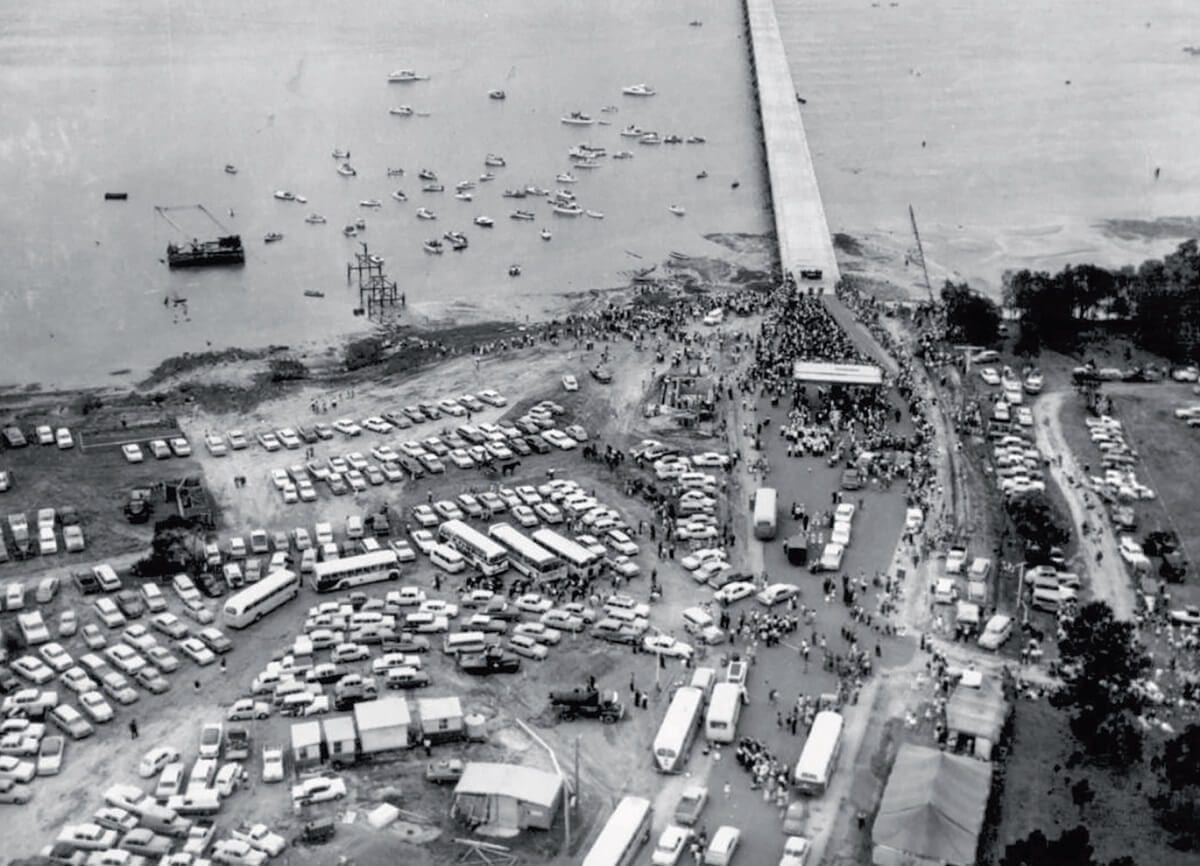
Bridge opening aerial 1963

Also, in 1963 the Commonwealth Marriage Act came into force legitimising children born out of wedlock by the subsequent marriage of their parents. In 2019 we have different issues occupying our minds, including thoughts about an additional bridge, or a replacement bridge, and when and where it might happen. Quiet holiday destination In 1963 the resident population of Bribie Island was less than 600 people, with thousands more coming for weekends and holidays.

But Bribie Island was still a quiet and peaceful holiday destination. There had been much speculation about building a bridge to Bribie Island for over 30 years. In those days, even with a small population, two Councillors were representing Bribie on Caboolture Shire Council and the community worked hard creating what they needed with their own volunteer efforts.

In 1963 when the Bridge was built:

  • U.S. President John Kennedy was assassinated in Dallas
  • Queen Elizabeth & Prince Philip visited Australia
  • Government announces Decimal currency to come in 1966
  • Charles Perkins “Freedom Ride” to end aboriginal segregation
  • The first National Television Network was formed.


Steamship excursions from Brisbane to Bribie had carried thousands of people for weekends and holidays since 1912, but this had stopped in 1953. A car ferry service had become popular since 1947 after the military built a road from Caboolture in WW2, and motor car ownership increased.

history australian queensland moreton bay bribie island bridge (1)
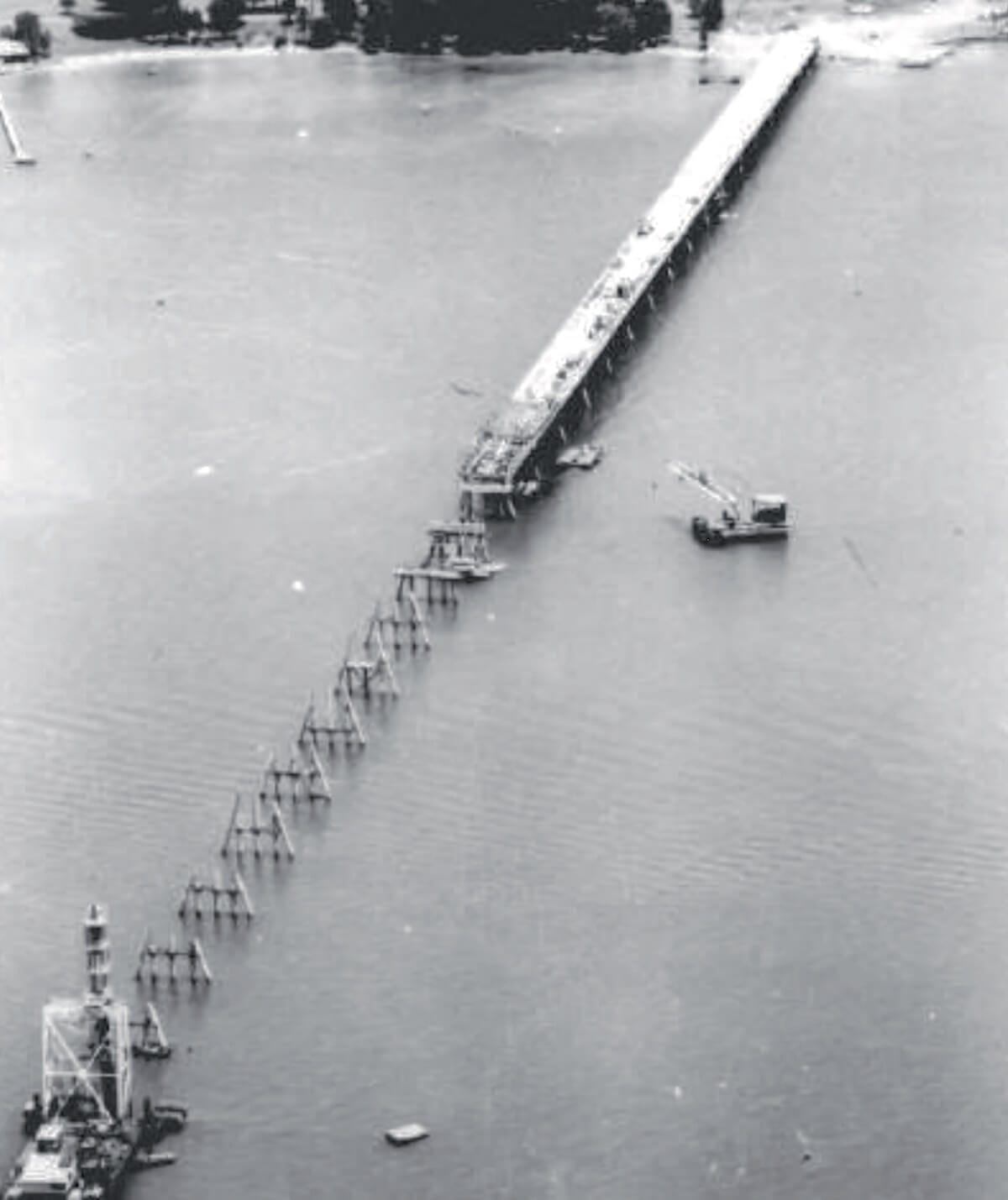
Bribie Bridge building 1962

Politicians talked about a bridge to Bribie during election campaigns in the late 1950s and had considered having it paid for by Developers, in exchange for land on the island. This did not eventuate, but in 1961 a Contract was awarded for a bridge to be constructed at a cost of 358,000 pounds. The Bridge was opened by Premier Frank Nicklin on 19th October 1963 and was the longest precast prestressed concrete bridge in Australia.

The complex construction had involved driving 206 piles, weighing 12 ton each, laying 38 spans of concrete beams to span the 832-metre length. Just weeks before the opening an expensive Toll was announced, to be paid by all vehicles coming to the island. The 10-shilling Toll was a significant cost and came as a complete surprise.

Residents and Visitors were very disappointed, and it impacted growth and development for some time. Better roads and increased car ownership had led to population growth on both the Gold and Sunshine Coasts, but this did not immediately eventuate on Bribie Island. In 1963 the 10 Shilling Bridge Toll would have paid the cost of Petrol to drive a car from Brisbane to the Gold Coast and back, and you could buy a pound of Beef for 2 shillings.

history australian queensland moreton bay bribie island bridge (1)
First cars cross bridge 1963

The Bribie Bridge toll was 10 times that on the Hornibrook Highway and was the most expensive road toll in Australia Land prices and rates on Bribie had risen significantly in anticipation of change, but the expensive Bridge Toll lasted 12 years and was finally removed in 1975 when the bridge had been paid for by the money collected. The much lower Hornibrook Highway toll was also lifted in 1975 having been in place for 40 years.

Bridge Opening celebrations.

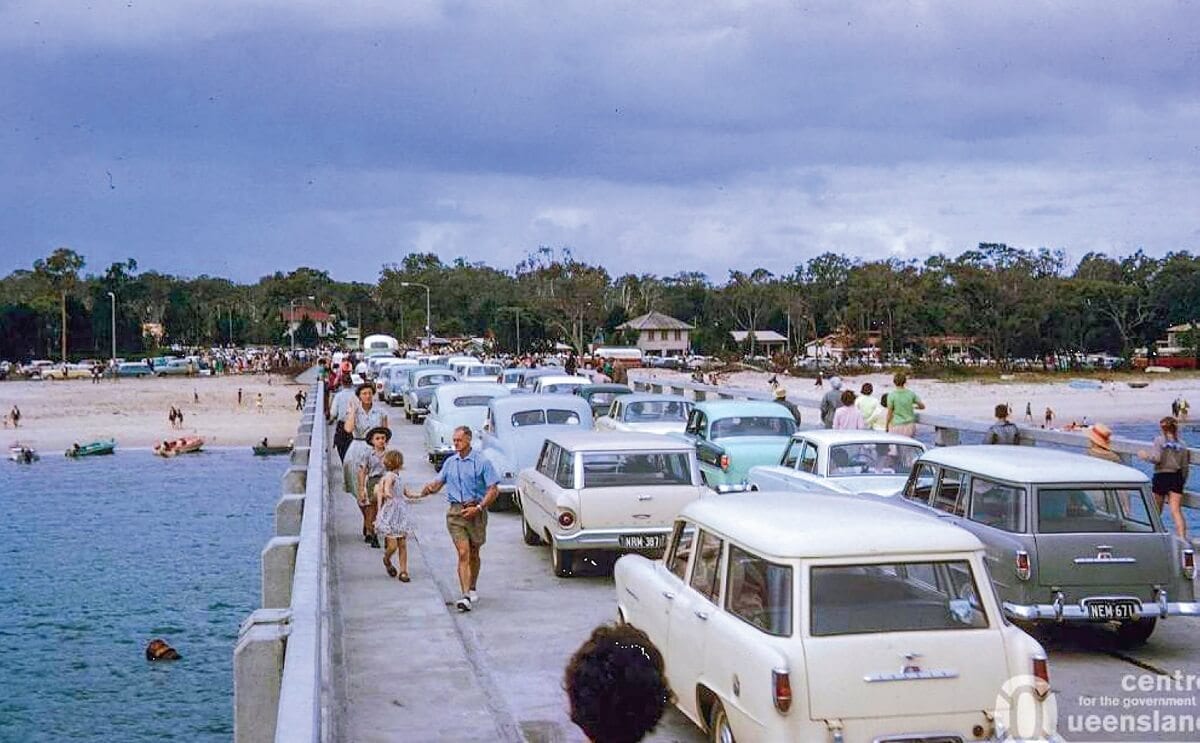
Bribie residents were outraged at the expensive toll and threatened to boycott or disrupt the opening ceremony. The opening day was, however, a big success, with large crowds and processions of floats, horse-drawn carts, vintage cars, marching bands and hundreds of vehicles driving to the island for the first time. It was so busy that the bridge was declared “One- Way” on to Bribie in the morning, and then “One- Way” off in the afternoon.

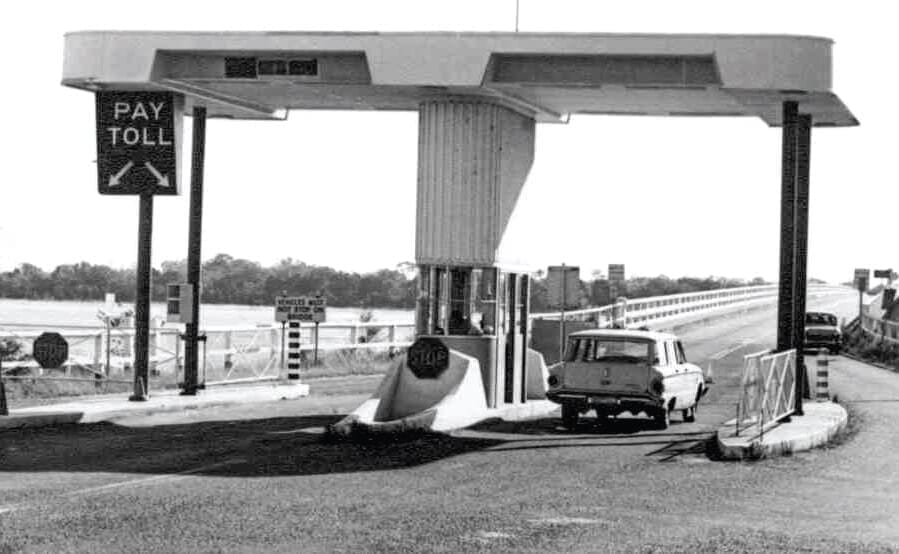
This photo, taken on an opening day, shows the two lanes of vehicles coming onto the island. If you look carefully at the photo you will see many things that are different today.……. footpath handrail, overhead lights, sealed road …… how many more differences can you see? An Aerial photo of the mainland end of the Bridge, taken on an opening day, shows the huge number of buses, cars, and people that gathered for the event, with the Toll Gates in the divided road surrounded by people waiting to walk across for the first time.

history australian queensland moreton bay bribie island bridge (1)
Bridge Toll Gates 1963

The “Bribie Star” local newspaper of the day produced a special complimentary souvenir edition documenting some fascinating history of the island by many of the pioneer residents. There had been an expectation that Bribie residents would not have to pay the toll, and eventually, they did get a small concession. Books of tickets for multiple crossings could be purchased at a small discount and there was an exemption for Ambulance, Fire Brigade, Royal Mail and Government vehicles.

14,000 cars crossed the bridge in the first week it was open, paying 7000 pounds to the two toll collectors, who were each on an annual salary of 5000 pounds. Many of the new visitors were very disappointed with inadequate parking facilities and amenities on the island, and may never have returned. In the first two years of the new bridge, over 300,000 cars crossed over, but population growth was much lower than anticipated reaching just 2000 by 1975 when the toll was lifted.

50 years of Bridge Anniversaries

For the 10th Anniversary in 1973, the toll was still in force, but by the 20th Anniversary in 1983 the toll had been lifted and a major celebration was held in conjunction with the “Bribie Island Festival” organised by the Lions Club, who sold “Passports” to the island as a fundraiser. In 1988 a “Silver Jubilee Carnival” was held for 25 years, together with a special edition of the local newspaper, and a souvenir T-shirt was produced.

The 30-year anniversary in 1993 was held in conjunction with a “Bribie Aquatic Festival”. I had only just come to live on Bribie Island in 2004 and knew nothing at all about Bribie History, or the significance of the Bridge, but I organised a fundraising walk for Rotary in which several teams of 10 people each walk over the bridge and back 4 times. So, each sponsored team walked 40 kilometres and raised $4000 for Rotary causes.

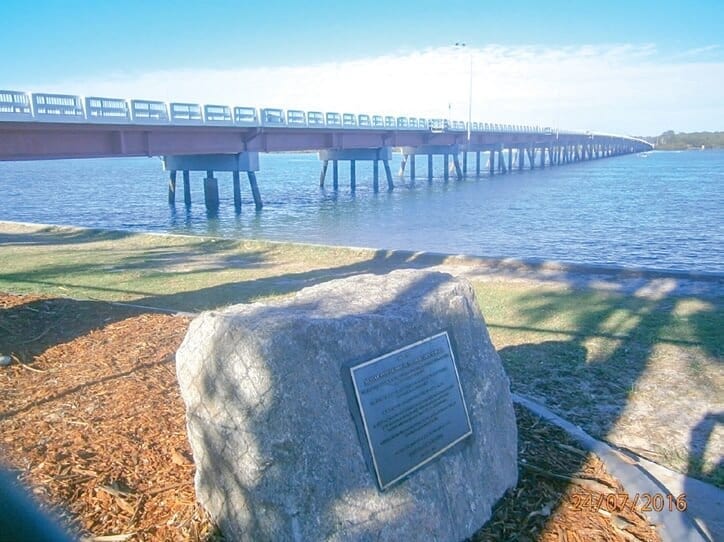
As a result of organising this event, I met Stella Ray, a very long-term resident of the island, who sparked my interest in the unique history of this island community. In 2008 I founded the Bribie Island Historical Society, and in 2013 the Society placed a 50-year commemorative bronze plaque on a stone beside the bridge and invited people involved in the bridge construction to participate.

The Past …and Future

There has been much talk in recent years about the age and limitations of our 56-year-old bridge, and the need for a second or replacement bridge. There are some who say “Bring back a Bridge Toll” and others who say “Blow the bridge up” and return to the peaceful days of water access only.

history australian queensland moreton bay bribie island bridge (1)
Bridge and 50yr Plaque

In four years’ time in 2023, the Bridge will be 60 years old, and will still be very much in use, whatever decisions are made about the location and timing of a second bridge. As there is currently no shared community “Vision” for what Bribie should be like in the future, it will just go on drifting and developing to become like every other coastal town. It is a pity that the people of Bribie don’t demand more of their representatives, to make sure that it remains the unique place that has made it so different for so long.

MORE BRIBIE HISTORY

The Historical Society has monthly public meetings at the RSL Club on the second Wednesday of each month commencing at 6;30pm. with interesting guest speakers on a wide range of topics. At the next meeting on Wednesday 13th November, I will be giving a presentation titled “Who really discovered the Brisbane River”. Come along. You can see many more photos and articles on our Blog Site at http://bribieislandhistory.blogspot.com or contact us on [email protected]


Other Articles

Gloss Magazine Bribie Islander 25th Edition December 6th 2019 Issue 102

Get all your community news and information. Bribie Islands only community gloss magazine NOW EVERY TWO WEEKS! – Articles on boating, camping, fishing, life, drama, travel destinations, sports and what to see and do on Bribie Island. Covering charities, organisations, places, children’s activities, arts and crafts, tourist destinations, heritage parks, technology, science, music, gardening, and much more.

Download the latest digital edition here


Bribie Wildlife – Red-necked Stint – Calidris ruficollis

0

Tags: Wildlife. Native. Birds. Australian. Red-necked Stint. Queensland. Moreton Bay. Bribie Island.

Red-necked stints are the smallest migratory shorebirds to visit our beaches. They are very common and descend onto our sandy beaches in flocks to mingle with other waders roosting and feeding. Kakadu Hide, the beach at Buckley’s Hole and the roost at Toorbul are places where you are likely to see them.

They start arriving in late August to early October and remain for the summer, so by now they should all be back from their breeding grounds in the Northern Hemisphere. Red-necked Stints are tiny birds just a little larger than Sparrows. They are 13-16 cm in length and weigh just 25-40 g.

Their non-breeding plumage is brown-grey on heads and backs and whitish underneath. Legs and bills are short and bodies are chunky. Male and females are similar in appearance. Their smallness distinguishes them from other shorebirds. When roosting, flocks frequently burst into flight and then come back to their roosting spot.

When feeding they dart about looking for food pecking at worms, crustaceans, molluscs, aquatic plants and insects on wetlands and mudflats at low tide both day and night. They feed in flocks and must eat huge quantities of food before tackling their marathon flight to the north. During breeding in the tundra, they eat mostly insects. Habitats are quite diverse. As well as frequenting beaches and sand flats they can also be found in inland freshwater wetlands.

Red-necked Stints at Toorbul

The southern Summer is spent in Australia, SE Asia, and NZ and during late autumn they fly off to the Arctic north to breed. Before leaving our shores, many have already developed their breeding plumage. Feathers on the throat neck and breast become a reddish colour – hence the name Red-necked Stint.

Their journey takes them along the shores of the Yellow Sea where they stop to rest and eat to replenish their strength for the rest of the journey. They are known to fly 5000 km or more between stops. When reaching the Siberian Tundra or Western Alaska up to 15000 km from Aust they make their nests on damp moss and lichen. Nests are just a shallow indentation on the ground and lined with grass and leaves.

Usually, about 4 olive blotched eggs are laid. Both parents incubate the eggs and care for the young. Chicks leave the nest soon after hatching. Birds that have been unsuccessful breeders leave for the south in June. Breeding females migrate south almost immediately after the chicks have hatched leaving the males to finish raising the babies. Males are the next to leave and the juveniles leave when strong enough to tackle the long journey.

Red-necked Stints at Toorbul
Compare Red-necked Stints with the larger Bar-tailed Godwits

It is amazing how they know how to find their way to their summer destination. Juveniles spend their first winter in Australia and are 2 years old before migrating to breed in the north. Red-necked stints are common and widespread in Australia. They are being threatened by development on the shores of the Yellow Sea where they stop to rest and in Australia where they feed and roost.

Plastics have become a problem to all shorebirds, harmful when eaten and deadly when caught up in fishing lines and plastic bags. Storms and cyclones occurring during their migration can be a big problem as if they are blown off course they often die of hunger and exhaustion.

A few interesting facts: Kalidrus is from the Ancient Greek and was a term used by Aristotle for small grey-brown waterbirds. Ruficollis is from the Latin Rufus “red” and collum meaning “neck”. A group of stints is known as a “spell”.


Other Articles

Touching Base: Home run

My Dearest Island fam, It’s been a while! I’m sorry for not writing to you in the last couple of issues. So much has been going on and there is a lot to tell you. So let’s begin… First of all, I’ve had a bit of a job change recently which has been super exciting and captivating. The hotel where I work has some magnificent gardens that I very much admire.

Often while I’m on my shift I’ll take moments to absorb the views and the singing flowers. Does the heart good. The gardens are kept beautiful, though, only through the love and care of Natacha our gardener. And boy does she put a dozen wheelbarrows full of love and care into her plants. It’s a lot of responsibility looking after living things that respond to even just the slightest changes in their routine, so when one afternoon Natacha asked if I would like the opportunity to take care of her plant babies while she goes away I was immediately both excited and scared.

Of course! “I would love that opportunity; it would be an honour!” I exclaimed in response. But my heart and thoughts were racing with doubt too. I knew I wanted to do it because I have a deep love for gardens, however taking on a job that big is a whole new level of green thumb. Nevertheless, I agreed to take on this responsibility and got the training. I really wanted to impress our gardener with my attention to the plants and show that I care. Which made me worry a lot about if I was doing a good job or not.

I even did homework at night revising certain elements to plant care. As well as learning this new skill and taking on this responsibility my family and I were also preparing for my sister’s wedding in Cairns which would happen just when my plant sitting finalised. So a lot of my emotions have been put into important things of late, hence not getting to talk to you all much. Which makes me sad.

I’m sorry! Anyway, all in all, I’m here to say it went better than well and the garden is looking happy. But I’m sure all the plants and flowers will be glad to have their Mumma back home! Only thing is, I’m not sure I want to go back to what I was doing before! Oops. I mean, I had a passion for nature before, but now I have a taste of doing it as a profession and I want more!

So there’s a certain path unfolding there… So now it is a cruisy Monday-on-Bribie night, and my parents and I just got back from Cairns: much wedding festivity has been had! We all stayed at a northern beach called Palm Cove. Yes, it is true. I traded Bribie for Palm Cove for a while and thoroughly enjoyed it. Please don’t think I’m a trader!! It feels weird to be in two different places in one day separated by a flight, but a privilege is all the same. It’s definitely a tropical paradise, Australia showing off or something I think. Different from Bribie in its atmosphere and mountains close by the sea.

The water is not as nice as ours and there is the potential for scaly and stingy things in the brackish water. But the palms and soft grass landing right upon the sandy shore is divine. Lots of places to eat and live music is everywhere. One thing I wish Bribie had is more live music flooding the streets, especially at night. But you know what they say, there’s no place like home. I hope that I have planted seeds from Bribie Island (spiritually speaking of course) on the Esplanade of Palm Cove and brought back something from the Cove to plant on Bribie so we can all share in the goodness of the two different places.

Cross-pollination of cultures I suppose you could call it. Travelling has made me fall in love with the land of Australia all over again and makes me hungry to see more of its rugged and varied beauty. We live in a sacred place and our people are as unique as the land. We must nurture each other like a gardener nurture’s her plants and share our territory with those willing to respect it. So much more to catch up on Islanders, I’ll do my best to make our writings not as far apart anymore!

All the best Nikita P.s Make some happy memories with your loved ones this coming weekend. I’ve realised how much memories are important; for they give life to, well, new life. Stay safe!

Other Articles


BUSY FINGERS – November 2019

This last month has been quite busy with a lot of donations arriving, keeping our volunteers very busy indeed. We have been having many different sales, furniture and pictures 50% off, ladies clothing $6 a bag and many others. Our daily sales will continue, so please check the blackboard as you enter the shop.

Our new truck is working out well, being bigger we can deliver more/ pick up more in fewer trips so if you need any items picked up please call 3408 1014 for an appointment.

CHRISTMAS BREAK JUST A GENTLE REMINDER

As Christmas is fast approaching, I thought I would continue to advise our customers of our Christmas Break this year. We will remain open until 3pm Tuesday 24th December and will reopen again on Monday 6th January at 8.30 am. During this period our gates will be locked and we will not be accepting any donations over the 12-day period. Please remember that the footpath belongs to the council not Busy Fingers, so please do not leave anything on the footpath as this is regarded as dumping rubbish and the council can prosecute those who do it.

Our security cameras take in the footpath area, and we wouldn’t like to see any of our customers prosecuted. Our volunteers and staff work very hard throughout the year and we like to give them the opportunity to spend quality time with their families over the festive season. We thank you for your cooperation during this time.

Queen’s Birthday Holiday

Sadly, someone left furniture on the footpath during the public holiday, this was picked up by the council and they will be taking appropriate action. The furniture should have been taken to the rubbish tip as it was not in good condition; if we had been open we would not have accepted it advising the person to dispose of it themselves. Busy Fingers has to pay to use the rubbish tip, therefore we cannot accept anything that we cannot sell.

Nice Lunch

One of the Island groups we have supported is the Art Centre and I thought I would go down and see how they were going, while there my friend and I had a lovely lunch in their cafe. There was quite a group enjoying the quality food and ambience of the cafe at the back of the centre. The whiting and salad was quite yummy and my friend was impressed with her Wagyu beef burger, the coffees were great too. But I must admit I wish I had seen the scones before I ordered, as the lady sitting nearby appeared to be really enjoying them, they looked so light and fluffy, I will have to wait until my next visit to give them a try. So if you plan to have a morning out with friends go and try it out while supporting the Art Centre at the same time.

DONATIONS

As well as continuing to support the VMR with fuel and the Hospice with the Palliative Care Suite at the BI Retirement & Aged Care Village, we have been able to support quite a few associations on the island this month including: The Bribie Island Aged Care which required Medical Equipment for moving patients, some Bed Assist with Monitors and Standard Chair Pads, 4 Air Lift Arm Chairs and Various medical products.

St Peters Church Committee requested help in re-roofing the old church so it can be used for functions and raising funds for island associations they in turn support. The Scouts required new mattresses to allow visiting scout groups to sleep in the den. BI National Servicemen’s Association required a new refrigerator to store food and drinks for their monthly meeting luncheon.

BI Dragon’s Abreast asked for help in obtaining a fully Automatic Defibrillator to ensure the safety of their rowers. House of Happiness has asked for help in preparing a concrete patio area and also improving the BBQ area. BI Hospice/Boronia Cottage Respite has asked for new linen, BBQ and an outdoor setting allowing their guests to enjoy their lovely garden area.

The BI Croquet Club requires some new equipment to accommodate the new field. The BI High School has requested help in fencing for their new “The Grow @ Bribie project”; this is designed to reduce waste through recycling, improving and promoting environmental practices. Students will be building the designated area with gardens that include Waste/Composting/Veggie Garden and Worm Farms. We will also support the Bribie Island Kids Education Support (BIKES) through assistance with School Book Packs, Uniforms & Shoes, School Excursions and Camps.

Once again we wish to sincerely thank all our customers, the people who donate all the pre-loved items, and our wonderful hardworking volunteers and staff, without them we would not be able to support as many island community schools, associations and clubs.

If you require assistance – If you are a member of an island club or association and require assistance please let us know. We try to assist all not for profit associations and sporting clubs, we also assist the Police, SES, VMR, and the BI Hospice. Our President Karen is quite happy to come along to your club and present our aims and goals and how your club can apply for assistance.

Please call 3410 1920 or email [email protected] if you wish to have a presentation or if you wish to apply for a grant of assistance. When applying for assistance please include a contact name and phone number and also a current equipment quote, tell us a bit about your association/ club and membership and why you need the equipment you are requesting.

Please be aware we only deal with island associations and groups not individuals. As usual, I wish to thank Richard and The Islander family for all their support throughout the year. Hope to see you in the shop soon.

Sandra.

Other Articles


BUSY FINGERS Sept-Oct 2019

Bribie Island Rotary – Teacher in a Box!

0

One of my family’s favourite poets, Robert Frost, said, ‘I am not a teacher, but an awakener.’ Likewise a paraphrased quote from Plutarch says ‘education is not the filling of a pail, but the lighting of a fire’.

These eloquent quotes are all very well for people in developed countries who have access to so many educational resources, but how do we educate, awaken, or light a burning desire to learn for people in remote areas of developing countries such as PNG and Africa? As part of its commitment to basic education, one of Rotary’s six causes, Rotary District 9600 is providing the ‘Teacher in a Box’ program, and training in its use, to people in remote areas.

NO, we are not packaging teachers in boxes and sending them to developing countries, whereupon they spring forth to work their magic. We are actually thinking outside the box, as well as inside, to achieve our aims. What some might call lateral thinking. Teacher in a Box (TIB) uses re-purposed laptops, which act as both a browser and a server, to provide offline access to over 10,000 educational and vocational videos that are stored in the system.

bribie island rotary (4)By connecting the TIB laptop with a projector and speakers, a teacher is able to provide a complete lesson to a classroom. The mini router, that comes with the TIB kit, means that it can also be accessed by any Wi-Fi enabled device for self-paced learning. TIB is the brainchild of Jeanette Johnstone from the Rotary Club of Paddington, Queensland. Following a visit to Tanzania and Zanzibar in 2012, she recognised the need for educational resources that didn’t depend on the internet which was not only unreliable but expensive, in many parts of Africa.

Jeanette met Patrick Hackett, a volunteer with Computers 4 Learning, another Rotary Project, which comes under Rotary’s Donation in Kind program. Jeanette and Patrick formed a partnership and they stripped and cleaned donated laptops, uploaded thousands of educational videos, lessons, books and accompanying resources and connected the laptop to a small router. The information on this laptop can be shared with as many as 100 other devices. The TIB Project continues to grow and has been invaluable to schools in Liberia, Tanzania, Kenya, Cambodia, Papua New Guinea, and the Philippines.

bribie island rotary (2)Recently, Jeanette and some of her fellow Club members visited our Club and demonstrated the system. I was able to connect 2 iPhones and my iPad to the system instantly and had access to thousands of free educational and training manuals. Jeanette explained that they are now using Remote Area Community Hotspot for Education and Learning (RACHEL) as a content provider for the TIB units.

You can find a list of the RACHEL modules already available at racheloffline.org. This now means that additional content can be added prior to sending the laptop or added locally by the users. Over the past few years, our Bribie Club has received district grants to purchase a number of TIB laptops and provide them to Rotary Clubs in PNG, Nauru, and the Solomon Islands. Every March the incoming Presidents from these Clubs come to Bribie Island to receive training for their presidential year.

They are given a TIB kit and provided with training on how to use the system. To me, one of the ‘apparent’ problems with the TIB kit was the lack of electricity needed to charge the laptops; however, my concerns were alleviated when I saw a photo of a man from the Western Province of PNG charging his iPhone with a solar panel during a 4 hour walk to the next village. Also, I have read that satellite charging is available to remote areas and that solar panels are being placed on the roofs of schools.

bribie island rotary (4)
Dr Russ Stephenson is ready for work after solar charging his laptop in PNG

Yet another problem solved. In our developed world, we take internet access and readily available electricity for granted. So this is such an inspiring innovation for rural villages and countries where it is limited, or no, internet access. Teacher in a Box is making a huge and positive impact in places where there are few classroom resources or teachers with very little training.

In closing, I am drawn back to my favourite poet, Robert Frost, who also wrote the famous poem ‘The Road Not Taken’– or to many – ‘The Road Less Travelled’. I feel the ‘Teacher in a Box’ program is perhaps indicative of Frost’s poem where many people, never given the chance before, are being given an opportunity to take that road. A road to success and happiness – the one less travelled by. And, that can make all the difference!

Other Articles


Technology and how it affects our life

Bribie Groups – New Zealand Ladies

The New Zealand Ladies group meets at the Bribie Sports Club at Bongaree, 10.30 am on the third Wednesday of the month. It is very casual and a wonderful gathering of ex-pats, from New Zealand.

Some of us have been here for many years, while others are relative newcomers. Getting together every month for twenty years is quite an achievement and we have lots of laughter and fun.

We would like to encourage any more ‘Kiwi ladies’ out there, to come along and enjoy the friendship and know there are plenty of us hidden in the crowds on and around our island paradise.

We would like to boost our numbers, as we guess there are always new people coming to live on the Island to enjoy our weather and lifestyle.

We have a Christmas gathering in early December.

For any more information please contact Lynne on 0422 313 584.


Other Articles

Bribie Island VIEW Club has a new club banner

Bribie Island Weather – Showers and thunderstorms this afternoon & evening (1/12/2019)

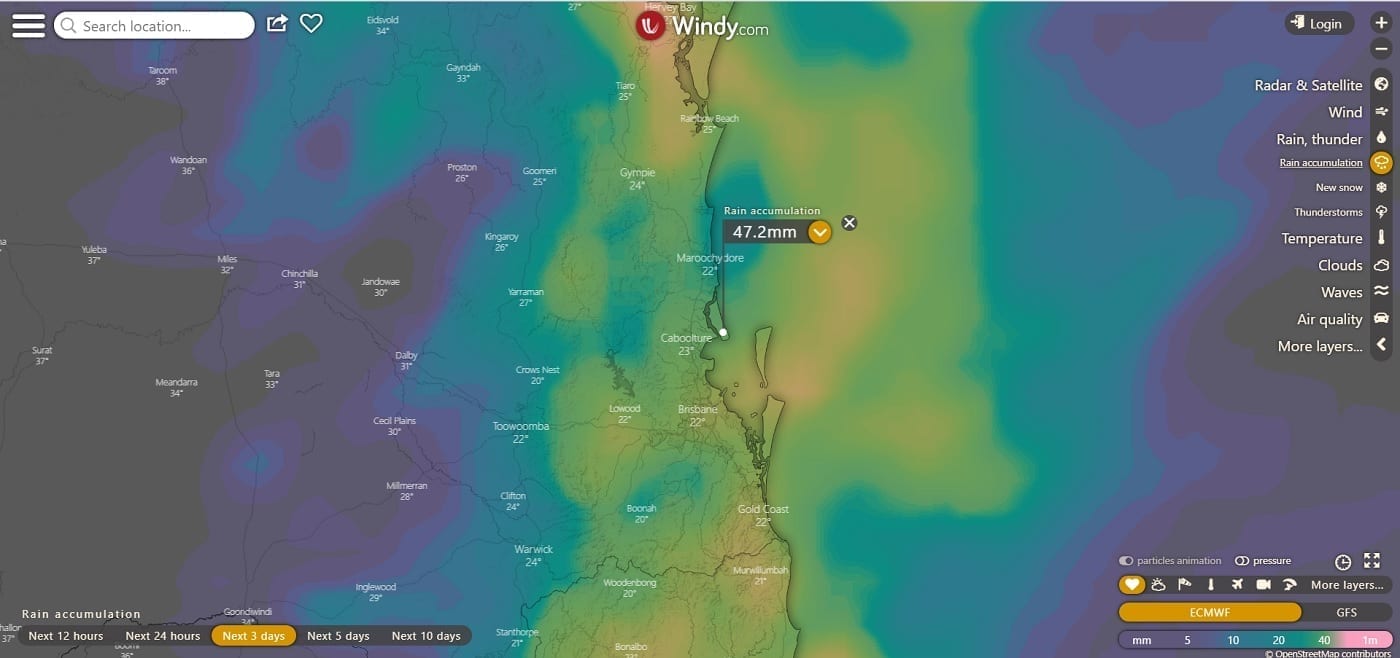
The SE Queensland and Moreton Bay areas including Bribie Island and surrounding areas may get some explosive showers and thunderstorms developing this afternoon and evening, with the possibility of some decent rain as well.

Bribie Island is in the grip of dry and hot weather, while some areas of SE Queensland have experienced the driest November in history with some parts only recording just over 1mm of rainfall.

Read more here:

https://www.weatherwatch.net.au/weather/queenslands-driest-november-on-record-from-cape-york-to-the-nsw-border-and-beyond/

These conditions have also been experienced in NSW and as a result, the hot, dry conditions have lead to hundreds of bush fires resulting in 6 human deaths.

This is due to abnormally dry winds bringing in no moisture from all directions.  This is extremely rare for this time of year, as usually in November we see consistent storms developing over Queensland.

These conditions are set to continue for at least another 2 weeks and we may see more significant rainfall late December or early next year.

Some thunderstorms may be severe as they interact with the coastal sea breeze and may contain heavy rain, hail, and strong winds.


***UPDATE****


Severe thunderstorm warning

http://www.bom.gov.au/products/IDQ21035.shtml

Keep an eye on the BOM weather radar for live updates or visit https://www.facebook.com/HigginsStormChasing for more information.

Weather Radar.


Other Articles


MarketPlace, Ningi

0

MarketPlace held at the Hall Grounds, Bribie Island Road in the centre of Ningi is a successful community initiative hosted by the Lions Club of Sandstone Point. The MarketPlace has a fantastic variety of locally produced goods for sale.

There are art and craft, bric ‘a’ brac, a sausage sizzle, including egg & bacon muffins, plants & nursery, recreational gear, fresh fruit & veg, gourmet produce, baked cakes and biscuits, alternative medicine & natural products, secondhand goods – and much, much more! The MarketPlace is held on the first Saturday of every month between 7 am and midday.

However, the next market, which will be a Christmas market will open for extended hours from 7 am to 2 pm to give market-goers more time to pick up some great Christmas bargains and hang about so the kids can meet Santa. Yes, Santa is coming to MarketPlace, so bring the kids and be part of the Christmas celebrations.

He’ll also be handing out a lolly bag or two thanks to Simone Wilson, State Member for Pumicestone. According to Eric Banham, Sandstone Point Lion’s MarketPlace coordinator “Our Christmas MarketPlace is shaping up to be the best market yet with lots of Christmas fun for everyone, apart from the great community feel and village atmosphere it’s a great place to meet up.

You can enjoy a bacon and egg muffin brekky, cooked perfectly by one of our Sandstone Point Lions, relax over a barista-made coffee from the ‘Coffee Man’ and to top it off stroll around MarketPlace and pick up a bargain or two at one of the many market outlets.” This is also a way you can support your community.

So, come along, follow the signs to MarketPlace, Ningi and we’ll see you there! If you’re interested in doing your bit for the community, but not quite sure how.

Then why not talk to one of the Lions Club of Sandstone Point members at MarketPlace or call 0435 017 752 and find out how you can be part of the friendliest, fun-filled Lions Club on the planet. For more information about MarketPlace or Lions call 0435 017 752.

Other Articles