Home Blog Page 45

VMR Bribie Island

Green Saturday’s second to last job. An 8.5m half cabin with some electrical issues and they didn’t catch any fish either so not happy fisherman, made it back into Spinnaker before it got dark. Great to see all the guys wearing new life jackets keeping themselves safe on the water.

Green Saturday was tasked to an interesting job. A 26ft sailing boat motor had given up and needed to get to Bribie Gardens which many of you won’t know, is only accessible by a lock. So the vessel folded its mast down so we could get under the bridge, then that made it 36ft!! So, Jonkers Bribie 3 towed the vessel to the lock and each vessel had to enter the lock on their own as there was not enough room for them both. So a lot of man handling of the sailing vessel was done, lots of ropes thrown and in the end the sailing boat was towed safely once on the other side to its pontoon. It took a great deal of team work to make it happen great job Green.

MSQ VISIT
Ben Bosschieter from Maritime Safety Queensland was a special invited guest at the July Committee Meeting to bring the committee and some of the VMR Coxswains who also attended, up to date on the issues and problems that MSQ faces. Discussions were held on ways of helping each other regarding vessels on mooring buoys in the Pumicestone Passage.

ALP CANDIDATE VISITS VMRBI
State Labor candidate for Pumicestone Ali King along with Kerry Duffy visited VMR Bribie Island on Wednesday morning 15th July 2020. Commodore Liz Radajewski, Secretary and Commercial Coxswain Gary Voss, Radio Operator and Emergency Services Liaison Officer Graham Gibb outlined our operation, highlighted our challenges and conducted a tour of our base and vessels.

NIGHT TRAINING
Caption On water Night Training for or VMR rescue crews is an essential part of VMR Bribie’s training schedules for all crew members, but safety is always one of our major concerns. So whenever one of our rescue vessel go out day or night, there is always a radio operator to handle their calls. At night there is a call out system for radio operators, the same as for the boat crews, for anyone of our three rescue vessels Bribie 1, Bribie 2 or Jonkers Bribie 3.

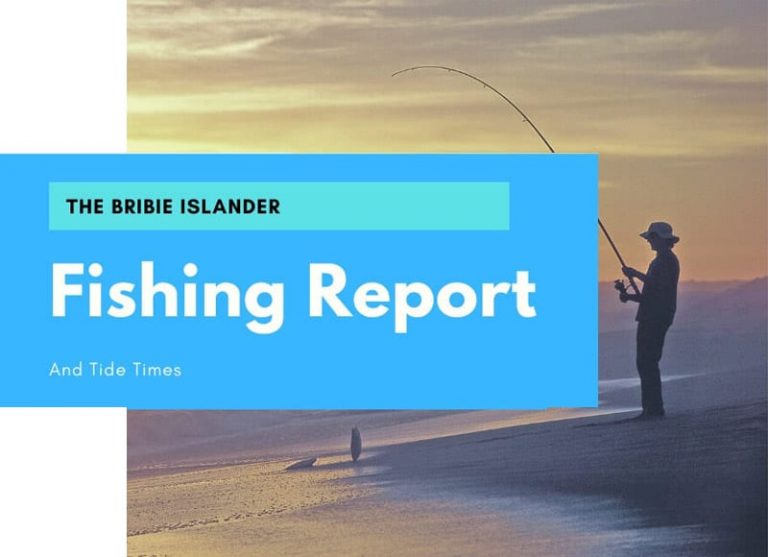
Fishing Report – July 31, 2020

Despite fairly miserable weather during the last fortnight, the anglers who have braved the conditions have been rewarded with some nice fish.

I can only report what my informants have relayed to me. Once again, Claude has caught some very nice Flathead trolling hard- bodied lures on the banks in front of Pebble Beach, and also in the deeper waters behind the Avon wreck. Danny has also caught some nice Flathead and Bream on soft plastics off the sandbank on the northern side of Pacific Harbour canal entry. Amazingly enough, he also managed to get a half dozen very nice Whiting of 35-39cm in the same location on yabbies. It is important to note that Danny has taken all his fish at night. The proof is in the pudding – a photo of 55cm Flathead and 39cm Whiting. I have also had solid reports of nice Flathead and the odd good Tailor caught at Red Beach on pillies. Fairly sketchy reports of tailor being caught at Skirmish Point, but those that have been taken have been caught in the early morning or late evening and were pretty handy fish. There is quite a lot of bait scattered along the beach close to shore, and with the cold west to south-west winds we have had in the last week or so, one can only expect that the Tailor should show up in numbers in the near future.

Don’t forget that the season is closed now for Snapper and Pearl Perch until midnight on the 16th August, but have a look at the nice Snapper Kelly caught a couple of days before the closure. According to the Almanac, our next ‘hot’ time is the 20th, 21st, and 22nd August. In my last report, I mentioned some nice Squid being taken at night at Creel Bend, and this is still the case. Just remember – these are absolutely delicious, but only take what you can eat so all can enjoy a feed. It would be very remiss of me if I didn’t make mention of the ‘reel’ specials that are on at the moment at Bribie Bait Tackle and Bikes. Come in and grab a bargain while the stocks last.

That’s all for this fortnight. Keep your stories of success rolling in.

Attax

OUR STRENGTH. YOUR NUMBERS…

If you want quality, trust and expertise, look no further than Attax tax accounting and bookkeeping. Angela and Elizabeth are committed to helping your business succeed. But let’s have a closer look at their business and why they are the right people for you…. Angela is a born and bred north Brisbane girl who fell in love with accounting at Kedron State High School. Accounting was Angela’s favourite subject at school and to this day still brings her joy. Where does a school graduate go to get her fill of money and numbers? To the bank of course! So banking became Angela’s career and after 20 years of working for the Commonwealth Bank she moved interstate, got married and had two of her three children. Home is where the heart is so Angela returned to the Sunshine State to pursue her love of numbers and to ensure her third child was a Queenslander.

Angela started working for John Trezona Accounting in 2012 on Bribie Island and now considers herself a Bribie local and loves bringing up her family in such a community minded place. Through extensive study Angela is now a registered tax agent and a member of the IPA and NTAA.

Which brings Angela to her current venture – Attax Services – a business she formed in 2008. Angela’s 10 years of experience in taxation and public practice gave her the confidence and drive to open up her own company.

Elizabeth, after gaining her Bachelor Degree in Accounting, worked for 17 years as Finance Manager for The Electrical Trades Union QLD & NT, a role she loved and thrived in. This role took Elizabeth from daily accounting, dealings with State and Federal Government compliance and Governance, to financial accountability for State and National Unions. This was a demanding role which Elizabeth succeeded in with the support of her partner Michael and their 3 kids. Then came the need for work/life balance, a change of pace – Elizabeth can finally see the kids morning and night and walk about our beautiful Island. The chance to partner with Angela to create their own firm is a dream come true.

The community is important to Angela and Elizabeth, they take the chance when available to sponsor local teams. For the last 3 years Attax Services has been a major sponsor of Bribie Island`s Junior Rugby League Club, the Warrigals.

The ladies pride themselves on their thorough and up to date knowledge of all Australian taxation issues. They are here to help you with all your taxation needs whether they be big or small, complex or simple – please contact them via their website, email, Facebook or telephone or make an appointment at the new office situated at Shop 3/17 Benabrow Avenue, Bellara.

You won`t miss them as you drive across the bridge on to Bribie Island!!!

TK Beauty Studio

A business dedicated to client satisfaction

TK Beauty Studio is a small home business that started just over 12 months ago at Sandstone Point. We have a professional attitude and aim to provide a relaxing and comfortable experience for all clients. TK Beauty Studio has Tara, the head beautician.

Her aim is to provide the clients with the best possible experience, using her depth of knowledge about the industry to provide the best possible results. She has completed her Certificate 3 and Diploma in Beauty Therapy as well as completing thorough training with industry leaders in Australia. Patricia, the receptionist, is a welcoming person who answers the phone whenever a call comes through. Despite not being a beautician, she also has a vast knowledge of the industry and connections with major suppliers to ensure the customer can get any of their questions answered about their concerns or products. Sean, the tech-savvy member of the family has done the design of the brochures, business cards, logo and more. He keeps the website and social media up to date with all the appropriate information. Together as a family, we use our industry experience and knowledge to benefit clients in the best way possible.

We pride ourselves on using only the best products to cater to anyone’s needs. Most of the products are vegan-friendly, gluten-free and hypoallergenic to minimise the adverse reactions clients could get from using typical products. Using top of the range products allows Tara to effectively give the best results. Best of all, most of these products are made in Australia. We are an Australian business supporting fellow Australians.

At TK Beauty Studio, we also take pride in our old-fashioned business values with it being one of the key things we focus on. We like to provide our customers with the best experience possible, keeping our services in a relaxed environment, listening to the clients, teach our clients the maintenance of their services, and giving back through various giveaways we have throughout the year. We ensure that our clients know how to care for their services such as eyelash extensions to provide longer-lasting results.

While everything above sounds great, why do we go through all this effort? We like seeing the smiles on our client’s faces that is the most rewarding part of working in this industry. To give the gift of self- confidence to our clients is something that cannot be put into words, it is just a wonderful feeling. Tara is passionate about making our clients feel good and is the reason why TK Beauty Studio came to be.

Even when you leave the salon, our service still is not complete. We are here to answer any of your questions about our beauty services. Feel free to contact us on 0477 755 161 if you have any questions or want to book in. Be sure to remember to keep an eye out for our ad in the Bribie Islander Magazine for future specials.

Pricelist is on our website: tkbeautystudio.com Facebook: TK Beauty Studio Instagram: @tk_beauty_studio_qld_aus

The Plant Patch: Pollination of a Nation

A KEY INGREDIENT TO A HEALTHY GARDEN IS POLLINATION.

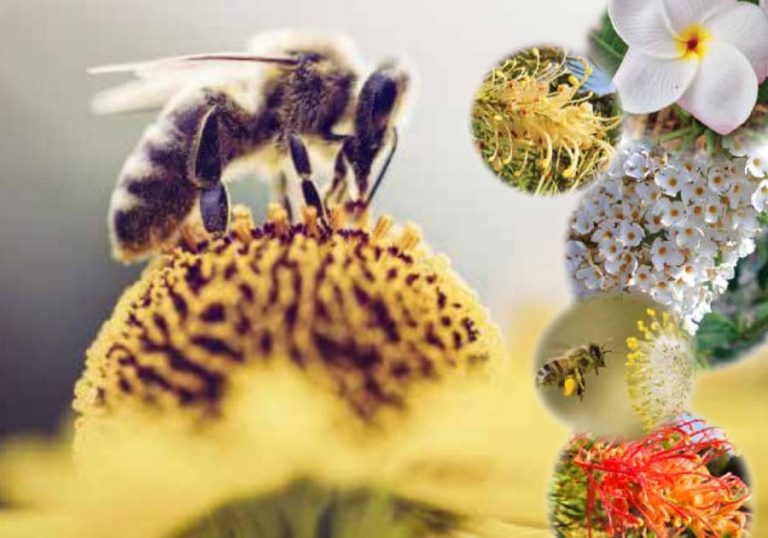
There are various ways a flower can be pollinated and the most well-known is the humble bee, either native or introduced.

Native bees are Australia’s wildflowers best friend. Did you know there are about 2000 species of native bees, some as small as 2mm in length, that primarily make the tropical regions their home? The smaller ones are perfect for pollinating those tiny floral gems in your garden. Some native bee varieties live in tree hollows but the majority are solitary dwellers, preferring to make timber cracks or holes in the ground their home.

European Honey Bees are more commonly recognised in our coastal gardens. They are ideal for commercially grown honey due to the larger volume of honey produced when compared to native bees. When introduced in the late 1800s, some escaped into the wild and they became a key part of our pollination landscape. In recent times though, these bee numbers have dwindled due to changes in the environment and attacks from pests.

Moths are another group of pollinators that are usually forgotten. They work their magic on plants whose flowers only open at night, like the pawpaw. A Tasmanian vegetable grower has used flies to pollinate their cauliflower crop. He attracts the flies using rotting carcases to grow their maggot babies.

Native birds also provide a valuable pollinating service when feeding on flowers. They get covered in pollen and then disperse it between flowers.

Butterflies & the humble flies help pollinate the native plants they are feasting on. Imagine a world without avocados or coffee beans – how would the Hipsters cope?

Did you know that a commercial grower in NSW is trialling a robot buzz pollinator in their greenhouse environment? The robot will identify the plant’s flower and then direct pulses of air at it to simulate the buzzing of a pollinating bee, causing the pollen to be released and drop down further into the flower.

Frangipanis, magnolias and Lilly Pilly are great food sources for bees. To encourage butterflies, you’ll need plants for them to feast on – Pentas are a popular choice. Rainbow Lorikeets love Grevilleas and flowering gums.

As with all living creatures, year-round food supply is essential so factor in a healthy biodiverse selection of plants & trees and you’ll find our local pollinators will be regular visitors to your outdoor patch.

It’s All About The Tecnology

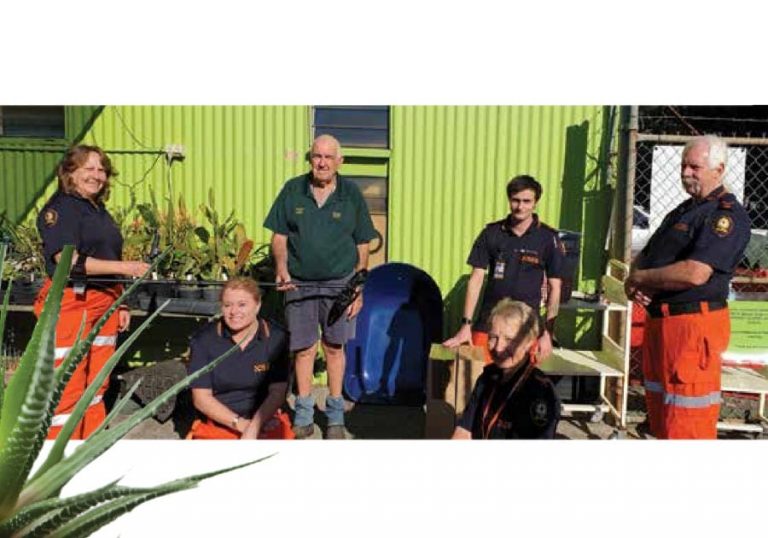
I guess that anyone who spotted a group of SES volunteers assembled at the front of the Wallum Action Group’s Bribie Community Nursery last week could be forgiven for thinking that they were there to deal with some type of emergency situation but, as this article will reveal, that was definitely not the case. Bribie Island SES members Jan Dwyer, Tracey Crees, Ian Moxham, Tash Barends and Jake Swallow were at the nursery to participate in a small ceremony that involved the presentation of three very hi-tech metal detectors which were paid for by the profits of plant sales at the nursery.

During the presentation, Wallum Action Group President David Wearne pointed out that, although the new detectors were considerably less expensive than some others on the market, they incorporated some of the latest technology which included being fully submersible and wifi capable as well as being able to penetrate up to ten metres underwater. ‘They also have the ability to detect a gold ring or a gold filling in someone’s tooth and this will be of extreme benefit when searching for a missing person,’ David explained.

SES volunteer Jan Dwyer told me that having the new metal detectors makes Bribie Island SES one of the most technologically advanced groups in the region. ‘We get to keep two of the three detectors that the Bribie Community Nursery has so generously donated and the third goes to Woodford SES,’ said Jan. ‘Because all the groups join together in any major search activities, that one will always be available if we need it,’ she added.

The presentation of the metal detectors has been just one of the instances in which the Wallum Action Group Bribie Community Nursery has used their funds to assist individuals in need or community organisations and these include the provision of many diabetes pumps, paying for the training of an assistance dog, sponsoring various community groups and a large donation to Camp Quality each year. All the plant sales profits are used to benefit the community within the local region.

The Community Nursery can be found on First Avenue next to the Orchid House and is open from 8 am to Noon each week day as well as on the first Saturday of each month. It is operated solely by a group of dedicated volunteers and has an incredibly large range of plants in stock. Anyone who would like to find out more about this great community organisation or perhaps enquire about becoming a volunteer should either visit the nursery or call 0407 699 953 for details.

Community Men’s Shed Bribie Island Inc.

The Community Men’s Shed Bribie Island was formally established in August 2017. The Shed was developed because of a need on Bribie Island for men to get together in companionship, and to work on personal and community projects.

The Shed is a member of the Australian Men’s Shed Association. (AMSA) is the peak body supporting almost 1000 Men’s Sheds and is recognised as one of Australia’s largest male-based community development organisations. The CMSBI is situated behind the Church of Christ, Corner Foley Street and Fifth Ave, Bribie Island.

The shed was closed for a period because of COVID-19, reopening again on the 17th of June.

The shed is open from 8:30am to 12:00pm every Wednesday. For now, the numbers are limited to 20.

If you or someone you know would like to consider joining the Men’s Shed, come along – have a look and a chat to our wonderful members – stay for a coffee or tea and biscuits.

What is a Men’s Shed? Men’s Sheds are found in many cities and towns around Australia and continue to spring up internationally. Not all Men’s Sheds are the same – if you looked inside you might see a number of men making furniture, perhaps restoring bicycles for a local school, making Mynah bird traps, fixing lawn mowers, or making a cubby house for a local children’s group.

You will see teabags, coffee cups, and a comfortable area where men can sit and talk. So what is so special about the ‘Men’s Shed’? Men’s Sheds are vital community investments delivering programmes and activities that foster community spirit and contribute to building a more inclusive Australia. Men’s Sheds not only provide diverse memberships but also promote a platform for the blending of ethnic, social, and cultural values with a strong focus on men’s physical, emotional, and mental health. This in turn contributes to the sharing of skills, making friends and fellowship, networking, and also offers opportunities to positively engage with their local community for the benefit of all.

Statewide Search for Year 6 Queensland Student to be Fred Hollow’s Junior Ambassador

The Fred Hollows Foundation is calling for nominations for the Fred Hollows Humanity Award, which recognises Year 6 students who demonstrate compassion, integrity and kindness towards others. Parents, teachers, principals and community members around the country can nominate a child in Year 6 who has made a difference at www.hollows.org/fredhollowshumanityaward before 11.59pm, Friday 11 September.

One Junior Ambassador from each state and territory will be selected.

Honouring children for their kindness, compassion and integrity is more relevant than ever in 2020, which has underscored the importance of these values.

“Fred used to say the basic attribute of mankind is to look after each other,” said Gabi Hollows, Founding Director of The Fred Hollows Foundation.

“He would be so proud to know the Fred Hollows Humanity Award is recognising students who are demonstrating this belief in their own lives.

“To see students honouring these words by showing compassion, kindness and integrity during such a challenging year is incredibly inspiring.

“I urge people to nominate a Year 6 student for the Humanity Award and together we can continue to help spread compassion and kindness during this trying time.”

One student recognised at last year’s ceremony was Concordia Lutheran College student, Bella Edwards, who was nominated for her altruistic, caring and compassionate nature.

“Bella has a beautiful heart and always thinks of others,” Principal Juanetta Priest, said.

“In 2019 she conceived an idea to make over 300 ANZAC biscuits with her classmates to say thank you to our veterans.”

“Bella also personally wrote handwritten letters to accompany each batch of cookies. She insisted that they were handwritten so that the veterans knew how much the students cared.”

All nominees will receive a certificate and be recognised at a virtual presentation ceremony later in the year.

A Junior Ambassador from Queensland will be recognised and will be able to extend their humanity by allocating $5,000, donated by the award’s charity partner Specsavers, to one of The Foundation’s programs to end avoidable blindness.

Since 2012, the Fred Hollows Humanity Award has recognised more than 1,500 students who follow in Fred’s footsteps by making a positive difference in the lives of others.

The Bribie Islander Gloss Magazine July 17, 2020 Issue 118

Issue 118 OUT NOW. Get all your community news and information. Bribie Islands only community gloss magazine NOW EVERY TWO WEEKS! – Articles on boating, camping, fishing, life, drama, travel destinations, sports and what to see and do on Bribie Island. Covering charities, organisations, places, children’s activities, arts and crafts, tourist destinations, heritage parks, technology, science, music, gardening, and much more.

Download latest digital edition here. Or use the ebook below to view.

8 Secrets to Styling Your Bathroom

1. WALL COLOURS You can always change the colour of paint – perhaps a stronger, darker tone or even a fresh white. So, by keeping the floor and wall tiles very neutral, you can easily introduce colour in the form of paint to the walls. This means that the look of your bathroom can be freshened up and changed quite dramatically over the course of just a weekend.

2. TILES It can be expensive to tile a bathroom from floor to ceiling and most prefer to only use tiles in the wet areas and have plastered walls that can be painted. It is a good idea to have a self contained shower, for example at the end of the bathroom or even in a separately designed corner or area.

3. NO CLUTTER The last thing you want is for your bathroom to be cluttered. Ensure that the tray, bowl or dish that you employ has a purpose and that your styling vignette doesn’t get too busy.

4. BATHROOM STYLING ACCESSORIES Do you love to shop for bathroom accessories? There are so many lovely pieces that are available now. Mother of Pearl trays, gorgeous organic shaped timber bowls, or delicate porcelain dishes. Whatever your style, there are items that you can add to transform the look of the space.

5. FREESTANDING BATHS can look lonely without a timber stool. A handy seat or just a spot to leave the soap tray, whichever use you have for it there is no doubt that the texture and colour in the timber is a nice contrast in a simple white or grey bathroom.

6. WATER AND ELECTRICITY DO NOT MIX and there are very definite guidelines which you absolutely must follow when installing a pendant in a bathroom. LED strip lighting underneath a wall hung vanity is a good idea as this can be left on at night and can be just enough to see by in the dark and saves you turning on the lights, waking yourself up completely and then not being able to get back to sleep!

7. TOWELS are another way to introduce some colour, even if you have white towels with a trim colour, these will give the room personality and just as important to the success

8. BATHROOM STYLING Remember though that the mantra of ‘keep it simple, decorate and at the end take one item away’ should be employed here. Finally, if you have the space, some statement greenery is the perfect complement to a bathroom.

70% of Aussies are worried our cafés will never be the same again, according to new research

WEDNESDAY, 1 JULY: 70% of Aussies are worried our cafes will never be the same as they were pre-COVID, according to a new report commissioned by Australian coffee roaster Harris Coffee.* With five million Australians claiming to have missed their local café more than pubs and clubs during the COVID-19 lockdown*, Harris has unveiled a first-of-its-kind initiative to help keep Australia’s café culture alive and support cafes on the road to recovery.

The Harris Café Report, conducted by YouGov Galaxy, surveyed 1,000 Australian café -goers and small business owners, to uncover attitudes towards Australia’s café culture and owners’ fears and hopes in a post-COVID-19 world.

The absence of cafés was sorely felt by many during the COVID-19 lockdown restrictions – just under ten million said they felt isolated from their local community during this time while 70% declared their local café as the centre of the community, ahead of amenities including the post office and hairdressers.*

To help, Harris has launched the Harris Café Recovery Project – a new scheme for Australian café owners nationwide, to apply for a share in a $1 million worth of support that will assist them in rebuilding, as they return to serving their local communities.

Cafe owners around Australia are invited to apply for the Harris Café Recovery Project, with up to 25 café owners eligible to receive a share of the $1 million worth of support.

Cafe owners around Australia are invited to apply for the Harris Café Recovery Project, with up to 25 café owners eligible to receive a share of the $1 million worth of support.

“Through our Harris Café Report, we found that 80% of small business owners in hospitality believe they won’t recover from recent hardships without support. 43% also said they won’t be able to stay open longer than six months without the support.”

Harris is encouraging Aussies to support their local café by buying a coffee, and if your local is doing it tough, encourage them to apply for the Harris Café Recovery Project.

For more information and application terms and conditions, visit www.harriscoffee.com.au.

Why do we have closed seasons?

CLOSED SEASONS PREVENT PEOPLE FROM FISHING AT CERTAIN TIMES OF THE YEAR TO PROTECT SPECIES AT VULNERABLE TIMES IN THEIR LIFE CYCLE, SUCH AS DURING SPAWNING SEASONS.

The following closed seasons run from midnight to midnight – from 12.01am on the first day of the closure to 11.59pm on the last day of the closure.

AUSTRALIAN BASS
A closed season applies to Australian bass throughout Queensland tidal waters from 1 June to 31 August.

BARRAMUNDI
Throughout the Queensland east coast, a closed season applies to Barramundi from 1 November to 31 January. It is also prohibited to deliberately target Barramundi for catch and release during these closed seasons, as the stress of capture may prevent a fish from spawning.

SNAPPER AND PEARL PERCH
A closed season applies to Snapper and Pearl Perch throughout Queensland tidal waters from 15 July to 15 August.

If you catch a Snapper or Pearl during the closure, use good catch and release techniques – handle the fish correctly, remove the hook if it’s in its mouth or lip, cut the line and leave the hook in place if it’s in the gills or gut and release the fish as soon as possible. Snapper may also need to be treated for barotrauma.

SPANNER CRABS
Throughout Queensland a closed season (regulated period) applies to spanner crabs from 1 November to 15 December inclusive Tropical rock lobster (tropical spiny rock lobster) A closed season applies to all species of tropical rock lobster (family Panuliridae) from 1 October to 31 December in Queensland tidal waters.

First White Foot on Bribie Island

By Barry Clark, Bribie Island Historical Society

A memorable day for the indigenous Joondooburri people of Bribie, 211 years ago, when they first saw a Sailing Ship coming to their island. The year was 1799. Some elders may have had memories or heard stories, of seeing a big boat way out to sea, 29 years earlier, when James Cook sailed past this coast in 1770.

The first fleet had arrived in Sydney in 1788, to establish a new Penal Colony. Small areas around Sydney were explored and farmed, but nothing much else was known of this vast land. It was thought that big rivers might flow from a vast inland sea, and young Matthew Flinders, aged 25, was sent north to explore bays and find rivers.

FLINDERS TO BRIBIE

Aboard the sloop, Norfolk, built by Convicts on Norfolk Island, Flinders and a small crew, including his brother, and an Aboriginal named Bongaree, sailed into Moreton Bay in July 1799.

On July 16th the first white footprint was made in the sand of Bribie Island, near the site of today’s Seaside Museum, where a commemorative stone and plaque can be seen. Hardly noticed these days, but it is Queensland’s equivalent of Australia Day.

Two engraved plates show Flinders’ face, and the Map he drew of Moreton Bay. The words on the plaque read;

Flinders sailed all around Moreton Bay, charted the islands, but failed to find the Brisbane River. He beached the Norfolk for repairs at White Patch, rowed up what he called the Pumicestone River, and climbed a Glasshouse Mountain. Flinders did not know that Bribie was an island, and nobody at that stage even knew that Australia was a huge island continent.

FLINDERS THE EXPLORER

Flinders had come to Australia, aged 21 in 1795, and circumnavigated Van Diemen’s Land (now Tasmania) in a small boat with George Bass. Flinders was a great cartographer and navigator and in 1803 became the first to sail right round, and map, the land previously named New Holland by early Dutch explorers. Flinders confirmed it was a huge island Continent, to which he gave the name TERRA AUSTRALIS, in a book about his journeys. Years later the name AUSTRALIA was officially adopted as the name for this continent.

Flinders took his cat TRIM with him on all of his travels. They travelled together for many years until dramatically interrupted when sailing back to England. Arriving on the island of Mauritius, not knowing that England was a War with France, he was taken prisoner and held for 7 years. Finally getting home in 1810 in failing health, he struggled to finish “Voyage to Terra Australis”, his book finally published a day before his death on 19 July 1814 at age 40.

FLINDERS REMAINS

Records of his death and burial 206 years ago were reviewed when major building work began at Euston Railway Station in London in 2019.

In a mass gravesite, where 60,000 largely unidentified bodies had been buried, records indicated the possible site of Flinders grave. Like finding a needle in a haystack, on a huge archaeologic dig site, the coffin plate and remains of Matthew Flinders were unearthed last year.

Monument at Banksia Beach, and the Bribie Arts Centre has a Matthew Flinders Gallery. There are many books about Flinders and his cat Trim, places and plants bear his name, and a bronze memorial to the welltravelled cat stands outside the NSW State Library.

FINAL TRIBUTE

Some recovered items from Flinders burial site may eventually come to Australia, to honour the man who first circumnavigated and named this continent.

This article reflects on two July dates in his life. First footing on Bribie Island on 16 July 1799 age 25, and his death on 19 July 1814 at age 40