Home Blog Page 64

History – Bribie Island Transport 1950s

0

Tags: History. Brisbane. Bribie Island. Queensland. Moreton Bay. Australian

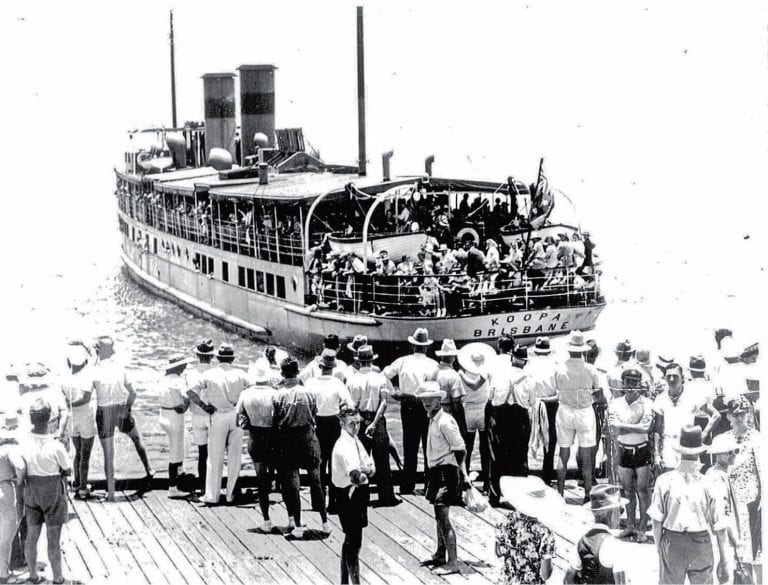
For 40 years after the Jetty was constructed at Bongaree in 1912, everything and everyone coming to and from Bribie Island were by ship. After WW2 in 1947, an intermittent barge service started operating from Toorbul Point (now Sandstone Point) when motor cars became popular, despite the long rough bumpy dirt road trip from Caboolture. For 40 years all goods, food, materials, fuel, water, and equipment were brought over by steamship from Brisbane and unloaded at the Jetty.

  • Featured image(above): Koopa leaving Bribie

In the early 1950s, the Tug Co. sold the declining Steamship KOOPA to a private Bribie syndicate who attempted to maintain the service. It did not last very long and was soon abandoned, as the future of road transport took hold. In mid-1951, the Government called tenders for a new Goods Transport service to operate between Brisbane and Bribie Island.

History. Brisbane. Bribie Island. Queensland. Moreton Bay. Australian-1

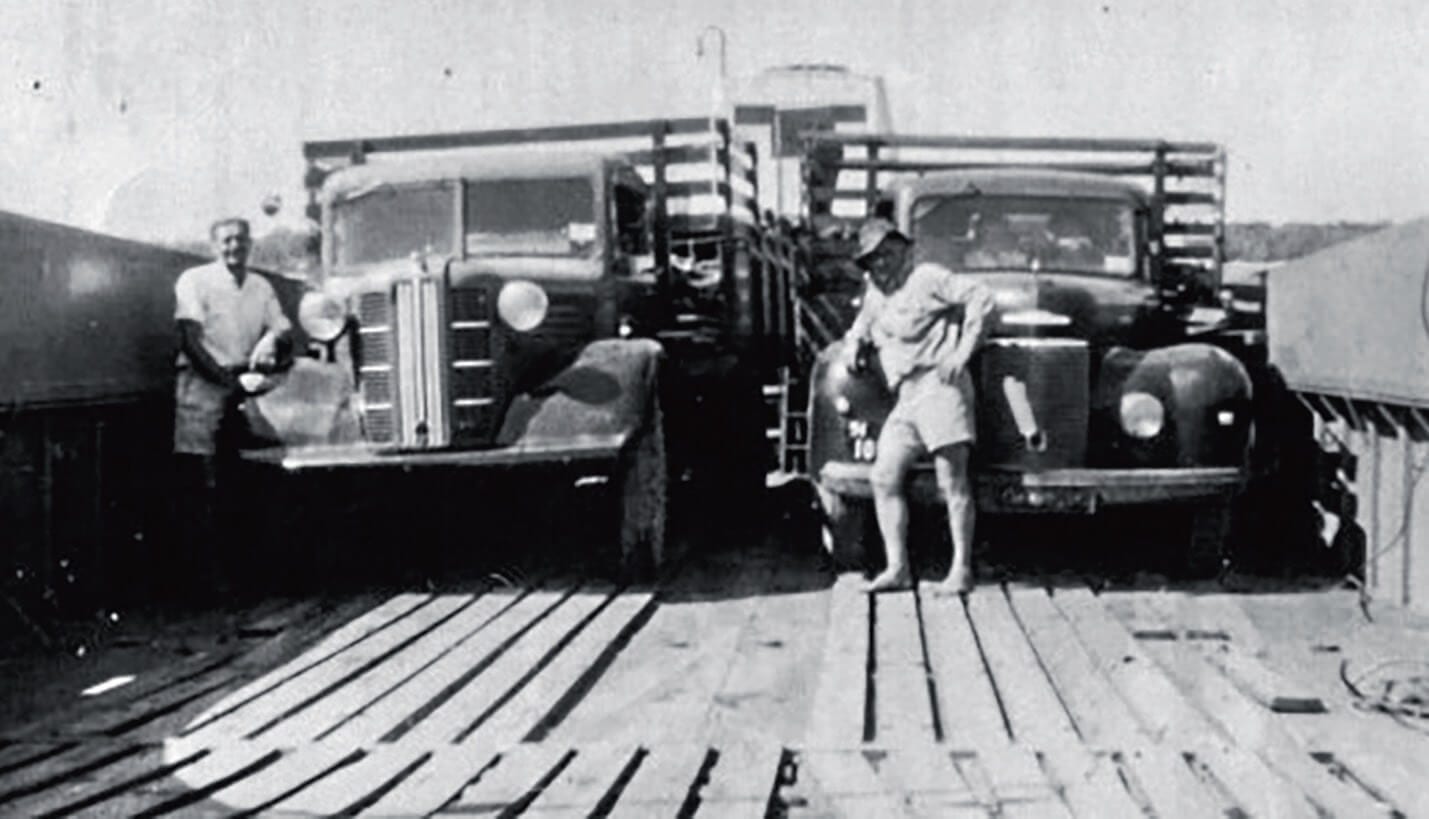
  • MARQUARDT Transport trucks on barge crossing to Bribie 1952

SHIP to ROAD TRANSPORT

Stan and Alma Marquardt ran a small trucking operation at Mondure in Wondai Shire. They decided to submit a tender and in July 1951 traveled down to visit Bribie Island and speak with residents and businesses, measure distances, estimate volumes and evaluate the prospect of business success.

Initial reactions from Bribie merchants were mixed, as they had relied on twice-weekly steamship deliveries for a long time. Stan Marquardt decided to submit a tender based on current railway charges, which were 2 pounds 10 shillings ($5) per ton and 2 shillings and 6 pence (25 cents) per parcel.

His first customers were likely to the few Bribie Shops (Vines, Campbell’s, Brennan, Winston, Renton) Milk vendor (Christoferson) Hotel (Dudley) Pies (Young) Butcher (Camp) and Baker (Kling). It was several months before being advised by the Government that he had won the Tender, and Marquardt was then required to commence the service immediately in March 1952.

History. Brisbane. Bribie Island. Queensland. Moreton Bay. Australian-1

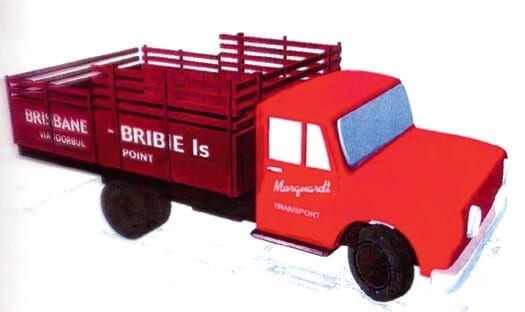
  • First Transport Truck 1952 – Brisbane to Bribie Island via Toorbul Point

MARQUARDT TRANSPORT

They sold their house and business in Mondure, and with Alma pregnant with their second daughter, rented a house on Bribie for 12 shillings and 6 pence a week ($1.25) and moved here. They kept their 5-ton truck, which required suitable signage to comply with requirements. They had it painted and launched the “Brisbane to Bribie Island via Toorbul Point” goods transport service.

This was a big step for the whole family with just 50 Pounds in the Bank, a toddler, and a pregnant wife and starting a new business from scratch. The first truck road service was on 10 March 1952 with a drum of Tallow from the Butcher and 200 loaves of bread from the Baker. The new service had been initially approved for three days a week, and with no phone, unreliable barge service, dreadful road surfaces, and hygiene controls that were hard to enforce.

History. Brisbane. Bribie Island. Queensland. Moreton Bay. Australian-1

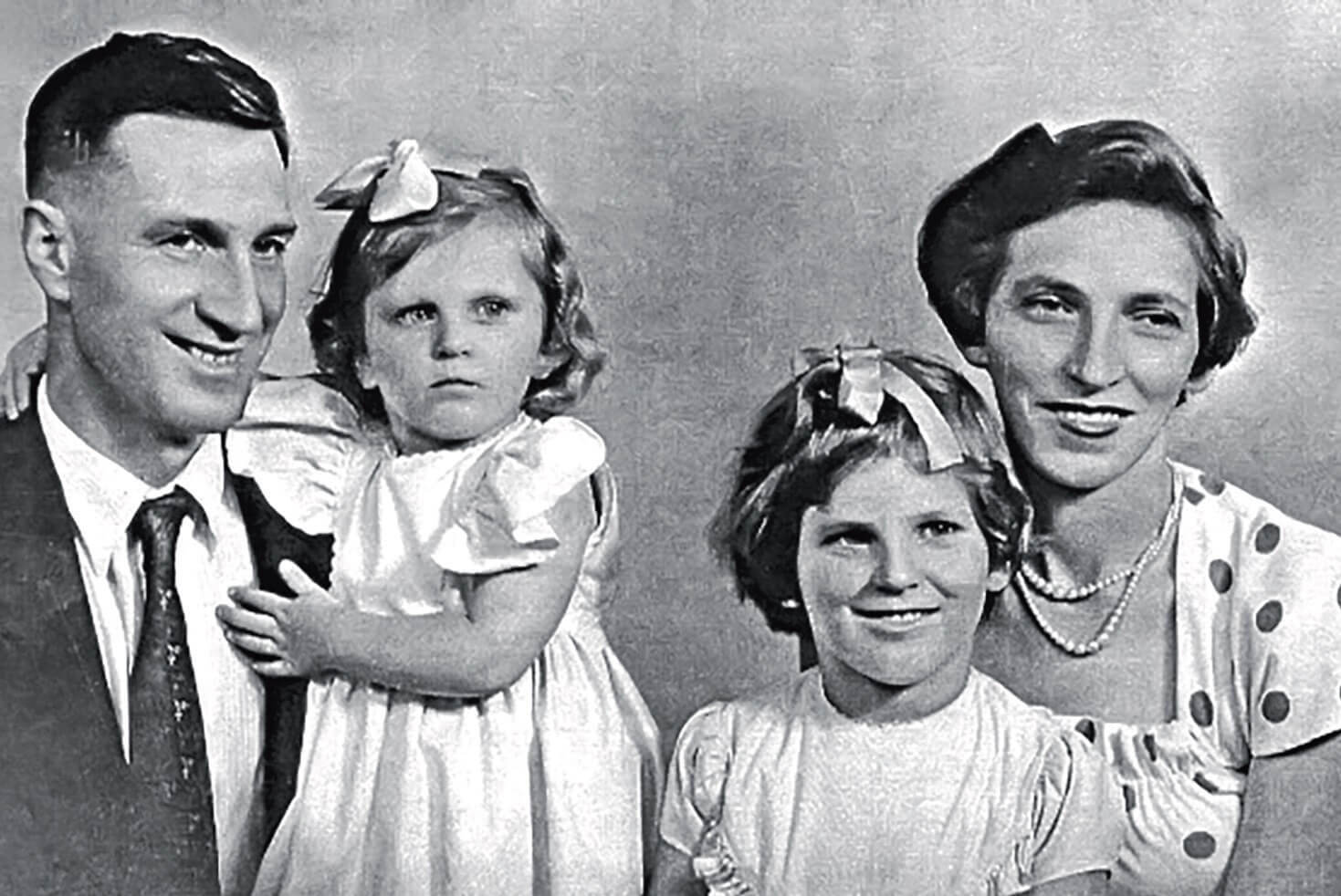
  • Marquardt family 1954

History. Brisbane. Bribie Island. Queensland. Moreton Bay. Australian-1

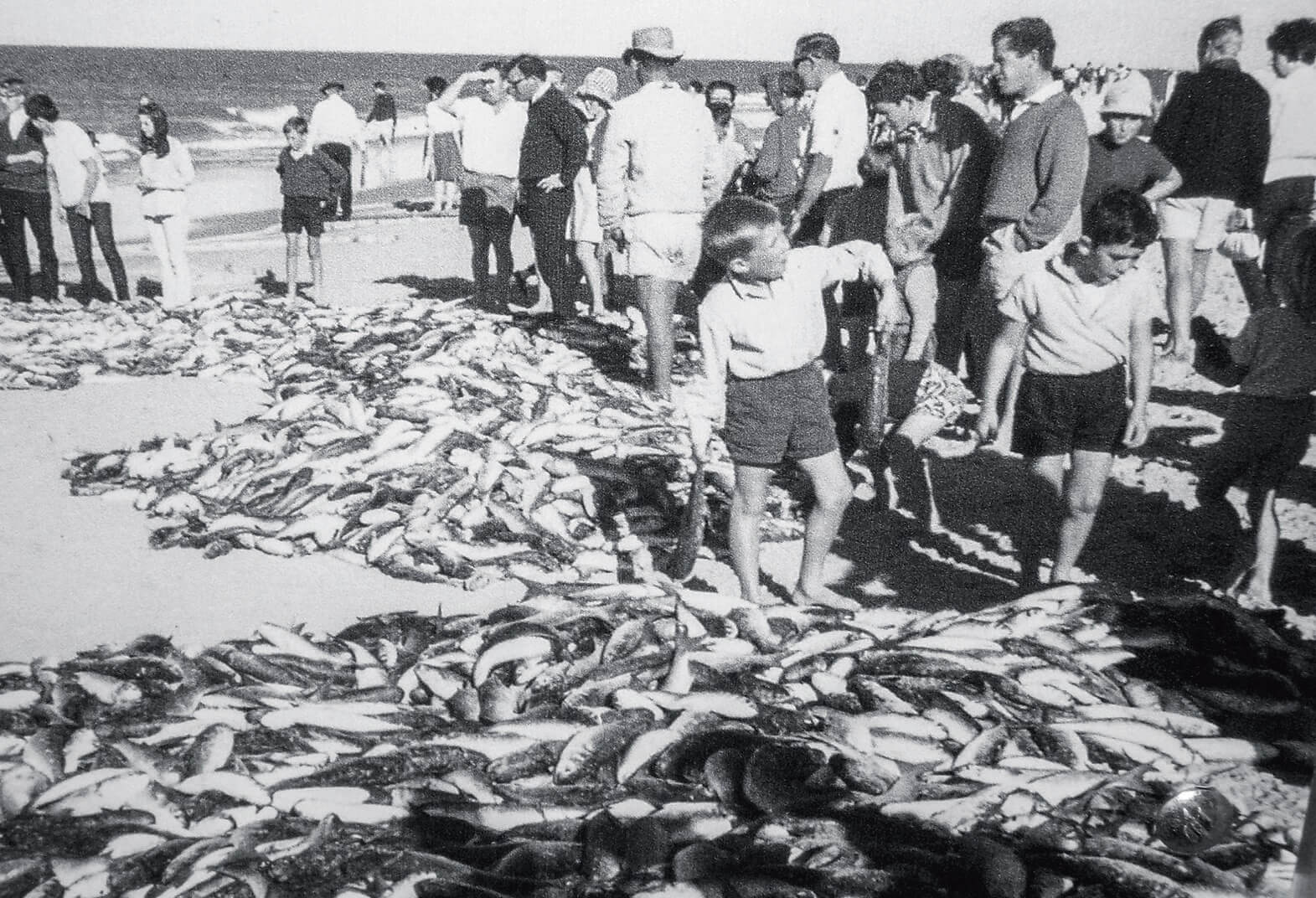
  • Mullet Fish Catch

BUSINESS GREW QUICKLY

Businesses and shops on Bribie soon recognised the benefits of more frequent and timely deliveries both to and from Brisbane markets, and this contributed to the termination of the Steamship Koopa service within a few months. Marquardt Transport had the sole rights to service Bribie from Brisbane and it was soon carrying soft drinks and ice cream in dry ice containers, small and large Parcels, Furniture, Beer and Groceries.

Within months, the service was extended to every day on demand, and the workload, paperwork, and communications soon became too demanding and complex to operate from Bribie. The Marquardt family bought a house in Zillmere where they continued to live for the next 43 years.

A second truck was required as the variety of goods grew to include Meat, Milk, Fuel, Fruit, Vegetables and even huge loads of fresh Mullet from the beach fishermen. There were also many large loads of Bottles and Cans, which remarkably survived the noisy bumpy road trips and the empties on return. Reversing fully laden trucks on to the rocking barge in rough weather provided many exciting moments.

SUCCESSFUL BUSINESS SOLD

The business was a big success but the workload was hard and demanding on a family with two small children and growing health problems. Stan Marquardt had done very well, working hard to establish and build a business from nothing. As far back as 1953, the Government had even started talking about building a bridge to Bribie, which offered even greater opportunities.

They decided to sell their successful Transport business to Braithwaite and the family took a long and well-deserved holiday. Of course, it was 12 years later in 1963 before a Bribie Bridge would be constructed.

History. Brisbane. Bribie Island. Queensland. Moreton Bay. Australian-1

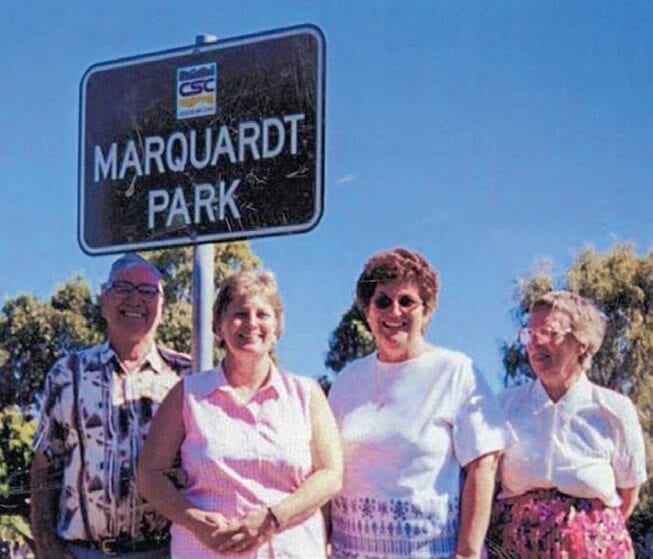
  • Marquardt Park proud family 2002

PIONEER BUSINESS RECOGNISED

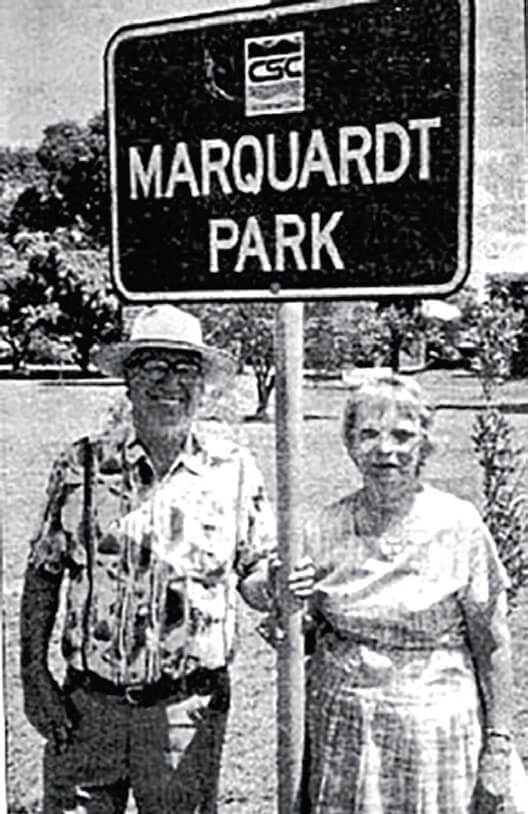
In 2002, to mark the 50th anniversary of Marquardt starting the new road transport business, Caboolture Shire Council dedicated a new Park in his honour.  Marquardt Park in Alamanda Drive, facing Azalea Drive, Bongaree, was the scene of a proud family unveiling ceremony in March 2002 and a tribute article appeared in the local newspaper.

History. Brisbane. Bribie Island. Queensland. Moreton Bay. Australian-1

  • Marquardt Park News Article 2002

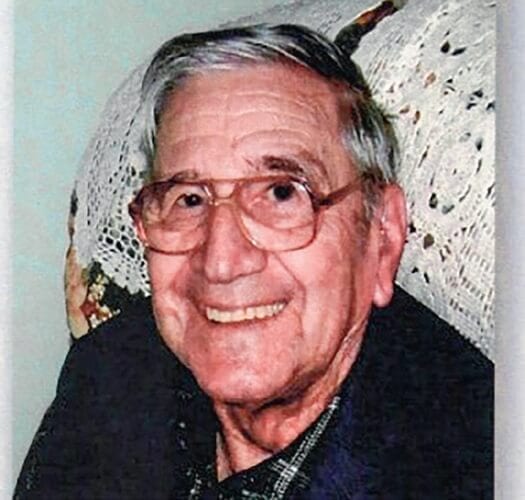
A great many pioneer business residents made significant contributions to the establishment of new business and service ventures on the island over the years. Some are remembered and recognised with Streets and Parks bearing their names. Others are unfortunately long forgotten. Stan Marquardt documented his family story some years before he died at the age of 89 in 2010.

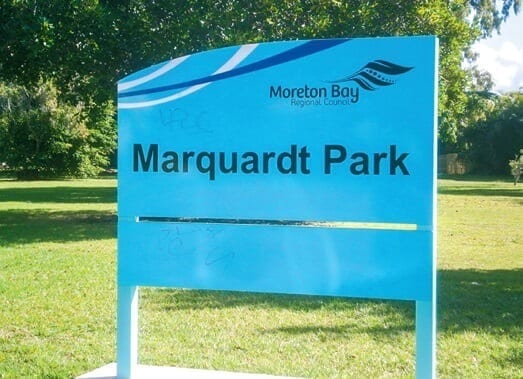
He died almost 50 years after he established the first Bribie Truck Transport business, but it is appropriate to remind residents and readers of this important step in the development of the island in the years when large steamships were replaced with small barges and road transport. MBRC has now replaced the original park sign with a new one, but residents and visitors rarely see this quiet area.

History. Brisbane. Bribie Island. Queensland. Moreton Bay. Australian-1

  • Marquardt Park Sign

History. Brisbane. Bribie Island. Queensland. Moreton Bay. Australian-1

  • Stan Marquardt died in 2010

For those who do see it, there is nothing to indicate the story behind the naming of the park. Unfortunately, that is also the case for most other “named” parks on the island. I think it is a pity that the Council does not see fit to put just a few words on Park signs to make the names meaningful. I am pleased to pay tribute to the Marquardt family with this article.

Other Articles

Gloss Magazine Bribie Islander 17th Edition August 16th 2019 Issue 94

Get all your community news and information. Bribie Islands only community gloss magazine NOW EVERY TWO WEEKS! – Articles on boating, camping, fishing, life, drama, travel destinations, sports and what to see and do on Bribie Island. Covering charities, organisations, places, children’s activities, arts and crafts, tourist destinations, heritage parks, technology, science, music, gardening, and much more.

Download the digital edition here.

Bribie Island Wildlife – BRONZE – CUCKOOS

0

Tags: Wildlife. Native. Birds. Cuckoo. Australian. Queensland. Bribie Island. Moreton Bay

Bronze-Cuckoos are the smallest of the Cuckoo species in Australia. They have iridescent bronze-green plumage and are barred on their underparts. Their calls are similar. All are parasitic and lay their eggs in other bird’s nests and expect the host birds to raise their chicks. There are four species of Bronze- Cuckoos in Australia.

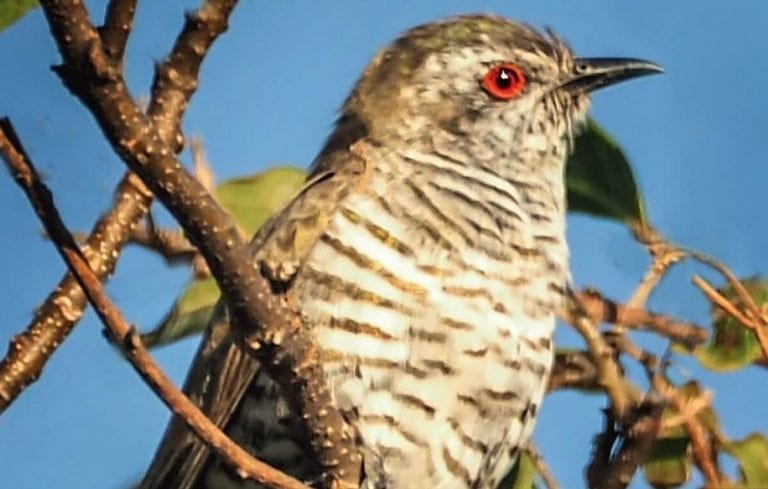
Featured Image(above): Little Bronze-Cuckoo

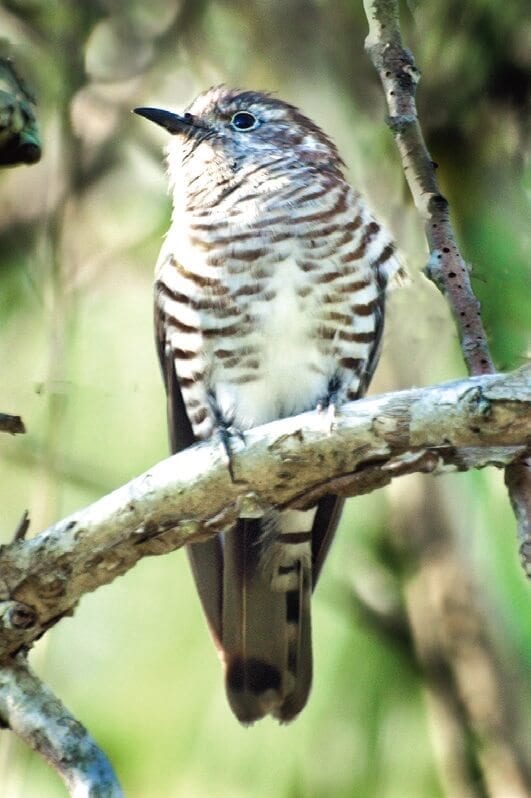
Shining, Little, and Horsfield’s Bronze-Cuckoos have all been recorded on Bribie Island with the Little and Horsfield’s being very rare visitors. Shining Bronze-Cuckoos (Chrysococcyx lucidus) is the species most likely to be seen on Bribie Island as they are fairly common in the woodlands and eucalyptus forests.

They are small birds, just 17-18 cm in length with iridescent green plumage on their backs and heads and with black almost complete bars across their throat, chest, and tail. Their call from a perch is a high-pitched whistle which sounds a little like someone whistling a dog. Usually, they are reasonably quiet birds but become quite vocal during the breeding season. They are not easy to spot as they are small and are mostly in the mid to upper branches of the trees in rainforests, eucalyptus forests, and woodlands. Some are migratory while others prefer to stay in the same area.

From our area, some of the Shining Bronze-Cuckoos migrate to PNG. In Australia, they are found in the east and southern parts and in the south of Western Australia. They are also found in NZ and some Pacific Islands. Insects and caterpillars are their main food which they take from leaves and from the ground.

They sit on a perch waiting for their prey to appear. Hairy caterpillars are on the menu and the sharp spines are caught up in the soft lining of their stomachs. These eventually are spat out. August to January is usually the breeding time in our area. Being parasitic the females usually select domed host nests belonging to Thornbills, Gerygones, Scrubwrens and some other small species.

Wildlife. Native. Birds. Cuckoo. Australian. Queensland. Bribie Island. Moreton Bay

Shining Bronze-Cuckoo

One egg is laid in each nest and up to 16 greenish-brown eggs may be laid in one season. Even though Cuckoo eggs are slightly different the host birds don’t seem to notice in the darkness of the domed nests. Eggs are incubated by the host birds. When the baby Cuckoos hatch, they get rid of any chicks or eggs which are in the nest. Host parents are left with just one baby bird to raise. Young Cuckoos leave the nests and are ready to fly after about 18- 22 days. Shining Bronze-Cuckoos are sometimes called Golden Bronze Cuckoos and are similar to other Bronze-Cuckoo species.

They were first recorded in NSW in 1801. Little Bronze-Cuckoos (Chrysococcyx minutillus) are very rarely seen on Bribie Island but there has been the odd sighting mostly in October. Being only 15-16 cm in length and weighing 17 g Little Bronze-Cuckoos are the world’s smallest Bronze-Cuckoos. They are bronze-green on wings and head, with broken black bars on neck, underparts, and tail. Their eyes are red which makes them easy to distinguish from the other Bronze-Cuckoos if you can get close enough to see them. Their call is a descending whistling trill.

Open forests, mangroves, rainforest edges, and melaleuca swamps are the habitats which they most prefer. In Australia, they are found in a strip from around Broome along the northern coastline to northern NSW. Other countries where they are found are Indonesia, Malaysia, and PNG. Insects and their larva are their preferred food which is mostly hunted from a perch and taken from foliage and on the ground. Insects are often caught on the wing. Breeding is usually from September to February.

Little Bronze-Cuckoos are parasitic and lay one brown, small egg in each of their preferred host bird’s nests. They use the nests of Gerygones and other small birds that build domed nests. The main threats to Bronze-Cuckoos are cats, loss of habitat and flying into windows.

Other Articles

https://thebribieislander.com.au/community/wildlife/bribie-island-wildlife-yellow-tailed-black-cockatoo/

https://thebribieislander.com.au/community/wildlife/australian-pelican-pelecanus-conspicillatus/

THE DUNNY DOOR

Generally speaking, I am not one for collecting material washed up on the beach. I left that to my husband who could not wander along the strand without bringing home a selection of hooks, lines, and sinkers, along with a variety of other objects that “might come in useful.” However, when I saw a whole timber door washed up on the beach in front of us, I knew that all those lifestyle programmes that I had watched over the years, we’re about to pay off. With great excitement, and much huffing and puffing, I dragged my booty home, expecting the husband to be equally delighted. Not so.

I think he realised that this represented work for him. Still, he had to admit that I had supplied the inspiration and all that was required of him was a little perspiration. The top and bottom of the door were sawn off, which removed most of the dry rot. A little sanding and some puttying were followed by a generous splash of mission brown paint, and the tabletop was ready. Some wooden trestles, on which to rest our masterpiece, completed the rustic look.

The table was set up at the bottom of the yard, overlooking the ocean. Our garden bench, also painted in fashionable mission brown, provided seating. It is to this little bit of Heaven that we would retreat in the late afternoon. A bottle of Merlot and two glasses, and all was right in our world. Here we could catch up on each other’s day and relax before dinner. From our vantage point over the Bay, we frequently saw dolphins chasing baitfish.

It is hard to say which was the more beautiful, the graceful movements of the dolphins or the silver ripple of the baitfish in their anxiety to escape finishing up as someone else’s last supper. The birds too began thinking of retiring for the night, with just time for one last snack, before roosting. The lorikeets indulged in noisy squabbling for the best position to spend the night, whilst the pelicans and ducks flew in formation back to the nearby lagoon that was their resting place for the evening.

Gradually, the sunset and the sky turned to a rosy hue. We would just have time to admire our beautiful surroundings when the mosquitos and sand-flies began to arrive, and it was time to retreat to the house. We have no idea as to where our door came from, whether it really did once have as prosaic a purpose as we imagined, but whatever its past, we trusted it appreciated its romantic present.

Other Articles

https://thebribieislander.com.au/travel/the-long-way-round-to-bribie/queensland-travel-destinations-coolum/

The Bribie WINELANDER

The merry go round of the judging of wines around Australia has begun with the Royal Queensland Wine Show and it was a $15 Shiraz from Deep Woods Estate near Yallingup in Western Australia that took out the trophy and gold medal for Best Shiraz/Cabernet blend with its 2017 ‘Ebony’ Cabernet Shiraz. The wine scored 95 points out of a possible 100 and also won a gold medal with The Deep Woods Estate 2017 Cabernet Sauvignon Merlot which also scored 95 points which retails for around $35 per bottle.

Deep Woods Estate is a part of the Fogarty Wine Group, a Western Australian family-controlled wine group which also owns Evans and Tate in Margaret River and The Millbrook Winery in the Perth Hills, which if you are visiting Perth is well worth the 40 minute drive, it is a fabulous winery and restaurant overlooking a lake. Evans and Tate took out the gold medal for the Redbrook Reserve Chardonnay along with the Evans and Tate 2016 and 2017 Reserve Cabernet Sauvignon, Millbrook Wines won gold medals for the 2018 Single Vineyard Chardonnay which will be released in September.

The show wasn’t without controversy this year though as no Queensland wine was awarded many gold medals with winemaker and show medal sponsor Angelo Puglisi blaming the prohibiting costs of entry fees for wines to the show being the major reason. The entry fees range from $110 to $130 for each wine entered plus 6 bottles of each wine as well which is ridiculous as with the advent of Stelvin caps having made most wines pretty well taint free there is no need for more than two bottles of each, which used to be the norm, obviously the extra bottles are going somewhere else!

wine wineries white redIf you have for example 6 wines to submit the cost would be at least $660 plus three dozen samples which for a small producer will come at too high a cost, it is about time the RNA took a good look at themselves if they want the wine industry to develop in Queensland. Ironically the wine that was judged to be the grand champion trophy this year was the Giant Steps Nocton Vineyard 2018 Pinot Noir from Victoria’s Yarra Valley from fruit sourced from Tasmania which was made by winemaker Steve Flamstead a Queenslander! Other trophy winners were Pewsey Vale ‘The Contours’ Riesling, McGuigan Bin 9000 Semillon 2013, Miles from Nowhere 2019 Sauvignon Blanc, Capel Vale Black Label 2018 Chardonnay, Jacobs Creek 2019 Classic Pinot Grigio, Nepenthe Winemakers Select 2018 Gewurztraminer, Brown Bros Patricia 2015 Noble Riesling.
The Jacobs Creek Classic Reserve Classic Reserve Pinot Grigio currently sells at Dan Murphy’s for $8.50 a bottle in a six-pack. The Italians are once again trying to get the term ‘Prosecco’ off the labels of Australian wines comparing its use to that of Champagne. Prosecco is currently enjoying a massive boom probably at the expense of Champagne and other sparkling wine styles with the Australian grape crush surging 42% this year with the Prosecco grape crush volume increasing by an average of 50% each year since 2015.

Producers predict a catastrophic effect on the industry if the name is removed and which may have contributed to the decline of Australian fortified wines when terms such as ‘Port’ and ‘Sherry’ were removed as we discussed in the last issue of ‘The Bribie Islander’. The Italian undersecretary of state for economic development Michele Geraci expects Australia to give up the name as part of the latest round of EU trade negotiations and expected he was prepared to look at a ‘sunset clause’ for anxious winemakers which would probably be for around 4 years to allow for Australian winemakers to adapt or adjust but this could jeopardise a market that could be worth $200 million within four years.

wine winery white red australia queenslandThe European Commission tried to register Prosecco as a geographic indicator or GI in Australia in 2013 meaning it was confined to a region in Italy in the same way as Champagne and they changed the grape name from Prosecco to Glera in 2009 but the bid failed as Australia argued it was a generic variety like Chardonnay, however I don’t think we have heard the end of the argument and with the strength of the EU behind them I feel it is only a matter of time before the Italians get their way. As a matter of interest Feta cheese and several other food products are also being targeted in the same way.
This week I opened a 2012 Wynn’s Black Label Cabernet Sauvignon from Coonawarra and as usual, the wine lived up to expectations. The wine which has aromas of blackcurrants was supported by a smooth full-bodied palate and was an absolute delight. Also, two wines from Angove, the first a Long Row 2018 Pinot Grigio which was a pleasant dry white with citrus aromas and flavours of apples and the other being a full-bodied red from McLaren Vale a 2018 Family Crest Grenache Shiraz Mourvedre which had aromas of spice and berries, two very good wines. Cheers, Philip Arlidge [email protected]

Other Articles

https://thebribieislander.com.au/food/the-bribie-winelander/bribie-winelander-may-2019/

BEAUTY VS BURGLARY

Familiar old sayings such as “good as gold, cheaper than chips” have long been around in the Aussie vernacular but “beauty vs burglary” is not normally as common as maybe it should. The past 23 years living on our beautiful island, 14 of which have been on the waterfront, has shown the writer both the beauty and the beast of burglary by uncaring individuals who often cause havoc in the lives of the innocents.

Whether on water or not we all need to be watchful both day and night, but particularly in the dark hours when our homes are more vulnerable. The police have always done their best to round up these offenders, and having “Neighbourhood Watch” in our area is a bonus. It is up to the residents either singularly or in community groups to help us.

Bribie and its nearby areas like Beachmere, Toorbul and Donnybrook and the homes in Ningi and beyond need to look seriously at their security making sure that their homes are securely locked is a good start. Lighting is the best security available. Almost all waterfront properties have lighting available on their pontoons or waterfront gardens but very few take advantage of the effects that lights have on would-be intruders and the beauty that the lights create.

Locals have told me that electricity is too expensive or lights are just not necessary until they suffer the trauma of a break-in or even an assault. Many have lost their cars and household valuables and some have been hospitalised. Many homes have auto day/night switches fitted on their pontoon lights and others have beautiful rock garden and wall lights. The present low voltage high output and cost-efficient globes have a long life.

These globes help keep electricity prices down and security up. Solar security lights are also very effective. Irrespective of where we live thieves could be watching – double check your locks and turn on your lights. The writer has seen evidence of the trauma foisted on innocent residents by break-ins and everyone should be watchful.

Many locals are retired and enjoying the quieter life whilst others have young families…. our area has a wonderful smorgasbord of newly arrived and longstanding residents who need protection. Pontoons and front gardens often hold a multitude of toys – tinnies, kayaks, canoes, and jet skis, bikes and toys are left lying outside to be easily scooped up on the road front by quick-thinking opportunists.

We are so fortunate to live in such beautiful areas so we need to do our best to be safe, happy and secure. Let us help ourselves and aid the police with their overstretched workload.

A good slogan could be, “lights on and lock up for security.”

Other Articles

https://thebribieislander.com.au/news/local-news-and-articles/school-watch-look-listen-report/

BRIBIE BOWLS CLUB BOTTLE CAP CAMPAIGN

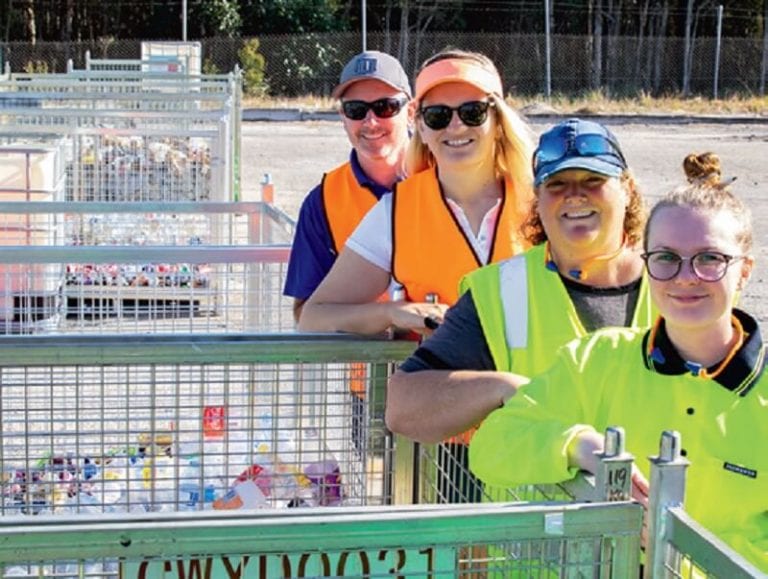
Bottle caps are fully recyclable. Unfortunately, as reported on ABC’s ‘War on Waste’, they aren’t being recycled. They get sent to landfill, they fall through machinery, and in worst-case scenarios, if attached to a bottle, they can explode and force expensive repacking issues. This overlooked waste product is almost entirely made from HDPE 2 (High-Density Polyethylene).

After considerable experimentation Envision Hands have successfully taken this plastic and extruded it to create functioning filament for 3D printers. Once they have the filament, they 3D print all the components that make up prosthetic hands and support people in need of these aids. The Bribie Island Bowls Club considers this to be such an innovative mission and has recently signed up to become a collection point for Vision Hands.

“We are in the perfect position to help,” said Kerry Muller, Treasurer, “If we can save the environment and aid in helping this amazing charity, then it’s an easy solution to become a collection point.” The Bribie Island Bowls Club is asking all the locals to get behind the campaign. Simply keep all your bottle caps such as water bottle, milk bottle, soft drink bottle lids, and caps and drop them into the collection container set up in the Reception area of the Club.

The Bribie Bowls Club will then ensure they are sent to Envision Hands located in Victoria. Any children/people within Australia who believe would benefit from the support of a mobility aid, please contact [email protected]

GOING OUT ON A HIGH

After seven years of hosting the New Year’s Eve markets and fireworks in Brennan Park, the BIDCA (Bribie Island District Community Appeal) team are ready to hand over the event to any organisation that would like to take it on.

BIDCA President Sharon Parsons has announced that she and husband Gary believe the event would benefit from a fresh approach. ‘Gary and I have been the main organisers of the New Year’s Eve Markets and we believe that it is time to hand over the reins,’ said Sharon. ‘We have enjoyed being able to provide such great entertainment for locals and visitors and with the last one being such a wonderful success with an estimated 25,000 people attending on the day, we will go out on a high,’ she added.

Sharon remarked that anyone who would like to organise the event is welcome to contact her for information on what is required. ‘As an established event, it will be relatively easy for another organisation to step in and take over.

We will offer them as much advice as we can,’ she said. As an organisation which is consistently active within the local community, BIDCA has been responsible for assisting many worthy causes with funding gained through the operation of a monthly market at Brennan Park on the third Sunday of each month. Anyone who would like to contact Sharon can call 0409 583 928.

Craig’s Artist of the Month talk 9th August

0

A MOUNTAIN AND HIS CAMERA

Our favourite 6ft 5in ‘mountain’ is back with us as Artist of the Month for August, right on time for the Matthew Flinders Art Prize in the gallery. And that, as many readers will know, is significant because Craig Rohse took out first in the art prize last year. His winning portrait of trio Three Wise Veterans has subsequently been sold, reprinted and sold several times since then.

Featured Image(above): Paratroopers jumping out of C-130 Hercules

Craig tells me he is doing something different for this exhibition, away from military life. So the mind boggles wondering what the wall at Bribie Island Community Arts Centre will reveal. Whatever he produces, it is sure to reflect Craig’s award and grant-winning status as a becoming well-known, emerging photographer – his latest achievement in May being exactly that: recognition as one of the Top 20 of Australasia’s Top Emerging Photographers 2019 in the Portrait category. Among those awards was a Highly Commended for his entry in 2018 Napier Waller Art Prize.

Now permanently hanging in the Australian War Memorial, the photo, aptly titled Transition, is a self-portrait taking a critical view of four stages from defence to civilian life. For after serving in both the German and Australian Armies as a paratrooper, deployed in the Solomon Islands, East Timor and Afghanistan, Craig hung up his uniform as a result of the injury. Thereafter followed for him a period of uncertainty with a loss of identity and purpose. However, Craig Rohse admirably rediscovered himself when he completed a Diploma of Visual Arts in photography at TAFE Tasmania in 2016.

From then he has gone from strength to strength, opening his Little Gallery and with his wife, Vanessa, the Zesty Lemon Cafe, both in Deception Bay. And most of us know about Craig’s successful and ongoing efforts to bring Defence Force Veteran artists together to exhibit at the gallery in April this year and into the future. To quote Mervyn Napier Waller, the young man for whom the first national military art prize is named and who lost his arm fighting at Bullecourt, France in WWI, then took up drawing with his left hand during convalescence:

“An artist draws with his head, not his hands.” Craig Rohse is one of his ilk: an artist who makes pictures with his head – seen through a lens and captured by a camera! Craig’s Artist of the Month talk followed by morning tea will be held on Friday 9 August at the Arts Centre, just one day before our art prize finishes. Bookings for catering purposes can be made by ringing 3408 9288.

Helly’s Celebrities of the 20th Century – KENNY BAKER

Tags: Celebrities. Famous People. Actors. KENNY BAKER C 3PO Star Wars.

“I’d sooner be a dwarf than a giant!” declares 44-year-old Kenny Baker bravely with vehemence and philosophical conviction that belies his 112 cm (3’8”) frame as the smallest man in England. But what an icon he is! One of the two most famous robots the world has ever known, R2D2, alias ARTOODETOO, stands proudly on a banana crate in my London home, his little legs as far apart as possible for stability, as we enjoy his favourite game: table tennis.

Featured Image(above): Well-matched in size

It’s shortly after the first 1977 release of STAR WARS and Kenny loves popping over for a game, being a neighbour in nearby Bushey, Middlesex. He hops off the crate, has a little lunch and elaborates: “If you’re small, you can get lost in a crowd. But when you’re very tall, you stand out like a sore thumb. You get a lot of backaches, have trouble getting through doorways, in telephone booths and airplane seats, which must be harder to live with than our problem.”

The benefits he lists are mostly illusory, the perky defiance of a man determined not to let a cruel trick of nature get him down. But his lifetime’s experience of being tiny is shared with his 30-year-old wife, Eileen, only 10 cm taller than himself. Kenny’s parents, were normal height, his mother, a pianist and dressmaker, his father, an artist, musician, and draughtsman. And how did Kenny react when sons Christopher, 7, and Kevin, 4, were born? “We were absolutely amazed that the boys were normal.

Eileen too had parents who were normal and we don’t know why we are dwarfs any more than we know why our boys aren’t. But, of course, we are delighted with it.” But it’s when Kenny walks onto a film set, heavily disguised as a fancy tin can, that the elaborate process begins which turns him into one half of the android double act with C-3PO, that makes the incredible STAR WARS into more than just another science fiction movie. Yet Kenny’s stardom must be the most anonymous of all time.

How many of the fans to whom Artoo Detoo is a personality in his own right, realize that underneath the metal tub is a real man – still pinching himself in case he wakes up and discovers it isn’t true after all? “I’ve had over 2,000 letters from kids all over the world,” he says wonderingly. “They just write to Artoo Detoo, 20th Century Fox, England. And the letters get to me. But there are too many now for me to answer, so the Star Wars Department is taking them over.”

Already Kenny’s life has changed considerably. “With the first Star Wars money I bought myself a Japanese car, a three-piece suite, and a fridge-freezer. We could use the rest to buy a bigger house, but instead, it will be a nest egg for our sons’ private schools, as the classes are smaller and the boys will get more attention and so a better education.” Kenny does not let his lack of size dominate his life. Where it causes problems, he finds a way around them, like driving his car. He has the air of a showman, sporting two gold rings, initialed K.B. and his face is seldom without a beaming smile.

“I can drive the car easily. It’s my legs that are short. So, I get over that by having the pedals extended upwards by 9” and I put a cushion behind my back to keep the seat more upright, which brings me closer to the steering wheel. I’ve discovered the more expensive a car is, the easier it is to handle with everything automatic and within easy reach.” As the years go on Kenny will be seen in many other than the Star Wars movies including THE ELEPHANT MAN, AMADEUS, WILLOW, FLASH GORDON, JIM HENSON’S MUPPET SHOW, LABYRINTH and BBC’S THE CHRONICLES OF NARNIA, to include just a few.

“I’m on a percentage for the next franchise, THE EMPIRE STRIKES BACK, one-eighth of one percent, plus my basic salary. It won’t make me a millionaire, but I think it will be a wise choice in the end.” And even as a robot there are problems other actors never dream of. “I stand inside the robot with my elbows pinned and my hands on the gramp handles.

Originally, I was supposed to slide one foot forward and then the other. But as the robot is twice as heavy as me, I’m only 75lbs, the other one goes automatically backwards and I nearly did the splits. I then rock the robot from side to side, but still can’t move fast. So now they developed a remote control, dropping down a third leg with steering and a motor drive. And it gets terribly hot inside.

In the scene where they are burning the Jawas and I’m standing right next to the funeral pyre, it was so hot I could hardly breathe nor touch anything inside.” And as the Star Wars films continue, Kenny as R2D2 will be in every one of them until in 2015, when he stops acting because of his chronic lung problems.

Instead, he becomes the consultant in THE FORCE AWAKENS, to teach the new R2D2, how to play the role Kenny has been a master of for nearly 40 years. Sadly, in 2016 we will lose Kenny just 11 days before his 82nd birthday. But Artoo Detoo has captured our hearts and will be there for generations to come, remaining children’s and many grownups’ favourite robot.

Other Articles

Queensland History – STEPPING THROUGH HISTORY

0

Tags: History. Historical. Bribie Island. Moreton Bay. Queensland. Australia

WALK WITH ME THRO’ OLD BRIBIE

a-History. Historical. Bribie Island. Moreton Bay. Queensland. Australia (1)

Barry Clark

I write this regular History Page to introduce readers to a few fascinating facts about this place where we live. For those who are recent arrivals, and those who have lived here for some time, I know they are often surprised and entertained by things they learn. I conduct regular free heritage walks on Bribie as part of the Councils “Healthy & Active” program and there are several coming up in the months of August and October.

a-History. Historical. Bribie Island. Moreton Bay. Queensland. Australia (1)The Poster on this page gives dates and details. The guided walks are free but you are required to register on the web site (moretonbay.qld.gov.au/healthy-active) to come along as numbers are limited. WALK WITH ME THRO’ OLD BRIBIE By Barry Clark, Bribie Island, Historical Society


These are slow and easy guided walks to introduce you to fascinating facts, events and buildings that formed part of the unique lifestyle that Bribie had years ago. People are always surprised to learn the history and heritage of building and places that have driven past a thousand times but had no idea what they originally were, or the role they played in shaping the unique character of Bribie Island.

Featured Image(above): Horses roam on Bribie

How long has Bribie been an island is a question I am often asked. I can’t give you an exact date but we do know that just a few thousand years ago the whole of Moreton Bay was dry land, and the shoreline was on the other side of Moreton Island. The sea level has risen over the last 6000 years and was certainly once much higher than it is now, as we can see from distinctive land formations. It may not have been an island when the first European explorers came here when the indigenous people had numerous camping and ritual sites throughout the area.

a-History. Historical. Bribie Island. Moreton Bay. Queensland. Australia (1)

Camping on Bribie 1922

It was certainly plentiful for fish and seafood, plants and berries and extensive wildlife. When Bribie was opened up to Steamship excursions from Brisbane from 1912 people came in their thousands to camp and fish here. Most of the Bongaree foreshore was covered with thousands of white canvas tents prior to construction of a few cottages and guest houses in the 1920s.

Early visitors referred to Bribie as “A Zoo without a Fence” because there was so much natural wildlife here. With settlement came domestic animals such as cattle and horses and these roamed wild around the island for many years. Collecting cow dung in the early morning was a regular task for people to burn on open fires to reduce the mosquito problem. And it was a very big problem back then!!

a-History. Historical. Bribie Island. Moreton Bay. Queensland. Australia (1)

Lady standing on Turtle

a-History. Historical. Bribie Island. Moreton Bay. Queensland. Australia (1)

Ormiston’s Store Toorbul Street

BRIBIE HAD CHARACTERS

As the population slowly grew to a few hundred permanent residents it became known as “The three D’s” because it had a reputation for Drunks, Dogs and De Facto relationships!! Yes, there were certainly some unusual charters who made their way to Bribie in the early days. After the first World War, there were many veterans with less than the full complement of arms or legs. One such was Jimmy “No-Legs” Hagan whose original cottage still stands beside Shirley Creek today.

To serve the growing number of campers and residents a few small shops and services started up around Bongaree, and evidence of this is still visible if you know where to look. Electricity eventually came to Bribie in the 1950s but prior to that, a private electricity generator was installed in Banya Street to service a few grand homes that had been built. A School, Churches and Community dance hall and Cinema were built, and the core of a self-sufficient community soon developed.

a-History. Historical. Bribie Island. Moreton Bay. Queensland. Australia (1)

First Car Bribie

a-History. Historical. Bribie Island. Moreton Bay. Queensland. Australia (1)

Glan Y Mor Boarding House Banya St. the 1920s

a-History. Historical. Bribie Island. Moreton Bay. Queensland. Australia (1)

Pier Kiosk & Guest House Advert 1936

When the first car was brought to Bribie there were no roads here, or indeed any roads anywhere near Bribie. It took two days to drive this car from Brisbane over bush tracks and beaches, and it was finally floated over to Bribie from the mainland.

ROADS BUILT ON BRIBIE

It was several years later that the first dirt road was constructed from Bongaree to Woorim, which was the start of a Surf Club and construction of the first houses at Woorim. In the 1930’s Woorim was the closest surf beach to Brisbane, long before there were roads or developments at what is now the Gold Coast.

Perhaps the grandest road on Bribie is Banya Street which was developed with the amazing vision of a dual carriageway, even when there were no cars or vehicles other than horse-drawn carts on the island. Some of the original buildings still remain to be seen in Banya street, but several of the large Guest Houses at the core of Bribie tourism in the 1920s and 30s have gone.

a-History. Historical. Bribie Island. Moreton Bay. Queensland. Australia (1)

Oyster Stall at Jetty 1926

The Bribie Jetty was the focal point of island life and everyone came down to see the many steamships come and go laden with people looking for the unique day trip or holiday experience. Various families ran a guest house, dining room and shop beside the Jetty for over 30 years. Oysters and Fish dinners were always available for the visitors and there was much competition to entice customers to the various offerings. An Oyster stall on the Jetty offered large Oysters at 6 pence a dozen.

Those were the days!! During World War 2 most residents were evacuated and many homes were occupied by the military. After the War when building materials were scarce several old buildings were brought to Bribie and re-erected for various purposes. Savige’s Fish shop was once a military Hospital in Brisbane before it was brought to Bribie.

a-History. Historical. Bribie Island. Moreton Bay. Queensland. Australia (1)

Aquarium Tanks – Built Redbeach 1962

PROGRESS & DEVELOPMENT

With progress and development, the population increased, and by the early 1960s, there were about 700 residents on Bribie. Eventually, a Bridge was constructed in 1963 and in the expected boost to visitor numbers several new commercial businesses started up. A large recreation hall was built in Cotterill Avenue which operated as a Skating Rink and Dance Hall, and eventually became a Cinema.

Today it is the Baptist Church. Movies were the main focus of public entertainment for many years before TV was available. Another business venture at the time of the Bridge was a mini “Sea World” seawater aquarium constructed at Red Beach. Created by people who developed new techniques to display seawater fish in large concrete and glass tanks constructed in the bush at Red Beach.

It was never a business success but the remains of some of these aquarium tanks can still be seen in the bush at Red Beach. With the Bridge came many more cars, no longer having to come by Barge from the mainland, and several Petrol stations were opened on Bribie. Where “Scoopy’s” Cafe stands today was once a Petrol station. Why not join me for an interesting hour strolling the streets of Bongaree and learn much more about this place where you live. Aquarium Tanks – Built Redbeach 1962

More BRIBIE History

Next Historical Society meeting at the RSL Club on Wednesday 14th August at 6: 30 pm will be Lynne Hooper’s presentation of fascinating photos of Bribie in the 1920s and ’30s from our extensive Database collection. View our Blog Site http://bribieislandhistory.blogspot.com or contact us on [email protected]

More Articles on History


AUSTRALIAN BOOBOOK OWL – NINOX NOVAESEELANDIAE

Tags: Native Australian Wildlife. Birds. BooBook Owls. Bribie Island. Moreton Bay. Queensland

Australian Boobook Owls are the smallest and most common of the Australian Owls and are reasonably common breeding residents on Bribie Island. They are 30-35 cm in length and weigh 120-350 g. They belong to the Hawk Owl family as their faces are quite hawk-like. Their most prominent feature is their huge yellowish eyes which are surrounded by dark circles.

Featured Image(above): Australian Boobook Owl. Note the Hawk like face

To look in different directions they need to turn their heads as their eyes are fixed in their sockets. Heads are large and tails are short. The plumage is dark brown and mottled with slight variations on birds living in different habitats. Young birds are usually lighter in colour. They are nocturnal birds and their calls “Boobook Boobook” during the night from sunset to sunrise may be heard up to a kilometre away.

Quite often the calls are from a pair of owls calling to each other. Females are a little larger than males. They are thought to live for about 15 years. Occurring singularly, in pairs or in family groups Boobooks may be sighted anywhere in mainland Australia and Tasmania from open woodlands, suburban parks and gardens to the desert. In fact, they may be found anywhere there are suitable trees.

A closely related species is found in NZ, PNG, and Indonesia. During the day they roost in thick foliage usually high up in trees blending in well with the surroundings and therefore very hard to spot. Sometimes the agitated sounds of other birds attacking them are the only indication of their presence. When alarmed they stretch upward and turn side on and try to blend in with their surroundings.

Native Australian Wildlife. Birds. BooBook Owls. Bribie Island. Moreton Bay. Queensland (3)

In Mango Tree, Bongaree

Some of their food such as insects and small bats is caught on the wing while other prey such as small mammals and reptiles is pounced upon on the ground. They rely on their sight and hearing for detecting the prey. From a perch on a fence, pole or tree they wait, watching and listening for movement and swiftly pounce when their quarry appears. Their food is swallowed whole and bones etc are later disgorged.

The breeding season is quite long from September to February but most of their breeding is done during October if the conditions are right. Hollows in large old trees, stumps and sometimes in cliff faces are used as nesting sites. Males line the nests with chewed woodchips and leaves. Clutches of 2-3 white eggs are laid and incubated by females for about 34-42 days. Males bring food to the females while on the nest and help with the feeding when the babies hatch.

Chicks are blind and helpless and covered in white down when hatched. After about 6 days the eyes open. Males bring food to the females that tear it apart to feed to the chicks. By this time the nests are becoming quite smelly with the droppings and unwanted food. The young fledge after about 5 weeks and remain under their parents care for several more months before dispersing.

Native Australian Wildlife. Birds. BooBook Owls. Bribie Island. Moreton Bay. Queensland (3)

In Hollow at Sylvan Beach

Sites are usually reused time and time again. If hollows are becoming scarce Boobooks sometimes evict other birds occupying a hollow. Sometimes one or two birds will occupy a hollow for many months before they begin to breed. Recently during 2019 Boobooks had a name change from Southern Boobook to Australian Boobook. Other names for Boobooks are “Morepork” and “Mopoke”.

These common names were derived from their call. They were first recorded by John Latham in 1801. In 1968 David Fleay from the Gold Coast observed that the Tasmanian Boobooks resembled the NZ species more closely. Australian Boobooks could be confused with Barking Owls which are larger and a grey colour instead of brown. Feral Cats, Raptors, and Possums are a danger to the eggs and young birds. Rat poison and loss of habitat are other threats.

They are often harassed by other birds that see them as a danger to their eggs and young. As they need very large hollows for nesting, they require old, large trees which can be hundreds of years old. Big old dead trees are just as important. Boobooks are common residents throughout mainland Australia and Tasmania. There has been no evidence of serious decline and their conservation status, for now, is secure.

Other Posts:

Australian Wildlife – STRIATED HERON

Bribie Island Wildlife – AUSTRALASIAN SHOVELER

Need grant money for your community group?

The Liberal and Nationals’ Government has committed $150,000 to fund up to 20 local community infrastructure projects across the electorate of Longman.

Federal Member for Longman Terry Young said projects would be funded as part of a $22.65 million investment nationwide under Round 5 of the Stronger Communities Programme.

“These investments in vital local infrastructure for the people of Longman are the sort of projects that bring our communities together, strengthen social connections, build community participation and create vibrant and viable communities into the future,” Mr Young said.

Deputy Prime Minister and Minister for Infrastructure, Transport and Regional Development Michael McCormack said the Stronger Communities Programme was aimed at funding projects that deliver social benefits as part of the Government’s continuing commitment to strengthen communities across Australia.

“Our local communities are the heart of this great country and this investment in local projects under the Stronger Communities Programme is about invigorating these communities and ensuring their continued success,” Mr McCormack said.

“The program will fund small capital projects in each of the 151 federal electorates, which can range from upgrading the local community hall or sporting facility, building new bike paths, or providing essential equipment for the local State Emergency Service.”

Each electorate nationwide has received $150,000 to allocate towards successful projects, with a maximum of 20 projects to be funded per electorate. Grant values range from $2,500 to $20,000.

For further information and guidelines please contact Federal Member for Longman Terry Young’s office at [email protected] or visit www.business.gov.au/assistance/stronger-communities-programme.