Home Blog Page 51

What does having the coronavirus feel like?

A doctor explains how COVID-19 attacks the body and why it can make us feel so awful.

When Dr. Clare Gerada, a 60-year-old general practitioner (GP) and former chair of the Royal College of GPs in the UK, recently caught coronavirus, she said it was “the worst I have ever felt” and “worse than childbirth”.

She tested positive for COVID-19 and wrote about her experience of the illness online.

Thankfully Dr. Gerada is making a full recovery but hearing first-hand what it is like to have the illness got me thinking about how the virus attacks the body and why it makes us feel so bad.

Why do we get a fever and cough? Where does the sore throat come from and why do some people suffer from diarrhoea? To understand this, we need to understand how the virus takes control of our bodies.

COVID-19 is like all other viruses in that it needs a host – in this case, the human body – to help it to reproduce and spread. A virus is basically a piece of genetic material that cannot do much on its own. It has to invade the body of a living creature in order to reproduce – without this it will die.

A virus is not the same as a bacteria, in that it does not need to eat, drink, excrete waste or rest. It has only one job and that is to reproduce by duplicating itself, but it can only do that once it has found a suitable host.

corona virus italy
Medical personnel help patients inside the Spedali Civili hospital in Brescia, Italy on March 13, 2020 [REUTERS/Flavio Lo Scalzo/File Photo]
COVID-19 is not the only type of coronavirus there is. Other types of coronavirus include the Middle East respiratory syndrome coronavirus (MERS-CoV) and severe acute respiratory syndrome coronavirus (SARS-CoV).

All types of coronavirus can be transmitted from animals to people – a characteristic known as being zoonotic. COVID-19 is thought to have originated in a wildlife market in China.

The COVID-19 virus is spherical in shape with a crown or “corona” of club-shaped spikes on its surface, hence its name.

As with all viruses, the COVID-19 coronavirus’s main route of transmission is through droplets. Infected people cough or sneeze these droplets out; they are loaded with viruses and other people either breathe them in or touch a surface on which the droplet has landed, then touch their face and breathe it in and, voila, they have contracted it.

The journey and symptoms of a coronavirus

Once you have breathed it in, the virus quickly travels to the back of your throat and nose.

The lining of the nose and throat is called the mucosa and this is what those club-shaped spikes attach themselves to before they start getting to work.

When it reaches the back of your nose, the COVID-19 virus will take over your nasal passageway cells. It will get inside them and re-programme them to stop doing whatever job they were doing and focus only on making more COVID-19 viruses.

Once that cell has produced more viruses than it can hold, the viruses will burst out and attach themselves to neighbouring cells, using them in turn as a platform on which to reproduce and the cycle repeats itself.

This destruction of cells in your nose and throat leads to the dry cough and sore throat. The pain you feel is a sign that your cells are in distress and are being destroyed.

Next comes the fever.

By this time, your immune system has realised there is a foreign body inside you. It has taken until now for this to happen because when a new foreign body enters the body, it takes time for your immune system to recognise it and start the immune response. However, when it does, memory cells are also produced which means if the virus tries again in future, your immune system will respond much quicker.

Chemicals called pyrogens are released by the immune system. These instruct your brain to raise your temperature – giving you a high fever of 37.8 Celcius or higher.

The fever helps the body trigger other parts of your immune system to start working and also creates an unfavourable or hostile environment for the virus. There is an argument that fevers actually help fight infection but because they tend to make us feel unwell, we try to bring them down.

The reason that people are reporting feeling so bad with this virus is the rate at which this particular one duplicates itself and its aggressive ability to invade the body.

Thankfully, the fever, cough and possible sore throat are where the symptoms will end for most people. Within five to seven days your immune system will have responded enough to now be able to destroy the virus and you will recover.

When complications occur

There are, however, some people whose immune systems will not be able to respond as quickly and the virus will continue to spread after this stage. These are people who are immunocompromised or have underlying health conditions.

As the virus duplicates and infects more cells in these people’s bodies, it works its way down the airways towards the lungs. Here it invades the cells in the lungs, making it hard for the lungs to do their job of taking in oxygen and removing carbon dioxide. Therefore, your lungs end up working harder and you will feel short of breath.

This is why coronavirus is associated with breathing difficulties – because the cells responsible for our breathing functions are impaired.

People feel their chest tightening; they are unable to get out of bed as the body needs to conserve energy and general aches and pains take hold as the body diverts all energy resources to fighting the infection.

As the COVID-19 virus attacks more and more parts of the lungs, they become inflamed and can start to fill with fluid and pus – you then have pneumonia.

If the lungs swell further and fill with more fluid, the patient may need a ventilator and, sadly, there is a risk of death if the lungs give up altogether.

Some people have reported diarrhoea as one of their symptoms and that is because the Covid-19 virus may be able to get from your nasal passageways and travel as far as your gut, causing problems there too. Even people with mild symptoms may experience diarrhoea.

This means there is a slight risk of passing the virus on through faeces, something that is being urgently investigated by medical professionals right now.

The situation is evolving all the time and we are learning new things about this virus every day. However, it is important to stress that most people will recover with mild to moderate symptoms and will build an immunity to COVID-19.

[source https://www.aljazeera.com/indepth/features/doctor-note-coronavirus-feel-200323065512541.html]

Gloss Magazine Bribie Islander March 13th 2020 Issue 109

Get all your community news and information. Bribie Islands only community gloss magazine NOW EVERY TWO WEEKS! – Articles on boating, camping, fishing, life, drama, travel destinations, sports and what to see and do on Bribie Island. Covering charities, organisations, places, children’s activities, arts and crafts, tourist destinations, heritage parks, technology, science, music, gardening, and much more.

Australian Bribie Wildlife – Whistling Kite Halaistur Sphenurus

0

Whistling Kite. Australian, Queensland, Moreton Bay, Bribie Island native wildlife. Birds.

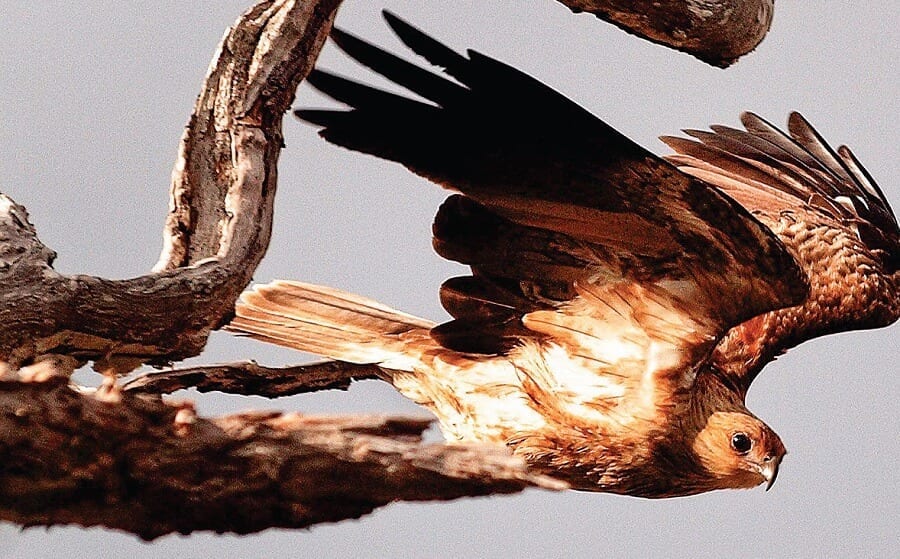
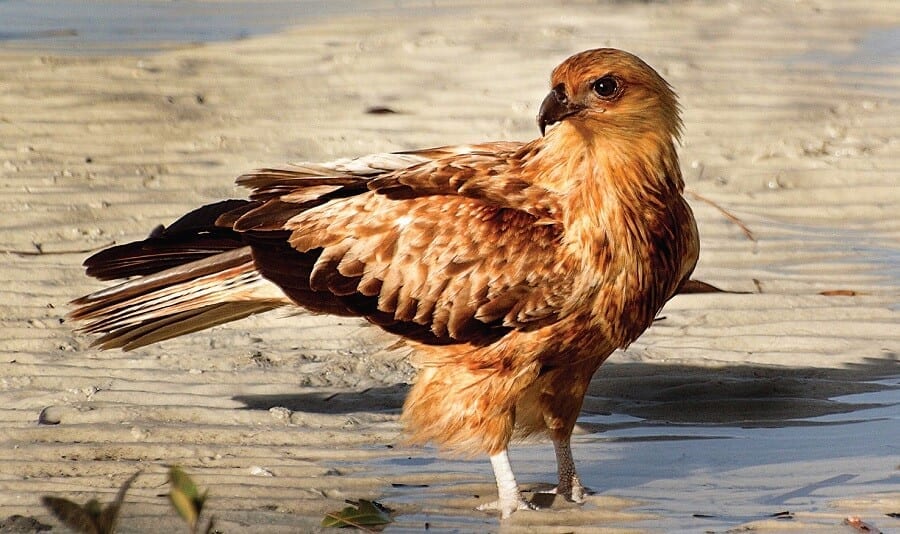
Whistling Kites are medium-sized raptors commonly seen and heard while soaring above all areas of Bribie Island. Their whistling calls while in flight or perched are an indication that they are present. Much of their time is spent gliding up and down the Pumicestone Passage in the quest for food.

They are easily identified when in flight by large, white M shaped patches under their wings. At the tip of each wing are six long, feathered fingers which are spread out in flight. They are a sandy brownish colour with rather an untidy appearance and a long pale tail extending well past the wingtips when perched.

Males and females are similar in appearance with the female being a little larger at 60cm, with a wingspan of 120-145 cm and weighing up to 1 kg. They are sometimes mistaken for Little Eagles when in flight as the underwing markings are similar. They have been named for their whistling calls.

Habitat is diverse, with Whistling Kites found over most of Australia. Generally, they like to be near water where much of their food is found. They are more common in the northern areas of Australia and are also found in PNG, the Solomon Islands, and New Caledonia. During drought seasons they become nomadic in search of food. Food is obtained by flying and pouncing on prey and is also found on the ground in the form of carrion.

They are opportunistic hunters and scavengers consuming foods such as fish which are swooped upon from the air, crustaceans, small animals, insects, and carrion. Like Black Kites they often feed at rubbish tips and on roadkill. Also, in the company of Black Kites, they are often present hovering over fires to attack small mammals, reptiles, and insects as they try to escape the flames. I was once surprised to see a Whistling Kite eating a large cormorant at the side of a lagoon.

The cormorant looked like a fresh kill. As well as catching their own prey they will sometimes pirate from other birds and scavenge from fishermen. When swooping and snatching up fish, birds or small mammals they must be careful not to choose something that is too heavy.

It is difficult for them to let go once the talons are fixed. If the prey is too large they could be pulled into the water and drown. Breeding takes place usually from March to November with the predominant breeding months in our area being August and September. They may breed 2 or 3 times a year. Nests are large and cumbersome with lined basin-shaped inners, mostly built in tall trees and near water.

These are often used year after year and added to each season, growing larger each year and sometimes reaching 1.5 m across and 1 m deep. Both parents build nests. Clutches of 2-3 blue-white motley eggs are laid which are incubated mostly by the females for about 40 days. When hatched the chicks are covered with white down and fledge at 7-8 weeks. Adult plumage appears at about 12 months.

Along with Black Kites and Brown Falcons, they are sometimes known as “Firebirds” because of the belief that they pick up burning sticks to drop and start new fires to flush out fresh prey. Whistling Kites appear to have benefited from forest clearing and farming as they prefer to hunt their prey in open areas. Conservation status at this time is secure.


Other Articles

THE ROAD LESS TRAVELLED

Fire is not a gentle master!

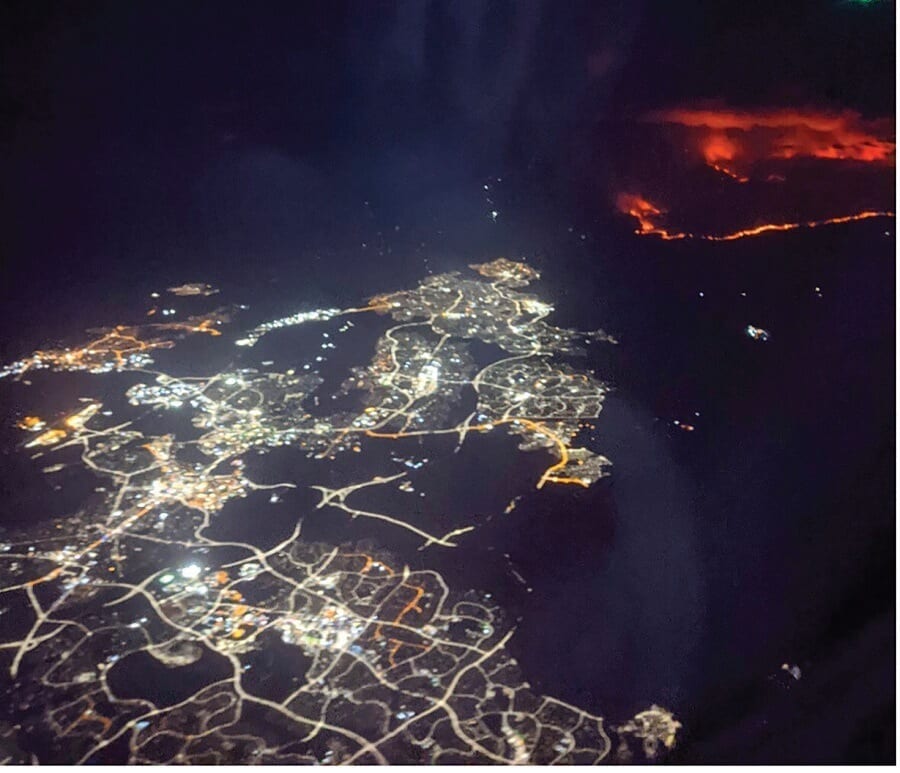
It is 17 years since my husband, son, golden retriever, Charlie, and I survived the Firestorm that hit Canberra on Saturday 18 January 2003. This was the worst natural disaster to ever strike the Australian Capital Territory (ACT). As I write this, a state of emergency has been declared in the ACT due to the threat of fires surrounding Canberra. This declaration has bought back memories of that very hot January day in 2003.

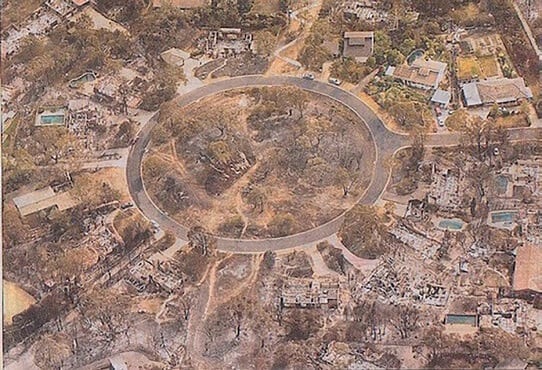
The 2003 Canberra bushfires caused severe damage to the suburbs and surrounding land of the ACT during 18–22 January 2003. Almost 70% of the ACT’s nature reserves, pastures, and pine plantations were badly damaged and most of the Mount Stromlo Observatory was destroyed. After burning for a week around the edges of the ACT, the fires entered the suburbs of Canberra on 18 January 2003.

Over the next ten hours, four people died, more than 490 people were injured, and 470 homes were destroyed or severely damaged. At that time we were living in Chapman, one of the eight residential suburbs of Weston Creek. The District of Weston Creek is situated about 13 kilometres southwest of the Canberra City Centre. Chapman, Rivett, Duffy and Holder, the worst-affected suburbs of the 2003 fires, are situated adjacent to the large Stromlo Pine Plantation which was completely destroyed in the fires.

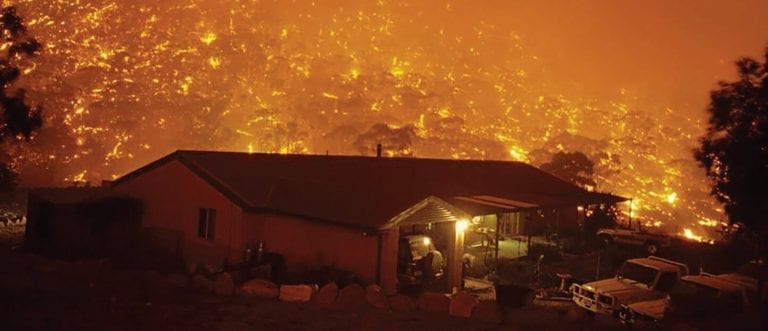
The sound of exploding pine trees, the complete darkness at 4 pm on a hot dry summer’s afternoon, the smoke, floating embers and the height of the approaching firewall are still very vivid in my mind. Michael and I were at home when a friend rang just after 2.00 pm to see if we were alright. Ron had heard an emergency radio broadcast listing Chapman, Duffy, Holder, and Rivett as at risk in the approaching fire.

It was a 40-degree dry hot day and we were inside in air-conditioned comfort, sitting in an east-facing room. When we went outside and looked to the west we couldn’t believe the scene – fire, smoke, and embers, plus the sound of exploding pines and gums. Then we heard “Elvis” the helicopter, flying over and dropping water on the fires. We turned on ABC 666 radio and listened to the emergency instructions. The station closed down normal programs and just gave a continual update.

On that Saturday afternoon, the radio announcer was a calming influence and provided a lifeline. She kept repeating important information about the location of Evacuation Centres, how to prepare your home and when to leave. I will always be grateful to ABC 666, especially since January is usually a quiet time in Canberra. Parliament is not sitting and many public servants take holidays as it is also the long school holiday break. Many Canberra businesses, including Radio Stations, work with a skeleton staff.

Those announcers who were on duty had to work long hours to provide emergency coverage. Our son Tim was playing cricket for his Weston Creek team in Woden and I rang him to tell him to come home. He said he had just called an end to the game because it was so dark where he was you couldn’t see the ball! He was a bit annoyed because he was 40 not out and on a roll!

Michael and our next-door neighbour started hosing down our houses and putting embers out on houses across the road. When Tim arrived home he got up on the roof and watered everything down. I started packing the two cars. Between 3.00 and 3.30 pm the first houses were lost in Eucumbene Drive Duffy, which had pine forests across the road. We lost power around this time. Around 4.00 pm Police and Emergency Services came down our street with a loud hailer calling out ‘Evacuate Now.’

It was quite surreal and eerie – like a scene from an apocalyptic movie. Looking back up to the west of our street we could see the fire raging. Embers and small sparks seemed to be coming at us in the strong wind like we see tracer bullets in a movie. Gas bottles were exploding and the local Rivett petrol station had already caught fire. This was all accentuated as it was very dark and all you could hear was the police loudspeakers and “Elvis” flying over.

Tim and Charlie left in his car and Michael and I in ours. We joined the long queue of cars driving through the reddish tinged darkness to the Evacuation Centre in Woden. We picked up a man walking out with all his possessions in one suitcase. The Evacuation Centre was crowded and wouldn’t take animals, so we drove into the underground car park of my Office and parked our cars, and Charlie, there until we could sort out emergency accommodation.

We survived and I am proud of how calm the three of us were, unlike many around us. Our house survived with only minor damage (ash and embers had seeped in through bathroom and toilet vents and we had to throw out a freezer full of frozen food that had perished without electricity) but we couldn’t move back in for five days. I remember walking around my devastated neighbourhood and calculating that the last house to burn in our Street was less than 500 metres from our home.

If it had not been for a change in wind direction which turned the fire up the hill our home would have been lost. Funny thoughts do go through your mind – one concerned having a cup of tea. The fact the electricity was “out” didn’t register until you thought about it. But, being there in total darkness, due to the smoke, at 3 pm, made you lose your sense of reality.

Subsequent inquiries into the 2003 bushfires, including the Roche report, the McLeod inquiry, and the Coroner’s Report, identified poor management of the initial response to the four fires that started as a result of lightning strikes in New South Wales on 8 January as a key contributor to the disaster that occurred on 18 January 2003. Also, Researchers have confirmed that the first fire tornado was observed during these 2003 fires.

Perhaps the saddest aspect of it all – notwithstanding the fires and loss – was after we returned, having people cruising the area – either sightseeing or offering to buy burnt out blocks from those coming to terms with their losses. You truly see the very best and the very worst of human nature in these times. Thankfully the worst was confined to a very, very small minority.

The funniest aspect? Well, we’d always had a disaster emergency plan for such things. It contained a list of “must take with us” items. Passports, Birth Certificates, important documents, photos, jewellery, mementos, etc. As we drove away I remembered that I had left the plan with the Passports and Documents. However, we had taken the things that really mattered – ourselves, our dog, precious photos and mementos.

Today we still laugh about how we thought we were so prepared and forgot all our important documents. On Friday 31 January 2020 ACT Chief Minister, Andrew Barr, declared a state of emergency in the ACT. A state of emergency is the strongest possible signal the ACT government can send to the community to prepare for the worst. It gives the ACT Emergency Services Agency Commissioner, Georgeina Whelan, the authority to coordinate resources across the ACT government to respond to the developing threat of fire to Canberra properties.

This time the authorities appear to be better prepared. In 2003, instead of urging residents to leave the area, they asked us to return to our homes and prepare for the coming fire front. And, at first, a senior emergency services official resisted police efforts to declare a state of emergency, which would allow police to forcibly evacuate residents. Fires can happen in any community.

I must admit feeling uneasy last year when the fires broke out along Sunderland Drive. And I did go and check that our Disaster Plan was with our important documents! So from personal experience, the best advice I can give is to prepare your home, by hosing down, put water in your roof gutters if you can, make water available for the firefighters and leave early. Material goods are replaceable – even your documents – lives are not.


Other Articles

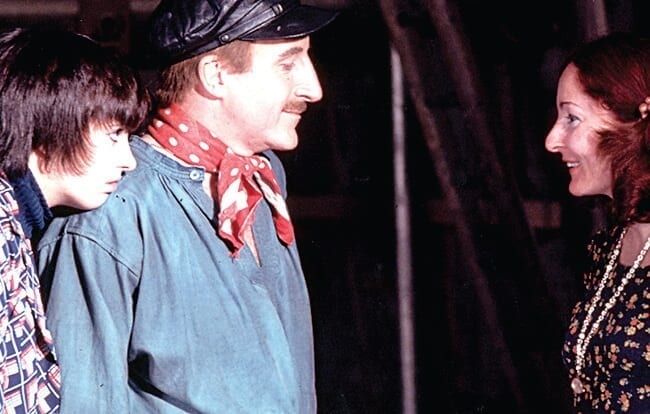
HELLY’S CELEBRITIES OF THE 20TH CENTURY – Peter Sellers

THE BEST LAID PLANS OF MICE AND MEN…

PETER SELLERS’ films brought laughter and happiness to millions, but in real life, he had more than his share of heartbreak with broken marriages and failed love affairs. Bard Robert Burns’ 1786 proverb “The best-laid plans of mice and men….”

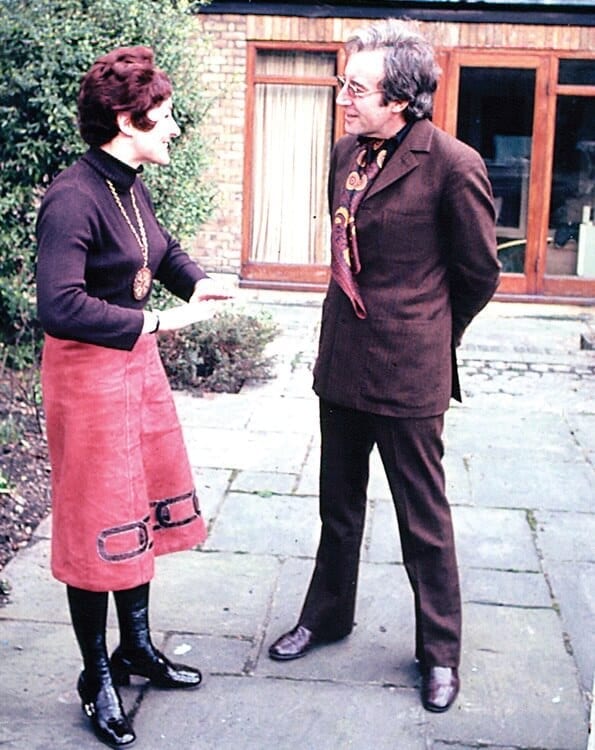
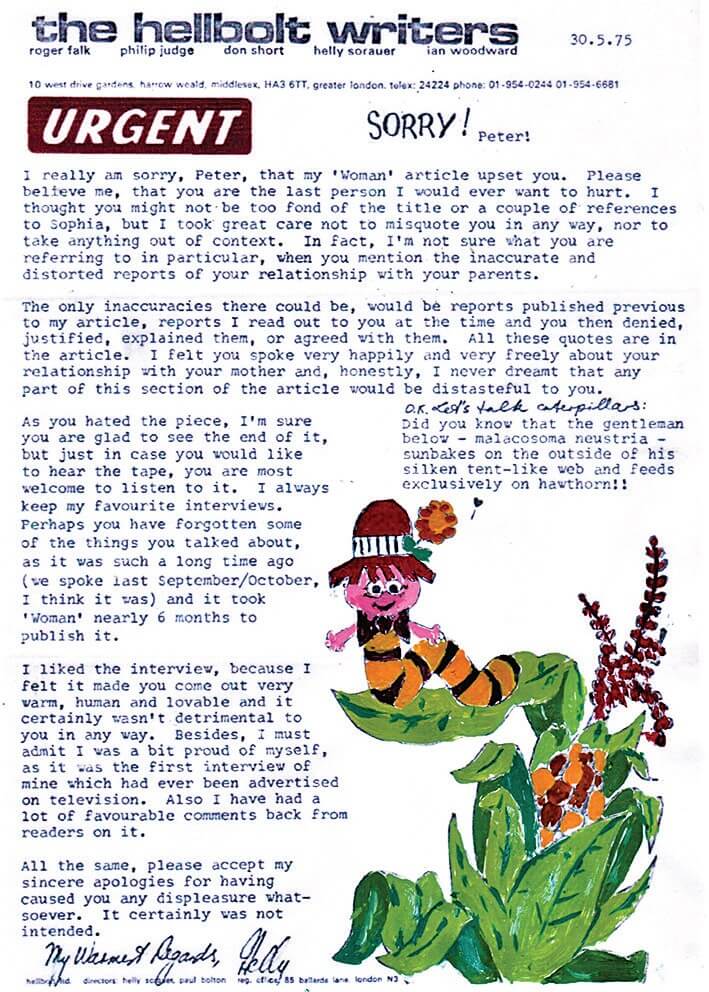
Oh yes, when it goes wrong, it flattens you like a tornado. Having been friends with Peter since the ’60s, through interviewing him about his films like THE PINK PANTHER movies, a HITLER SPOOF, visiting his home on various occasions, exchanging letters and being introduced by him to Liza Minnelli, I was as much distressed as my last feature had, apparently, upset Peter. But it was not my fault.

Woman Magazine published my latest Sellers interview six months after it had been submitted in 1974. And that exact same publication week at the end of April 1975, Peter broke up with the partner about whom he had spoken so lovingly and passionately in that interview. Peter was well known for never controlling his tantrums, whether it was family, friends or work. But I had never been at the brunt of it before.

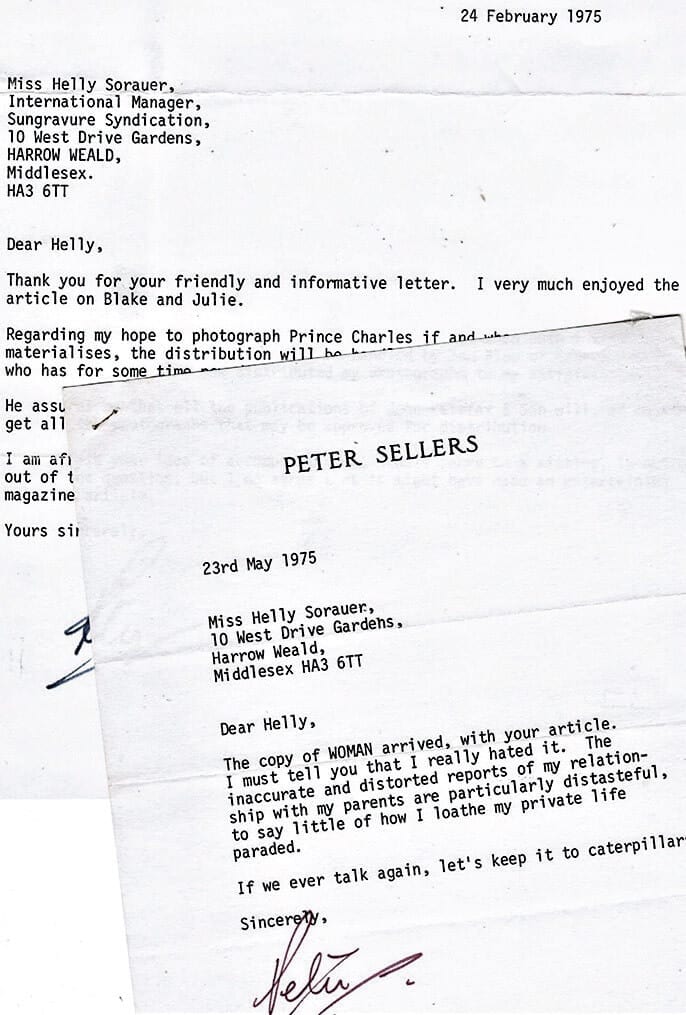
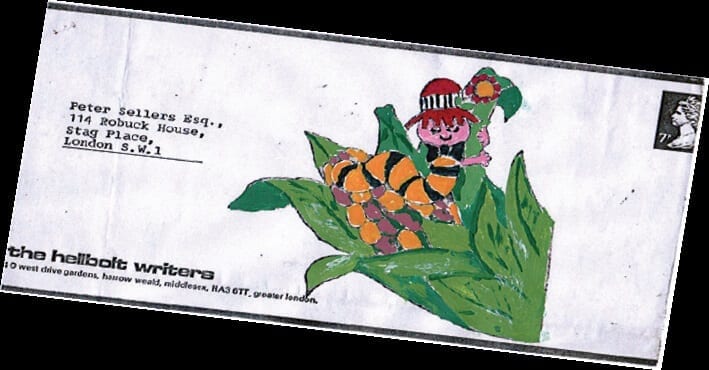
So, after receiving his “let’s talk about caterpillars letter” (see attached), and finding a delightful caterpillar greeting card, I phoned the London Natural History Museum, obtaining info on a particular caterpillar. Hence my reply, (attached) including “Did you know that Malacosoma Neustria sunbakes on the outside of his silken tent-like web and feeds exclusively on hawthorn.” All was forgiven.

But when I next saw Peter in his home, the comic genius, yet a serious man in private, was in a very depressed mood. Trying to cheer him up, I gave the wrong impression by saying it upset me to see him like this because I cared what happened to him. Big mistake! He took it romantically and the harder I tried to get out of it, the worse it sounded. I loved Peter’s incomparable talent, his company, and vitality, his sense of humour and achievement, but he never appealed to me as a man.

So I made a rather hasty exit to get back home to my toddler. Peter at this time had already had previous heart attacks, and four years later, at the young age of 54 in 1980 this bright star of some 60 movies, Including, DR. STRANGELOVE, THE PARTY, THE MILLIONAIRESS, THERE’S A GIRL IN MY SOUP, and his last and most brilliant 1979 film, BEING THERE with Shirley MacLaine (for which he received an Academy Award Nomination) – Peter lost the battle.

For a moment the world stood still in shock and disbelief.

Keywords

Peter Sellers. actors. famous people. celebrities.


Other Articles

My Bribie

Sue Wighton is a Brisbane writer and frequent Bribie visitor, who wrote weekly opinion pieces for the Courier-Mail from 2011 to 2014. Sue is keen to contribute regularly to the Bribie Islander, sharing her observations both serious and amusing. She has been known to bake.

I’ve been visiting Bribie for about 25 years. This daggy, lovely little island and I have become great friends. How did this friendship begin? Like most friendships, there was a chance meeting and a sense that we have much in common. An old mate (let’s call her ‘J’) has a house on Bribie.

This place has been in her family for a couple of generations. It’s not flash but it’s comfortable. In fact, it’s where her grandparents lived for many years. Her grandma had a gift cum haberdashery shop. Haberdashery – now there’s a word you don’t hear much these days! The house is well stocked with crockery and linen from Grandma’s shop. In fact, it looks like Grannie just popped next door for a cuppa and never came back. When my marriage went south, I headed north.

Here was the chance meeting with Bribie that would blossom into a lifelong love affair. Visiting the island became a welcome antidote to the grind of single parenting. And I wasn’t the only one. My memories of those days are of lots of women, some single, some partnered, but many of us failed wives with children in tow – converging on this island sanctuary, thanks to J’s unfailing generosity.

My dear dad dubbed us Bribie girls the Failed Wives Club. We swam in the benevolent waters of Bribie Island, chronically ignored our own kids, cogitated over cryptic crosswords, gossiped about absent failed wives and disappointing men, drank wine, rode bikes along the dappled Bribie bike path, cooked, drank more wine, ate ice-creams and generally had a lovely time. There’s something reassuring and heavenly about the downright dagginess of Bribie that I love. Who wants a world where everything is designer slick?

Daggy is being natural and enjoying some of life’s simpler pleasures. Sitting under the back verandah of my friend’s house at Bribie eating ice blocks with the sprinkler cooling our toes. Now that’s my idea of Heaven. Over the years, these Failed Wives Club visits became a tradition, with major holidays seeing a bunch of women and kids descend on J’s place – trailing eskies, beach towels, boogie boards, soft toys, and books.

Such wonderful times. As the years passed, some failed wives acquired partners – a motley crew of Failed Wives Club associate members. So baritone voices augmented the female chorus as we idled away the hours on beds and lounges strewn about the place. Nowadays the children have grown and moved away – all the better for the indolent ignoring by their single parents and the undivided attention of a bevy of kindly ‘aunties’ on these languid Bribie weekends.

The friendships forged in those regular visits remain strong. We all still visit on high holidays, sharing stories, old and new, our sorrows, our joys and of course delicious food. At Easter, it’s Di’s fish pie. Lamb roast lovingly prepared by one of our associate members is always a weekend crowd pleaser.

Rumbledy-thumps for breakfast. (Don’t ask.) And the Australia Day weekend wouldn’t be the same without Henk’s pies and mushy peas. The writer, PD James reckoned that ‘every island, to a child, is a treasure island’. She was absolutely right. I hope I never grow up.

Other Articles

EDIBLE NATIVE PLANT LIST SUNSHINE COAST REGION Part 1

Everyone is familiar with easy-to-grow edible plants such as mint, rosemary, thyme, and other herbs, but did you know there are a range of native Australian plants that are also edible and can be easily grown at home? These plants are versatile and flavoursome and can be incorporated into a variety of modern dishes.

Syzyguim luehmannii SMALL LEAVED LILLY PILLY OR RIBERRY

edible plants berries sunshine coast - SMALL LEAVED LILLY PILLY RIBERRYThe attractive red fruit of this ornamental small tree is a popular ingredient in many wild food dishes. It is now being harvested commercially.

Eugenia reinwardtiana BEACH CHERRY

edible plants berries sunshine coast - beach cherry

The bright red fruit of this small shrub ripens between August and March. It is good to eat, being succulent and sweet.

Diospyros ferrea SEA EBONY

edible plants berries sunshine coast - sea ebonyEdible, sweet-tasting, deep red fruit which ripens in summer

Syzygium Australe edible plants berries sunshine coast syzyglum australe


With its purplish fruit one of the best of the Lilly Pilly group. It can be eaten raw or as a jam.

Freycinetia Scandens CREEK SANDPAPERS FIG

edible plants berries sunshine coast creek sandpapers figBright red fruit resembling strawberries ripens in winter. It is eaten raw.rigines to give a smooth finish to their weapons.

Dianella congesta – FLAX LILLY

edible plants berries sunshine coast flax lillyThe shiny, dark blue berries are edible. Aborigines ate the roots after pounding and roasting them on hot rocks. They used the fibre from the tough leaves to make baskets and nets.

Acronychia Imperforta FRASER ISLAND APPLE

edible plants berries sunshine coast fraser island appleJuicy bright orange fruit which ripens in Winter and Spring, have a sharp-tasting edible flesh. This is a hardy, ornamental shrub or small tree for the seaside garden.

Austromyrtus Dulcis MIDYIM

edible plants berries sunshine coast midyamOccurring in sandy coastal areas of Northern NSW and Southern QLD. This small shrub produces pretty white flowers in spring and summer. These are followed by edible, mauve white speckled berries which are quite delicious.

Alpinia caerulea NATIVE GINGER

edible plants berries sunshine coast native gingerAll parts of this plant are edible, raw or cooked. The pulp of the blue fruit is pleasantly acidic and the seed is ginger flavoured. Aborigines wrapped the leaves around meat to be cooked in an earthen oven. The young root tips are gingery and tender.

Carpobrotus glaucescens PIG FACE

edible plants berries sunshine coast pig faceFruits of this fleshy creeper of the sand dunes ripen in Summer and autumn. They have a delicious salty-apple flavour.

Cordyline manners suttoniae A PALM LILLY

edible plants berries sunshine coast palm lillyOccurring in sandy coastal areas of Northern NSW and South-ern QLD. This small shrub produces pretty white flowers in spring and summer. These are followed by edible, mauve white speckled berries which are quite delicious.

Ficus coronata CREEK SANDPAPER FIG

edible plants berries sunshine coast creek sandpapers fig darkThe dark purple fruit is very tasty when fully ripe. Peel off the hairy skin before eating the soft, pulpy seed mass. The sandpapery leaves were used by aborigines to give a smooth finish to their weapons.

Planchonia careya COCKY APPLE

edible plants berries sunshine coast cocky appleA common tree of northern eucalypt forests. Aborigines ate the large, green, egg-shaped fruit roasted or raw. Bark and roots were pounded to use a fish poison. Strong fibre from the bark was spun to make string for nets and belts.

Microcitrus australisica FINGER LIME

edible plants berries sunshine coast finger limeGreen cylindrical fruit with a similar flavour to round limes.

Davidsonia pruriens DAVIDSON’S PLUM

edible plants berries sunshine coast davidsones plumThe purple egg shape fruit ripens in Autumn. It has a tangy flavour and is delicious stewed with sugar. Good for jam and winemaking.

Pleiogynium timorense BUDEKIN PLUM

edible plants berries sunshine coast budekin plumThe purple-black fruit is edible when completely ripe and fallen to the ground. Aborigines buried the fruit in sand until it was ready to eat. An excellent jam is made from the fruit.

Planchonella australis BLACK APPLE

edible plants berries sunshine coast black appleThe dark purple fruit is very tasty when fully ripe. Peel off the hairy skin before eating the soft, pulpy seed mass. The sandpapery leaves were used by aborigines to give a smooth finish to their weapons.

Other Articles

Bribie History – How it was in the 1920’s

Tags: History. Bribie Island. Moreton Bay. Queensland. Australia 1920s

WALK IN OLD BRIBIE

This article looks into life on Bribie Island in 1920 and is an invitation to come on a free HERITAGE WALK with me in March or May.

The attached poster shows the dates of our next four Heritage Walks, which are free but with limited numbers, and you MUST book online at the web site moretonbay.qld.gov.au/healthy-active.

Tags History. Bribie Island. Moreton Bay. Queensland. Australia 1920s (13)These guided walks give an insight into the history and lifestyle of early Bribie, and an appreciation of some pioneer residents and buildings. Here are some edited extracts from various Brisbane newspapers of 1924, 1926, 1929 and 1930, with some Photos inserted from our Historical database. This is my favourite Photo from our Database of Bongaree foreshore in 1920.

Tags History. Bribie Island. Moreton Bay. Queensland. Australia 1920s (1)
Bongaree Foreshore 1920

THE CHARMS OF BRIBIE ISLAND.

The Daily Mail- 29 March 1924. By Phoebe Kirwan.

For years, I intended going to Bribie and always put off the visit, but recently seeing the charming island, I confess that for years I have deprived myself of a very pleasurable visit. The delightful quaintness, the wild beauty of her bush, and the charm of her long white-sanded beach, I have taken her unto my affection for all time. Numbers of folk of all shades and colours from the pure aboriginal to the scarlet sunburnt holidaying townsfolk, added variety to the scene whilst the vendors of the fine fish, vegetables, fruit, meat, etc., plied their trade.

Behind us lay the thick, fragrant treed bush, and the long road in course of construction, leading to the main beach three miles from the wharf, a road which will give access to the finest beach in Australia, facing Cape Moreton, and which for surfing and pleasurable facilities is unexcelled.

A slow, plodding team of bullocks ploughed through the heavy, broken tracks, bearing the materials for the road making, adding their quota to picturesque interest to the scene. For 30 miles, the island offers delightful possibilities, and in her virgin wildness, for there are few houses erected, there is an atmosphere of peace and quiet, very grateful to those seeking tranquillity. May she come into her heritage.

Tags History. Bribie Island. Moreton Bay. Queensland. Australia 1920s (1)
Temporary Road Building Jetty

BRIBIE SPELLHEALTH and HAPPINESS

The Brisbane Courier -23 November 1926

For generations, Bribie has fascinated Queenslanders, just as for centuries it threw a spell over the aborigines, who believed that the island was the haunt of good spirits, who used their magic to aid their sick or ailing descendants. The pretty settlement, which has grown up near the wharf where the steamers from Brisbane berth, is generally called Bribie, but its real name is Bongaree. Over 50 houses have been erected at Bongaree during the last 12 months, and on the ocean beach a large number of houses have been built within the same period, and about 15 more are being constructed. The last-named are the property of the Government.

They were formerly at Beerburrum Settlement, but when the soldiers were placed elsewhere the cottages were dismantled, and the timber in some of them was brought to the island. This village on the beach is called Woorim. It is a picturesque spot, and one feels that he could be happy here for an indefinite period.

There are now 170 houses on Bribie, and the community feels that the time has arrived for it to direct its own affairs. There is dissatisfaction that it has not even a representative in the Caboolture Council and that it has no knowledge how its civic affairs stand. The residents believe that the money raised in rates on a property on the island should be spent on improvements there.

ATTRACTIONS FOR HOLIDAYMAKERS

The Brisbane Courier – 30 October 1929, By Chas Wise of Wamuran

The first thing I noticed on landing was a newly erected, tiled-roofed building at the end of the jetty, which has been built by the Tug Company for use as a fish and oyster shop by Mr J. Campbell. Facing the Esplanade were some good boarding houses, several new residences and weekend cottages, while the Amateur Fishermen’s Association had excellent accommodation for its members.

Tags History. Bribie Island. Moreton Bay. Queensland. Australia 1920s (1)
Oyster Kiosk Jetty

Returning along the seafront, we passed the kiosk and dining rooms, the property of the Tug Company, where good fish and oyster lunches were obtainable. Facing the beach stood the 12 huts built by the Tug Company for letting purposes. On the right were two splendid new tennis courts and an inviting bowling green.

Beyond the Bowling Green was the pavilion erected for the use of visitors as a dance hall and general place of amusement. Retracing my steps across the Tug Company’s Reserve we passed Arthur Bestmann’s general store where necessities for campers, visitors, and residents could be obtained. A fine building also had been erected for Church of England services at a cost I was informed, of more than 1000 Pounds.

NOVELTY GARDENS

Tags History. Bribie Island. Moreton Bay. Queensland. Australia 1920s (1)
Bestmanns Store

The next items of interest were the novelty gardens, created by Mr R. J. Davies. There were to be seen many handsome and some grotesque figures, grown and formed out of cypress pines. Behind Mr Davies’ house were seen some rough-leaved pineapples, which compared favourably with mainland crops.

THE SURFING BEACH

A run to the outer beach, three miles distant, was made by motor bus. Facing the ocean was a fine roomy kiosk where lunches and teas could be procured at all times. Several shelters for the public had been erected on the crest of the sandhills by the Tug Company.

Tags History. Bribie Island. Moreton Bay. Queensland. Australia 1920s (1)On the day of the visit to Woorim township, as the outer beach is officially named, a strong northwesterly wind was blowing straight from the open ocean at the north end of Moreton Island, causing heavy rollers to break upon the beautiful white beach which extends northwards for some miles. Surf bathers here enjoy themselves to the full, and at holiday times, members of lifesaving clubs were always on the lookout.

CYPRESS PINE POSSIBILITIES.

Brisbane Courier 21 June 1930. By Thos. J. Mcmahon. Bribie Island

Tags History. Bribie Island. Moreton Bay. Queensland. Australia 1920s (1)
Woorum Surf Club

Apart from being a popular seaside resort, has agricultural possibilities, especially regarding the propagation of cypress pine trees, which thrive well all over the island. The first settlement of Bribie Island may be traced to the earliest days of Brisbane, when Bribie Passage, the deep and narrow stretch of water between the island and the mainland, had become notable as one of the best fishing grounds of Moreton Bay.

Eventually, several fishermen took up their residence on the island and forwarded supplies of fish to the Brisbane markets. To some extent, this fishing is still important, large quantities of fish being sent to Brisbane every week. For many years Bribie has been popular with campers, and particularly with amateur fishermen. Visitors to Bribie know that it is one of the few seaside resorts where fish can be purchased in all seasons, fresh and cheap.

PROGRESS OF SETTLEMENT

Tags History. Bribie Island. Moreton Bay. Queensland. Australia 1920s (8)A little more than 15 years ago, an old settler states, scarcely a dozen persons were permanent residents of the island. But today there is the cosy little township of Bongaree, the settlement facing the mainland and Bribie Passage, with a large number of permanent settlers, stores, a newsagency, two churches, a State School with 25 children, a hall, a sports club, at least half-a-dozen boarding-houses, many cottages, including a row of small cottages along the Passage beach, popularly known as “The Twelve Apostles,” a bowling green, and tennis courts.

FROM PASSAGE TO MAIN BEACH

Bill Shirley runs a fleet of five comfortable motor buses between the settlements at the Passage and on the Main Beach and has carried as many as 2000 passengers in a day. He also runs pleasant trips along the beaches and claims that the trips are the cheapest motor trips in the world. Bribie is holding its own well and there is not the least doubt that it will always be popular with large numbers of persons many of whom consistently visit the island at weekends and on holidays.

AGRICULTURAL AND PASTORAL

Almost from the earliest days of its settlement, Bribie has been used for the grazing of cattle, and at one time the island carried many hundreds of sheep. While the natural pastures would scarcely be considered of fattening value, the fact remains that cattle can be seen that are in really good condition… At any rate, Mr Cotterill is enterprisingly carrying on dairy farming and is supplying the island settlers with milk

TUG COMPANY’S ENTERPRISE

Tags History. Bribie Island. Moreton Bay. Queensland. Australia 1920s (1)
12 Apostle Huts

No account of Bribie would be complete without reference to the energy and enterprise of the Brisbane Tug and Steamship Co., Ltd., which has been responsible for much of the progress on the island. The company maintains a regular service with the two popular steamers, which are speedy and comfortable, and the run from Brisbane to Bribie is one of the most pleasant and cheapest in the Commonwealth…

The future of Bribie appears to be rosy, and if progress is maintained at the rate of the past few years, it will not be long before it will be one of the most prosperous settlements within easy reach of the metropolis.

Tags History. Bribie Island. Moreton Bay. Queensland. Australia 1920s (1)
Bowling Green & Tennis Court

BRIBIE HISTORICAL SOCIETY

If you would like to experience more of this come on one of the guided Heritage Walks. The Historical Society also has monthly public meetings at the RSL Club on the second Wednesday of each month commencing at 6; 30pm. with interesting guest speakers on a wide range of topics. You can see many more photos and articles on our Blog Site at http://bribieislandhistory.blogspot.com or contact us on [email protected]

Other Articles

Next to the Lap of Luxury – Nikita Chee

Dear Island-friends, Recent wet-weather events have been, in-part, inspiring to the personal development of interesting new thoughts and habits. Oh, and everything is looking so lush, green and healthy! Are we not blessed with the belongings of subtropical climate? As well, recent endeavours along Welsby Parade have caught me up in visions of whitecapped passage and white, rocking sail-ships (and the odd ‘Marooned’ one too) upon the rough greywaters.

Sometimes the little scenes I pass by make me feel rather surreal. How delightful it is to live on our sandy shores. Anyway, back to the development of interesting new thoughts and habits. So, one day a few weeks back I noticed our little Wi-Fi modem had, well, blown up. Upon ringing our provider, I found that the only thing we could do was purchase a new one and upon ringing JB HIFI I found it had been a common thing of late, what with all the storms, that modems have been blowing up.

Very long story short, I’m in the process of waiting for a completely new set up, which means no phone nor internet for a while. Besides that, I have also chosen to put away my mobile for a time so all in all I’ve entered into a sort of unplanned tech-detox. To tell you all the truth, I don’t miss it. Not yet anyway. In fact, it’s been rather pleasant and I feel purified. Moreover, I’ve found there’s something that kick starts in you when one daily habit changes for the better.

I don’t know if you’ve ever experienced this Islanders, but often, if I eat something really healthy and clean in one meal sitting, I feel repulsed at eating something the opposite in the next. It’s like if I do, I have spoiled the clean eating experience altogether. Well, it is not any different if you improve a daily habit. One improvement kick-starts another and before you know it you’re a changed person! Basically, it went something like this for didn’t need much but the fundamental needs in life.

And, instead of indulging in the lap of luxury, you were sitting beside it. Being restricted in one area of my life, heightened my appreciation in other areas. Because I not only found productivity out of the restriction but also enjoyment, I realised something. Just because we have access to luxury (as I feel a lot of what we take for granted in the West, a lot that we just expect as part of normal daily lives, would seem so luxurious in poorer countries) doesn’t mean we have to or should partake in them.

At least, partake so often as we do. I feel that a lot of social stress comes from keeping up a lifestyle that demands luxury. Luxury meaning: being in a state of great comfort, gratification and excess.

1. I mean, right now as I write I have both a lamp and overhead light on, *gets up and turns one light off*. What’s more, is we are so used to our comforts; so, used to them are we that at the slightest inkling of change we ruffle our feathers and seem very displeased. What stink behaviour! However good it is to nurture one’s self and be nestled and safe when the eye shuts, nothing excuses our consumer behaviour.

21st-century living has two foes: more, more more and feel good, feel good, feel good. More will forever shout at you and feel good likes you only when it wants then abandons you when it’s done. Both push you around, both are abusive, both are controlling. Speaking of control…

Dearest Islanders, I believe we can do without many things. Already you have great minds, abilities and hearts within you to live driven and fulfilling lives on this planet. Many of us already have the ingredients for success within reach, but there’s someone out there deceiving us to believe otherwise. They tell us we do not have it, (whatever it is) and that whatever it is, lies beyond our reach (and in the pockets of others).

In 1928, Edward Bersnay, well known for his work in public relations, said: “The conscious and intelligent manipulation of organized habits and the opinions of the masses is an important element in democratic society…We are governed, our minds are moulded, our tastes formed, our ideas suggested, largely by men we have never heard of,”

2. An unpleasant thought and a terrible fact if those in leadership are not good men. The empowering thing is, we do have a will and we do have a choice. Our freedom lies within choices that are healthy and regenerative and if they are good for us, they are also good for the planet.

However hard the escape from more, more, more’s and feel good, feel good, feel good’s sticky, controlling, a matrix of a web, you can become free. Take one good decision, reinvent one habit at a time and see yourself change into the strong man or woman you are to become. Blessings to you my dear island friends, Nikita.

Other Articles

THE PURSUIT OF PEACE

Mental Health – UNDERSTANDING WORTHLESSNESS

ARRIVAL – Scaling & Filleting

My husband and I were both what was termed “frying pan fishermen”, meaning if you can’t eat it; don’t bother trying to catch it. Not for us big game fish, but small sweet winter Whiting, Bream, Flathead, and Moses Perch. The occasional Flatfish we caught, such as Sole or Flounder, generally went to my mother-in-law as a form of rent. I loved the little chopper Tailor which Don and I caught off the beach with a rod. They needed bleeding, but that was no hassle.

When they were in the bucket, one had to keep an eye open for greedy Pelicans who would attempt to steal them whilst we had our back to them and were making the next cast. The leaky boat with heavy oars that I had to bail while Don fished was replaced by an aluminium boat known as a “tinny”, complete with a motor. This meant that we could both fish, and when the children reached the advanced age of three and four years, fishing became a family affair.

Don would use a light rod, while the children and I would use hand lines. They soon learnt to feel when a fish was biting at the end of their line, and even to recognise what kind of fish it might be. Soon they could manage their hand lines without getting them into incredible tangles, and to both bait their hooks and remove the fish and place it in the bucket in the boat where our catch was kept. Even while young, they would help us to collect bait.

We discovered the best spots to pump for yabbies (Ghost Shrimps). Don and I would pump vigorously with our yabby pumps until we had four or five yabbies out of their hole and on the surface, and the children would follow us, picking them up and never complaining about the occasional nip. When older, they learnt how to use a rod and line, the art of rod binding, the safe use of a knife, and how to rig up their lines.

My daughter was just as an enthusiastic student as any of the boys who joined Don’s tutorials. When our children had grown up and gone to the big smoke in search of fame and fortune, it was Don and I alone that went fishing. There was nothing more wonderful than to be out in the early morning on a mirror-like sea heading for “our spot”. On the way, we would keep an eye open for the Dolphins, Turtles, and Dugongs that were common in those days.

When we were in the “right place” we began our drift, baiting our hooks with squid, worm, prawn, yabbies or whatever the fish seemed to be biting on. Generally, it was Winter or Diver Whiting that we were after; not big fish, but delicious. As I told my brother-in-law who came from the Northern Territory and would boast of the Barramundi he had caught up there, “Any fool can catch a big fish, but it takes skill to catch the little ones”.

On a good morning, we could catch a hundred or so of those delicious little fish within a couple of hours, and then it was time to head for home where the real work would begin. First the scaling, then the filleting, then the belly boning so that each fillet would be guaranteed to be bone free. When completed, I would begin to pack for the freezer, leaving some fish fresh for the evening meal.

Last, of all, I took the skeletons to the beach and threw one or two into the sea. The Seagulls were the first on the scene. Their cries attracted the notice of other birds, and it was not long before we had Terns and Pelicans joining the “green” clean up. On one occasion when my husband was feeding the Pelicans in this manner, one crafty Pelican crept up behind him, and on a backward swing took a bite out of his hand, gaining both fish and flesh.

We got to enjoy the fruits of our labour later when the fish hit the fry-pan and were then served on our plates, along with lemon juice from our own lemon tree. Surely this was the food of the gods!

Other Articles

Vintage, classic and historic car group – HISTORICAL CARS ON BRIBIE ISLAND

If you’re a fan of old cars you may be interested to learn that Bribie Island has its own vintage, classic and historic car group. This year marks the 20th anniversary of the group. The Bribie Island group was formed by Trevor Shields and Gil Leach back in 2000.

They realised that travelling long distances on fast, modern and unfriendly highways to club meets and getting together with fellow members of the Sunshine Coast Antique Car Club (SCACC) in Brisbane or the Sunshine Coast was neither a pleasant experience nor safe for themselves or their fragile and valuable old motor cars.

As a local branch of the SCACC (based at the showgrounds at Nambour), the Bribie Island group caters for locals (and not only locals) who enjoy sharing each other’s company, talking old cars and participating in less strenuous outings together, with or without their vehicles, on Bribie and the surrounding areas. Members are also involved in assisting at the famous Nambour Swap Meet held annually in July (this year’s swap will be on Saturday 25-July at the Nambour Showgrounds).

Vintage, classic and historic car group - HISTORICAL CARS ON BRIBIE ISLAND (1)
Line-up of members’ cars at a recent gathering

The Bribie Island group meets regularly each month for a cuppa, a BBQ and a natter somewhere locally so the cars on concessional registration can stretch their legs, blow away the cobwebs and their owners can do the same and keep in touch with each other. Members are proud of their cars and we are pleased to have amongst our number several rare and interesting models, for example, various early and late model Fords, Chevrolets, Chryslers, pre and postwar Austins, Morris, VWs, Rileys, minis, classic MGs, commercial and special interest vehicles.

The Bribie Island branch is always looking for new members. If you happen to have a vehicle older than 30 years or even an interest in old vehicles you will be most welcome to join our group. Membership of the SCACC allows owners with eligible vehicles to participate in the Queensland Government’s Special Interest Vehicle Concession Scheme which offers reduced registration fees and compulsory third-party insurance premiums.

The club also produces a monthly newsletter which keeps members up to date with all club and related activities. If you’d like to have a chat you can contact our Bribie Island Representative, Bob Parsons on 0481 955 229. We’d love to see you.

Other Articles

Parenting tips and advice

0

BE AN EVEN BETTER Parent in 2020

1. Build redundancy into your parenting, you don’t want your kids living with you when they’re in their 40s, so start making yourself redundant now. Expect kids to help at home without being paid and develop their self-help skills from the earliest possible age. If your kids are dependent on you then start small and work from there.

2. Build self-belief in kids. It is self-belief rather than ability that holds kids back. Parents mirror back to their children how they see themselves. If you are naturally negative, start focusing on children’s strengths, help them to improve and give them responsibilities so they learn that their parents have faith in them.

3. Talk less when kids misbehave. Do you repeat yourself when your kids don’t do as you ask? Don’t. Act rather than repeating yourself or shouting. Put the meal on the table rather than reminding them to come to dinner. Turn the TV off if they are fighting rather than shouting for peace and quiet.

4. Choose your battles. If you always seem to be fighting with your kids, it’s time to assess what’s important and what’s not. Fighting over minor issues burns up energy and damages relationships. Make a list of minor and major issues as a reminder.

5. Have at least five family mealtimes a week. If you want to influence your kid’s thinking then you need to talk with them. Mealtimes provide these opportunities, as long as the TV is turned off and you avoid getting into fights about how much they are eating. Set a goal of five shared mealtimes a week as a minimum.

6. Financial smarts begin at home. Avoid being your children’s personal ATM and don’t give them money whenever they want it. Start by giving them a small amount of pocket money regularly and build up the amount as you feel more confident and their financial competence grows.

7. Encourage a sense of generosity. Moving kids from thinking “me” to thinking “we” takes work these days as families are smaller and parenting tends to be focused on the child rather than the family. Develop a sense of altruism in your children by encouraging them to volunteer, giving some of their pocket money to charity and giving away old or unused toys.

8. Help kids appreciate what they have. Some children have a default mechanism that is both negative and self-centred. They are never happy and always want more. Change their thinking by encouraging them to look on the bright side and be thankful for what they have.

9. Encourage kids to be self-occupiers. Parents underestimate the importance of kids being able to keep themselves busy. Spending time on their own encourages self-initiated play; is good for their mental health and is a prerequisite for success at school. If you are your children’s home entertainment machine then you can change. First, avoid rushing in when children seem bored. Suggest ideas rather than providing entertainment.

10. Don’t fight your children’s battles. Leave some for them. Well-meaning parents can sometimes fight too many of their children’s battles, robbing them of opportunities to solve their own problems. If this is you, the next time your child experiences some frustration or difficulty at school or home, stand back, offer support and suggestions, but don’t solve the problem for him or her. Most importantly, show them love and affection. We all need to know we are wanted.

By Michael Grose www.parentingideas.com.au

Other Articles

CARAVAN Road Trip Tips & Advice

0

Do you dream of packing your bags and hitting the open road but are worried you’ll forget something? If you want to make sure your trip becomes a positive story you will tell the grandkids about for years to come, here are some top caravan road-trip tips to remember.

Roadworthy

If you are going to be spending a lot of time in your car or caravan, the most important tip to remember is to ensure it is 100% roadworthy and safe. Check your tyre pressure, pump them up if needed, and keep at least one spare with you. Check your water and oil, and if you are going to be travelling long distances, it is a good idea to have a professional look at your vehicle before setting out.

Maps and GPS

Asking for directions may become a point of contention when on a road trip, so having navigation software like GPS or Google Maps can help ease tensions. It’s as easy as entering the address of your destination – exact or general – and letting the technology plot your course for you. This doesn’t mean you can’t go wherever the whim takes you, but it is always a handy tool to have. If you are going to locations where there is no phone or internet reception, a physical map works just as well.

Roadside Assist

The last thing you want is for your car or caravan to break down and find out your coverage has lapsed. Before setting off on your great journey, make sure your roadside assist payments are up to date or arrange to get coverage if you don’t already have it.

Tool Box and First Aid Kit

Something else you don’t want to be caught without is a toolbox and first aid kit. A good torch can help you navigate in the dark, with spare batteries in case they run out of power. The contents of your first aid kit will generally be the same regardless of where you go, but for outback destinations, it is also good to include items that can help in case of a snake or spider bite.

Breaks Stop, revive, and survive.

Taking the time for breaks will not only let you stretch your legs and breathe the fresh air but gives you the chance to see more of the country you might miss while driving. Snacks Depending on how long you will be travelling for, and what restaurants and cafes are along the way, a good tip is to pack plenty of water and snacks. You can gather these from grocery stores, convenience stores, or dedicated camping stores.

Secure Your Possessions

The last thing you want is for something to fall and break while you’re on the road. Secure all small objects both inside and outside the car or caravan, including bicycles you may be bringing along. Make a list before you leave and follow Santa’s example by checking it twice. Once you are sure you have packed everything you will need, you will be able to focus on enjoying yourself and creating amazing new memories.

Other Articles